• woodrow wilson center
  • ecsp

New Security Beat

Subscribe:
  • rss
  • mail-to
  • Who We Are
  • Topics
    • Population
    • Environment
    • Security
    • Health
    • Development
  • Columns
    • China Environment Forum
    • Choke Point
    • Dot-Mom
    • Friday Podcasts
    • Navigating the Poles
    • Reading Radar
  • Multimedia
    • Water Stories (Podcast Series)
    • Backdraft (Podcast Series)
    • Tracking the Energy Titans (Interactive)
  • Films
    • Water, Conflict, and Peacebuilding (Animated Short)
    • Paving the Way (Ethiopia)
    • Broken Landscape (India)
    • Scaling the Mountain (Nepal)
    • Healthy People, Healthy Environment (Tanzania)
  • Publications
  • Events
  • Contact Us

NewSecurityBeat

The blog of the Wilson Center's Environmental Change and Security Program
Showing posts from category PHE.
  • Seven Billion People, One Planet: Roger-Mark De Souza on Empowering Young People

    ›
    From the Wilson Center  //  July 10, 2014  //  By Kate Diamond

    “Population is critical to thinking about sustainability and human wellbeing, and how we live and subsist on the planet,” says ECSP’s Roger-Mark De Souza on this World Population Day.

    MORE
  • From the PHE Conference in Addis Ababa, a Progress Report on Integrated Development

    ›
    Guest Contributor  //  July 7, 2014  //  By Kristen P. Patterson
    PHE_conference1

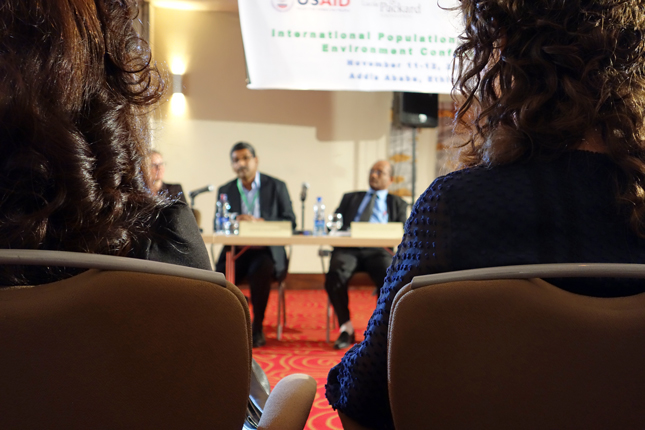
    My grandmother was pleased when I told her I was heading to Ethiopia last November for an international conference focused on population, health, and the environment.

    MORE
  • Special Issue of ‘Reproductive Health Matters’ Highlights Integrated Development, Resilience Efforts

    ›
    Reading Radar  //  July 1, 2014  //  By Kate Diamond

    rhm43The May edition of Reproductive Health Matters is a special edition on sustainable development and reproductive health and rights. Our own Roger-Mark De Souza writes that in the quest to build resilience, development practitioners can learn from integrated population, health, and environment (PHE) programs.

    MORE
  • Partnering on Climate Change Adaptation, Peacebuilding, and Population in Africa

    ›
    June 12, 2014  //  By Lauren Herzer Risi
    CC-FP-hotspots

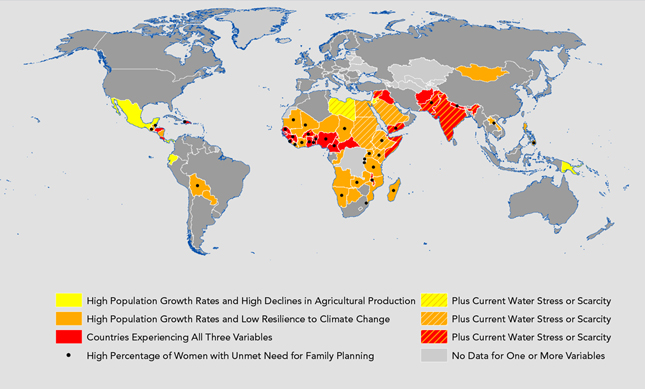
    Rapid population growth can be a contributing factor to climate change vulnerability and should be considered in climate adaptation and peacebuilding efforts, said the Wilson Center’s Roger-Mark De Souza at a workshop on climate change adaptation and peacebuilding hosted by the Institute for Security Studies (ISS) in Addis Ababa.

    MORE
  • CNN Profiles the Work of Conservation Through Public Health in Uganda

    ›
    On the Beat  //  June 9, 2014  //  By Kate Diamond
    gladys_thumb

    Reporting on long-term, complex human-environment interactions can be daunting. As the saying goes, “if it bleeds, it leads,” and slow, sometimes-distant changes rarely make headlines. Yet, earlier this year CNN International’s African Voices program took a stab at it, diving into the world of integrated development in a three-part profile of Conservation Through Public Health (CTPH), a Ugandan NGO that is working to preserve one of Central Africa’s most important biodiversity hotspots while strengthening the health and wellbeing of nearby communities.

    MORE
  • To Build Resilience Through Development, Learn From Population, Health, and Environment Programs

    ›
    May 19, 2014  //  By Laurie Mazur
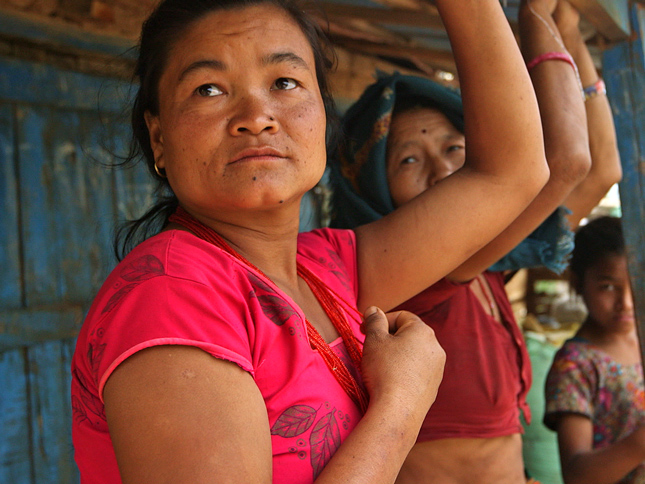
    Scaling-Mountain_girl

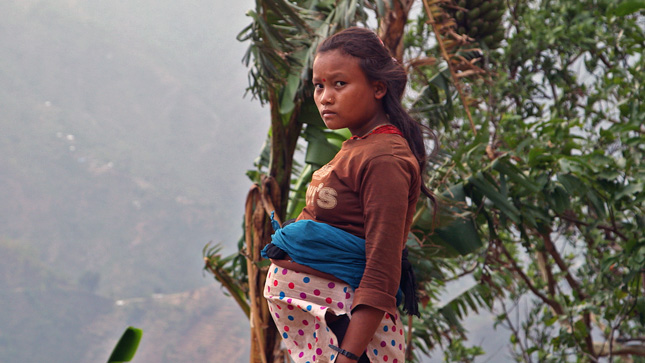
    In an era defined by climate change and other disruptions, “resilience” – the capacity to survive and thrive in times of crisis and change – is increasingly essential.

    MORE
  • The Future of Population Funding in the U.S.: Mixed Prospects for Foundation Support

    ›
    May 12, 2014  //  By Laurie Mazur
    Funding_small

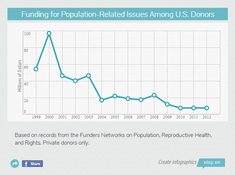
    World population continues its steady climb, surpassing 7 billion in 2011 and heading to somewhere between 8 and 11 billion by midcentury. But funding to address population-related issues is moving in the opposite direction.

    MORE
  • Lisa Meadowcroft on Integrating Water and Sanitation With Maternal Health Goals in Kenya

    ›
    Dot-Mom  //  Friday Podcasts  //  May 9, 2014  //  By Donald Borenstein
    Meadowcroft_small

    In sub-Saharan Africa, women collectively spend an estimated 40 billion hours a year gathering water, often walking miles to the nearest source, which may not be clean, and braving exhaustion, harassment, and worse along the way. Water availability and quality at health clinics is often not much better, creating a crisis for women, especially pregnant women, throughout the continent. A mutual solution lies in better coordination between efforts to improve water, sanitation, and hygiene (WASH) and maternal health, says the African Medical and Research Foundation’s Lisa Meadowcroft in this week’s podcast.

    MORE
Newer Posts   Older Posts
View full site

Join the Conversation

  • RSS
  • subscribe
  • facebook
  • G+
  • twitter
  • iTunes
  • podomatic
  • youtube
Tweets by NewSecurityBeat

Trending Stories

  • unfccclogo1
  • Pop at COP: Population and Family Planning at the UN Climate Negotiations

Featured Media

Backdraft Podcast

play Backdraft
Podcasts

More »

What You're Saying

  • Volunteers,At,The,Lagos,Food,Bank,Initiative,Outreach,To,Ikotun, Pan-African Response to COVID-19: New Forms of Environmental Peacebuilding Emerge
    Rashida Salifu: Great piece 👍🏾 Africa as a continent has suffered this unfortunate pandemic.But it has also...
  • A desert road near Kuqa An Unholy Trinity: Xinjiang’s Unhealthy Relationship With Coal, Water, and the Quest for Development
    Ismail: It is more historically accurate to refer to Xinjiang as East Turkistan.
  • shutterstock_1779654803 Leverage COVID-19 Data Collection Networks for Environmental Peacebuilding
    Carsten Pran: Thanks for reading! It will be interesting to see how society adapts to droves of new information in...

What We’re Reading

  • Rising rates of food instability in Latin America threaten women and Venezuelan migrants
  • Treetop sensors help Indonesia eavesdrop on forests to cut logging
  • 'Seat at the table': Women's land rights seen as key to climate fight
  • A Surprise in Africa: Air Pollution Falls as Economies Rise
  • Himalayan glacier disaster highlights climate change risks
More »
  • woodrow
  • ecsp
  • RSS Feed
  • YouTube
  • Twitter
  • Facebook
  • Home
  • Who We Are
  • Publications
  • Events
  • Wilson Center
  • Contact Us
  • Print Friendly Page

© Copyright 2007-2021. Environmental Change and Security Program.

Woodrow Wilson International Center for Scholars. All rights reserved.

Developed by Vico Rock Media

Environmental Change and Security Program

Woodrow Wilson International Center for Scholars

Ronald Reagan Building and International Trade Center

  • One Woodrow Wilson Plaza
  • 1300 Pennsylvania Ave., NW
  • Washington, DC 20004-3027

T 202-691-4000