• woodrow wilson center
  • ecsp

New Security Beat

Subscribe:
  • rss
  • mail-to
  • Who We Are
  • Topics
    • Population
    • Environment
    • Security
    • Health
    • Development
  • Columns
    • China Environment Forum
    • Choke Point
    • Dot-Mom
    • Friday Podcasts
    • Navigating the Poles
    • Reading Radar
  • Multimedia
    • Water Stories (Podcast Series)
    • Backdraft (Podcast Series)
    • Tracking the Energy Titans (Interactive)
  • Films
    • Water, Conflict, and Peacebuilding (Animated Short)
    • Paving the Way (Ethiopia)
    • Broken Landscape (India)
    • Scaling the Mountain (Nepal)
    • Healthy People, Healthy Environment (Tanzania)
  • Publications
  • Events
  • Contact Us

NewSecurityBeat

The blog of the Wilson Center's Environmental Change and Security Program
Showing posts from category oil.

  • “Greening” the Military An Issue at Chuck Hagel Hearings?

    ›
    February 1, 2013  //  By Schuyler Null

    ECSP Senior Advisor and Ohio University Professor Geoff Dabelko appeared on Marketplace yesterday to comment on Defense Secretary Nominee Chuck Hagel’s confirmation hearings and whether the Pentagon’s pursuit of renewable energy and other “green” technologies might enter the discussion.

    MORE
  • Michael Klare on the Race for What’s Left

    ›
    Eye On  //  September 27, 2012  //  By Carolyn Lamere

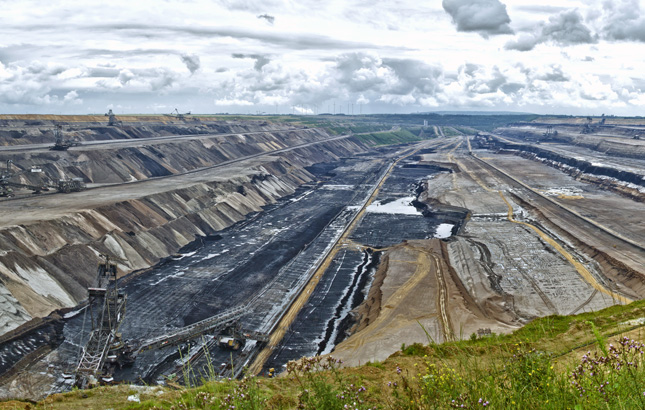
    Around the world, as the most easily accessible natural resources are depleted, states are beginning to turn to more remote reserves to meet their needs and the shift may spark international tensions or even conflict, said Hampshire College professor Michael Klare in a recent interview with ECSP. “I worry very much about this growing global competition for the remaining resources in those parts of the world,” he said.

    MORE
  • Regulating the Resource Curse: U.S. Adopts International Transparency Rules for Oil Industry

    ›
    Guest Contributor  //  September 10, 2012  //  By Jeff Colgan

    The original version of this article appeared on Foreign Policy.

    It’s not often that a change in accounting rules could reduce the probability of war. But that’s exactly what happened at the U.S. Securities and Exchange Commission (SEC) last month.

    MORE
  • Emmanuel Karagiannis: Mediterranean Oil and Gas Discoveries Could Change Regional Alignments, Global Energy Equation

    ›
    Eye On  //  From the Wilson Center  //  August 6, 2012  //  By Keenan Dillard

    “The discovery of gas reserves in the eastern Mediterranean comes at a time when world demand for energy is growing rapidly and many are questioning the reliability of supplies from North Africa and the Middle East,” said Emmanuel Karagiannis, assistant professor of Russian and post-Soviet politics at the University of Macedonia, in an interview at the Wilson Center.

    The newly-discovered fields contain about 122 trillion cubic feet of recoverable natural gas reserves, 25 trillion of which are located within Israeli territorial waters. “That’s twice the reserves Libya has,” according to Karagiannis. The remaining fields have been claimed by the Republic of Cyprus, the Turkish Republic of Northern Cyprus, Syria, and Lebanon.

    Europe currently depends on Russia for most of its gas supplies, so the new fields could provide an “important alternative source for European economies,” said Karagiannis.

    The discovery also has the potential to increase stability in the region by serving as an incentive for nations to work together. “For example, Israel and Cyprus have come closer to each other in many respects, including military cooperation,” Karagiannis said. Greece and Israel have also strengthened their relationship, in part due to the historical relationship between Cyprus and Greece but also because the latter could serve as an energy hub to transport gas throughout Europe, he said. “In effect Israel, Greece, and Cyprus could form a new axis of stability in the region.”

    “Turkey can also play a significant part in the business of transporting energy resources to Europe,” Karagiannis said, but Syria and Lebanon, the two other countries that lie adjacent to the newly discovered gas reserves, are less likely to benefit in the near future from the find, given their current political circumstances. “It’s very difficult to imagine their participation in the regional energy projects,” he said. Lebanon has tried and failed to sell offshore exploratory licenses twice due to its lack of a state petroleum administration, while the current uprising against President Bashar al-Assad is preventing any progress in Syria.

    In part as a result of these political challenges, the gas fields also have the potential to generate conflict in the region. There will be a divide between “haves and have-nots,” explained Karagiannis. According to a report by the Institute for National Strategic Studies, “piping Israeli gas to the RoC [Republic of Cyprus] and then onto Turkey, which could be the gateway to the European market, is unlikely due to current tensions between Ankara, the RoC, and Tel Aviv.” Since the discovery of the fields, “Turkey has already issued military threats against Cyprus in order to stop the gas exploration process that is currently taking place in the Cypriot Exclusive Economic Zone,” Karagiannis said. The Israeli government issued a response to the threat, stating that they are committed to protecting energy infrastructure in the region.

    The first new natural gas field in the region is expected to begin full-scale production this year, with two additional fields coming on-line over the next six years.

    Keenan Dillard is a cadet at the United States Military Academy at West Point and an intern with the Woodrow Wilson Center’s Environmental Change and Security Program.

    Sources: Institute for National Strategic Studies, Noble Energy Inc., Turkish Weekly, U.S. Geological Survey.
    MORE
  • Kirk Talbott, State of the Planet

    Burma at a Crossroads for Peacebuilding and Natural Resource Governance

    ›
    June 18, 2012  //  By Wilson Center Staff
    The original version of this article, by Kirk Talbott, appeared on the Columbia University Earth Institute’s State of the Planet blog.

    After a half-century of authoritarian rule, armed conflict against millions of ethnic minorities, and natural resource plunder, Burma, also known as Myanmar, now stands at a crossroads. As conditions for peace coalesce and civil society begins to blossom, there is hope once more for Burma’s people.

    Burma’s quasi-civilian government, led by reformist Thein Sein, has initiated a series of surprising political openings and continues to engage actively with Nobel laureate Aung San Suu Kyi, now a member of parliament. Civil society and international relations are flourishing in contrast to conditions just one year ago. In May, the United States suspended economic sanctions and President Obama appointed a U.S. Ambassador for the first time in decades.

    A new set of challenges emerge, however, around sharing the benefits and responsibilities of governing the country’s diverse wealth of natural resources. Nestled strategically between China and India, Burma has been isolated from the world’s attention since a coup in 1962. Its military government has consolidated a brutal grip on power through the sale of its rich timber, mineral, natural gas, and other resources, primarily to China and Thailand. This practice expanded after 1995, when the regime brokered a series of cease fire agreements with several ethnic armies along mountainous border areas. (For the first time in 60 years the Karen National Union joined almost all other major ethnic armies in agreeing to a cease fire, with the notable exception of the Kachin Independence Army.)

    Oil and gas revenues fund the Tatmadaw, Burma’s half-million-strong army, one of Asia’s largest. Currently the huge offshore Shwe and Yadana natural gas reserves provide more than 90 percent of the nation’s foreign exchange. Chinese and Thai companies fund extensive pipeline, hydro-power, and transport networks as Burma becomes a potential regional economic corridor and natural resources production hub. China looms large in the geo-political equation investing over $12 billion in Burma in 2011.

    Continue reading on State of the Planet.

    Image Credit: Shwe gas line map, courtesy of Shwe Gas Movement.
    MORE
  • Re-Thinking Price Shocks and Conflict?

    ›
    Reading Radar  //  June 11, 2012  //  By Carolyn Lamere
    “Conflict, Food Price Shocks, and Food Insecurity: The Experience of Afghan Households,” a paper prepared for presentation at the Agricultural and Applied Economics Association’s annual meeting, examines the relationship between conflict and food prices, using Afghanistan during the 2008 global food crisis as a case study. By examining per capita food intake, numbers of fatalities and injuries, and the number of violent incidents in a given area, authors Anna D’Souza and Dean Jolliffe, of the U.S. Department of Agriculture and World Bank, respectively, determine that “at least in the case of Afghanistan, conflict does not seem to be the predominant driver of food insecurity.” Instead, inhabitants of conflict-prone regions, namely southern Afghanistan, consume more food, on the whole, than their northern compatriots. Residents of conflict areas do seem to be more affected by major food price increases, however these are fairly uncommon. D’Souza and Jolliffe speculate that this may be due to “interruptions in market access, inability to trade and barter, and worse food production and distribution systems.” These findings may be somewhat counterintuitive, but are an important resource for those seeking to reduce food insecurity in both conflict-prone and peaceful regions.

    In a working paper for the Center of Global Development, Samuel Bazzi and Christopher Blattman upend much of the established thinking on the relationship between commodity prices and conflict onset. Past researchers have found that lower prices of agricultural commodities lead to conflict as civilians have less to lose by rebelling against the government, and higher prices of resources like oil and minerals can lead to conflict as rebel groups have greater incentive to seize control. Contrary to these explanations, however, Bazzi and Blattman find “no evidence of a consistent, robust relationship between commodity price shocks and political instability.” Even when examining states with higher risks of conflict, like those which are particularly fragile, ethnically polarized, economically unequal, especially poor, and/or located in sub-Saharan Africa, they find no correlation between price shocks and conflict. The only evidence of a relationship they find is that rising prices lead to rising incomes, which can hasten the end of a conflict, but even this correlation is weak and varies from state to state. Though currently only a working paper, Bazzi and Blattman’s research provides an intriguing counter-narrative: “We argue that errors and publication bias have likely distorted the theoretical and empirical literature on political instability,” they write.
    MORE
  • Stacy VanDeveer: Will Using Less Oil Affect Petrostate Stability?

    ›
    July 12, 2010  //  By Schuyler Null

    If we were to actually use less fossil fuel, what would happen to today’s petrostates? “If the oil revenues dry up or even decline a little bit you might have a real serious crisis,” said Stacy VanDeveer of the University of New Hampshire, during an interview with ECSP. We spoke to VanDeveer following his presentation at the Wilson Center event, “Backdraft: The Conflict Potential of Climate Mitigation and Adaptation.”

    MORE
  • Backdraft: The Conflict Potential of Climate Mitigation and Adaptation

    ›
    From the Wilson Center  //  June 24, 2010  //  By Dan Asin

    The European Union’s biofuel goal for 2020 “is a good example of setting a target…without really thinking through [the] secondary, third, or fourth order consequences,” said Alexander Carius, co-founder and managing director of Adelphi Research and Adelphi Consult. While the 2007-2008 global food crisis demonstrated that the growth of crops for fuels has “tremendous effects” in the developing world, analysis of these threats are underdeveloped and are not incorporated into climate change policies, he said. [Video Below]

    MORE
Newer Posts  
View full site

Join the Conversation

  • RSS
  • subscribe
  • facebook
  • G+
  • twitter
  • iTunes
  • podomatic
  • youtube
Tweets by NewSecurityBeat

Trending Stories

  • unfccclogo1
  • Pop at COP: Population and Family Planning at the UN Climate Negotiations

Featured Media

Backdraft Podcast

play Backdraft
Podcasts

More »

What You're Saying

  • Volunteers,At,The,Lagos,Food,Bank,Initiative,Outreach,To,Ikotun, Pan-African Response to COVID-19: New Forms of Environmental Peacebuilding Emerge
    Rashida Salifu: Great piece 👍🏾 Africa as a continent has suffered this unfortunate pandemic.But it has also...
  • A desert road near Kuqa An Unholy Trinity: Xinjiang’s Unhealthy Relationship With Coal, Water, and the Quest for Development
    Ismail: It is more historically accurate to refer to Xinjiang as East Turkistan.
  • shutterstock_1779654803 Leverage COVID-19 Data Collection Networks for Environmental Peacebuilding
    Carsten Pran: Thanks for reading! It will be interesting to see how society adapts to droves of new information in...

What We’re Reading

  • Rising rates of food instability in Latin America threaten women and Venezuelan migrants
  • Treetop sensors help Indonesia eavesdrop on forests to cut logging
  • 'Seat at the table': Women's land rights seen as key to climate fight
  • A Surprise in Africa: Air Pollution Falls as Economies Rise
  • Himalayan glacier disaster highlights climate change risks
More »
  • woodrow
  • ecsp
  • RSS Feed
  • YouTube
  • Twitter
  • Facebook
  • Home
  • Who We Are
  • Publications
  • Events
  • Wilson Center
  • Contact Us
  • Print Friendly Page

© Copyright 2007-2021. Environmental Change and Security Program.

Woodrow Wilson International Center for Scholars. All rights reserved.

Developed by Vico Rock Media

Environmental Change and Security Program

Woodrow Wilson International Center for Scholars

Ronald Reagan Building and International Trade Center

  • One Woodrow Wilson Plaza
  • 1300 Pennsylvania Ave., NW
  • Washington, DC 20004-3027

T 202-691-4000