• woodrow wilson center
  • ecsp

New Security Beat

Subscribe:
  • rss
  • mail-to
  • Who We Are
  • Topics
    • Population
    • Environment
    • Security
    • Health
    • Development
  • Columns
    • China Environment Forum
    • Choke Point
    • Dot-Mom
    • Friday Podcasts
    • Navigating the Poles
    • Reading Radar
  • Multimedia
    • Water Stories (Podcast Series)
    • Backdraft (Podcast Series)
    • Tracking the Energy Titans (Interactive)
  • Films
    • Water, Conflict, and Peacebuilding (Animated Short)
    • Paving the Way (Ethiopia)
    • Broken Landscape (India)
    • Scaling the Mountain (Nepal)
    • Healthy People, Healthy Environment (Tanzania)
  • Publications
  • Events
  • Contact Us

NewSecurityBeat

The blog of the Wilson Center's Environmental Change and Security Program
Showing posts from category oceans.
  • On Building a Better (and More Resilient) World: Complexity, Community, and the Precautionary Principle

    ›
    April 3, 2013  //  By Laurie Mazur

    ‘Toward Resilience’ is a series on the meaning of global resilience and vulnerability today.

    From the 2004 Indian Ocean tsunami to Superstorm Sandy, the last decade has seen an incredible array of natural disasters. Of course, disasters of all kinds are nothing new, but, thanks to the growing scale and interconnectedness of the human enterprise – and the damage we have done to the natural world – the frequency, scale, and consequences of today’s calamities are truly without precedent.

    MORE
  • Stewart M. Patrick, The Internationalist

    Environmental Security Goes Mainstream: Natural Resources and National Interests

    ›
    March 29, 2013  //  By Wilson Center Staff

    The original version of this article, by Stewart M. Patrick, appeared on the Council on Foreign Relations’ The Internationalist blog.

    Not long ago, concerns about environmental degradation were marginal in U.S. national security deliberations. What a difference climate change has made. Foreign policy officials and experts are starting to recognize profound linkages between planetary health, economic prosperity, and international security. These connections were on full view last Wednesday, when the Council on Foreign Relations (CFR) teamed up with Conservation International (CI) to convene a symposium, “Global Resources, the U.S. Economy, and National Security.”

    MORE
  • After Cyclone Haruna, Blue Ventures Leverages Its PHE Program for Disaster Response in Madagascar

    ›
    Beat on the Ground  //  Guest Contributor  //  March 28, 2013  //  By Laura Robson

    ‘Toward Resilience’ is a series on the meaning of global resilience and vulnerability today.

    Balbine is moving through her coastal village of Andavadoaka with a sense of urgency. Normally she works as a community-based distributor for Blue Ventures’ integrated population, health, and environment (PHE) program in southwest Madagascar, providing health information and products to her community. However, since Cyclone Haruna swept through the region several weeks ago, Balbine has been especially busy distributing diarrhea treatment kits to mothers caring for sick infants, providing families sleeping out in the open with mosquito nets to protect against malaria, setting up water filtering stations, and emphasizing the importance good hygiene practices.

    MORE
  • Making ‘Healthy People, Healthy Environment’: A Look Inside Integrated Development

    ›
    From the Wilson Center  //  March 27, 2013  //  By Carolyn Lamere

    “We need dynamic approaches. We can’t just keep going with the single sector approach and hoping that a conservation project will do really more than it’s intended to do,” said ECSP’s Multimedia Editor Sean Peoples in an interview with Dialogue at the Wilson Center. “These people are living integrated lives. How can we have integrated solutions for them?”

    MORE
  • UNEP Highlights Environmental Impacts on Health in Africa

    ›
    March 20, 2013  //  By Carolyn Lamere

    While it can be convenient to think of human health and the environment as unrelated silos, they are in fact closely related. The United Nations Environment Program (UNEP) recently released a report underscoring this point especially for Africa, where large numbers of people are directly reliant on natural resources for their livelihoods.

    MORE
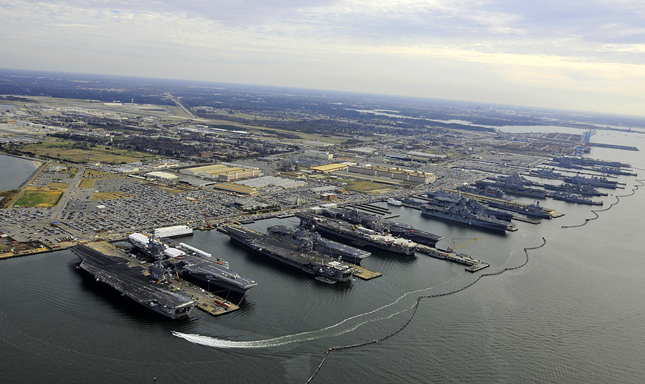
  • East Asia’s Many Maritime Disputes and the Imperative of Energy Access

    ›
    Eye On  //  March 19, 2013  //  By Schuyler Null

    Friction between Japan and China in the East China Sea has escalated this year to the point where jets on both sides have been scrambled and Chinese military vessels have locked their fire control radar onto their Japanese counterparts multiple times. The source of this tension is the Senkaku (as they are known in Japan) or Diaoyu (if you’re in China) Islands – specifically, who owns them.

    MORE
  • Avoiding the Resource Curse in East Africa’s Oil and Natural Gas Boom

    ›
    Guest Contributor  //  February 14, 2013  //  By Jill Shankleman

    This year, Texas-based Anadarko and Italian partner ENI are due to make the final investment decision on whether to construct one of the largest liquefied natural gas facilities in the world in Mozambique. The complex would allow them to tap into deep off-shore gas fields that could rival Australia and Qatar as the largest liquefied natural gas reserves in the world.

    MORE
  • Sam Eaton on Food Security, Family Size, and Family Planning in the Philippines

    ›
    February 13, 2013  //  By Graham Norwood

    “We chose the Philippines because we really wanted to do a story that looked at population growth,” reporter Sam Eaton says of his two-part contribution to the Food for Nine Billion project, which aired last year on PBS’ NewsHour and American Public Media’s Marketplace. Eaton recently visited the Wilson Center to discuss his experiences in the Philippines, describing the heavy toll overcrowding and poor resource management is taking on the country’s ecosystems and highlighting how access to family planning may hold the key to a better future.

    MORE
Newer Posts   Older Posts
View full site

Join the Conversation

  • RSS
  • subscribe
  • facebook
  • G+
  • twitter
  • iTunes
  • podomatic
  • youtube
Tweets by NewSecurityBeat

Trending Stories

  • unfccclogo1
  • Pop at COP: Population and Family Planning at the UN Climate Negotiations

Featured Media

Backdraft Podcast

play Backdraft
Podcasts

More »

What You're Saying

  • Volunteers,At,The,Lagos,Food,Bank,Initiative,Outreach,To,Ikotun, Pan-African Response to COVID-19: New Forms of Environmental Peacebuilding Emerge
    Rashida Salifu: Great piece 👍🏾 Africa as a continent has suffered this unfortunate pandemic.But it has also...
  • A desert road near Kuqa An Unholy Trinity: Xinjiang’s Unhealthy Relationship With Coal, Water, and the Quest for Development
    Ismail: It is more historically accurate to refer to Xinjiang as East Turkistan.
  • shutterstock_1779654803 Leverage COVID-19 Data Collection Networks for Environmental Peacebuilding
    Carsten Pran: Thanks for reading! It will be interesting to see how society adapts to droves of new information in...

What We’re Reading

  • Rising rates of food instability in Latin America threaten women and Venezuelan migrants
  • Treetop sensors help Indonesia eavesdrop on forests to cut logging
  • 'Seat at the table': Women's land rights seen as key to climate fight
  • A Surprise in Africa: Air Pollution Falls as Economies Rise
  • Himalayan glacier disaster highlights climate change risks
More »
  • woodrow
  • ecsp
  • RSS Feed
  • YouTube
  • Twitter
  • Facebook
  • Home
  • Who We Are
  • Publications
  • Events
  • Wilson Center
  • Contact Us
  • Print Friendly Page

© Copyright 2007-2021. Environmental Change and Security Program.

Woodrow Wilson International Center for Scholars. All rights reserved.

Developed by Vico Rock Media

Environmental Change and Security Program

Woodrow Wilson International Center for Scholars

Ronald Reagan Building and International Trade Center

  • One Woodrow Wilson Plaza
  • 1300 Pennsylvania Ave., NW
  • Washington, DC 20004-3027

T 202-691-4000