-
Natural Gas and Albacore: What Tuna Says About the Future of Mozambique
›January 13, 2014 // By Laura Henson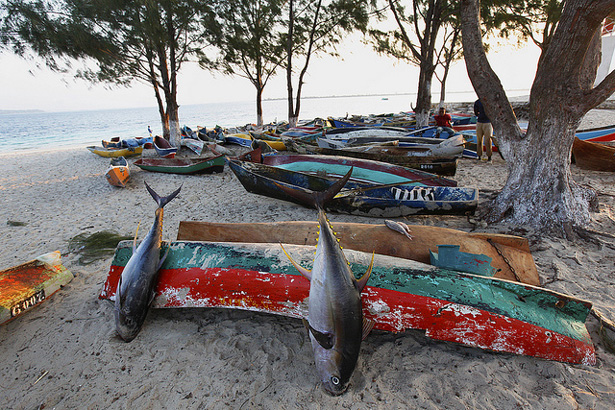
A 20-year peace accord between Mozambique’s two major political parties was brought to an abrupt end last fall. A series of violent skirmishes between FRELIMO and RENAMO resulted in at least 10 deaths, dozens injured, and fears that the country might relapse into the kind of political violence seen during its civil war, which left more than a million dead. RENAMO claims its frustrations stem from a fraudulent electoral system and social inequality, but some observers have suggested their motivations may be less benevolent: making sure they get their piece of the country’s newfound natural gas wealth.
-
Vik Mohan: Madagascar’s Cyclone Haruna Showed Benefits of Integrated Development
›December 10, 2013 // By Jacob GlassWhen Cyclone Haruna swept across Madagascar last February, Blue Ventures, a marine conservation and community health organization, found themselves in a surprising new role. “We went from development, to aid, and back to development, in an integrated way we never expected,” said Medical Director Vik Mohan in an interview at the Wilson Center.
-
Laura Robson and Caroline Savitzky, Blue Ventures
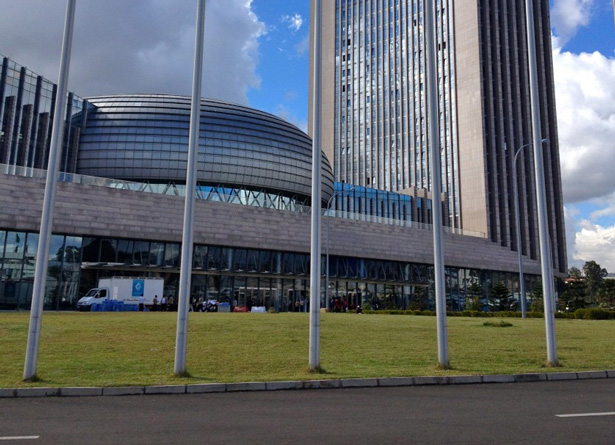
PHE Is Alive and Kicking: Inspiration and Endorsement From Addis Ababa
›December 4, 2013 // By Wilson Center Staff
The original version of this article, by Laura Robson and Caroline Savitzky, appeared on Blue Ventures’ Beyond Conservation blog.
The excitement was palpable as we gathered with almost 200 of the world’s finest population-health-environment (PHE) practitioners, researchers, and advocates in Addis Ababa for the International PHE Conference earlier last month! With all of us working on integrated projects encompassing family planning, community health, sustainable livelihoods, and environmental initiatives, there were many ideas and progress updates to be shared.
-
Anthropocene Visualized: Video Summarizes Key Findings of IPCC Fifth Assessment Report
›“Humanity is altering Earth’s life support system. Carbon dioxide emissions are accelerating; greenhouse gas levels are unprecedented in human history,” says a new video summarizing some of the most striking finds of the Intergovernmental Panel on Climate Change’s latest report. The climate system is changing rapidly, and it is “extremely likely,” the video quotes the IPCC, that humans are the central reason why.
-
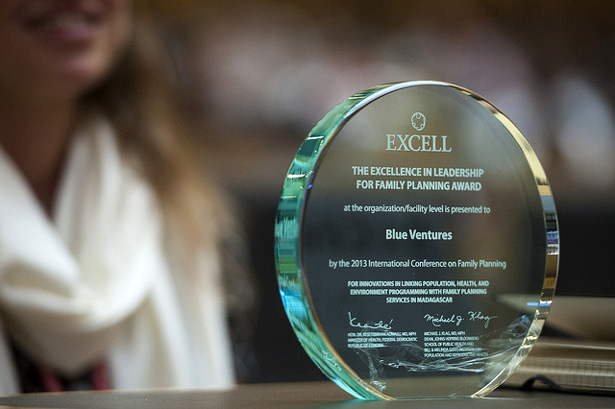
Population-Environment Program Wins Recognition: Blue Ventures Honored at International Conference on Family Planning
›This year’s International Conference on Family Planning (ICFP) happened to coincide with the UN’s annual climate change summit. Perhaps it’s apt then that one of the organizations recognized for excellence is helping to bridge the gap between the environment and family planning communities.
-
Crowded Out: New Evidence Points to Population Growth as Key Driver of Biodiversity Loss
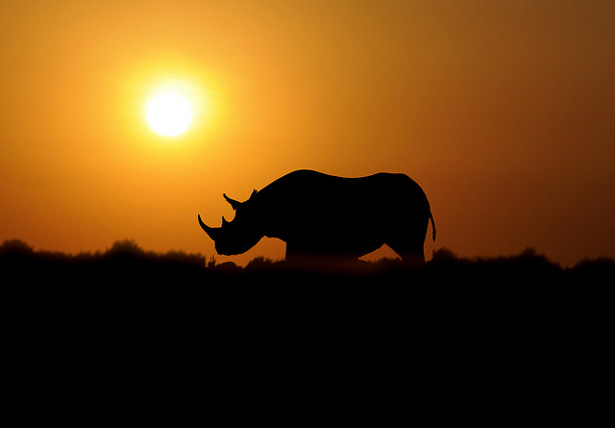
›November 12, 2013 // By Kathleen MogelgaardIn 2009, economist Jeffrey Sachs, alongside more than 20 eminent scholars from different fields, highlighted the importance of biodiversity for human well-being in a policy commentary published in Science. They noted the Millennium Development Goals (MDGs) included a target to achieve, by 2010, a significant reduction in the rate of species loss, and they also noted that it was one of the MDG targets that was most off-track. “Our lack of progress toward the 2010 target,” they said, “could undermine achievement of the MDGs and poverty reduction in the long term.” The 2010 target was missed, and today species are moving toward extinction at an ever faster pace. Last week’s announcement confirming the extinction of Africa’s western black rhino is the latest sad example of this trend.
-
Curbing China’s Massive – and Destructive – Distant Water Fishing Fleet
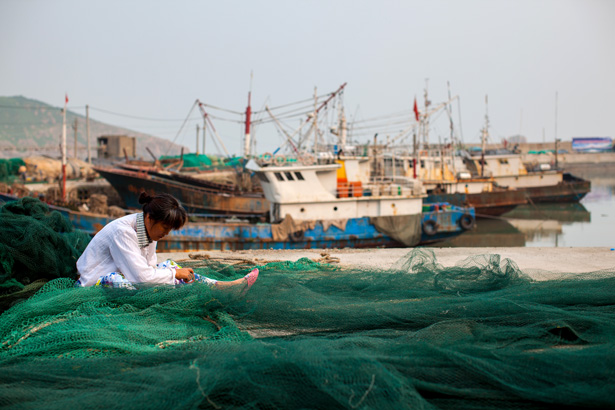
›Last month, two Chinese fishing boats were caught operating illegally in South Korean waters. The incident made local headlines and minor diplomatic waves, but it’s just a drop in the bucket in what has become a troubling trend for China’s foreign water fishing fleets. Over the last decade, there have been more than 4,600 cases of Chinese fishing boats being caught illegally in South Korea’s waters alone, according to the government, and these marine transgressions have not been limited to neighbors.
-
In Urban Planning for Climate Change, Pay Attention to Population Dynamics & Smaller Cities, Says Daniel Schensul
›
When it comes to coping with the effects of climate change, cities will be a crucial proving ground for adaptation efforts. Over the next few decades, the percentage of the world’s population living in urban areas is projected to increase to 67 percent – 6.3 billion people by 2050, according to the UN. But because three-quarters of the world’s major cities are located on coastlines, the growing percentage of urban residents means more people will be vulnerable to environmental stressors such as sea level rise and storm surges.
Showing posts from category oceans.