• woodrow wilson center
  • ecsp

New Security Beat

Subscribe:
  • rss
  • mail-to
  • Who We Are
  • Topics
    • Population
    • Environment
    • Security
    • Health
    • Development
  • Columns
    • China Environment Forum
    • Choke Point
    • Dot-Mom
    • Friday Podcasts
    • Navigating the Poles
    • Reading Radar
  • Multimedia
    • Water Stories (Podcast Series)
    • Backdraft (Podcast Series)
    • Tracking the Energy Titans (Interactive)
  • Films
    • Water, Conflict, and Peacebuilding (Animated Short)
    • Paving the Way (Ethiopia)
    • Broken Landscape (India)
    • Scaling the Mountain (Nepal)
    • Healthy People, Healthy Environment (Tanzania)
  • Publications
  • Events
  • Contact Us

NewSecurityBeat

The blog of the Wilson Center's Environmental Change and Security Program
Showing posts from category newborn and child health.
  • No Mother Left Behind: How Conflict Exacerbates the Global Maternal Health Challenge

    ›
    Dot-Mom  //  November 7, 2016  //  By Nancy Chong
    AMISOM-clinic

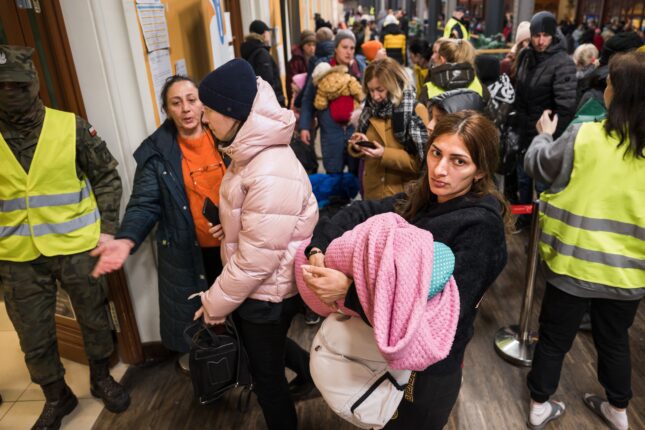
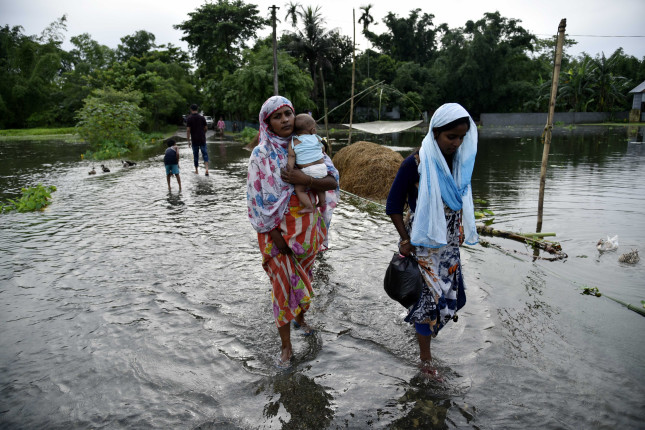
    Since the end of World War II, the number of wars between states has declined significantly, but the number of intrastate civil conflicts – as seen in Syria and Afghanistan – has increased.

    MORE
  • After Mexico City and Before Copenhagen: Keeping Our Promise to Mothers and Newborns

    ›
    Dot-Mom  //  From the Wilson Center  //  May 3, 2016  //  By Haodan "Heather" Chen
    mother and child

    Last October, on the heels of the UN General Assembly agreeing to the Sustainable Development Goals, the global health community met in Mexico City to discuss strategy for achieving the “grand convergence”: finally bridging the gap between maternal and newborn health in rich and poor countries. [Video Below]

    MORE
  • Mariam Claeson: Quality, Not Quantity of Care for Maternal and Child Health

    ›
    Dot-Mom  //  Friday Podcasts  //  April 29, 2016  //  By Sean Peoples

    Claeson-small“It’s not about counting how many times a mother interacts with antenatal services or comes to the facility,” says Dr. Mariam Claeson, the director of maternal newborn and child health at the Bill and Melinda Gates Foundation, in this week’s podcast. “But it’s what happens in these encounters that matters.”

    MORE
  • How Zika Is Shaping the Sexual and Reproductive Health and Rights Agenda

    ›
    Dot-Mom  //  From the Wilson Center  //  April 27, 2016  //  By Francesca Cameron
    zika handout

    “The Zika outbreak is a result of something; it is the result of the lost attention to sexual and reproductive health issues as a human right and women as subjects of rights,” said Jaime Nadal Roig, the United Nations Population Fund representative to Brazil, at the Wilson Center on April 12. [Video Below]

    MORE
  • Pakistan’s Maternal and Child Health Problems “Huge Stumbling Block” to Development, Long-Term Security

    ›
    Dot-Mom  //  From the Wilson Center  //  September 21, 2015  //  By Schuyler Null

    In the long term, improving maternal and child health is as critical to national security as any problem in Pakistan today, said a panel of experts including Minister of National Health Services Saira Afzal Tarar at the Wilson Center on September 9.

    MORE
  • Overcoming Malnutrition Key to Maternal and Child Health Improvements, Says Dr. Ranu Dhillon

    ›
    Dot-Mom  //  Friday Podcasts  //  August 29, 2014  //  By Sarah Meyerhoff
    Ranu_small

    With less than 500 days until they expire, it’s almost certain that the Millennium Development Goals on child mortality and maternal health will be missed by many countries. Already, work on drafting the MDG successors has begun; but unless policymakers put nutrition at the center of maternal and child health systems, reducing global maternal and child mortality ratios by an appreciable amount will be difficult, says Dr. Ranu Dhillon in this week’s podcast.

    MORE
  • The Intergenerational Cycle of Malnutrition: How Gender and Social Status Doom Many Mothers and Newborns

    ›
    Dot-Mom  //  From the Wilson Center  //  August 13, 2014  //  By Sarah Meyerhoff
    Infant Survival Unit in Indian Hospital

    When Dr. Ranu Dhillon stumbled upon baby Reena during a routine visit to a clinic in India, she was almost comatose and unable to get the care she needed. Dhillon traveled with Reena and her mother from hospital to hospital, but left again and again without finding treatment. [Video Below] 

    MORE
  • Improving Monitoring, Transparency, and Accountability for Maternal, Newborn, and Child Health

    ›
    Dot-Mom  //  September 15, 2010  //  By Wilson Center Staff
    “There is a knowledge gap between global targets and locally owned goals,” said Sallie Craig Huber, global lead for results management at Management Sciences for Health (MSH). The seventh meeting of the “Advancing Policy Dialogue on Maternal Health” series – cosponsored by the Global Health Council, MSH, and PATH – comes at a critical time as world leaders meet next week at the high-level, plenary UN Summit to review progress toward the Millennium Development Goals (MDGs).

    Panelists Marge Koblinsky, senior technical advisor, John Snow Inc., Ellen Starbird, deputy director, U.S. Agency for International Development, and Monique Widyono, program officer of PATH, discussed strategies for improving maternal health evaluation methods while balancing the interests of donors and beneficiaries.

    Maternal Health Indicators: Contact vs. Context

    “Skilled birth attendants [have] become the strategy [for improving maternal mortality rates], but one size does not fit all,” said Koblinsky. The proportion of births attended by skilled birth attendants is a key maternal health indicator; however, it is not sufficient and says little about what the attendants actually did during the birth.

    Koblinsky demonstrated how other indicators such as near-miss morbidity, rates of cesarean section, and contraceptive prevalence rates (CPR) are better aligned with maternal mortality outcomes. “CPR is much more closely linked with the outcome we desire as [contraception] reduces pregnancies for those at higher risk and reduces unwanted births and unsafe abortions,” said Koblinsky.

    “Are the present benchmarks enough?” asked Koblinsky. “The answer is no….Indicators based on contact with skilled birth attendants focuses attention on contact, not on the quality of care or event context.”

    Qualitative Data Is Necessary


    “When we talk about monitoring and evaluation, transparency and accountability, it’s really critical to engage [in a discussion] on how we gauge progress,” said Widyono. In the field, “collection of data varies widely and depends on the capacity of those collecting, aggregating, and analyzing the information,” said Widyono. Such inconsistencies demand increased investment in local research capacity and qualitative analysis.

    Such engagement also provides an opportunity for feedback. This “qualitative data helps to reinforce, illuminate, and deepen the understanding of what this quantitative data is showing on the ground,” said Widyono. Moving forward, policymakers, donors, and program managers will need to find a balance between these two sets of data and work together to galvanize action.

    “There is a lack of attention paid to developing local, sustainable research capacity,” said Widyono. “We have an obligation to build local research capacity and disseminate findings in collaboration with the people who are going to be affected by this data,” she said.

    Innovation and Research

    “We really need to think about monitoring and evaluation and research and innovation as a continuum,” said Starbird. “They reinforce each other and play different roles in helping us understand what makes programs work or why they are not working.”

    “We have a myriad of indicators that we expect people to monitor, collect data for, and report back to headquarters in a way that has not given countries and programs the freedom to be country-specific,” said Starbird. Therefore, “one of the goals is to minimize the reporting burden and better coordinate around indicator definition with other donors,” she said.

    In order to strengthen “M&E;” for maternal health, Starbird called for new indicators as well as new ways of thinking about data analysis. “Having a results framework is really important to do good monitoring and evaluation,” she said. Evaluating the relationship between inputs, outputs, outcomes, and impacts requires a wide range of data resources so we can “get under the numbers” and determine what needs to be improved, she said.

    “It’s really important to have realistic goals, otherwise it’s difficult to put programs into place and get where we want to go,” said Starbird. She said that MDG 5.B, which calls for universal access to reproductive health, “is great, but there’s never going to be universal access to reproductive health. If we really want to make progress we need to define something that is achievable and is something we can come together around.”

    In conclusion, it is necessary to provide “countries with the room to do what needs to be done locally, so we can better understand these concepts rather than imposing indicators on everybody,” said Starbird.
    MORE
Newer Posts  
View full site

Join the Conversation

  • RSS
  • subscribe
  • facebook
  • G+
  • twitter
  • iTunes
  • podomatic
  • youtube
Tweets by NewSecurityBeat

Trending Stories

  • unfccclogo1
  • Pop at COP: Population and Family Planning at the UN Climate Negotiations

Featured Media

Backdraft Podcast

play Backdraft
Podcasts

More »

What You're Saying

  • Volunteers,At,The,Lagos,Food,Bank,Initiative,Outreach,To,Ikotun, Pan-African Response to COVID-19: New Forms of Environmental Peacebuilding Emerge
    Rashida Salifu: Great piece 👍🏾 Africa as a continent has suffered this unfortunate pandemic.But it has also...
  • A desert road near Kuqa An Unholy Trinity: Xinjiang’s Unhealthy Relationship With Coal, Water, and the Quest for Development
    Ismail: It is more historically accurate to refer to Xinjiang as East Turkistan.
  • shutterstock_1779654803 Leverage COVID-19 Data Collection Networks for Environmental Peacebuilding
    Carsten Pran: Thanks for reading! It will be interesting to see how society adapts to droves of new information in...

What We’re Reading

  • Rising rates of food instability in Latin America threaten women and Venezuelan migrants
  • Treetop sensors help Indonesia eavesdrop on forests to cut logging
  • 'Seat at the table': Women's land rights seen as key to climate fight
  • A Surprise in Africa: Air Pollution Falls as Economies Rise
  • Himalayan glacier disaster highlights climate change risks
More »
  • woodrow
  • ecsp
  • RSS Feed
  • YouTube
  • Twitter
  • Facebook
  • Home
  • Who We Are
  • Publications
  • Events
  • Wilson Center
  • Contact Us
  • Print Friendly Page

© Copyright 2007-2021. Environmental Change and Security Program.

Woodrow Wilson International Center for Scholars. All rights reserved.

Developed by Vico Rock Media

Environmental Change and Security Program

Woodrow Wilson International Center for Scholars

Ronald Reagan Building and International Trade Center

  • One Woodrow Wilson Plaza
  • 1300 Pennsylvania Ave., NW
  • Washington, DC 20004-3027

T 202-691-4000