-
Chased by Drought, Rising Costs, and Clean Technology, India Pivots on Coal
›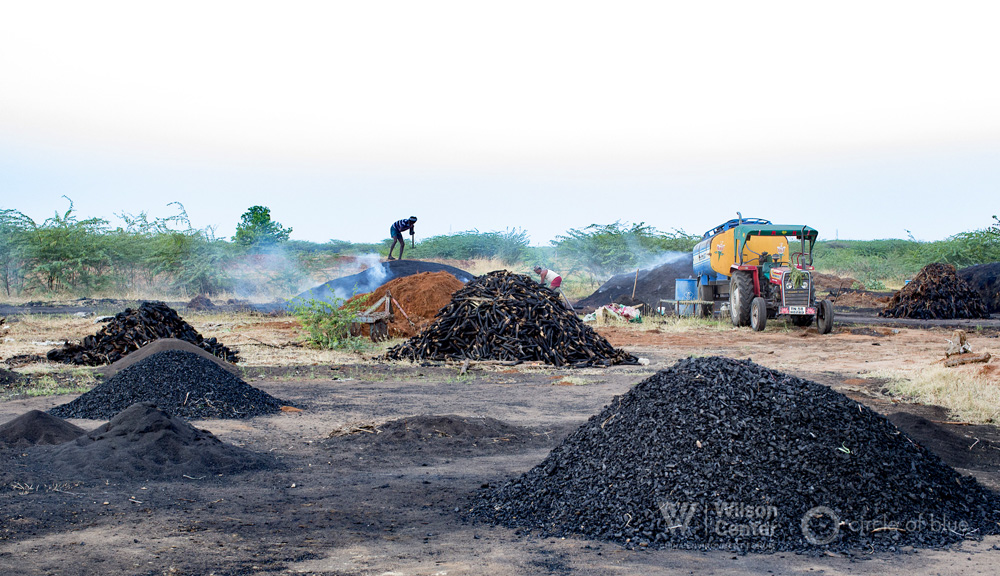
VILAMBUR, India – The mammoth coal-fired Cheyyur electrical station was first imagined by bankers at India’s Power Finance Corporation and senior engineers across town at the Central Electric Authority. That was in 2005, when the country was rich in fossil fuel resources and desperate for electric power. Though India mined more coal than almost any other country, endemic blackouts and brownouts enfeebled its economic prospects.
-
Backdraft #6: Jesse Ribot on Why It’s So Important for Climate Interventions to Work Through Local Democracy
› In a research project spanning more than two dozen case studies on environmental governance in 13 sub-Saharan African countries, Jesse Ribot, professor at the University of Illinois, and colleagues found that while many forest management projects claimed to be working with communities, they were in fact undermining local democracy in various ways.
 -
A Survey of the “War on Wildlife”: How Conflict Affects Conservation
›Over the last 60 years, more than two-thirds of the world’s remaining biodiversity hotspots have experienced armed conflict. The effects have been myriad, from destruction as a result of military tactics to indirect socioeconomic and political changes, like human migration and displacement. This so-called “war on wildlife” has important implications for conservation and peacebuilding efforts, according to a recent literature review published in Frontiers in Ecology and the Environment.
-
Can Demographic-Environmental Stress Contribute to Mass Atrocities? And the Future of Arctic Cooperation
›In a brief published by the Stanley Foundation, Cullen Hendrix explores how “the degradation and overexploitation of renewable sources…and unequal access to these resources” can make societies more or less susceptible to experiencing mass atrocities. Hendrix proposes that “demographic-environmental stress” is most likely to contribute to mass atrocities (genocide, war crimes, or crimes against humanity) in agricultural societies that have a high level of group identity-driven politics and economics, exclusionary political institutions, political actors that deprive certain groups, or when governments have low legitimacy. -
Breaking Down Water Security to Build it Up
›Water security remains an ambiguous concept with an uncharted path to achievement. Water is an essential resource to our survival and livelihoods, yet most countries lack a clear strategy for how to protect and manage it. With increasing rates and sources of consumption, a growing population, and shifting frequency and intensity of rates of precipitation, continued inaction will have serious impacts on our national security, economy, and environment.
-
In Ecuador, Indigenous Environmental Attitudes Affected by Proximity to Oil Extraction
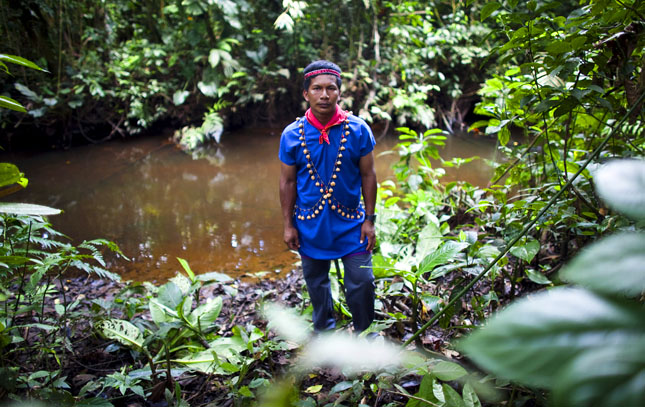
›True to essentialist stereotypes, Latin America’s indigenous peoples are the best stewards of the region’s rainforests. But the source of their enthusiasm for environmental protection is more complex than mere ascriptive traits or whether they speak native languages. What’s more, in a development that should be worrying to environmentalists, exposure to the negative effects of extractive industries appears to have a degrading effect on that enthusiasm.
-
Backdraft #5: Ken Conca on the Good, Bad, and Ugly of Water Conflict and Cooperation
›In international development, conflict is often used as shorthand for violent conflict, and avoiding conflict is considered a priority. But “it’s important to recognize that conflict is not always bad and cooperation is not always good,” says Ken Conca in this week’s episode of “Backdraft.” -
Advancing U.S. Prosperity and Security in a Thirsty World
›The waters of Lake Chad sustain 70 million people in four countries. Beginning in the 1970s, the 25,000-square-kilometer lake began shrinking due to excessive drawdown for agriculture and mining. Now only 10 percent remains. The dwindling water supply devastated food production and fostered massive economic and political tensions. Many experts credit the worsening conditions for contributing to the rise of Boko Haram, an extremist group that has killed 20,000 people and forced 2.3 million more to flee.
Showing posts from category natural resources.
 In a
In a 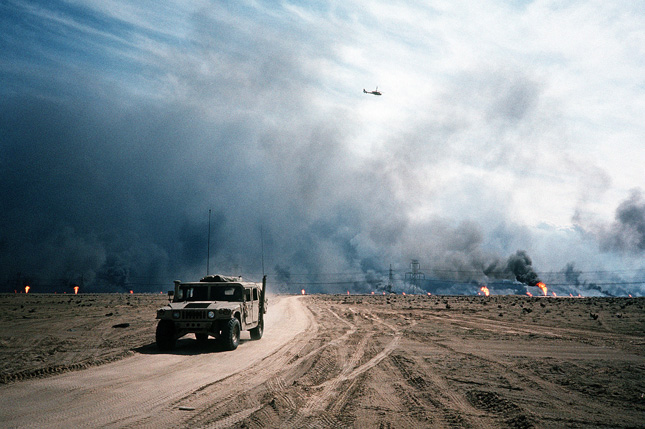

 In international development, conflict is often used as shorthand for violent conflict, and avoiding conflict is considered a priority. But “it’s important to recognize that conflict is not always bad and cooperation is not always good,” says Ken Conca in this week’s episode of “