

-
Cobalt is Critical to the Renewable Energy Transition. How Can We Minimize its Social And Environmental Cost?
›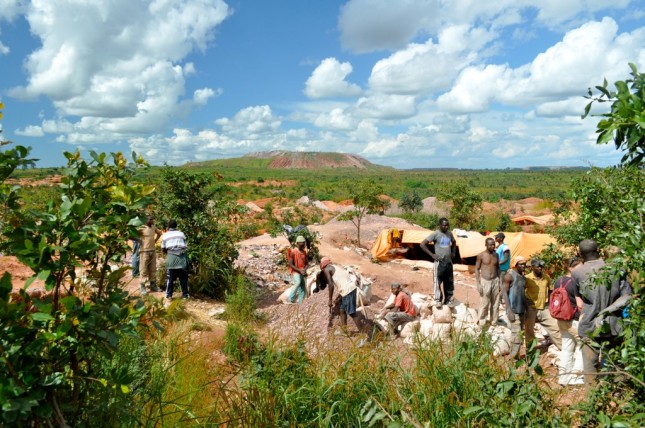
Its name conjures an image of vivid deep blues. But when cobalt is dug out of the ground in ore form, there’s barely a hint of the rich hue it lends its name to. In the Democratic Republic of the Congo, which produces more than half of the world’s supply, it takes the form of heterogenite, a dull brownish mineral that could easily be mistaken for small clods of dirt.
But people die for this mineral. Children suffer for it. Livelihoods, educations, neighborhoods, environments and personal safety are sacrificed for it.
-
Capturing Greenhouse Gases in China’s Countryside
›
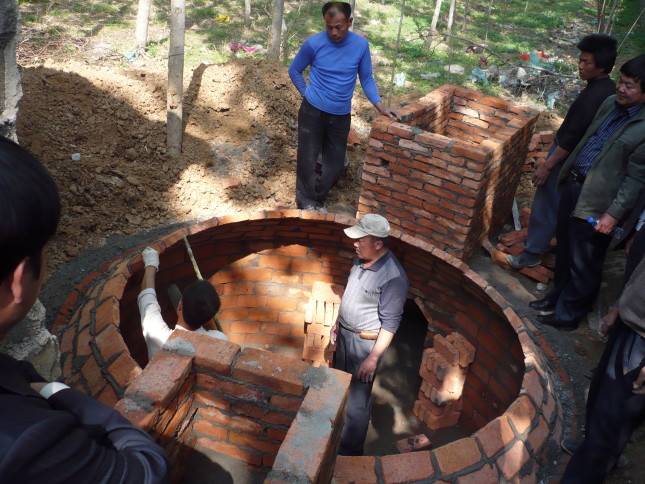
Spreading manure on crops recycles the nutrients, but as it decomposes it releases methane. And lots of it. Agriculture is the largest source of methane emissions globally. Each year, methane from livestock manure has the warming equivalent of 240 million tons of carbon dioxide, or the same as the annual emissions from 52 million cars.
-
How to Think and Work Politically to Reach Biodiversity Conservation Goals
›“You might know what to do,” said Rachel Kleinfeld, a Senior Fellow for Democracy, Conflict, and Governance Program at the Carnegie Endowment for International Peace. “But if you don’t think about how to do it, your reform isn’t going to move forward.” She spoke at a recent Wilson Center virtual event on how to think and work politically while supporting biodiversity conservation goals. It may sound counterintuitive, she said, but undertaking what’s considered the best intervention may not be the best approach.
-
Improve Biodiversity Conservation, Enhance Public Health and Food Security
›Our collective development objectives will not be achieved if they come at the expense of biodiversity and natural resource management, said Jeff Haeni, Acting Deputy Assistant Administrator in the Bureau for Economic Growth, Education, and Environment at USAID. He spoke at a recent Wilson Center virtual event, co-hosted with USAID, that explored the links between conservation and public health with examples from USAID’s BRIDGE project, which aims to build the evidence base for integrating biodiversity conservation considerations into policy discussions and decision-making across sectors. “The ability of societies around the world to develop and thrive is dependent on the health of the forests, fisheries, and natural systems around them,” he said.
-
Fair Trade Seeks a Foothold in Artisanal Gold Mining
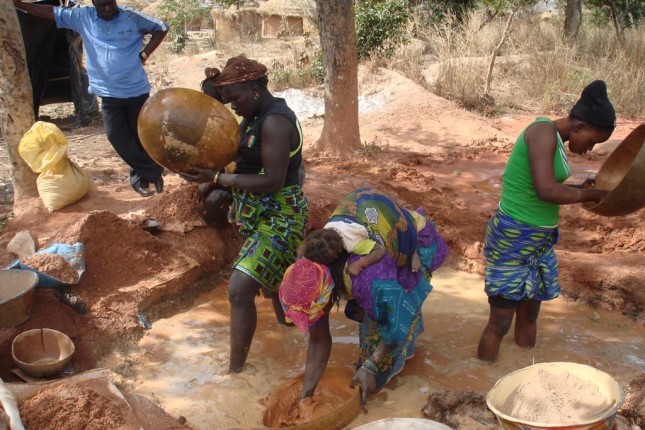
›COVID-19 isn’t the only problem going viral. Economic insecurity is driving gold prices to record highs around $1,700 per ounce, causing levels of global mercury pollution to rise too. In the United States coal-fired power plants drive mercury pollution, but globally, the leading cause is small-scale ‘artisanal’ gold mining. Roughly 30 million men, women, and children in poor countries depend on mining for subsistence incomes. Unfortunately, the cheapest and easiest way to mine gold uses mercury, a highly toxic heavy metal the United Nations is striving to eliminate.
-
Toward a New Regional Approach to Water Security and Governance in the Horn of Africa
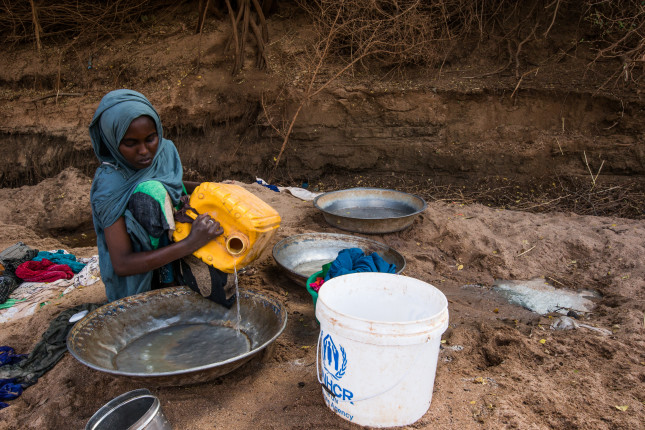
›Guest Contributor // April 7, 2020 // By Anniek Barnhoorn, Florian Krampe, Luc van de Goor, Elizabeth Smith & Dan SmithAs the global climate changes, climate-related security risks are making the existing political, social, and economic challenges even more complicated. The 230 million people who live in the Horn of Africa are highly vulnerable to the impacts of climate change such as droughts and floods. Political fragility and transnational complexities make water governance a matter of regional high-level politics as well as geopolitical tensions. In short, sustainable water governance is critical for achieving resilient peace.
-
How Gum Acacia Trees Could Help Build Peace in the Sahel
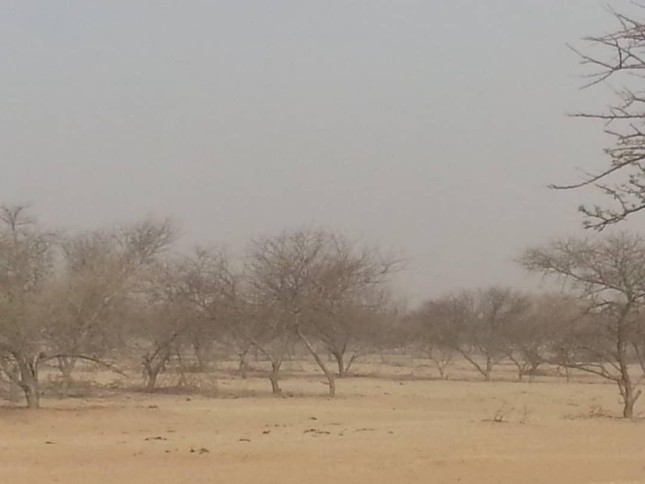
›A special type of tree could facilitate peacebuilding in the Sahel. A stretch of semi-arid land south of the Sahara that runs from the Red Sea to the Atlantic Ocean through 10 countries (Eritrea, Sudan, Chad, Niger, Nigeria, Burkina Faso, Mali, Algeria, Mauritania, and Senegal). But the western subregion covering the Lake Chad area (the intersection of Chad, Cameroon, Nigeria, and Niger) and Liptako-Gourma (the tri-border zone of Burkina Faso, Mali, and Niger) in the Sahel has been the scene of a growing humanitarian crisis. Armed groups are terrorizing local populations. Rampant insecurity has forced 1 million people to flee their homes. People have been cut off from their livelihoods. Food insecurity is worsening. Casualties continue to mount. And climate change will likely exacerbate conditions, forcing more people to compete for depleted forest resources and land. More food shortages and instability will surely follow.
-
A Conversation with Rodolfo Camacho on Using Data for Water Security
›Friday Podcasts // Water Security for a Resilient World // Water Stories (Podcast Series) // March 20, 2020 // By Eliana GutermanWhile there are many uses for global data sets and innovative data analysis technologies, the most important thing, Rodolfo Camacho said in this week’s Water Stories podcast, is not analyzing the data. It’s the collaboration among countries sharing data. Camacho, Project Director at Winrock International and Chief of Party for USAID’s Sustainable Water Partnership (SWP), sat down with Lauren Herzer Risi, Project Director of the Environmental Change & Security Program to discuss the importance of big data and machine learning on improving water security.
Showing posts from category natural resources.
 While there are many uses for global data sets and innovative data analysis technologies, the most important thing, Rodolfo Camacho said in this week’s

