-
Top 5 Posts for May 2022
›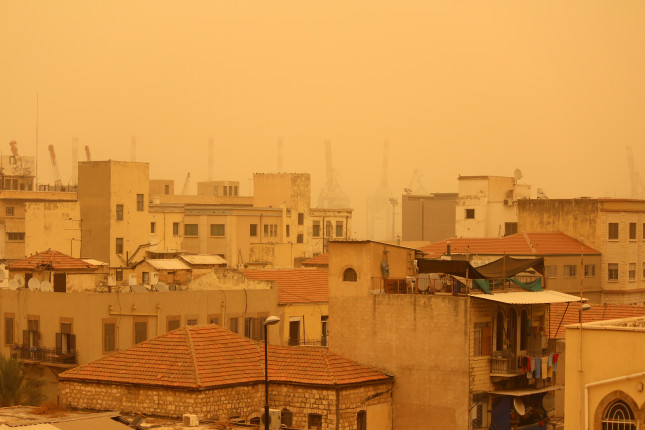
In Iraq, climate change is adding stress to an already precarious situation. Weak public services, growing unemployment, fossil fuel-related environmental and health hazards, and other factors have generated high levels of social vulnerability and contributed to recent protests. In the top post for May, Dylan O’Driscoll and Shivan Fazil write about how, against this fragile backdrop, insecurity is heightened by increasingly deadly flash floods and more frequent dust storms that pose a public health threat.
-
Preventing a “Green Resource Curse”: Opportunities and Risks of Mining in the Global Energy Transition
›
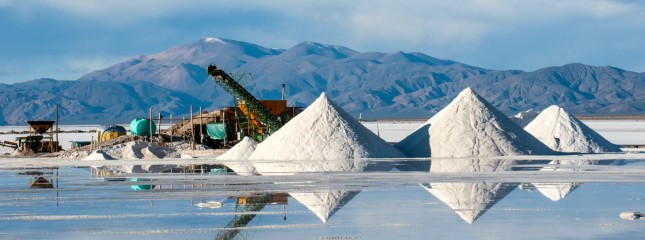
Is a “green resource curse” on its way? Kimberly Thompson, a Senior Advisor for Natural Resources and Conflict and the Industry Lead for Mining at the U.S. Agency for International Development (USAID), says that the current status quo in the green mining industry risks “inadvertently creating the conditions” for it to happen.
-
The Ukraine War’s Shadow on China’s Road to Decarbonization
›Russia’s invasion of Ukraine has shaken the world economy. The U.S.-led push for sanctions on Russia has surprised analysts with its depth. Germany, for example, is now turning away from four decades of reliance on Russian oil and gas. Given Russia’s status as a global energy colossus, the war has raised particular uncertainty in global energy markets, leading many countries to take steps to ensure adequate supplies.
China’s energy connection to the crisis and, specifically, the war’s effect on China’s decarbonization commitments, have drawn little attention. Unfortunately, the war’s impact on energy markets has accelerated Chinese plans to return to the use of coal for power generation. And the market volatility it has inflamed is partly behind China’s return to investment-and emissions-heavy stimulus. Make no mistake, however, China’s investments in renewables are still enormous and dwarf those of the United States.
-
Andrew I Rudman and Cecily Fasanella, Innovation News Network
Before Breaking Ground: Challenges and Opportunities for Mexican Lithium
›May 25, 2022 // By Wilson Center StaffIn response to the growing challenges created by climate change, consumers across the globe are demanding more environmentally friendly products. This demand is particularly evident when examining the automotive market. In 2021, global sales of electric vehicles (EVs) more than doubled from the year before, rising from 3 million to 6.6 million vehicles according to the International Energy Agency. This boom has created a need for lithium, a key component of the rechargeable batteries used to power these vehicles. Referred to as ‘white gold,’ countries with lithium reserves are racing to increase extraction and export deposits for battery production. As automobile and battery manufacturers work to meet demand and avoid supply chain shocks, many are looking toward the untapped potential of Mexican lithium.
-
New Security Broadcast | Jeff Colgan on Oil Politics and International Order
›Debates around whether and to what extent international order is changing can be misguided “so long as we are thinking about international order as a single, monolithic thing,” says Jeff Colgan, Associate Professor of Political Science and director of the Climate Solutions Lab at Brown University in this week’s episode of New Security Broadcast. Colgan spoke at a recent Wilson Center event featuring his new book, Partial Hegemony: Oil Politics and International Order. In the book, Colgan challenges the idea of a monolithic ‘global order’ and shows that international order instead comprises a set of interlinked “subsystems.” In a world where there is no single, all-encompassing hegemon to trigger universal global change, this framework of subsystems allows us to explore how particular geopolitical realms can alter without fundamentally changing the geopolitical landscape, he says. -
Climate Resilience for Whom? The Importance of Locally-Led Development in the Northern Triangle
›“One of the challenges of responding to climate risks is that climate’s impacts and how those impacts interact with existing systems on the ground are so varied and specific to a given place,” said Lauren Risi, Director of the Wilson Center’s Environmental Change & Security Program, at a recent PeaceCon conference panel on climate change, violence, and migration in Central America. “But there is also an opportunity in how we respond to develop more agile, just, and sustaining programs and policies that go beyond a singular focus on responding to climate change and instead build the overall resilience of communities.”
-
Blue Jeans Contaminating Blue Oceans: The Expanding Microfiber Footprint of Our Clothes
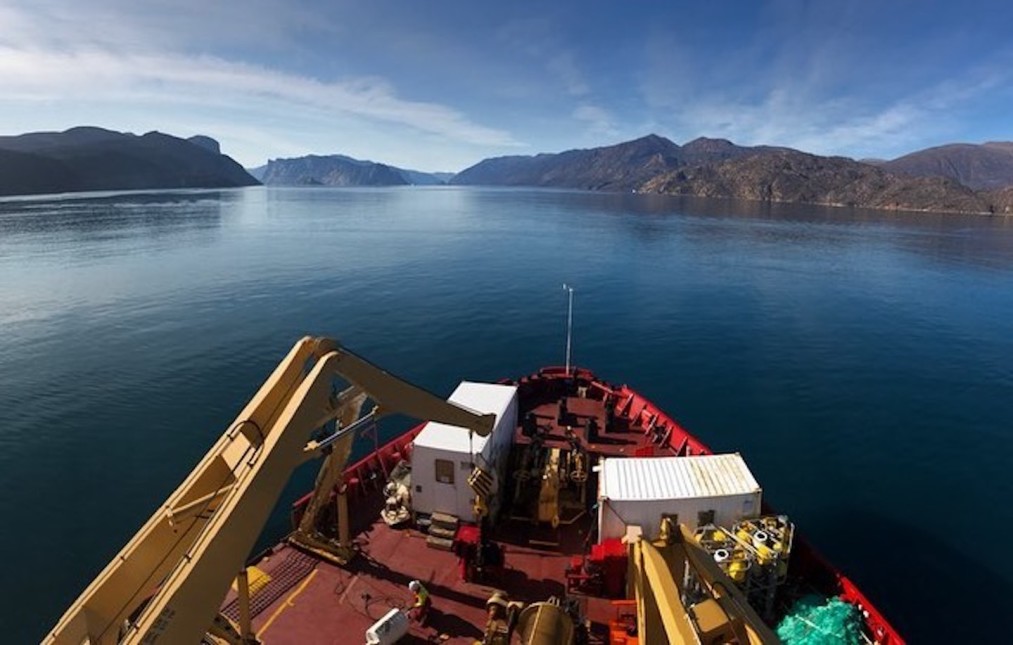
›The Arctic is believed to be a pristine environment, far removed from littered city streets and toxic industrial emissions. I study human pollution and I found it hard to believe that my fellow researchers and I would find so much litter out here. It was even harder to believe that what we uncovered closely resembled the contents of my own closet, over 3,000 kilometers (2,000 miles) away in Toronto. -
Imagine a Future Without Single-Use Plastics
›If producing plastic waste were a race, Japan would be rushing for the gold medal. Japan and the United States both rank the highest per capita for plastic packaging waste in the world. Former Prime Minister Shinzo Abe’s administration set a goal to reduce Japan’s plastic waste production by 25 percent by 2030 and recent polls show the majority of the Japanese public wants strong actions to reduce plastic waste. Nevertheless, Japan is not doing enough to stem the tide of plastic entering the ocean. If Japan and the rest of the world fail to act more boldly, global oceanic plastic waste could triple by 2040. Current commitments of governments and corporations would only reduce global plastic leakage seven percent below the business-as-usual scenario. Japan’s current waste management system prioritizes recycling and incineration, encouraging a make-take-waste linear model of plastic consumption. Japan needs a circular economy built on a culture of reduction and reuse instead of single-use plastics.
Showing posts from category natural resources.

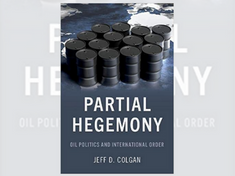 Debates around whether and to what extent international order is changing can be misguided “so long as we are thinking about international order as a single, monolithic thing,” says Jeff Colgan, Associate Professor of Political Science and director of the Climate Solutions Lab at Brown University in this week’s episode of New Security Broadcast. Colgan spoke at a recent Wilson Center