• woodrow wilson center
  • ecsp

New Security Beat

Subscribe:
  • rss
  • mail-to
  • Who We Are
  • Topics
    • Population
    • Environment
    • Security
    • Health
    • Development
  • Columns
    • China Environment Forum
    • Choke Point
    • Dot-Mom
    • Friday Podcasts
    • Navigating the Poles
    • Reading Radar
  • Multimedia
    • Water Stories (Podcast Series)
    • Backdraft (Podcast Series)
    • Tracking the Energy Titans (Interactive)
  • Films
    • Water, Conflict, and Peacebuilding (Animated Short)
    • Paving the Way (Ethiopia)
    • Broken Landscape (India)
    • Scaling the Mountain (Nepal)
    • Healthy People, Healthy Environment (Tanzania)
  • Publications
  • Events
  • Contact Us

NewSecurityBeat

The blog of the Wilson Center's Environmental Change and Security Program
Showing posts from category mitigation.
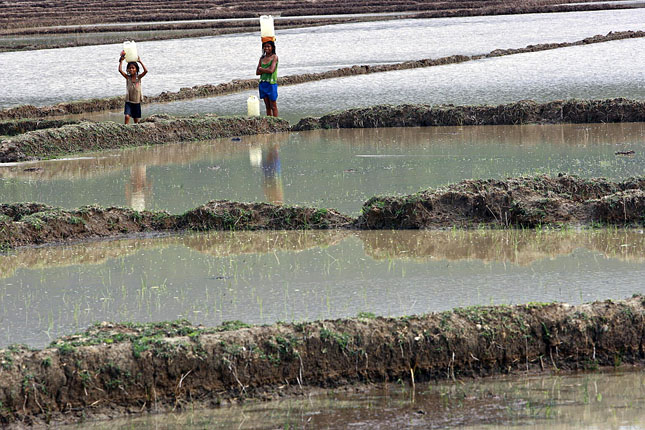
  • Measuring Community Resilience: Implications for Development Aid

    ›
    Guest Contributor  //  May 28, 2013  //  By Molly Jones

    ‘Toward Resilience’ is a series on the meaning of global resilience and vulnerability today.

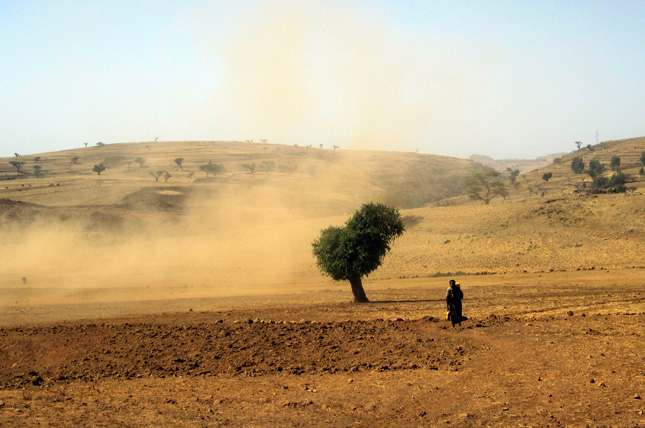
    A staggering amount of development dollars – one in three, in fact – are lost due to natural disasters and crises. Certain communities are less affected than others by such disasters; they are more resilient. Knowing where vulnerability and strength exist and how to bolster them could help avoid these losses. Yet, today, very little data exists to help development practitioners understand which adaptive capacities are lagging in a given community.

    MORE
  • Backdraft: The Conflict Potential of Climate Change Adaptation and Mitigation (ECSP Report 14)

    ›
    From the Wilson Center  //  May 16, 2013  //  By Geoffrey D. Dabelko

    Excerpted below is the introduction to ECSP Report 14, Issue Two.

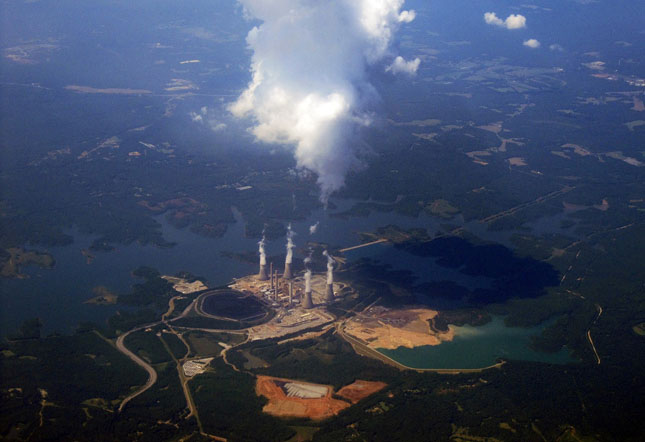
    Amid the growing number of reports warning that climate change could threaten national security, another potentially dangerous – but counterintuitive – dimension has been largely ignored. Could efforts to reduce our carbon footprint and lower our vulnerability to climate change inadvertently exacerbate existing conflicts – or create new ones?

    MORE
  • Addressing Urban Environmental Health and Maternal Mortality in Developing Countries

    ›
    Reading Radar  //  April 24, 2013  //  By Maria Prebble

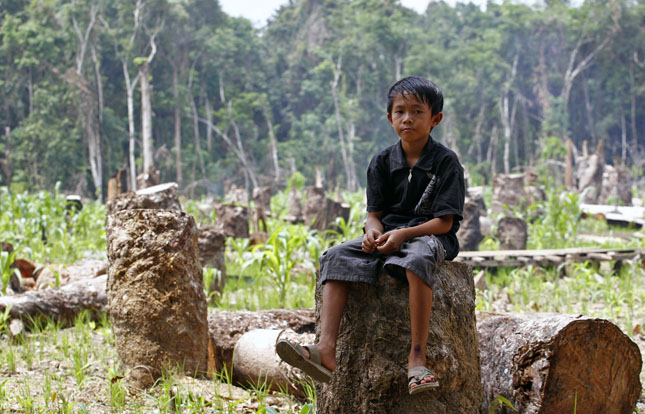
    Although climate change is a global phenomenon, developing countries – especially urban centers – are the most vulnerable to the negative health impacts of climate change.  In “Urban Governance of Climate Change and Health,” a working paper for the Norwegian Institute for Urban and Regional Research, author Siri Bjerkreim Hellevik reviews the existing literature on governments’ responses to climate change and health in developing urban centers. Overall, Hellevik concludes that there is a substantial need for more research specifically linking the two. She offers several recommendations for urban policymakers to consider, including developing an integrated and multi-level approach, and recognizing that human health and urban development are issues of global justice.

    MORE
  • Demographic and Environmental Dynamics Shape ‘Global Trends 2030’ Scenarios

    ›
    From the Wilson Center  //  March 25, 2013  //  By Maria Prebble

    “However rapid change has been over the past couple decades, the rate of change will accelerate in the future,” states the newest quadrennial report from the National Intelligence Council (NIC), Global Trends 2030: Alternative Worlds. Released late last year, the report identifies the “game-changers, megatrends, and black swans” that may determine the trajectory of world affairs over the next 15 years, including demographic dynamics and natural resource scarcity. [Video Below]

    MORE
  • Does Climate Change Kill Five Million People A Year? DARA’s 2012 Climate Vulnerability Monitor

    ›
    November 27, 2012  //  By Carolyn Lamere & Schuyler Null

    Five million people die each year due to climate- or carbon-related causes, and total mortality by 2030 could total 100 million people, according to new report from DARA, a nonprofit organization that works to improve aid to those affected by conflict and climate change and quantify the global cost of climate change and carbon use. But the report has drawn some fire for being too alarmist.

    MORE
  • Is This What Climate Change Feels Like? Geoff Dabelko on ‘CONTEXT’

    ›
    From the Wilson Center  //  August 7, 2012  //  By Kate Diamond

    “I think that the conditions that we’re experience now are ones that track with what we expect to see more of; so dry places getting drier, wet places getting wetter, and more extremes in terms of variability of the weather,” said ECSP Director Geoff Dabelko in the latest installment of CONTEXT, a weekly Wilson Center interview series. While it’s difficult to link the current drought – or any one weather or climate event – directly to man-made climate change, Dabelko said that “the warming trends that we’re seeing and anticipating with climate change suggests that this is a preview of what may be to come.”

    MORE
  • Tobias Feakin on the Debate in Europe About Climate Change and the Military

    ›
    Eye On  //  July 24, 2012  //  By Keenan Dillard
    “We established [the Climate Change Security Program] as a methodology of exposing the defense community in the U.K. and Europe to some of the more nuanced security debates that are going on around climate change, environmental change, and resource shortages,” said Tobias Feakin, senior research fellow at the Royal United Services Institute for Defense and Security Studies (RUSI) in an interview with ECSP.

    What they found when they first approached the U.K. defense establishment in 2006, was surprising. “They opened [that] door wide open and said, ‘actually, you know what, we’ve been looking at this, we’ve been concerned about this for a long time, and we’ve already started including it in our long-term planning and strategic thinking.’”

    “One of the reasons that the defense community has been looking at this issue is that they have a longer-term vision, if you like, than other departments,” Feakin said. “They have to think about procurement decisions which are going to be stretching out…up to 30 years into the future, so there are bigger demands on them to be thinking about these kinds of strategic issues.”

    Feakin co-authored International Dimensions of Climate Change, a 2011 report for the British government which highlights the security threats and challenges, both internal and external, that the U.K. will face as result of climate change.

    While the defense community acknowledged the need to include climate change in their planning processes, members of the policymaking community expressed concern that they did not, “have enough detailed understanding of what this [climate change] is going to mean in a security paradigm,” said Feakin. To meet that need, RUSI has been conducting regional and country-based studies in order to determine how things might play out.

    Dialogue on the issue has transcended Great Britain and is now taking place among member states of the European Union, although Feakin notes that, “there’s perhaps more hesitancy in terms of framing the debate in the security paradigm and perhaps a slight perception that it might be leading us down the wrong path when mitigation efforts should be at the top of the order of play.”

    Despite these ongoing debates, Feakin believes that the security aspect of climate change helps to “make a comprehensive case that we have a situation that does have to be dealt with and there are going to be multiple players in that.” Efforts to address climate change will be civilian-led, but the defense community will play an important supporting role in the future, he said.

    “It’s something we have to plan for and we will be part of the response.”
    MORE
  • ‘Dialogue TV’ With Sharon Burke, Neil Morisetti, and Geoff Dabelko: Climate, Energy, and the Military

    ›
    Eye On  //  February 17, 2012  //  By Stuart Kent

    The video embedded above is only a short synopsis of the full episode. To watch the full Dialogue episode, visit WilsonCenter.org.

    We are entering “an emerging security environment” where “what constitutes a ‘threat’ and what constitutes a ‘challenge’” requires a broader understanding of security than has often been the norm, according to Sharon Burke, Assistant Secretary of Defense for Operational Energy Plans and Programs. Burke was joined by the UK’s Climate and Energy Security Envoy Rear Admiral Neil Morisetti and ECSP’s Geoff Dabelko on a new installment of Dialogue TV. They debated what climate change and energy security mean for the world’s militaries.

    MORE
Newer Posts   Older Posts
View full site

Join the Conversation

  • RSS
  • subscribe
  • facebook
  • G+
  • twitter
  • iTunes
  • podomatic
  • youtube
Tweets by NewSecurityBeat

Trending Stories

  • unfccclogo1
  • Pop at COP: Population and Family Planning at the UN Climate Negotiations

Featured Media

Backdraft Podcast

play Backdraft
Podcasts

More »

What You're Saying

  • Volunteers,At,The,Lagos,Food,Bank,Initiative,Outreach,To,Ikotun, Pan-African Response to COVID-19: New Forms of Environmental Peacebuilding Emerge
    Rashida Salifu: Great piece 👍🏾 Africa as a continent has suffered this unfortunate pandemic.But it has also...
  • A desert road near Kuqa An Unholy Trinity: Xinjiang’s Unhealthy Relationship With Coal, Water, and the Quest for Development
    Ismail: It is more historically accurate to refer to Xinjiang as East Turkistan.
  • shutterstock_1779654803 Leverage COVID-19 Data Collection Networks for Environmental Peacebuilding
    Carsten Pran: Thanks for reading! It will be interesting to see how society adapts to droves of new information in...

What We’re Reading

  • Rising rates of food instability in Latin America threaten women and Venezuelan migrants
  • Treetop sensors help Indonesia eavesdrop on forests to cut logging
  • 'Seat at the table': Women's land rights seen as key to climate fight
  • A Surprise in Africa: Air Pollution Falls as Economies Rise
  • Himalayan glacier disaster highlights climate change risks
More »
  • woodrow
  • ecsp
  • RSS Feed
  • YouTube
  • Twitter
  • Facebook
  • Home
  • Who We Are
  • Publications
  • Events
  • Wilson Center
  • Contact Us
  • Print Friendly Page

© Copyright 2007-2021. Environmental Change and Security Program.

Woodrow Wilson International Center for Scholars. All rights reserved.

Developed by Vico Rock Media

Environmental Change and Security Program

Woodrow Wilson International Center for Scholars

Ronald Reagan Building and International Trade Center

  • One Woodrow Wilson Plaza
  • 1300 Pennsylvania Ave., NW
  • Washington, DC 20004-3027

T 202-691-4000