• woodrow wilson center
  • ecsp

New Security Beat

Subscribe:
  • rss
  • mail-to
  • Who We Are
  • Topics
    • Population
    • Environment
    • Security
    • Health
    • Development
  • Columns
    • China Environment Forum
    • Choke Point
    • Dot-Mom
    • Friday Podcasts
    • Navigating the Poles
    • Reading Radar
  • Multimedia
    • Water Stories (Podcast Series)
    • Backdraft (Podcast Series)
    • Tracking the Energy Titans (Interactive)
  • Films
    • Water, Conflict, and Peacebuilding (Animated Short)
    • Paving the Way (Ethiopia)
    • Broken Landscape (India)
    • Scaling the Mountain (Nepal)
    • Healthy People, Healthy Environment (Tanzania)
  • Publications
  • Events
  • Contact Us

NewSecurityBeat

The blog of the Wilson Center's Environmental Change and Security Program
Showing posts from category minerals.
  • Jacob Glass, PassBlue

    New Investment Law in Peru Undermines Rights of Indigenous Women

    ›
    August 22, 2014  //  By Wilson Center Staff
    peruvian-woman

    The original version of this article, by Jacob Glass, appeared on PassBlue.

    A new law in Peru encouraging investment in the country’s extractive industries has reignited debate on the lack of power indigenous women have in the mostly rural societies where they often live. The International Indigenous Women’s Forum, which drew more than 60 native women from across the world to Peru last month, highlighted this important issue.

    MORE
  • ECC Platform

    Transparency, Good Governance, and Natural Resource Management: An Interview With Peter Eigen

    ›
    April 30, 2014  //  By Wilson Center Staff

    The original version of this article appeared on the Environment, Conflict, and Cooperation (ECC) Platform.

    The governance challenges of natural resource extraction are enormous. What can be done to improve natural resource governance? ECC’s Stephan Wolters talked to Peter Eigen, founder of Transparency International and chair of the Extractive Industries Transparency Initiative (EITI) from 2006 to 2011.

    MORE
  • Forests on Film: New Stories From Nepal and the Congo Basin

    ›
    From the Wilson Center  //  April 14, 2014  //  By Donald Borenstein

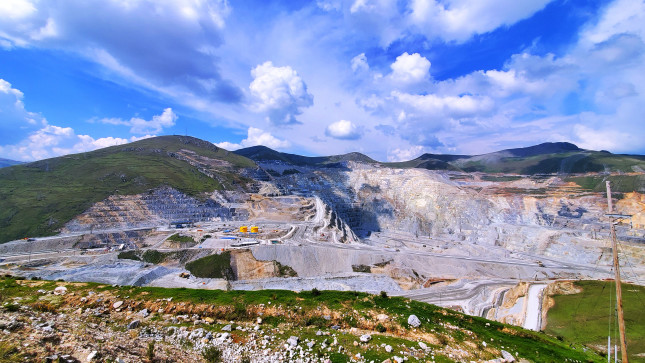
    Given growing awareness about environmental change and how it affects human life, it is perhaps not surprising there is also a growing audience for environmental filmmaking. At the 2014 Environmental Film Festival in the Nation’s Capital on March 25, the Wilson Center premiered ECSP’s latest documentary, Scaling the Mountain: Protecting Forests for Families in Nepal. Together with Heart of Iron, a recent film on mining in the Congo Basin, the event took viewers into some of the world’s most remote forests to see how their inhabitants are adapting to rapid changes in the natural resources on which they depend.

    MORE
  • Can China Solve Its Water-Energy Choke Point? Wilson Center Launches ‘China Environment Series 12’

    ›
    China Environment Forum  //  Choke Point  //  January 16, 2014  //  By Susan Chan Shifflett
    three-gorges-satellite

    Factories in China’s Pearl River Delta tick-tock around the clock, rapidly churning out gadgets from iPhones and Barbie dolls to forks and light bulbs, shipped off to village shops in Uganda and super Walmarts in America’s sprawling suburbs. But far from the global consumer’s view, manufacturing and rapid development are placing unrelenting pressure on China’s environment.

    MORE
  • Bringing Natural Resources to the Table: ELI, UNEP Launch New Environmental Peacebuilding Platform

    ›
    Guest Contributor  //  November 25, 2013  //  By Tim Kovach
    sierra-leone

    To date, despite their demonstrated importance in both conflict recovery and the risk of conflict recurrence, natural resources have been largely ignored or downplayed in post-conflict settings around the world.

    MORE
  • To Build Peace, Confront Afghanistan’s Natural Resource Paradox

    ›
    Guest Contributor  //  September 16, 2013  //  By Shamim Niazi
    UNEP_Afghanistan_NRM_guidan

    There’s a popular saying in Afghanistan reflecting the value of water: “Let Kabul be without gold, but not without snow.”

    Living in a refugee camp across the border in Pakistan during the Soviet occupation, my father, who worked as a doctor in Samangan, Bamyan, Kunar, and Balkh provinces, used to tell me about the importance of our country’s natural wealth. He was optimistic that it was Afghanistan’s land, water, forests, and minerals that would help the country re-emerge as a strong nation. However, he also knew that the mismanagement of our natural resources is partly to blame for the instability, insecurity, and vulnerability that have gripped our country for so many years. This is the paradox of the natural resource wealth in Afghanistan.

    MORE
  • Geoff Dabelko on Avoiding Conflict From Climate Adaptation

    ›
    Friday Podcasts  //  September 6, 2013  //  By Jacob Glass
    dabelko_small

    Although major global action remains stymied in many respects, policymakers around the world are increasingly at least recognizing the need to increase resilience to the effects of climate change. But are the consequences from hastily implemented initiatives being adequately considered? Perhaps not.

    MORE
  • Photo Essay: Wuhai City Coal Complex Shows Costs of China’s Energy Demands

    ›
    China Environment Forum  //  August 14, 2013  //  By Susan Chan Shifflett
    Wuhai City Moonscape

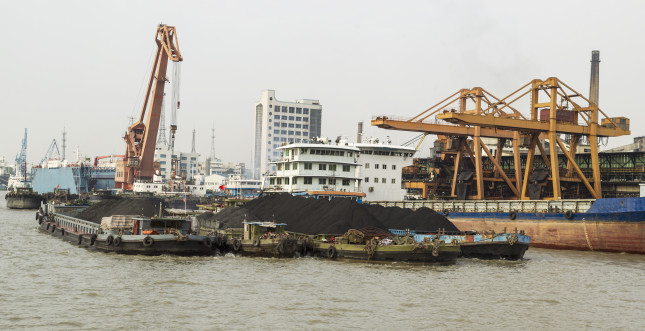
    The black, blasted landscape of Wuhai City sometimes looks more like the moon than Inner Mongolia. But this scene is becoming all too common across much of Northern China. China’s massive coal industry is not only polluting the air and water, but also fundamentally altering the surrounding landscape and communities.

    MORE
Newer Posts   Older Posts
View full site

Join the Conversation

  • RSS
  • subscribe
  • facebook
  • G+
  • twitter
  • iTunes
  • podomatic
  • youtube
Tweets by NewSecurityBeat

Trending Stories

  • unfccclogo1
  • Pop at COP: Population and Family Planning at the UN Climate Negotiations

Featured Media

Backdraft Podcast

play Backdraft
Podcasts

More »

What You're Saying

  • Volunteers,At,The,Lagos,Food,Bank,Initiative,Outreach,To,Ikotun, Pan-African Response to COVID-19: New Forms of Environmental Peacebuilding Emerge
    Rashida Salifu: Great piece 👍🏾 Africa as a continent has suffered this unfortunate pandemic.But it has also...
  • A desert road near Kuqa An Unholy Trinity: Xinjiang’s Unhealthy Relationship With Coal, Water, and the Quest for Development
    Ismail: It is more historically accurate to refer to Xinjiang as East Turkistan.
  • shutterstock_1779654803 Leverage COVID-19 Data Collection Networks for Environmental Peacebuilding
    Carsten Pran: Thanks for reading! It will be interesting to see how society adapts to droves of new information in...

What We’re Reading

  • Rising rates of food instability in Latin America threaten women and Venezuelan migrants
  • Treetop sensors help Indonesia eavesdrop on forests to cut logging
  • 'Seat at the table': Women's land rights seen as key to climate fight
  • A Surprise in Africa: Air Pollution Falls as Economies Rise
  • Himalayan glacier disaster highlights climate change risks
More »
  • woodrow
  • ecsp
  • RSS Feed
  • YouTube
  • Twitter
  • Facebook
  • Home
  • Who We Are
  • Publications
  • Events
  • Wilson Center
  • Contact Us
  • Print Friendly Page

© Copyright 2007-2021. Environmental Change and Security Program.

Woodrow Wilson International Center for Scholars. All rights reserved.

Developed by Vico Rock Media

Environmental Change and Security Program

Woodrow Wilson International Center for Scholars

Ronald Reagan Building and International Trade Center

  • One Woodrow Wilson Plaza
  • 1300 Pennsylvania Ave., NW
  • Washington, DC 20004-3027

T 202-691-4000