-
A Ukrainian Stand-Off: The Toxic Consequences of Armed Conflict in Donbass
›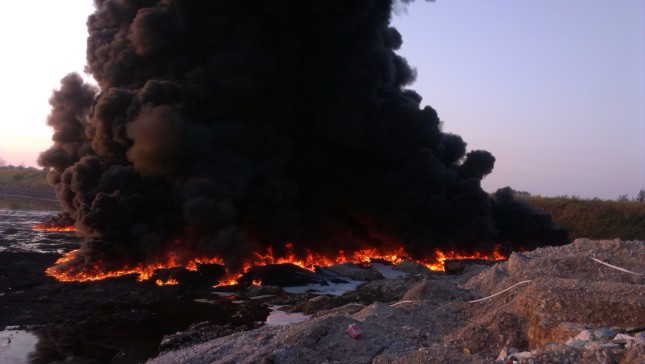
A looming industrial tower of pipelines and chemical storage tanks rises out of snowy landscape. In Novogorodske, a small quiet town in eastern Ukraine, workers go about their daily business at the Dzerzhinsk Phenol Factory. A penetrating, inescapable smell greeted us as we entered the village, which a Dutch journalist and I are visiting as part of our investigation into the environmental and health risks from ongoing fighting in Eastern Ukraine. Our research for the open-source collective Bellingcat has identified the factory as one of a number of potential environmental flashpoints.
-
“The Damn Thing Melted”: Arctic Security in the Blue-Water Era
›
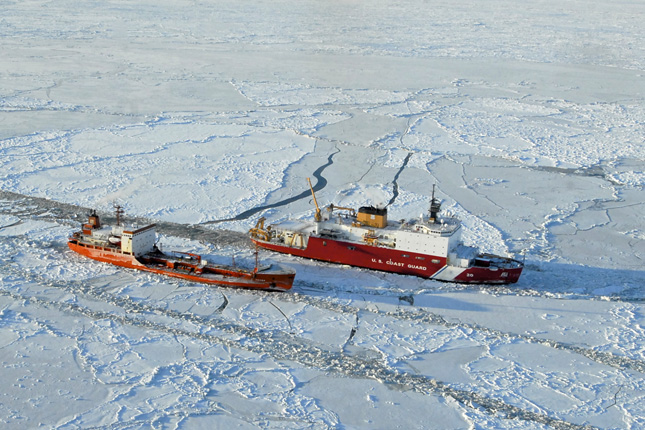
When Secretary of the Navy Richard Spencer told the media last week that “the damn thing melted,” he wasn’t talking about an ice cream cone. As the Arctic faces unprecedented levels of open water, Spencer and other naval leaders recently testified to Congress about the U.S. Navy’s strategy, which is changing as quickly as the Arctic itself.
-
First Responders of Last Resort: South Asian Militaries Should Strengthen Climate Security Preparedness and Cooperation
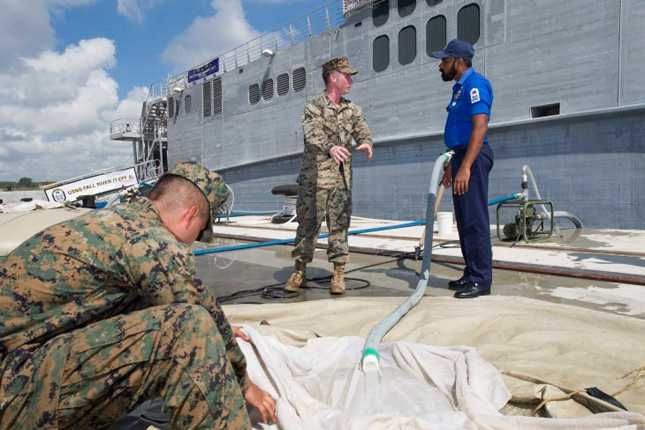
›Last month, a major multinational military exercise launched in South and Southeast Asia. The Pacific Partnership is the largest annual multilateral humanitarian assistance and disaster relief preparedness mission conducted in the Indo-Asia-Pacific and aims to enhance regional coordination in areas such as medical readiness and preparedness for manmade and natural disasters. At its center is the hospital ship USNS Mercy, with an international team of civilian and military specialists seeking to build response capacity in one of the most disaster-prone regions of the world.
-
Climate Change Will Further Complicate the Politics of U.S. Military Bases
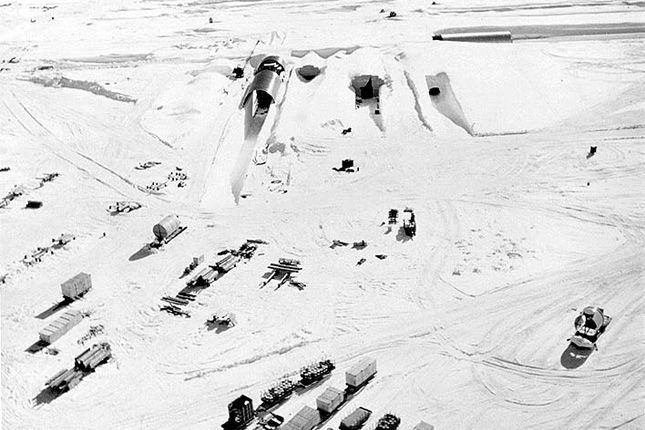
›The effects of climate change on an abandoned U.S. nuclear project in Greenland could create not just environmental problems, but also disrupt military politics and spur diplomatic conflicts. My new article in Global Environmental Politics finds that climate change will eventually expose toxic waste, long immobilized by ice, at Camp Century, which the U.S. military left in the 1960s. This situation—which has already spurred the dismissal of Greenland’s foreign minister—could be the canary in the coalmine signaling that climate change will further complicate the already contentious politics of military bases.
-
Women and War: Securing a More Peaceful Future
›“Conflicts are 35 percent more likely to be resolved and remain peaceful for 15 years if women are involved,” said Carla Koppell, vice president of the Center for Applied Conflict Transformation at the United States Institute of Peace, at a recent Wilson Center event on the role of women in war, security, and peace.
-
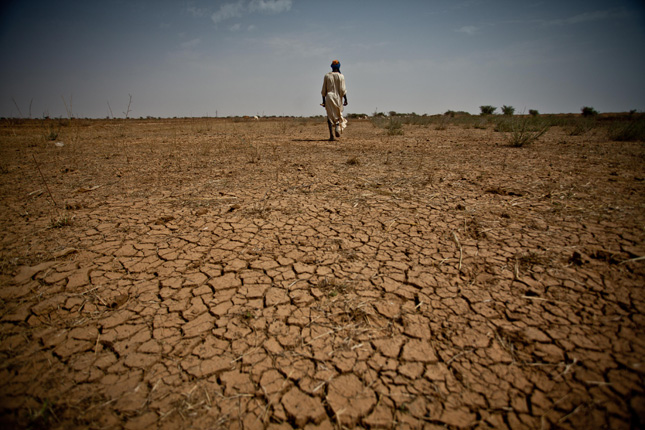
The Role of Water Stress in Instability and Conflict
›As senior military officers, we see water stress—the lack of adequate fresh water—as a growing factor in the world’s hotspots and conflict areas, many of vital interest to the United States. Our earlier reports have identified a nexus among climate, water, energy, and U.S. national security. We have previously shown how emerging resource scarcity across this nexus can be a threat multiplier and an accelerant of instability. With escalating global population and the impact of a changing climate, we see the challenges of water stress rising with time. It is in this context that we now seek to provide a better understanding of the mechanisms through which water factors into violence and conflict.
-
Can Climate Change Feed Extremism?
›Global warming is not just an environmental problem.
Goodman: “It is one of the most serious national security challenges we face. This is a risk issue.”
-
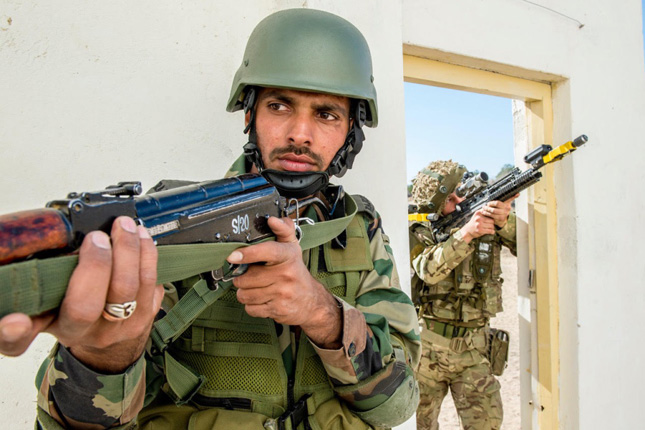
Indian Military Recognizes Environment as “Critical” Security Issue, But Response Is Still Fragmented
›For the first time, the Joint Doctrine of the Indian Armed Forces acknowledges that the “environment has emerged as a critical area of the security paradigm,” and warns that if environmental degradation and related issues increase security risks, the military will need to respond. Released in 2017, the doctrine lists a series of non-traditional security challenges linked to the environment that could influence conflict and war, including “climate change, ecosystem disruption, energy issues, population issues, food-related problems, economic issues of unsustainable modes of production, and civil strife related to environment.” While the military has taken steps to address its impacts on the environment, it can do much more to support the nation’s environmental goals and mitigate environment-related security risks.
Showing posts from category military.