-
Gender and the “War” on Covid-19
›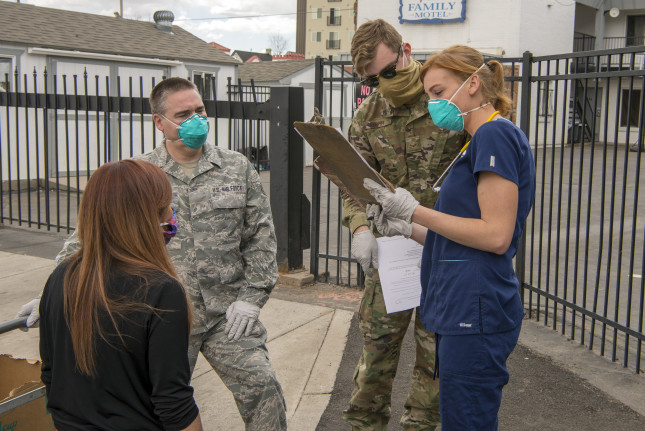
The rhetoric of war is all around us during the Covid-19 pandemic, from the World Health Organization to historical takes. More critical assessments note that this war, like others, will hurt the most vulnerable. In a recent essay, feminist political scientist Cynthia Enloe takes issue with this rhetoric, pointing to the historic ways in which wars have led to “racist, homophobic, and anti-Semitic practices.” Whether or not war rhetoric is helpful at this crucial moment, the current pandemic should be a wake-up call to expand what investments we consider essential to our national security, how we value work, and who gets called a hero.
-
Wim Zwijnenburg on Using Data to Visualize the Impacts of Conflict on the Environment
› Through open source information, remote sensing, and existing data, we can have a better sense of how conflict impacts the environment and how it then impacts people depending on the environment, said Wim Zwijnenburg, a Humanitarian Disarmament Project Leader for the Dutch peace organization, PAX, in this week’s Friday Podcast. Wim sat down for an interview with ECSP’s Amanda King at the first International Conference on Environmental Peacebuilding, hosted at the University of California, Irvine, in October 2019.
 -
Great Power Resource Competition in a Changing Climate: New America’s Natural Security Index
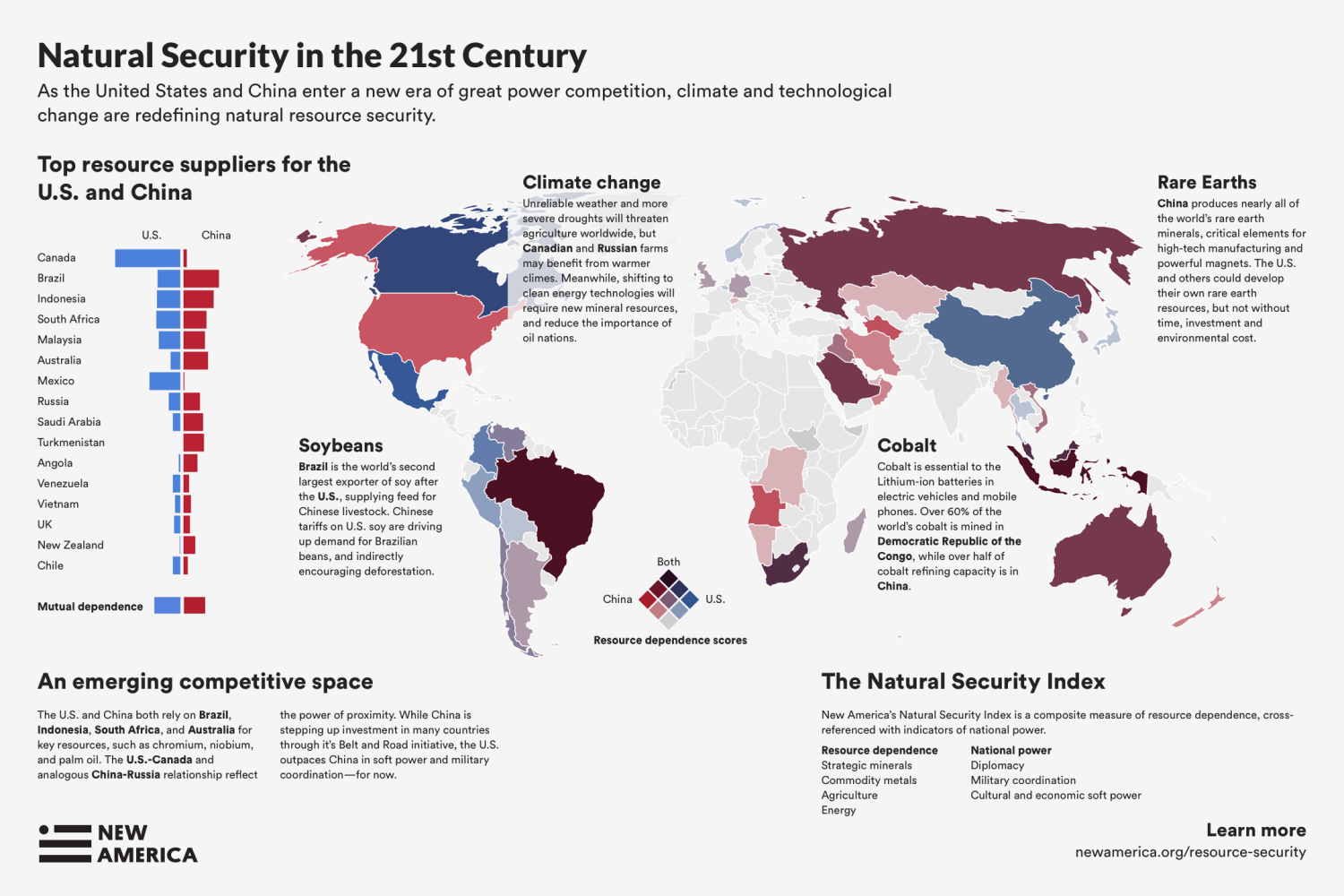
›Late last year, Reuters reported that the U.S. Defense Department plans to fund mining and processing operations for rare earth elements—a class of minerals for which China dominates the global market, producing over 80 percent of the world’s supply. In the past, China has restricted exports of rare earths, and recently threatened to do so again. Even with a phase one trade deal hammered out between the United States and China, natural resources are likely to remain a point of geopolitical tension.
-
Mohamed’s Story: The Climate Conflict Trap in the Lake Chad Basin
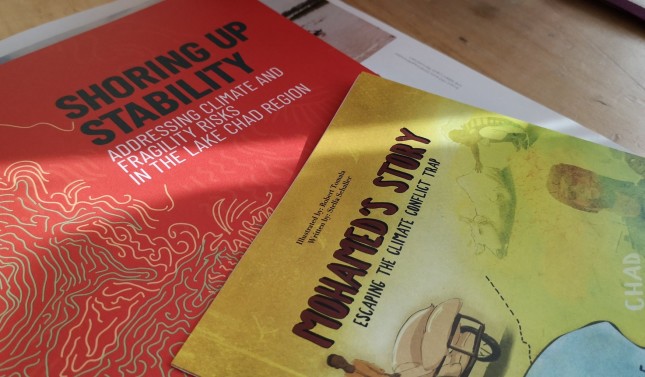
›Years ago, Mohamed’s family had enough to eat, despite being poor. His daughter owned a vegetable stall at a bustling market in northeastern Nigeria. The family had options: during the dry season, when Lake Chad was shallow, Mohamed could farm; and during the wet season, he could fish or graze his cattle.
-
The Environment Has Become a Hostage of Armed Conflict
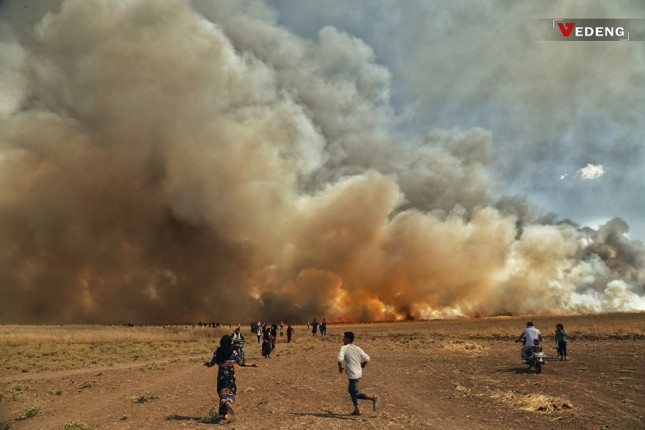
›This year, 2019, marked a new nadir for the environment that may reflect an ominous trend in warfare: Environmentally sensitive targets are being weaponized and taken hostage. Farmland went up in flames and burning oil tankers dominated the headlines, serving as a stark reminder of conflict’s ripple effects.
-
Permafrost Melt, Rising Seas, and Coastal Erosion Threaten Arctic Communities
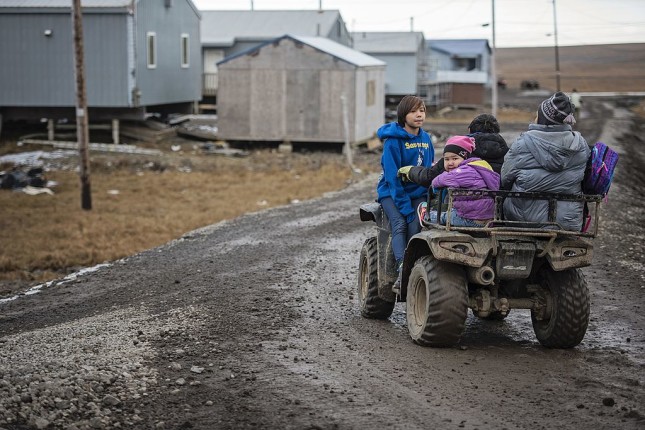
›November 5, 2019 // By Shawn Archbold“In 1959, he knew it was coming,” said Delbert Pungowiyi, a Yupik native of Savoonga, Alaska, on St. Lawrence Island in the Bering Sea in an interview at the Wilson Center’s 8th Syymposium on the Impacts of an Ice-Diminishing Arctic on Naval and Maritime Operations. “He prepared me my whole life for this. It is a crisis.”
-
Understanding and Responding to the Role of Drought in National Security
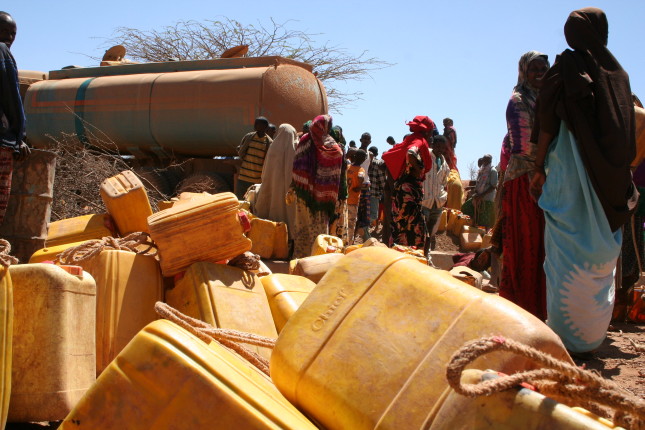
›“We don’t have a world water crisis, we have a world water management crisis,” said Brigadier General Gerald Galloway (U.S. Army Ret.) at the 2nd National Drought Forum, hosted by the National Integrated Drought Information System and the National Drought Resilience Partnership at the United States Institute of Peace. The Forum brought together subject matter experts with federal and state leaders to discuss how to strengthen the state-federal relationship to improve U.S. drought readiness and resilience.
-
Concerns Rise Over Governance Gap in Arctic
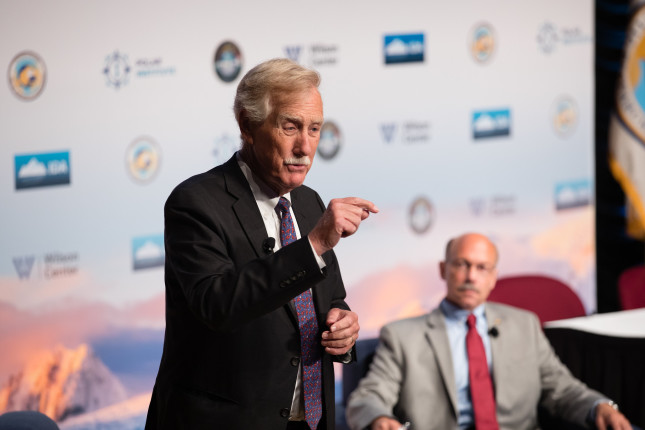
›“We’re attempting to do something that’s never been done before in world history,” said Senator Angus King (I-ME). “The peaceful development of a major new physical asset.” He spoke of the Arctic Ocean at the 8th Symposium on the Impacts of an Ice-Diminishing Arctic on Naval and Maritime Operations. The symposium was hosted by the Wilson Center’s Polar Institute, in partnership with the U.S. Arctic Research Commission, U.S. National Ice Center, Arctic Domain Awareness Center, Patuxent Partnership, St. Mary’s College of Maryland, and the Ronald Reagan Building and International Trade Center.
Showing posts from category military.
 Through open source information, remote sensing, and existing data, we can have a better sense of how conflict impacts the environment and how it then impacts people depending on the environment, said Wim Zwijnenburg, a Humanitarian Disarmament Project Leader for the