-
Rare Earth: A New Roadblock for Sustainable Energy?
›June 7, 2010 // By Wilson Center Staff
The 2010 National Security Strategy emphasizes that energy independence is part of a larger strategy for national security, stating, “As long as we are dependent on fossil fuels, we need to ensure the security and free flow of global energy resources.”
However, the alternatives to fossil fuels–such as wind energy, hybrid vehicles, and energy-efficient light bulbs–could also lead to dependence on international resources. They require minerals known as rare earth elements or minerals (REEs). REEs are required for producing the magnets necessary for a variety of goods, including precision-guided munitions, computer hard drives, lasers, communication and radar systems, satellites, and color televisions.
But China has a virtual lock on the production of REEs. In response, U.S. policymakers requested the GAO produce a detailed assessment of REEs in the U.S. defense supply chain as part of the 2010 National Defense Authorization Act. At the same time, the Pentagon is changing its policies regarding acquiring and stockpiling REEs.
Demand for Rare Earth Predicted to Rise
CEO Mark Smith of Molycorp Minerals, a U.S. rare earth mining operation, told HardAssetsInvestor.com:Today the largest use of these magnets is in hard disk drives… We believe that may be changing as hybrid cars become more popular and the use of wind turbines becomes more widespread. Clearly, on a volumetric basis, these two new clean energy technologies could easily overtake hard disk drives in terms of the volume of permanent rare earth magnets required.
Despite their name, REEs are not necessarily rare–known stocks and demand vary widely by element–but supplies of some key elements are short, reports Robin Bromby of The Australian.
China Corners the Rare Earth Market
The growing attention paid to REE supply stems more from the location of mining and production facilities rather than pure scarcity concerns. According to the GAO assessment, China produced 97 percent of rare earth oxides in 2009, and it has established economic protections on rare earth exports. The United States Magnet Material Association has estimated that China’s consumption of rare earth materials will outpace its supply between 2012-2015.
“What we need to be careful of is that we don’t unknowingly change our dependence on foreign oil to a new dependence on Chinese rare earths,” Molycorp’s Smith told HardAssetsInvestor.com. While new technologies may change the type of battery used in hybrids, “the one thing that cannot change in electric vehicles or hybrid vehicles is the use of permanent rare earth magnets in the motors and generators. There is simply no substitute for those magnets,” said Smith.
U.S. Seeks Secure Supplies
Given the lack of substitutes, the United States is attempting to secure access to REEs. Known deposits exist in the United States, Australia, Brazil, India, Canada, South Africa, and Greenland. However, in order for the United States to procure secure access to REEs, they must both acquire mines and processing facilities for the multi-stage production process, which today takes place almost entirely in China.
The GAO estimates it may take up to 15 years for the United States to produce a finished product. In that time, Chinese consumption is expected to have vastly increased and demand for certain REEs may be very high.
Washington is taking this threat seriously. As pointed out by CNAS’ Christine Parthemore, the 180-day turnaround time on the GAO’s rare earth assessment was considerably shorter than for other assessments, including a plan for operational use of biofuels.
The Pentagon is revamping its stockpiling practices, reducing bureaucratic barricades to changing quotas, broadening buying options, and growing the array of stockpiled resources, the Wall Street Journal reported, adding:The rising competition for raw materials has sparked fears in the U.S. military that some materials that once seemed abundant could suddenly become hard to get at any price. In 2008 the military suspended or limited sales of 13 commodities it had previously considered excess. Last year it added 14 materials to its list of resources it considers for stockpiling, including specialty steels, lithium and some rare-earth elements, taking the total to 68. More additions are expected, said Ms. Stead of the Defense National Stockpile Center.
While it seeks secure supplies of REEs, the United States, and the defense community in particular, should take heed of the long history of minerals and conflicts around the world. Global demand for certain minerals has supported combatants in conflict areas; for example, control of coltan mines in the Democratic Republic of Congo, while producing only 1 percent of global supply, played a significant role in that country’s civil war.
The switch to alternative transportation fuels could similarly produce new patterns of global resource demand that spur or support conflict–a phenomena that will be explored in an upcoming ECSP event, “Backdraft: The Conflict Potential of Climate Mitigation and Adaptation.”
On the other hand, done correctly, mineral extraction could be a way to break the “resource curse” and increase cooperation rather than conflict. In Pakistan, “development and maintenance of an extractive mineral industry could revolutionize the Waziristan economy and infrastructure in the long-term,” says Natural Security, which could provide “an incentive for local cooperation.”
Ultimately, the way that the United States seeks to slake its hunger for resources will determine whether it can stockpile its way to security.
Tara Innes is a PhD student at the University of Maryland, studying conflict-environment linkages and an intern with ECSP.
Photo Credit: Adaptation of Periodic Table, courtesy Flickr user Destinys Agent -
USDA v. Taliban
›May 28, 2010 // By Dan AsinAgricultural development is the “top non-security priority” in Afghanistan, said U.S. Secretary of Agriculture Tom Vilsack, in a recent speech. “Unemployment is the best recruiting tool for the Taliban,” he told the Des Moines Register.
Sixty USDA experts are working with their partners in State, USAID, DOD, and other members of U.S. government to increase agricultural opportunities in rural areas of the country. Embedded in small civil-military units of 15-100 people, USDA experts have worked on projects of all scales: installing windmill water pumps, training veterinarians, refurbishing university research laboratories, stabilizing river banks and irrigation canals, and developing storage facilities.
In his keynote speech at the Feed the Future launch, Vilsack emphasized the need to build markets. In Afghanistan, USDA is focusing on improving infrastructure so farmers can receive deliveries and ship produce, and boosting credit vehicles to help farmers purchase the inputs to grow crops. Opium traders provide seeds to the farmers and pick up the crops at the farms, he said, which makes opium easier to produce than legal crops.
Alternative crops could be just as or more valuable, Vilsack told NPR:Table grapes are in some cases perhaps four and five times more valuable than poppy. Saffron, almonds, pomegranates, a number of fruits are significantly more profitable. What we have to do is we have to establish that the reward of putting those crops in the ground is greater and the risk is equal to or less than poppy production.
On the same NPR program, Vilsack’s counterpart agreed: “Agriculture growth means employment and employment means security. They’re so much related to each other. In places where the military operates, if you do not offer people the future, just by military means, security and stability will be a very far-reaching dream,” said Minister of Agriculture, Irrigation, and Livestock Mohammad Asif Rahimi.
But the Afghan government faces an immense challenge: Afghanistan’s unemployment rate is estimated at 35 percent, which ranks it in the bottom 20 countries in the world. With a population growth rate of 3.5 percent and nearly half the population already under the age of 15, the need for job creation is only set to increase.
While agricultural development and food security are essential, Rahimi acknowledged, alone they are not enough. The Afghan government needs a “whole of government approach,” he said. To win the hearts of its people the government must offer “an alternative to what the Talibans were offering to people…more livelihood and security and education and health, and also a better and more secure future.”
Both Vilsack and Rahimi avoid the common trap of equating hunger with conflict, instead emphasizing agricultural employment and economic opportunities as key to solving that intractable conflict.
But it’s not the only piece of the puzzle. I hope the Feed the Future’s “whole of government” approach in Afghanistan will emphasize not only agriculture, but also the environmental policies and health services, such as family planning, that can ensure that agricultural gains are sustainable even after the troops leave.
Sources: Central Intelligence Agency, Des Moines Register, NPR, United Nations Statistics Division, United Nations Population Division, U.S. Agency for International Development, U.S. Department of Agriculture, U.S. Department of State.
Photo Credit: Colonel Stephen Redman and John Van Horn of the USDA discuss crop plans with local residents while surveying the site of the Arkansas Agribusiness Development Team’s (ADT)demonstration farm plot near Shahr-e-Safa, Afghanistan, courtesy Flickr user isafmedia. -
‘NATO 2020’ Recommendations Avoid “New Security” Challenges
›May 25, 2010 // By Schuyler NullA recently released report, NATO 2020, outlines expert recommendations for the alliance’s new strategic concept. However, while pointing to a nighttime satellite image of the globe at a Wilson Center conference last week, Professor Peter Liotta of Salve Regina University said the report focuses too much on conventional self-defense, when most of the new security challenges of the 21st century will come from areas of the world “where the lights are out.”
In an interview with New Security Beat, Liotta criticized NATO 2020’s emphasis on what he sees as a reactive, rather than a proactive, stance. By ignoring “new security” vulnerabilities such as environmental and demographic challenges, NATO may end up creating more threats for itself down the line, he said.
The report briefly acknowledges that demographic change and environmental degradation represent sources of uncertainty in forecasting global trends. However, neither are included as major threats to the alliance. Instead, the authors say the most probable threats are nuclear or non-nuclear armed ballistic missiles, terror attacks, and cyber intrusion.
Discussions about non-traditional security vulnerabilities often produce contentious and conflicting viewpoints, which makes it easier to ignore them, said Liotta. However, it is important for NATO to realize that security threats – even more conventional ones – do not exist in isolation.
Liotta said the continued focus on NATO’s Article 5, the invocation of collective self-defense, overshadows other important foundations of the alliance. For example, Article 2, which encourages “promoting conditions of stability,” could be invoked to help the alliance address non-traditional security threats.
In his presentation, Liotta, formerly of the U.S. Naval War College, cited mass migration, water scarcity, and low probability, high-risk events, such as rapid sea-level rise from Arctic ice melt, as examples of challenges that NATO should be preparing to meet. He also drew attention to the security challenges of a burgeoning global population, saying that rapid growth and urbanization will produce 600 cities with more than one million people by 2025.
Such extreme events as the 2008 earthquake in Sichuan, China, which killed about 90,000 people and left five million homeless, might be a symptom of the strain our growing population has placed on the Earth’s natural systems, said Liotta. Scientists point out that an earthquake of such magnitude has never been seen in Sichuan and that large construction projects – particularly a large dam and reservoir that lie within 550 yards of the fault line – have likely had a considerable effect on local geology.
In Europe’s current deployment-adverse, difficult fiscal environment, it is perhaps understandable that NATO planners would focus on concrete threats rather than emerging vulnerabilities. But, as Liotta argues, the consequences for ignoring these new security challenges could be no less dire.
Sources: Daily Mail, Foreign Policy, NATO, Telegraph.
Photo Credit: “The Night Lights of Planet Earth” courtesy of flickr user woodleywonderworks. -
As Somalia Sinks, Neighbors Face a Fight to Stay Afloat
›May 14, 2010 // By Schuyler NullThe week before the international Istanbul conference on aid to Somalia, the UN’s embattled envoy to the country, Ahmedou Ould-Abdallah, warned the Security Council that if the global community “did not take the right action in Somalia now, the situation will, sooner or later, force us to act and at a much higher price.”
The UN High Commission for Refugees (UNHCR) also issued strong warnings this week. Deputy High Commissioner Alexander Aleinikoff said in Geneva, “The displacement crisis is worsening with the deterioration of the situation inside Somalia and we need to prepare fast for new and possibly large-scale displacement.”
But the danger is not limited to Somalia. The war-torn country’s cascading set of problems – criminal, health, humanitarian, food, and environmental – threaten to spill over into neighboring countries.
A Horrendous Humanitarian Crisis
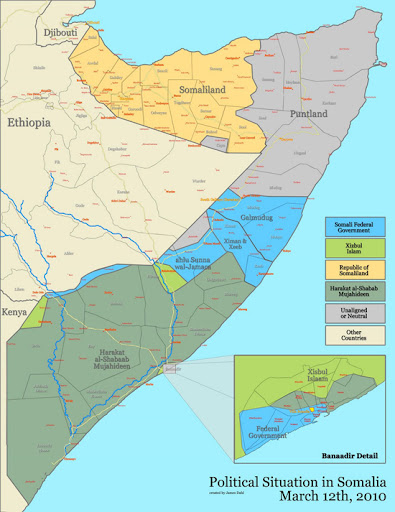
The UN- and U.S.-backed Transitional Federal Government (TFG) controls only parts of Mogadishu and small portions of central Somalia, while insurgent group Al Shabab controls nearly the entire south. The northern area is divided into semi-autonomous Somaliland and Puntland, which also fall outside of the transitional government’s control.
But the civil war is only one part of what Ould-Abdallah called a “horrendous” humanitarian crisis.
According to the UN, 3.2 million Somalis rely on foreign assistance for food – 43 percent of the population – and 1.4 million have been internally displaced by war. Another UN-backed study finds that approximately 50 percent of women and 60 percent of children under five are anemic. Most distressing, the UN Security Council reported in March that up to half of all food aid sent to Somalia is diverted from people in need by militants and corrupt officials, including UN and government employees.
Because of the country’s large youth bulge – 45 percent of Somalia’s population is under the age of 15 – food and health conditions are expected to get much worse before they get better. In the 2009 Failed States Index, Somalia ranks as the least stable state in the world and, along with Zimbabwe, has the highest demographic pressures.
Islamic Militants and the Battle for the High Seas
Yet the West continues to focus on the sensational pirate attacks on Somalia’s coast. The root cause of these attacks is not simply lawlessness say Somali officials, instead, they began partly as desperate attempts to stop foreign commercial fleets from depleting Somalia’s tuna-rich, lawless shores. A 2006 High Seas Task Force reported that at any given time, “some 700 foreign-owned vessels are engaged in unlicensed and unregulated fishing in Somali waters, exploiting high value species such as tuna, shark, lobster and deep-water shrimp.”
The transitional government opposes the fishermen-turned-pirates, but can do little to stop them. Al Shabab has thus far allowed pirates to operate freely in their territory. Their tacit approval may be tied to reports that the group has received portions of ransoms in the past.
Another hardline Islamist group, Hizbul Islam, recently took over the pirate safe haven of Haradhere, allegedly in response to local pleas for better security, but the move may simply have been part of an ongoing struggle with Al Shabab for control of pirate ransoms and port taxes – one of the few sectors of the economy that has remained lucrative.
“I can say to you, they are not different from pirates — they also want money,” Yusuf Mohamed Siad, defense minister with Somalia’s TFG, told Time Magazine.
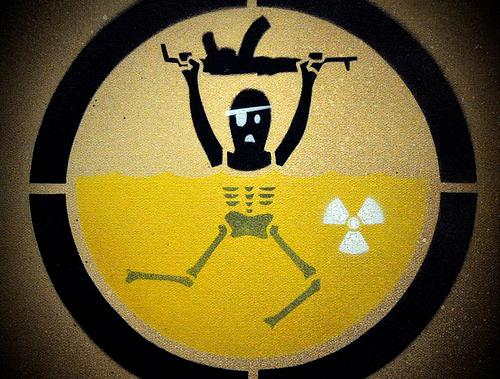
A Toxic ThreatInitially the pirates claimed one of their goals was to ward off “mysterious European ships” that were allegedly dumping barrels of toxic waste offshore. UN envoy Ould-Abdallah told Johann Hari of The Independent in 2009 that “somebody is dumping nuclear material here. There is also lead, and heavy metals such as cadmium and mercury – you name it.” After the 2005 tsunami, “hundreds of the dumped and leaking barrels washed up on shore. People began to suffer from radiation sickness, and more than 300 died,” Hari reports.
Finnish Minister of Parliament Pekka Haavisto, speaking to ECSP last year, urged UN investigation of the claims. “If there are rumors, we should go check them out,” said the former head of the UN Environment Program’s Post-Conflict Assessment Unit:I think it is possible to send an international scientific assessment team in to take samples and find out whether there are environmental contamination and health threats. Residents of these communities, including the pirate villages, want to know if they are being poisoned, just like any other community would.
To date, there has been no action to address these claims.
Drought, Deforestation, and Migration
While foreign entities may have been exploiting Somalia’s oceans, the climate has played havoc with the rest of the country. Reuters and IRIN report that the worst drought in a decade has stricken some parts of the interior, while others parts of the country face heavy flooding from rainfall further upstream in Ethiopia.
Land management has also broken down. A 2006 Academy for Peace and Development study estimated that the province of Somaliland alone consumes up 2.5 million trees each year for charcoal, which is used as a cheaper alternative to gas for cooking and heating. A 2004 Somaliland ministry study on charcoal called the issue of deforestation for charcoal production “the most critical issue that might lead to a national environmental disaster.”
West of Mogadishu, Al Shabab has begun playing the role of environmental steward, instituting a strict ban on all tree-cutting – a remarkable decree from a group best known for their brutal application of Sharia law rather than sound governance.
The result of this turmoil is an ever-increasing flow of displaced people – nearly 170,000 alone so far this year, according to the Washington Post – driven by war, poverty, and environmental problems. The burden is beginning to weigh on Somalia’s neighbors, says the UNHCR.
The Neighborhood Effect
One of the largest flows of displaced Somalis is into the Arabian peninsula country of Yemen – itself a failing state, with 3.4 million in need of food aid, 35 percent unemployment, a massive youth bulge, dwindling water and oil resources, and a burgeoning Al Qaeda presence.
In testimony on Yemen earlier this year, Assistant Secretary of State Jeffrey Feltman said that the country’s demographics were simply unsustainable:Water resources are fast being depleted. With over half of its people living in poverty and the population growing at an unsustainable 3.2 percent per year, economic conditions threaten to worsen and further tax the government’s already limited capacity to ensure basic levels of support and opportunity for its citizens.
Other neighboring countries face similar crises of drought, food shortage, and overpopulation – Ethiopia has 12 million short of food, Kenya, 3.5 million, says Reuters. UNHCR reports that in Djibouti, a common first choice for fleeing Somalis, the number of new arrivals has more than doubled since last year, and the country’s main refugee camp is facing a serious water crisis.
A Case Study in Collapse
The ballooning crises of Somalia encompass a worst-case scenario for the intersection of environmental, demographic, and conventional security concerns. Civil war, rapid population growth, drought, and resource depletion have not only contributed to the complete collapse of a sovereign state, but could also lead to similar problems for Somalia’s neighbors – threatening a domino effect of destabilization that no military force alone will be able to prevent.
Speaking at a naval conference in Abu Dhabi this week, Australian Vice Admiral Russell Crane told ASD News that, “The symptoms (piracy) we’re seeing now off Somalia, in the Gulf of Aden, are clearly an outcome of what’s going on on the ground there. As sailors, we’re really just treating the symptoms.”
Sources: Academy for Peace and Development, AP, ASD News, Carnegie Endowment for International Peace, Christian Science Monitor, Foreign Policy, High Seas Task Force, Independent, IRIN, New York Times, Population Action, Population Reference Bureau, Reuters, Telegraph, Time, UN, US State Department, War is Boring, Washington Post.
Photo Credits: “Don’t Swim in Somalia (It’s Toxic)” courtesy of Flickr user craynol and “Somalia map states regions districts” courtesy of Wikimedia Commons. -
Deepwater Horizon Prompts DOD Relief Efforts, Questions About Energy Security
›May 6, 2010 // By Schuyler NullAs the crippled Deepwater Horizon oil rig continues to spew an estimated 210,000 gallons of crude oil a day into the Gulf of Mexico, the Department of Defense has been asked to bring its considerable resources to bear on what has become an increasingly more common mission – disaster relief.
British Petroleum has requested specialized military imaging software and remote operating systems that are unavailable on the commercial market in order to help track and contain the spill.
In addition, the Coast Guard has been coordinating efforts to burn off oil collecting on the ocean’s surface and thousands of National Guard units have been ordered to the Gulf coast to help erect barriers in a bid to halt what President Obama called “a massive and potentially unprecedented environmental disaster,” as the oil slick creeps towards the coast.
As shown by these calls and the ongoing earthquake relief effort in Haiti, the military’s ability to respond to large-scale, catastrophic natural (and manmade) disasters is currently considered unmatched. The first Air National Guard aircraft was on the ground in Haiti 23 hours after the earthquake first struck, and DOD’s Transportation Command was able to begin supporting USAID relief efforts almost immediately. The Department of Defense also spearheaded American relief efforts after the 2004 tsunami and played a critical role in providing aid and security in New Orleans after Hurricane Katrina.
The Pentagon’s four-year strategic doctrine, the Quadrennial Defense Review (QDR), released earlier this year, predicts that such humanitarian missions will become a more common occurrence for America’s military, as the world grapples with the destabilizing effects of climate change, population growth, and competition over finite energy resources. Some experts see this expansion of the military’s portfolio as an essential part of a “hearts and minds” strategy, while others are critical of the military’s ability to navigate the difficulties of long-term reconstruction.
The QDR also highlights DOD’s efforts to reduce the need for oil – and thus deepwater oil rigs – in the first place.
The DOD as a whole is the largest consumer of energy in the United States, consuming a million gallons of petroleum every three days. In accordance with the QDR, Pentagon leaders have set an ambitious goal of procuring at least 25 percent of the military’s non-tactical energy requirement from renewable sources by 2025. The Air Force – by far the Pentagon’s largest consumer of petroleum – would like to acquire half of its domestic jet fuel requirement from alternative fuels by 2016 and successfully flight-tested a F/A-18 “Green Hornet” on Earth Day, using a blend of camelina oil and jet fuel.
At a speech at Andrews Air Force Base in March, President Obama lauded these efforts as key steps to moving beyond a petroleum-dependant economy. However, at the same event, he announced the expansion of off-shore drilling, in what some saw as a political bone thrown to conservatives. Since the Deepwater Horizon incident, the administration announced a temporary moratorium until the causes of the rig explosion and wellhead collapse have been investigated.
Cleo Paskal, associate fellow for the Energy, Environment, and Development Programme at Chatham House, warns that without paying adequate attention to the potential effects of a changing environment on energy infrastructure projects of the future – like the kind of off-shore drilling proposed for the Gulf and Eastern seaboard – such disasters may occur more frequently.
In an interview with ECSP last fall, Paskal pointed out that off-shore oil and gas platforms in the Gulf of Mexico were a prime example of how a changing environment – such as increased storm frequency and strength – can impact existing infrastructure. “Katrina and Rita destroyed over 400 platforms, as well as refining capacity onshore. That creates a global spike in energy prices apart from having to rebuild the infrastructure.”
The Department of Defense has demonstrated – in policy, with the QDR, and in action – that it can marshal its considerable resources in the service of renewable energy and disaster relief. But given the scope of today’s climate and energy challenges, it will take much more to solve these problems.
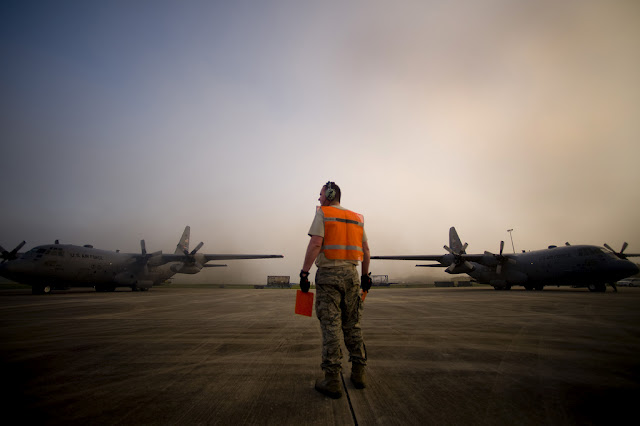
Photo Credit: “Deepwater Horizon,” courtesy of flickr user U.S. Coast Guard. U.S. Air Force Tech. Sgt. Joe Torba of the 910th Aircraft Maintenance Squadron, which specializes in aerial spray, prepares to dispatch aircraft to a Gulf staging area. -
DOD Measures Up On Climate Change, Energy
›May 5, 2010 // By Schuyler Null“As Congress deliberates its role, DOD is moving ahead steadily on a broad range of energy and climate initiatives,” says former Senator John Warner in a recent Pew report, Reenergizing America’s Defense: How the Armed Forces Are Stepping Forward to Combat Climate Change and Improve the U.S. Energy Posture.
The military as a leader and catalyst for renewable energy was a key focus of the recently released Quadrennial Defense Review (QDR), which for the first time included consideration of the effects of climate change and excessive energy consumption on military planning:Assessments conducted by the intelligence community indicate that climate change could have significant geopolitical impacts around the world, contributing to poverty, environmental degradation, and the further weakening of fragile governments. Climate change will contribute to food and water scarcity, will increase the spread of disease and may spur or exacerbate mass migration.
According to the Pew report, the Department of Defense has set a goal of producing or procuring at least 25 percent of its non-tactical electric energy needs from renewable sources by 2025. Highlights of the service’s efforts include:
The Pew report offers a generally favorable appraisal of the military’s response to the “twin threats of energy dependence and climate change” and the progress made towards reaching federal energy mandates. However, the authors let slide that the overwhelming amount of DOD energy usage is tied to tactical consumption, which has been given inadequate attention thus far (consider that the senior Pentagon official overseeing tactical energy planning was only just appointed, although the position has existed since October 2008).- The U.S. Navy’s “Great Green Fleet” carrier strike group, which will run entirely on alternative fuels and nuclear power by 2016;
- The construction of a 500-megawatt solar facility in Fort Irwin, California by the U.S. Army which will help the base reach ‘net-zero plus’ status;
- The goal of acquiring 50 percent of the U.S. Air Force’s aviation fuels from biofuel blends by 2016;
- The U.S. Marine Corps’ 10×10 campaign to develop a comprehensive energy strategy and meet ten goals aimed at reducing energy and water intensity and increasing the use of renewable electric energy by the end of 2010.
Interest in this field has grown quickly, as evidenced by the more than 400 people gathered at the launch of the latest report from the Center for New American Security (CNAS), Broadening Horizons: Climate Change and the U.S. Armed Forces – a big increase from the 50 or so at CNAS’ first natural security event in June 2008.
The CNAS study, much like the Pew report, breaks down the military’s efforts by service, but the study’s authors – including U.S. Navy Commander Herbert E. Carmen – thankfully provide more specific recommendations for what could be done better.
Based on research, interviews, and site visits, the study offers geographically specific recommendations for each of the Unified Commands, as well as seven broad recommendations for DOD as a whole:
“While we believe there is still much work ahead, there is a growing commitment to addressing energy and climate change within the DOD,” said USN Commander Carmen in the report:- In light of its implications for the global commons, ensure that DOD is included in the emerging debate over geoengineering.
- Urge U.S. ratification of the UN Convention on the Law of the Sea in order to provide global leadership and protect U.S. and DOD interests, especially in the context of an opening Arctic sea.
- Eliminate the divided command over the Arctic and assign U.S. Northern Command (NORTHCOM) as the supported commander.
- The U.S. government should make an informed decision about constructing nuclear reactors on military bases and provide clear policy guidelines to DOD.
- Congress and DOD should move away from the “cost avoidance” structure of current renewable energy, conservation, and efficiency practices in order to reward proactive commanders and encourage further investment.
- All of the services should improve their understanding of how climate change will effect their missions and capabilities; e.g. migration and water issues may impact Army missions, a melting Arctic, the Navy.
- The Air Force should fully integrate planning for both energy security and climate change into a single effort.
Indeed, in our conversation with officials in the Office of the Secretary of Defense for Policy, it was clear that, in developing the climate change and energy section of the 2010 QDR, the Department of Defense has developed a nascent, intellectual infrastructure of civilian and military professionals who will continue to study the national security implications of climate change, and, we hope, will continue to reevaluate climate change risks and opportunities as the science continues to evolve.
A holistic view of national security that includes energy and environment, as well as demographic and development inputs, continues to gain traction as an important driver in DOD policy and planning.
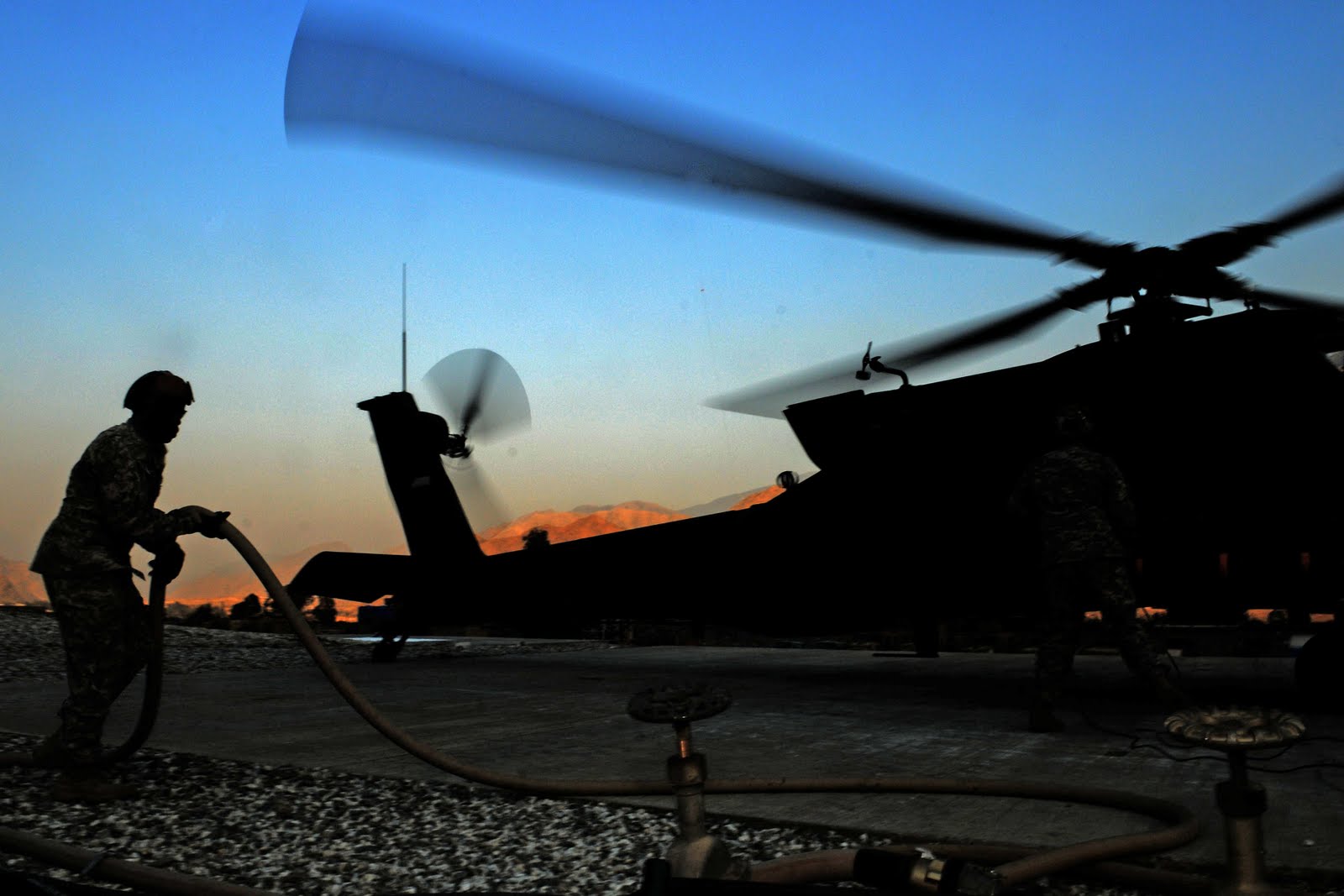
Photo Credit: “Refueling at FOB Wright” courtesy of Flickr user The U.S. Army. -
Climate Change and U.S. Military Strategy
›Promoting the Dialogue: Climate Change and U.S. Ground Forces, a new working paper by Christine Parthemore of the Center for New American Security (CNAS), delves into how climate change will affect future operating environments, related missions, equipment, and capabilities of U.S. ground forces. The working paper, part of “Promoting the Dialogue” series, is based on interviews, research, and site visits. The paper follows Promoting the Dialogue: Climate Change and the Maritime Services, also by Parthemore, and a publication on climate change’s implications for air missions is forthcoming. Parthemore concludes with recommendations for areas of future research and a call for “[d]eeper intellectual study of how climate change is likely to affect the U.S. ground forces.”
Neil Morisetti, U.K. rear admiral and climate and energy security envoy, and Amanda Dory, U.S. deputy assistant secretary of defense for strategy, published an article in Defense News discussing the inclusion of climate change as a new variable in strategic planning. “The Climate Variable: World Militaries Grapple With New Security Calculus” labels climate change a “threat multiplier,” noting that “[c]limate change will amplify the impact of some of the world’s most difficult and common challenges.” Morisetti and Dory call for greater military-to-military engagement concerning disaster response, studies into at-risk military infrastructure, and efforts to foster innovative energy technologies. “Current military operations must continue to be our highest priority, but we also have a responsibility to assess the future security environment, including the impacts of climate change and other key trends such as energy, demographics, economics and science/technology,” they conclude.
Morisetti and Dory recently spoke at the Wilson Center as part of a panel discussing climate change and energy in defense doctrine. -
Demobilized Soldiers Developing Water Projects – and Peace
›Can demobilized ex-combatants help improve water resources in post-conflict countries? Last fall, the Global Water Institute (GWI) held a symposium in Brussels to find out.
Seventy representatives from the African Union, the United Nations, civil society, research institutes, and EU water policy advisors discussed ways in which former soldiers could be employed in the water sector to create peace dividends, bridge divided societies, and improve water security in countries recovering from conflict.
GWI, which is headquartered in Brussels and led by Valerie Ndaruzaniye, formerly of the Institute of Multi-Track Diplomacy’s Global Water Program, hopes to use the water sector development to meet multiple objectives in post-conflict reconstruction, such as:- increasing environmental security,
- reducing the likelihood of future conflict over water,
- enhancing security and stability, and
- employing demobilized ex-combatants to create peace dividends.
While disarmament, demobilization, and reintegration (DDR), is a fairly new process in post-conflict settings (the first program took place only 15 years ago), it has progressed rapidly in recent years, moving from a primarily military exercise to one focused on reintegration. Reintegration has also shifted from its exclusive focus on the ex-combatants, which often caused resentment in conflict-affected communities, to include women, children, youth, and the elderly and disabled, as well as the affected communities.
Reintegration is still the most difficult stage of any DDR program, not only for budgetary and political reasons, but also due to the processes of transitional justice and reconciliation. Through experience in the field, practitioners have realized that such programs are not simply technical exercises and must be better linked to wider recovery efforts and development programs for more sustainable results.
By supporting sustainable development in the water sector, and simultaneously contributing to reconciliation and peace dividends by involving ex-combatants in community development work, GWI can offer a substantial contribution to the reintegration process.
“Making the link between water management and DDR is a novel idea. GWI is a good example of integration of policy areas in order to build peace in some countries,” said Catherine Woolard, the director of the European Peacebuilding Liaison office.
Adrienne Stork is currently working on natural resource management and disarmament, demobilization, and reintegration programs jointly with the UNDP Bureau for Crisis Prevention and Recovery and the UNEP Disasters and Conflicts Unit in Geneva, Switzerland.
Photo Credits: Flickr User ISAFMEDIA, 080816-N-8726C-019
Showing posts from category military.