-
‘Restrepo’: Inside Afghanistan’s Korengal Valley
›August 2, 2010 // By Marie HokensonRestrepo, the riveting new documentary film from Tim Hetherington and Sebastian Junger, follows a platoon of U.S. soldiers deployed in the dangerous Korengal Valley of Afghanistan. As a cadet at West Point majoring in human geography, I was fascinated to watch the ways the soldiers confronted and adapted to the challenges posed by the local culture of the remote Afghan community surrounding their outpost.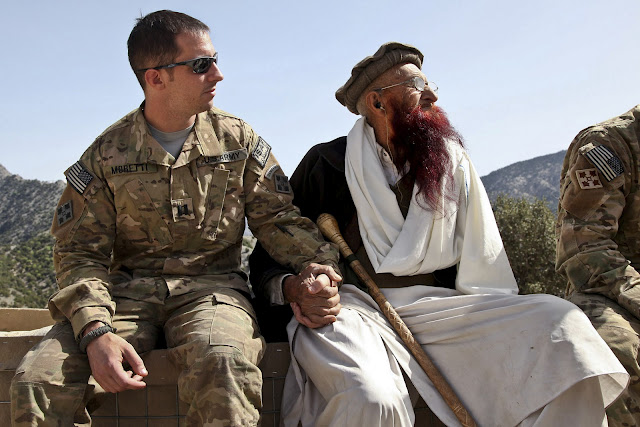
West Point’s human geography program delves into the relationships between facets of society and geography that may also have potentially significant security implications. In the wars in Iraq and Afghanistan, U.S. troops fight insurgents in difficult environments – from heavily urbanized cities to extremely remote valleys – while interacting with civilian populations with radically different languages and cultures.
Restrepo: Culture in Action and Under Fire
At the remote outpost Restrepo, named in memory of a medic killed in action, the platoon receives daily fire from insurgents as they seek to improve security enough to allow the construction of a road through the valley.
At a weekly shura, the company commander explains the benefits of the road to the village elders, yet they are either unconvinced or uninterested. This frustrating meeting reveals a cultural disconnect: the Americans see the road as the way to win Afghan “hearts and minds” by facilitating progress and bringing more revenue to the community, but the Afghans are suspicious of the Americans’ motives and promises, and not convinced of the benefits.
Another culture clash arises when a cow is caught in the outpost’s concertina wire. The soldiers kill the seriously injured cow, but this proves to be a continual source of tension in negotiations between the soldiers and the locals. Killing the cow was illegal, say the Afghan elders, who seek financial compensation that the Army is not willing to provide. Perhaps better understanding of regional culture could have prevented this relatively minor incident from souring relations.
On the other hand, by attending the traditional shura gatherings with village elders, the U.S. soldiers are showing their respect for Afghan culture while facilitating negotiations and, potentially, the sharing of useful intelligence.
Although not shown in the film, the U.S. military also demonstrates its understanding of Afghan culture through the growing use of female soldiers to reach out to Afghan women. As many women in Afghanistan are not allowed to be seen by unrelated men, female soldiers are tasked with searching houses and Afghan women, as well as assessing their need for aid and gathering intelligence from them.
West Point: Culture in Theory and Practice
Dealing with the problems faced by today’s soldiers, like those in Restrepo, requires understanding the current conflict landscape and its security implications. Understanding the influence of religion, language, development, and people on the world’s geography is vital to mapping the combat terrain.
Human geography instruction at West Point provides cadets with more perceptive views of other countries and the complex problems they face. Military geography analyzes urban and natural environments, as well as related interactions, such as the impact of population dynamics and nature resources on military operations. Land-use planning and management addresses conflicts over land use and environmental strategies. Other opportunities, such as study-abroad programs and interactions with foreign cadets, increase our exposure to other cultures and geographies.
Through my study of human geography, I have gained a much greater understanding of the people and countries where I travel and work today – and where I will go in the future as a commissioned officer in the U.S. Army.
Marie Hokenson is a cadet at the United States Military Academy at West Point and an intern with the Woodrow Wilson Center’s Environmental Change and Security Program.
Photo Credit: “Mutual support,” courtesy of flickr user The U.S. Army. -
Chad Briggs: Dealing With Risk and Uncertainty in Climate-Security Issues
›July 21, 2010 // By Wilson Center StaffWe must do more than simply take our current understanding of climate-change risk and extrapolate it into the future, asserted Chad Briggs of the Berlin-based Adelphi Research in a video interview with the Wilson Center’s Environmental Change and Security Program.
-
Demographics, Depleted Resources, and Al Qaeda Inflame Tensions in Yemen
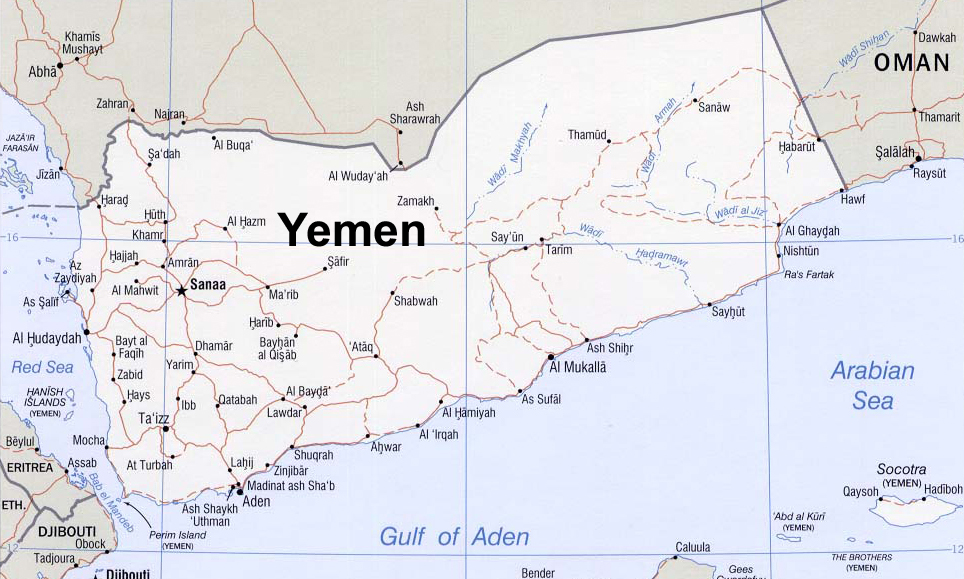
›July 21, 2010 // By Schuyler NullA second spectacular Al Qaeda attack on Yemeni government security buildings in less than a month is a worrisome sign that the terrorist group may be trying to take advantage of a country splitting at the seams. U.S. officials are concerned that Yemen, like neighboring Somalia, may become a failed state due to a myriad of challenges, including a separatist movement in the south, tensions over government corruption charges, competition for dwindling natural resources, and one of the fastest growing populations in the world.
Wells Running Dry
Water shortages have become commonplace in Yemen. Last year, the Sunday Times reported that Yemen could become the first modern state to run out of water, “providing a taste of the conflict and mass movement of populations that may spread across the world if population growth outstrips natural resources.”
Earlier this year, government forces came to blows with locals over a disputed water well license in the south. Twenty homes were damaged and two people were killed during the resulting eight day stand-off, according to Reuters.
The heavily populated highlands, home to the capital city of Sanaa, face particularly staggering scarcity. Wells serving the two million people in the capital must now stretch 2,600 – 3,200 feet below the surface to reach an aquifer and many have simply dried up, according to reports.
Yemeni Water and Environment Minister Abdul-Rahman al-Iryani told a Reuters reporter that the country’s burgeoning water crisis is “almost inevitable because of the geography and climate of Yemen, coupled with uncontrolled population growth and very low capacity for managing resources.”
Nineteen of Yemen’s 21 aquifers are being drained faster than they can recover, due to diesel subsidies that encourage excessive pumping, loose government enforcement of existing drilling laws, and growing population demand. Qat farmers in particular represent an excessive portion of water consumption; growing the popular narcotic accounts for 37 percent of agricultural water consumption. Meanwhile, according to a study by the World Food Programme this year, 32.1 percent of the population is food insecure and the country has become reliant on imported wheat.
Yemen’s other wells – the oil variety – have long been the country’s sole source of significant income. According to ASPO, oil has historically represented 70-75 percent of the government’s revenue. But recent exploration efforts have failed to uncover significant additions to Yemen’s reserves, and as a result oil exports have declined 56 percent since 2001. The steep decline has pushed Yemeni authorities to look to other natural resources, such as rare minerals and natural gas, but the infrastructure to support such projects will take significant time and money to develop.
The Fastest Growing Population in the Middle East
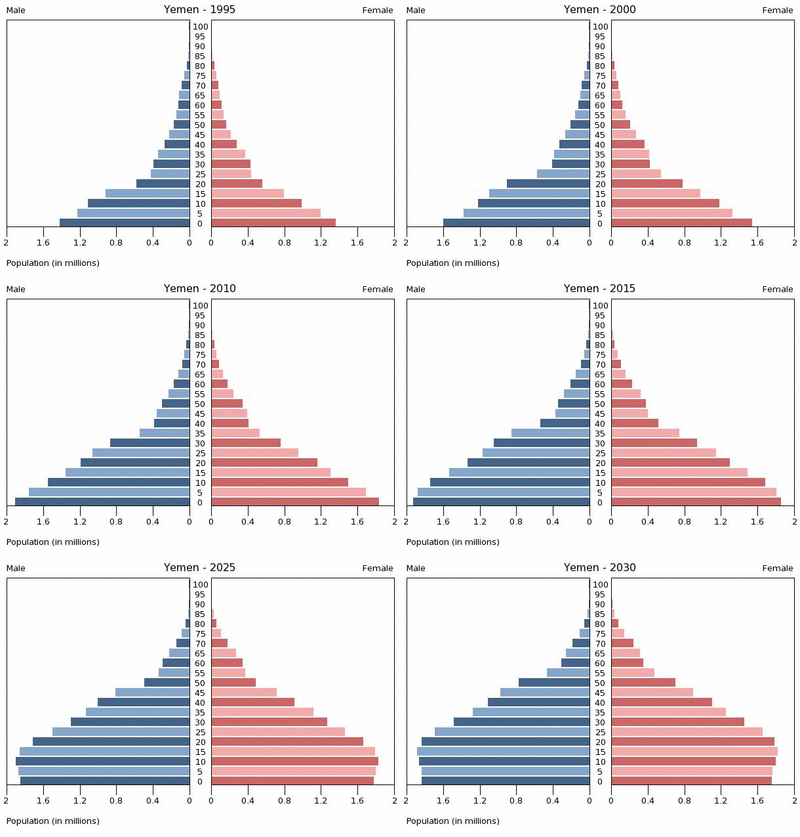
Despite the country’s limited resources, Yemen’s population of 22.8 million people is growing faster than any other country in the Middle East. According to projections from the Population Reference Bureau, by 2050, Yemen’s burgeoning population is expected to rival that of Spain.
Fully 45 percent of the current population is under the age of 15 – a troubling ratio that is expected to grow in the near future. The charts from the U.S. Census Bureau embedded below illustrate the dramatic growth of the country’s youth bulge from 1995 through 2030.A poor record on women’s rights and a highly rural, traditional society contribute to these rapid growth scenarios. According to Population Action International’s Elizabeth Leahy Madsen, only 41 percent of Yemeni women are literate and their total fertility rate is well over the global average. A recent survey from Social Watch ranking education, economic, and political empowerment rated Yemen last in the world in gender equity. Yemeni scholar Sultana Al-Jeham pointed out during her Wilson Center presentation, “Yemeni Women: Challenges and Little Hope,” that there is only one woman in a national parliament of 301 members and that ambitious political women routinely face systematic marginalization.
A contributing factor is that 70 percent of Yemen’s population live outside of cities – far more than any other country in the region – making access to education and healthcare difficult, especially in the large swaths of land not controlled by the government.
External migration from war-torn east Africa adds to Yemen’s demographic strains. According to IRIN, approximately 700,000 Somali refugees currently reside in country, and that number may grow as the situation in Somalia continues to escalate. Within Yemen’s own borders, another 320,000 internally displaced people have fled conflict-ridden areas, further disrupting the country’s internal dynamics.
Corruption and Rebellion
Competition over resources, perceived corruption, and Al Qaeda activity have put considerable pressure on the Saleh regime in Sanaa. The government faces serious dissidence in both the north and the south, and the Los Angeles Times reports that talk of rebellion is both widespread and loud:Much of southern and eastern Yemen are almost entirely beyond the central government’s control. Many Yemeni soldiers say they won’t wear their uniforms outside the southern port city of Aden for fear of being killed. In recent months, officials have been attacked after trying to raise the Yemeni flag over government offices in the south.
USAID rates Yemen’s effective governance amongst the lowest in the world (below the 25th percentile), reflecting Sanaa’s poor control and high levels of corruption. Some reports claim that up to a third of Yemen’s 100,000-man army is made up of “ghost soldiers” who do not actually exist but whose commanders collect their salaries and equipment to sell on the open market.
The West and Al Qaeda
In testimony before Congress earlier this year, Assistant Secretary of State Jeffrey Feltman called on the Yemeni government to take a comprehensive approach to “address the security, political, and economic challenges that it faces,” including its natural resource and demographic challenges.
The Yemeni government is poised to receive $150 million in bilateral military assistance from the United States. But some experts are critical of that approach: Dr. Mustafa Alani of the Dubai-based Gulf Research Center told UN Dispatch that, “you are not going to solve the terrorist problem in Yemen by killing terrorists,” calling instead for investing in economic development.
USAID has budgeted $67 million for development assistance, economic support, and training programs in Yemen for FY 2010 and has requested $106 million for FY 2011 (although about a third is designated for foreign military financing).
While Yemen’s Al Qaeda presence continues to captivate Western governments, it is the country’s other problems – resource scarcity, corruption, and demographic issues – that make it vulnerable to begin with and arguably represent the greater threat to its long-term stability. The United States and other developed countries should address these cascading problems in constructive ways, before the country devolves into a more dangerous state like Somalia or Afghanistan. In keeping with the tenets of the Obama administration’s National Security Strategy, an exercise in American soft power in Yemen might pay great dividends in hard power gains.
Sources: Association for the Study of Peak Oil – USA, Central Intelligence Agency, Congressional Research Service, Guardian, IRIN, Los Angeles Times, New York Times, Population Action International, Population Reference Bureau, ReliefWeb, Reuters, Social Watch, Sunday Times, U.S. Census Bureau, U.S. Department of State, UN Dispatch, USA Today, USAID, World Food Programme.
Photo Credit: “Yemen pol 2002” via Wikimedia Commons courtesy of the U.S. Federal Government and “Yemen youth bulge animation” arranged by Schuyler Null using images courtesy of the U.S. Census Bureau’s International Data Base. -
In Kampala, African Leaders Discuss Maternal Health While Attacks Renew Concern over Somalia
›July 19, 2010 // By Schuyler NullLeaders from 49 African countries are meeting today in Kampala, Uganda, at the start of a scheduled week-long African Union (AU) summit on maternal and child health. Uganda is a fitting location, as it faces some of the toughest health and demographic challenges in Africa, including a very young and rapidly growing population and poor maternal health services. However, with the memory of last week’s twin bomb blasts still fresh, peace and security issues will surely be on the agenda as well.
Somalia’s lead insurgency group, Al Shabab, took responsibility for the attacks in Kampala, which killed more than 70 people. Al Shabab’s first prominent cross-border attack is only the latest sign that Somalia’s issues – which also include a very young and rapidly growing population – are starting to spill over its borders. For more on Somalia’s deepening crisis and its effects on the East African region, see New Security Beat’s recent analysis: “As Somalia Sinks, Neighbors Face a Fight to Stay Afloat.”
Sources: AP, Washington Post.
Photo Credit: Adapted from “Ugandan African Union contingent in Mogadishu, Nov. 25, 2007” courtesy of flickr user david axe. -
DRC’s Conflict Minerals: Can U.S. Law Impact the Violence?
›July 13, 2010 // By Schuyler NullApple CEO Steve Jobs, in a personal email posted by Wired, recently tried to explain to a concerned iPhone customer the complexity of ensuring Apple’s devices do not use conflict minerals like those helping to fund the civil war in the Democratic Republic of Congo. However much one might be tempted to pile on Apple at the moment, Mr. Jobs is on to something with regard to the conflict minerals trade – expressing outrage and raising awareness of the problem is one thing but actually implementing an effective solution is quite another.
As finely articulated in a number of recent articles about conflict minerals in the DRC (see the New York Times, Guardian, and Foreign Policy for example), the Congo is, and has been for some time, a failed state.
Although a ceasefire was signed in 2003, fighting has continued in the far east of the country around North and South Kivu provinces, home to heavy deposits of tin, gold, coltan, and other minerals. The remote area is very diverse ethnically and has seen clashing between government troops and various militias from the Congo itself as well as encroachments by its neighbors Rwanda, Uganda, and Burundi. Referred to as “the Third World War” by many, there are by some accounts 23 different armed groups involved in the fighting, and accusations of massacres, rampant human rights abuses, extortion, and pillaging are common. According to the UN Special Representative on Sexual Violence in Conflict, “there is almost total impunity for rape in the Congo,” and a survey by the International Rescue Committee puts the estimated dead from preventable diseases, malnutrition, and conflict in the area at over five million over the past decade (or 45,000 deaths a month).
At a recent event in Washington, DC on this terrible conflict (see Natural Security for an excellent summary), DRC Ambassador Faida Mitifu expressed her hope to the audience and panel (including U.S. Under Secretary of State Robert Hormats) that they would not limit themselves to “just talking.” Hosts John Pendergast and Andrew Sullivan of the NGO Enough Project hope to address the demand side of Congo’s mineral trade by pushing Congress to pass the Conflict Minerals Trade Act, which would require U.S. companies to face independent audits to certify their products are conflict mineral-free.
But Laura Seay, of Texas in Africa and the Christian Science Monitor, is dubious of this proposal, pointing out that:Without the basic tools of public order in place and functioning as instruments of the public good in the DRC, the provisions of this bill are likely to work about as well as the Kimberley Process Certification Scheme does in weak states that lack functioning governmental institutions – which is to say, not at all.
The Kimberely Process (KP) is a certification scheme that is supposed to stem the flow of “blood diamonds” that support corrupt regimes and fuel human rights abuses. But the KP’s governing body has recently reached a crisis of action over whether or not to punish Zimbabwe for alleged abuses, with one diamond magnate even claiming, according to IRIN, that “corrupt governments have turned the KP on its head – instead of eliminating human rights violations, the KP is legitimizing them.”
The problem with international transparency schemes like the Kimberely Process, the proposed Conflict Minerals Act, or even EITI, is that at the very least, a functioning government – if not a beneficent one – is needed to enforce regulations at the source. In the DRC’s case, not only does the government have little to no authority over the affected areas, but the mining militias are smuggling their loot, on foot in some cases, directly into neighboring countries anyway. By the time they reach U.S. companies (if ever – Americans are not the only consumers in the world), conflict minerals have passed hands so many times that proving their provenance is next to impossible.
Then there is the question of whether or not cutting off the militias, rogue military officials, and government forces from conflict mineral monies would even end violence in the region in the first place. Certainly many armed groups gain a great deal from their illegal mining activities (as do some locals), but is it the root cause of their discontent? In the best case scenario where mining revenues are actually decreased, would that really convince the remnants of the Hutu Interahamwe, fleeing retribution from the now majority-Tutsi Rwandan government, to suddenly put down their weapons? How about the Mai Mai, who are fighting the Hutu incursion into their homeland?
I for one find that hard to believe. Stopping the conflict mineral trade from afar is very difficult, if not impossible, and even if we could end the trade, it would not necessarily stop the suffering. Illegal mining does play a large part in supporting rebel groups, but to address the human security problems that have so horrified the world, international attention ought to first be turned toward improving governance mechanisms in the Congo and rethinking the troubled UN peacekeeping mission (how about more involvement out of U.S. AFRICOM too?). The failure of the current UN mission is well documented, but withdrawing the largest peacekeeping force in the world in the face of continued violence, including the recent death of Congo’s most famous human rights activist under suspicious circumstances, seems more likely to cause harm than good.
Would passing the Conflict Minerals Act make Apple consumers feel better? Perhaps. But that’s not the point. Environmental security measures that prevent the DRC’s tremendous mineral wealth from being used to fund conflict can only make an impact if the government has some measure of accountable control over the area. To make a real difference in east Congo, human security must first be addressed directly and forcefully.
Sources: BBC, Christian Science Monitor, Daily Beast, Human Rights Watch, IPS News, IRIN News, International Rescue Committee, Enough Project, Foreign Policy, GlobalSecurity.org, Globe and Mail, New York Times, Share the World’s Resources, Southern Times, Times Online, UN, Wired.
Image Credit: “Minerals and Forests of the DRC” from ECSP Report 12, courtesy of Philippe Rekacewicz, Le Monde diplomatique, Paris, and Environment and Security Institute, The Hague, January 2003. -
U.S. Navy Task Force on Implications of Climate Change
›What about climate change will impact us? That’s the question the Navy’s Task Force Climate Change is trying to answer. Rear Admiral David Titley explains the task force’s objectives in this interview by the American Geophysical Union (AGU) at their recent “Climate Change and National Security” event on the Hill.
The task force is part of the military’s recent efforts to try to better understand what climate change will mean for the armed forces, from rising sea levels and ocean acidification to changing precipitation patterns. In the interview, Admiral Titley points out that for the Navy in particular, it is important to understand and anticipate what changes may occur since so many affect the maritime environment.
The Navy’s biggest near-term concern is the Arctic, where Admiral Titley says they expect to face significant periods of almost completely open ocean during the next two to three decades. “That has huge implications,” says Titley, “since as we all know the Arctic is in fact an ocean and we are the United States Navy. So that will be an ocean that we will be called upon to be present in that right now we’re not.”
Longer term, the admiral points to resource scarcity and access issues and sea level rise (potentially 1-2 meters) as the most important contributing factors to instability, particularly in places like Asia, where even small changes can have huge impacts on the stability of certain countries. The sum of these parts plus population growth, an intersection we examine here at The New Security Beat, is something that deserves more attention, according to Titley. “The combination of climate, water, demographics, natural resources – the interplay of all those – I think needs to be looked at,” he says.
Check out the AGU site for more information, including an interview with Jeffrey Mazo – whose book Climate Conflict we recently reviewed – discussing climate change winners and losers and the developing world (hint: the developing world are the losers).
Sources: American Geophysical Union, New York Times.
Video Credit: “What does Climate Change mean for the US Navy?” courtesy of YouTube user AGUvideos. -
Backdraft: The Conflict Potential of Climate Mitigation and Adaptation
›The European Union’s biofuel goal for 2020 “is a good example of setting a target…without really thinking through [the] secondary, third, or fourth order consequences,” said Alexander Carius, co-founder and managing director of Adelphi Research and Adelphi Consult. While the 2007-2008 global food crisis demonstrated that the growth of crops for fuels has “tremendous effects” in the developing world, analysis of these threats are underdeveloped and are not incorporated into climate change policies, he said. [Video Below]
-
Book Review: ‘Climate Conflict: How Global Warming Threatens Security and What to Do About It’ by Jeffrey Mazo
›June 8, 2010 // By Dan AsinThe heated back-and-forth over climate conflict in the blogosphere and popular press prompts the questions: In the debate over the security threat of a warming planet, who is spewing the hot air? Does climate change precipitate conflict, and if so, who is most at risk?
In Climate Conflict: How Global Warming Threatens Security and What to Do About It, Jeffrey Mazo unabashedly argues that weak–but not yet failed–states are at the greatest risk of climate-driven conflict. Packed into only 166 pages, the book takes readers on a crash course through climate science; 10,000 years of human-environmental history; case studies of the pre-modern South Pacific and modern-day Colombia, Indonesia, and Darfur; and analysis of geopolitical instability and stressors. This tour d’horizon all builds up to one point: Global warming and climate change threaten our security.
Key to Mazo’s work is the important but oft-overlooked insight that it is not the magnitude of climate change, but the difference between the rate of climate change and a society’s ability to adapt that threatens stability. He also confronts the all-too-common assertion that accepting climate change as a threat multiplier absolves individuals of culpability, and is explicit that intrastate–rather than interstate–conflict is the norm.
The Weakest Are Not the Greatest Threat
Mazo weaves threads of non-traditional and human security throughout the text, asserting that “there is no real contradiction between humanitarian and security goals” (pg. 132). However, his primary concern is the security of the nation-state and the international system. He argues that the next two to four decades are the most relevant time for strategic planning.
Within this context, Mazo claims global warming’s central security challenge will be the threat it poses to stability in states that are either unable or unwilling to adapt. Few will be surprised, therefore, when he says weak, fragile, and failing states appear the most vulnerable.
Mazo suggests that already fragile or failed states lying in climate-sensitive areas–namely a handful of states in sub-Saharan Africa, plus Haiti, Iraq, and Afghanistan–are the most likely to experience increased volatility as a result of warming-induced climate change. Yet he departs from received wisdom when he suggests that global warming’s greatest threat to international security is actually how it will impact more resilient states like Burkina Faso, Colombia, and Indonesia.
Precisely because they are less at risk, the onset of instability in these states would have a greater impact. Exacerbating conflict or instability in a fragile or failed state, such as the Democratic Republic of Congo, would not ripple through the international security framework in dramatically new ways. But the results of new conflict or instability in relatively stable states, such as Colombia, would. Mazo believes that the greater quantitative and qualitative impact of conflict in more resilient states renders them greater areas of concern.
Climate Factor Is One of Many
In no instance will climate change be the sole factor in conflict or state collapse. In already fragile or failed states, such as Sudan, instability is the product of a complex range of factors–political, social, and economic–many of which are non-environmental. “No single factor is necessary or sufficient,” writes Mazo (p. 126).
As it becomes increasingly pronounced, climate change may play a larger role in contributing toward volatility and instability. It is unlikely, however, to precipitate conflict where other risk factors do not already exist.
Adaptation Is Key
To address the threat to otherwise stable countries, Mazo advocates improving their latent capacity for adaptation. Good governance, rule of law, education, economic development: each is a key factor in a state’s ability to adapt. Variations across these factors may explain why death tolls from natural disasters in Bangladesh have fallen in recent years while those in Burma have risen.
Adaptation efforts should prioritize weak or recovering states that “have proved able to cope but are at particular risk,” Mazo writes (p. 133). Failing or failed states are either too susceptible to other conflict factors or too far advanced along the path of instability for adaptation to be of use to forestalling threats to international security. His argument is not to consign those in the most dire circumstances to a perpetual state of misery but, from a security perspective, to focus constrained resources on states where they will have the greatest impact. In states with the capacity to effectively absorb inflows, adaptation can preempt conflict, not simply reduce it.
Mazo does not ignore mitigation, and recognizes that it works in tandem with adaptation: Mitigation “is the only way of avoiding the most dire consequences of global warming, which would exceed the capacity of individuals, nations or the international system to adapt,” he notes (p. 124). Nevertheless, he argues that mitigation strategies “take much longer to bear fruit,” and that a certain amount of warming in the short- to medium-term is inevitable (p. 133). Against this warming, resilient adaptation is our best defense.
Case in Point: Indonesia
One otherwise stable state whose stability is threatened by climate change is Indonesia. Having suffered political and social unrest following the Asian financial crisis in 1997 and sectarian violence following Timor Leste’s independence in 1999, Indonesia avoided both failure and collapse to emerge as a flawed but vibrant democracy and Southeast Asia’s largest economy.
Indonesia is now home to the largest Muslim population in the world and is a key to regional security, yet its success “is potentially threatened by climate change,” writes Mazo; “food insecurity will be the greatest risk” (pg. 116).
Annual mean temperatures in Indonesia rose by 0.3°C between 1990 and 2005, and are predicted to rise an additional 0.36-0.47°C by 2020. The rainy seasons will shorten, increasing the risk of either flooding or drought. El Nino weather patterns–which in 1997 damaged over 400,000 hectares of rice and coffee, cocoa, and rubber cash crops–are expected to become more extreme and frequent in the future.
Climate change will further widen the substantial wealth gap between Indonesia’s rich and poor and, when it has differential impacts in different regions, “could lead to a revival of separatism” (pg. 117). While Mazo says threats from climate change will not be enough to push Indonesia into instability by themselves, he warns that if other destabilizing factors begin to emerge, “the added stress of climate change could accelerate the trend” (pg. 117).
Short and Sweet
Unlike some popular commentators on climate and security, Mazo does not confound brevity with hyperbole. While its concise format best lends itself to policymakers, students, and curious readers who are short on time, Climate Conflict’s content and its compendium of more than 320 citations make it deserving of a spot on everyone’s bookshelf.
Showing posts from category military.