-
Civilian Power in a Complex, Uncertain World
›
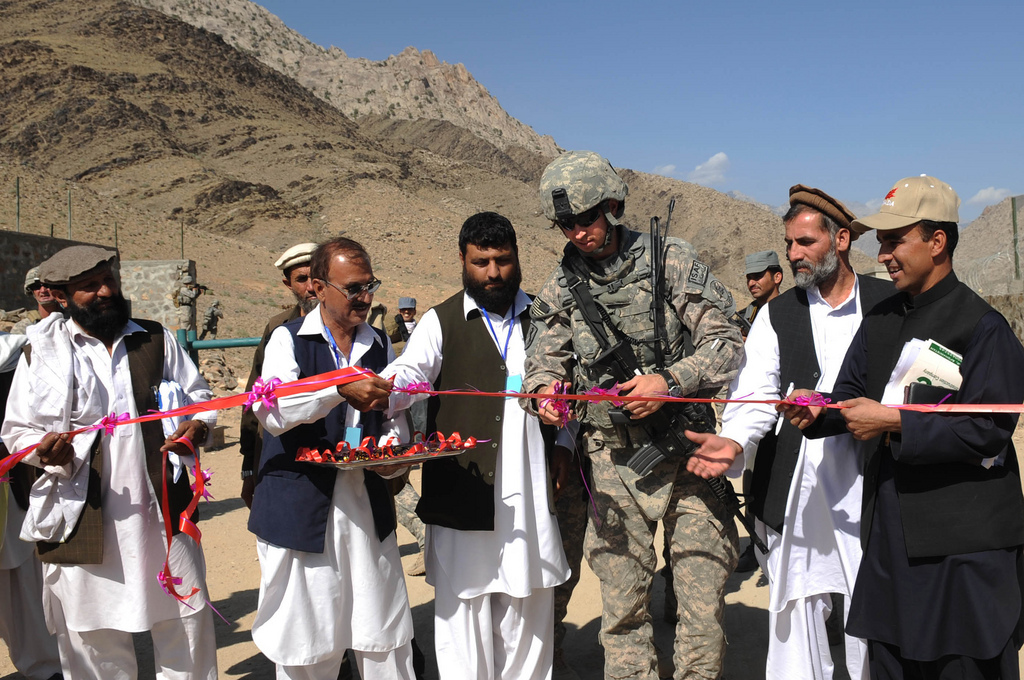
Leading Through Civilian Power: The First Quadrennial Diplomacy and Development Review (QDDR) initiates an encouraging process of rethinking and restructuring that is long overdue. It explicitly links itself to the 2010 National Security Strategy and echoes the latter’s commitment to “national renewal and global leadership.” It refers briefly to the obvious companion document, the Quadrennial Defense Review, although it resists engaging with some key aspects.
-
Teaching Environment and Security at West Point
›February 16, 2011 // By Geoffrey D. Dabelko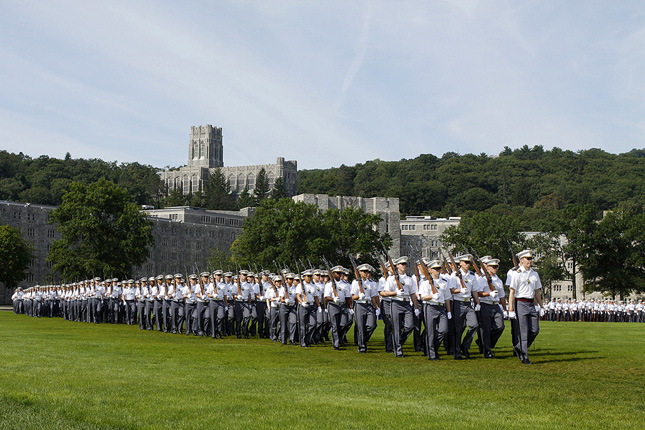
U.S. strategic assessments like the 2010 Quadrennial Defense Review, the 2010 National Security Strategy, and the Director of National Intelligence’s annual threat assessment have placed natural resources, climate change, population, and poverty squarely on the American security agenda. But are these broad statements in doctrine and threat assessments translating into tangible changes, such as new approaches to the education of future military officers? My colleague Sean Peoples and I recently spoke with faculty and cadets at the U.S. Military Academy about how West Point’s Geography and Environmental Engineering Department is integrating these issues directly into their curriculum.
-
First Steps on Human Security and Emerging Risks
›The 2010 Quadrennial Development and Diplomacy Review (QDDR), the first of its kind, was recently released by the State Department and USAID in an attempt to redefine the scope and mission of U.S. foreign policy in the 21st century. Breaking away from the Cold War structures of hard international security and an exclusive focus on state-level diplomacy, the QDDR recognizes that U.S. interests are best served by a more comprehensive approach to international relations. The men and women who already work with the U.S. government possess valuable expertise that should be leveraged to tackle emerging threats and opportunities.
-
Book Preview: ‘The Future Faces of War: Population and National Security’
›February 3, 2011 // By Christina DaggettThe word “population” doesn’t come up too often in national security debates, yet, a shift may be coming, as global population reaches the seven billion mark this year, youth-led unrest rocks the Middle East, and questions of aging enter the lexicon of policymakers from Japan and South Korea to Europe and the United States. What does a population of nine billion (the UN medium-variant projection for 2050) mean for global security? How will shrinking populations in Europe affect Western military alliances and operations? Is demography destiny?The latter question has plagued demographers, policymakers, and academics for centuries, resulting in heated debate and dire warnings. Jennifer Dabbs Sciubba continues this debate in her new book, The Future Faces of War: Population and National Security, but with a decidedly more measured and optimistic tone (full disclosure: Sciubba was one of my professors). The book is targeted at policymakers but is accessible to anyone with an interest in the field of demography and national security. She will launch her book at an event hosted by the Wilson Center on March 14.
Turning Challenge Into Opportunity
The main themes of The Future Faces of War are challenge and opportunity. Yes, national security will be tested by a series of evolving demographic trends in the decades ahead, but with proper insight and preparation, states can turn these challenges into opportunities for growth and betterment. Sciubba writes, “How a state deals with its demographic situation – or any other situation for that matter – is more important than the trends themselves” (p.125).
Part of turning these population challenges into opportunity is understanding long-term trends – a daunting task given the range and number of trends to consider. Drawing on her own experiences in the defense community, Sciubba writes how policymakers were “receptive” to the idea of population influencing national security, but that the “overwhelming number of ways demography seemed to matter” made them hesitant to act (p.3). With the publication of this book, which clearly and concisely outlines the basics of each population trend with demonstrative examples, hopefully that hesitation will be turned into action.
Youth and Conflict
The first population trend Sciubba highlights is perhaps the one of most immediate concern to national security policymakers given recent world events. In the chapter “Youth and Youthful Age Structures,” Sciubba discusses the security implications of those countries (in particular those in Africa, the Middle East, and Central Asia) with a majority of their population under the age of 29. She writes, “Most important for national security, countries with youthful age structures are generally the least developed and least democratic in the world, and tend to have the highest risk of civil conflict” (p. 18). In fact, between 1970 and 1999 countries with very young and youthful age structures were two to four times more likely to experience civil conflict than countries with more mature age structures.
The risks of very young and youthful populations are well documented (Sciubba cites the examples of Somali piracy, religious extremism, and child soldiers in Africa), but what has not been as widely discussed are the opportunities. Youthful states have a large pool of potential recruits for their armies, plenty of workers to drive economic development, and even an opportunity to grow democratically through social protest. Sciubba writes, “Youth can also be a force for positive political change as they demand representation and inclusion in the political process… social protest is not always a bad thing, even if it does threaten a country’s stability, because it may lead to more representative governance or other benefits” (p. 23). (For more on youth and the transition to democracy, see “Half a Chance: Youth Bulges and Transition to Democracy,” by Richard Cincotta, and his recent blog post about the Jasmine Revolution in Tunisia).
Graying of the Great Powers
At the other end of the demographic transition is population aging. Sciubba points out that the countries with the highest proportions of people aged 60 and older are also “some of the world’s most powerful and economically or politically strategic states” (p. 42). Europe, Japan, and the United States are all getting older (though the United States to a slightly lesser extent), and Sciubba states that the “graying” of these countries has the potential to greatly limit military preparedness, size, and funding. She points out that the number of recruits available will be much smaller and more money will have to be spent on pensions and health care for the growing number of elderly persons.
To counteract these challenges, Sciubba recommends that aging states seek out alliances with each other and countries with younger populations. She writes, “As part of strong alliances, states have strength in numbers, even if they are individually weakened by aging” (p. 47). Another alternative would be to improve military technology and efficiency to compensate for the drop in personnel.
Migration and Security: A “Unique” Relationship
Migration, the third pillar of demographic change after fertility and mortality, has what Sciubba calls a “unique relationship to national security” (p.83). Migration “is the only population driver that can change the composition of a state or a community within months, weeks, or even days” (p. 83). Mass migrations (such as those caused by a natural disaster or violent conflict) are the best examples of this trend. Some of the security challenges Sciubba highlights about migration are refugee militarization, competition for resources, and identity struggles among the native and migrant populations.
However, Sciubba also argues that both migrants and receiving countries can benefit. Origin states release pressure on their crowded labor markets and earn income from remittances, while receiving countries increase their labor market and mitigate population decline (a key component of U.S. growth).
Much of this has been studied before, but two new developments in migration trends that Sciubba calls to our attention are what she calls the “feminization of migration” (the increasing number of women who are likely to move for economic reasons) and migration as a result of climate change. Both are intriguing new areas of inquiry that deserve further study, but only get a passing mention in the book.
Making Her Case
The basic trends outlined above are only a small sampling of the wealth of information to be found in The Future Faces of War. Other noteworthy topics include a discussion on transitional age structures, urbanization, gender imbalances, HIV/AIDS, differential growth among ethnic groups, and many more. The topics are varied and wide-ranging and yet, Sciubba manages to connect them and makes her case convincingly for their inclusion in the broader national security dialogue. Sciubba has briefly written about many of these topics before, but this is the first time she (or anyone else, for that matter) has brought them together in one comprehensive book with such a focus on national security.
Christina Daggett is an intern with ECSP and a former student of Jennifer Dabbs Sciubba’s at Rhodes College.
Sources: Population Action International.
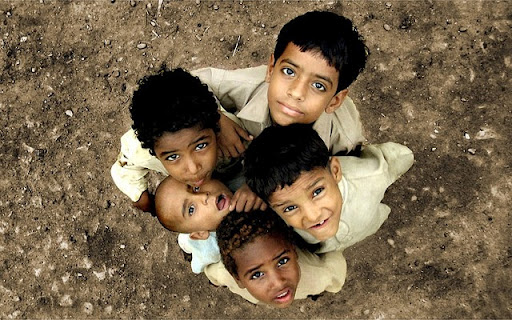
Photo Credits: “Children at IDP Camp Playful During UNAMID Patrol,” courtesy of flickr user United Nations Photo. Book cover image provided by, and used with the permission of, Jennifer Dabbs Sciubba and ABC-CLIO. -
Civil-Military Interface Still Lacks Operational Clarity
›The Quadrennial Diplomacy and Development Review (QDDR) is an important first step in redefining civilian roles and capacities in crises, conflict, and instability. After the expensive failures of both the military and USAID in Vietnam during the 1960s and 70s, Congress set new guidelines governing military interventions and assistance to foreign governments. Foreign assistance staff was cut from 15,000 to 2,000 people. When modern-day conflicts arose and USAID found itself understaffed and under-funded, the military was called upon to fill a gap and became overnight, in essence, our primary development agency.
-
Whither the Demographic Arc of Instability?
›December 14, 2010 // By Richard CincottaAfter the Berlin Wall came down in 1989, the demand for geostrategic mapping went up. Pentagon geographers revised maps almost monthly in order to keep pace with the rapid sequence of events – the toppling of Eastern Europe’s communist regimes, the rise of pro-Western liberal democracies in their place, and the reunification of Germany. Then came more borders, and even more maps: the breakup of the Soviet Union and the withdrawal of forces from former Warsaw-Pact states, the splintering of Yugoslavia and Czechoslovakia, and requests for accession to NATO. When, in the late 1990s, it became apparent that the end of the Cold War would have little effect on the emergence of civil and ethnic conflicts in Africa, Asia, and Latin America, and that a network of militant Islamist organizations had coalesced across Muslim Asia and Africa, strategic mapmaking shifted focus to identifying conditions in the Global South.
-
Food and Environmental Insecurity a Factor in North Korean Shelling?
›November 24, 2010 // By Schuyler NullJust two days before dozens of North Korean artillery shells fell on the island of Yeonpyeong off the west coast of Korea, a UN study reported that the DPRK was facing acute food shortages heading into the winter.
In a New York Times report, Choi Jin-wook, of the Korea Institute for National Unification in Seoul, called food “the number one issue.” While Choi just last month praised the resumption of food aid from the South to the North as a “starting point of a new chapter in inter-Korean relations,” she told the Times Wednesday that the North is “in a desperate situation, and they want food immediately, not next year.”
North Korea’s motives are notoriously indecipherable and this latest incident is no exception, but the regime has in the past sought to distract from domestic problems by inciting the international community (the sinking of the Cheonan being the other latest prominent example).
Infrastructure has always been primitive in the North under the DPRK regime, but the country’s tenuous food security situation was made worse this last year by an unusually long and severe winter followed by heavy flooding in the summer. Flooding was so bad during August and September, that the normally silent regime publically announced details of rescue operations around the northern city of Sinuiju. The joint FAO/WFP report put out by the UN does not predicate production will significantly recover in the next year and estimates an uncovered food deficit of 542,000 tons for 2010/11.
“A small shock in the future could trigger a severe negative impact and will be difficult to contain if these chronic deficits are not effectively managed,” Joyce Luma of the World Food Program told The New York Times.
For more on the severe weather events of this summer, including the flooding that impacted the DPRK and pushed the Three Gorge Dam to its stress limits in China, the impact of scarcity and climate change on the potential for conflict, and the intersection of food security and conflict elsewhere, see our previous coverage on The New Security Beat.
Sources: Christian Science Monitor, Food and Agriculture Organization, Los Angeles Times, The New York Times, UN, Washington Post, World Food Program.
Image Credit: Google Maps. -
Colin Kahl on Demography, Scarcity, and the “Intervening Variables” of Conflict
›“One of the major lessons of 9/11 is that even superpowers can be vulnerable to the grievances emanating from failed and failing states,” said Colin Kahl, now deputy assistant secretary of defense for the Middle East, at an ECSP event at the Wilson Center in October 2007. However, “if poverty and inequality were enough to lead to widespread civil strife, the entire world would be on fire.”
“I think any in-depth examination of particular cases shows that there’s a complex interaction between demographic pressures, environmental degradation and scarcity, and structural and economic scarcities – that they tend to interact and reinforce one another in a kind of vicious circle,” Kahl said.
“It’s really important to keep in mind that any attempt to address…environmental and demographic factors should focus not just on preventing environmental degradation, or slowing population growth, or increasing public health. They must also focus on those intervening variables in the middle that make certain societies and countries more resilient in the face of crisis.”
The “Pop Audio” series is also available as podcasts on iTunes.
Showing posts from category military.