-
Before the Waters Rise: Nigeria’s Predictable Flood Crises
›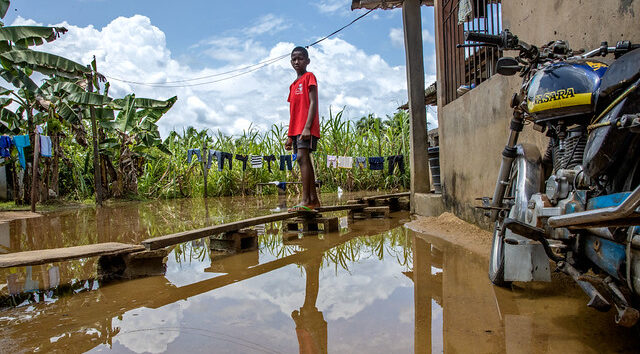
Devastating floods in Mokwa, a rural town in Niger State, claimed lives and destroyed homes and livelihoods in May 2025, and displaced many other residents as well. Yet, in Nigeria today, such flooding has become a predictable seasonal emergency. The real questions each year are not whether such floods will occur, but where they will happen—and if public institutions will act in time to prevent the next deluge from becoming yet another tragedy.
-
Environmental Security Weekly Watch: April 20-24, 2026
›
A window into what we’re reading in the Stimson Center’s Environmental Security Program
The Bolivian Cacao Farmers Taking on the Gold-Mining Industry (The Guardian)
Cacao farmers in Bolivia’s Alto Beni and Palos Blancos municipalities successfully pushed for local mining bans in 2021, protecting their organic agroforestry land from the destructive gold rush sweeping the region. Gold prices are up over 64% since 2020—intensifying illegal and legal mining across Bolivia, driving deforestation, mercury poisoning, flooding, and encroachment into protected national parks. Communities near active mining zones report polluted rivers, declining fish populations, and mercury-related illnesses.
-
A New Oil Crisis Stress-Tests the Global Energy Transition
›The US–Israeli war launched against Iran in 2026 may be remembered as the moment fossil-fuel dependence became more than a mere abstraction for the Global South. Brent crude quickly surged past $100 a barrel. Iran militarized the Strait of Hormuz (through which 20 million barrels a day, or a fifth of global oil consumption, normally flow) and retaliated against regional energy infrastructure. Qatar declared force majeure on its liquefied natural gas exports after Iranian drone attacks. Saudi Aramco’s Ras Tanura refinery shut down.
-
Environmental Security Weekly Watch: April 13-17, 2026
›A window into what we’re reading at the Stimson Center’s Environmental Security Program
Green Corridor Addresses Conflict Economies in Virunga National Park (Mongabay)
In the Eastern Congo, Virunga National Park faces an intertwined crisis of conflict and environmental destruction rooted in economic desperation. Communities residing within the park rely on charcoal production and forest clearing for survival. Simultaneously, armed militias exploit these same resources to finance ongoing violence. In response, Virunga administrators have developed an integrated model using renewable energy as the foundation for an alternative economy.
-
Protecting Water in the Mining Rush: A World Water Day Panel
›From Zambia to Indonesia, recent headlines about catastrophic toxic mining spills grimly underscore how the global push to secure one set of resources, critical minerals, might be compromising another: water.
“This isn’t just an environmental story,” said Lauren Risi, Director of the Stimson Center’s Environmental Security Program, at a recent event on protecting water resources amid increasing mining, held ahead of World Water Day 2026. “For many of these communities, the water being put at risk is their source of drinking water. It’s critical to subsistence farming and livelihoods. It sits at the center of daily life. When mining degrades or disrupts access to it, the consequences are immediate and personal,” she said.
-
Fighting Corruption Is Essential to Effectively Fighting Transnational Criminal Organizations
›In March 2026, Earth League International (ELI) published a report: Money Talks: What Criminals Told Us About Corruption. Our study synthesized over a decade of intelligence obtained firsthand by ELI’s undercover investigators from inside criminal networks to examine how corruption facilitates environmental and wildlife crime, as well as how these activities converge with other serious crimes.
-
Environmental Security Weekly Watch: April 6-10, 2026
›A window into what we’re reading at the Stimson Center’s Environmental Security Program
Argentina’s “Glacier Law” Opens Ecologically Sensitive Areas to Mining (Al-Jazeera)
Politicians in Argentina approved a bill pushed by President Javier Milei to authorize mining in ecologically sensitive areas of the nation containing nearly 17,000 glaciers and/or rock glaciers and permafrost which heavily support the country’s water security. Dubbed the “Glacier Law,” the measure is designed to leverage the vast critical mineral reserves (such as copper and lithium) found in frozen parts of the Andes mountains.
-
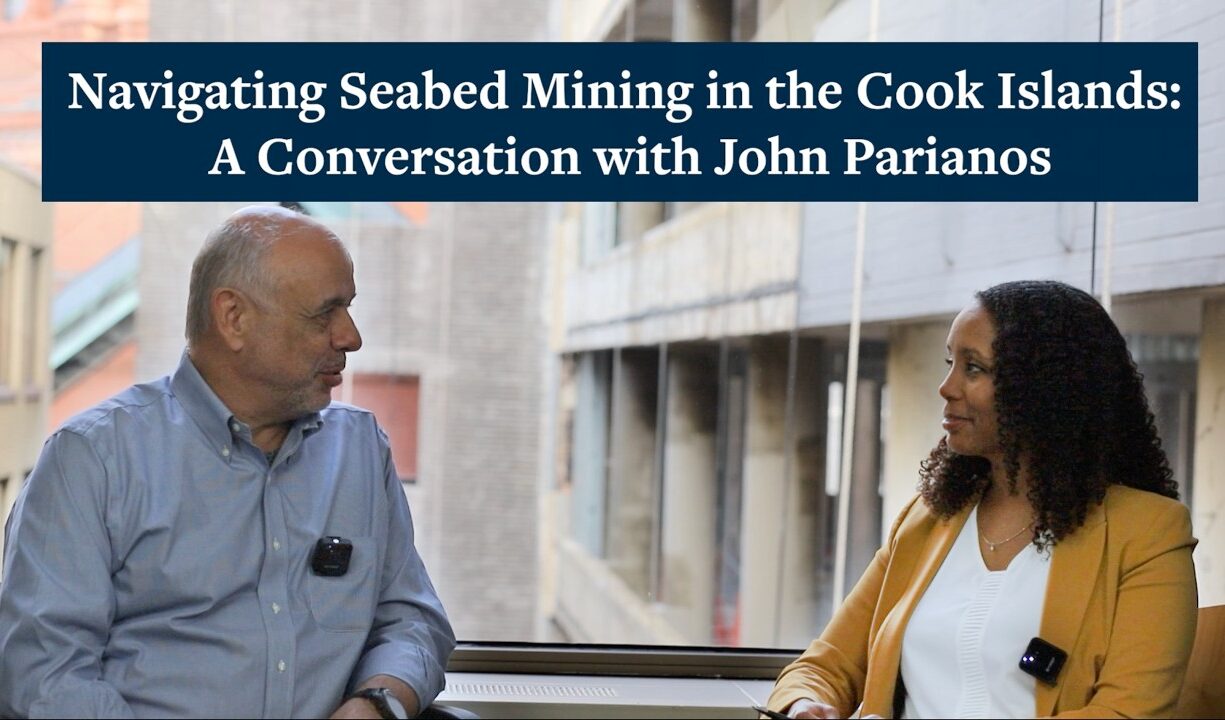
Navigating Seabed Mining in the Cook Islands: A Conversation with John Parianos
›
Showing posts from category meta.