Showing posts from category population.
-
Helping Hands: An Integrated Approach to Development
›Originally featured in the Wilson Center’s Centerpoint, June 2011.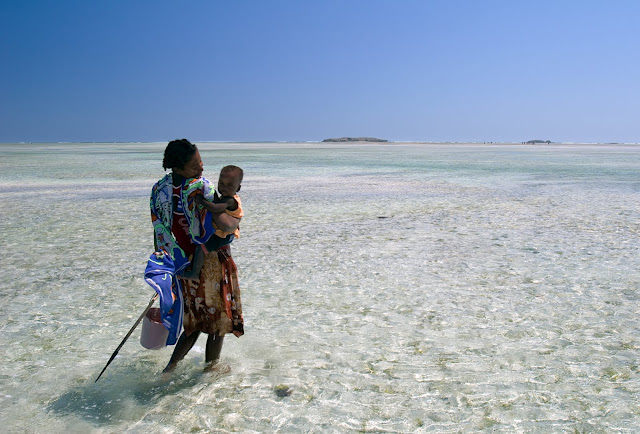
“At the moment, the agendas of the growing population of people and the environment are too separate. People are thinking about one or the other,” said Sir John Sulston, Nobel laureate and chair of the Institute for Science, Ethics, and Innovation at the University of Manchester, in an interview with the Environmental Change and Security Program (ECSP).
“People argue about, ‘Should we consume less or should we have fewer people?’ The point is it’s both. We need to draw it together. It’s people and their activities.”
Many who research and work on population, health, and environment (PHE) issues are increasingly advocating integrated solutions. Such issues as population growth, natural resource management, and food security, are interrelated challenges that, if addressed concurrently, likely will yield better results and community trust.
With this notion in mind, ECSP launched the five-year HELPS (health, environment, livelihoods, population, and security) project in October 2010. The project focuses on integrated PHE programs and demographic security linkages. HELPS also looks at population’s links to global environmental priorities, media coverage of population, and related issues like gender, youth, and equity.
Funded by USAID’s Office of Population and Reproductive Health through its IDEA (Informing Decision-makers to Act) grant, the HELPS project builds on ECSP’s 14-year history of exploring nontraditional security issues.
Population-Environment Connection
A February event in the HELPS series featured Sir John Sulston, who said dialogue between population and environmental communities has received renewed attention and is reappearing on national agendas.
The Royal Society’s People and the Planet study, which will be completed by early 2012, will “provide policy guidance to decision-makers as far as possible” and aims to facilitate dialogue, he said. The HELPS Project is helping the working group gather evidence of population-environment connections and to identify solutions.
“What we should be aiming to do is to ensure that every individual on the planet can come to enjoy the same high quality of life whilst living within the Earth’s natural limits,” said Sulston. People are happier, healthier, and wealthier than ever before, according to human development indexes. But, Sulston said, 200 million women worldwide have an unmet need for family planning, ecosystems are degraded, biodiversity has decreased, and there are widespread shortages of food and water.
“Many times we tackle different development challenges through single sector programs: health programs, agriculture programs, water programs. Those single sector approaches can make sense,” said ECSP Director Geoff Dabelko on the Wilson Center’s Dialogue television program. “But, of course, poor people are facing all those life and death challenges at once. We have to find ways to help them meet those challenges together in an integrated fashion.”
On the same program, Roger-Mark De Souza, vice president for research and director of the Climate Program for Population Action International, said the drive for integrated development stems from the communities being served, not necessarily from outside aid groups. “We’ve seen that there’s a greater impact because there’s longer sustainability for those efforts that have an integrated approach,” he said. “There’s a greater understanding and a greater appreciation of the value that [PHE] projects bring.”
At an April 7 ECSP event, De Souza said rural communities in developing countries understand that high population growth rates, poor health, and environmental degradation are connected. An integrated approach to development, he said, is a “cost-effective intervention that we can do very easily, that responds to community needs that will have a huge impact that’s felt within a short period of time.”
Proponents of integrated development face significant barriers, but the tide may be turning. To fully harness this momentum, former ECSP Senior Program Associate Gib Clarke argues in his FOCUS brief, “Helping Hands: A Livelihood Approach to Population, Health, and Environment Programs,” that the PHE community must solidify its research base, reach out to new partners, and push for flexible funding and programming. He suggested changing the name PHE to HELP – health, environment, livelihoods, and population. By adding livelihoods, the glue that binds population, health, and the environment, he said, the HELP moniker might broaden its appeal to new donors and practitioners.
Case Study: Madagascar
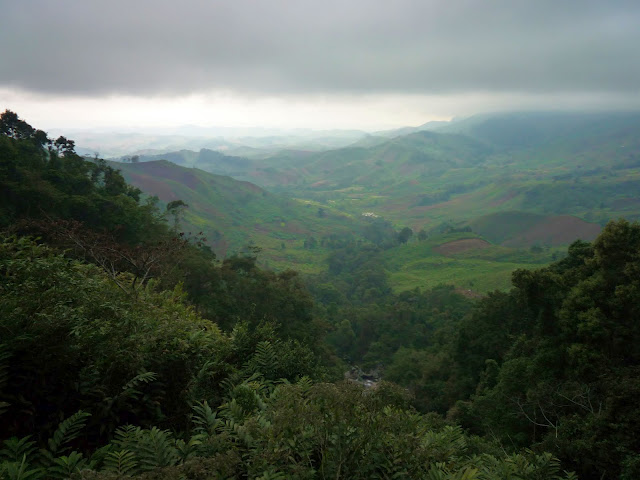
In Madagascar, a key country for integrated PHE programs, “today’s challenges are even greater than those faced 25 years ago,” said Lisa Gaylord, director of program development at the Wildlife Conservation Society, at a March 28 Wilson Center event. As the country’s political situation has deteriorated since 2009, the United States and other donors pulled most funding, and some PHE programs were forced to discontinue environmental efforts.
But other PHE programs are expanding: Based in southwestern Madagascar, the Blue Ventures program began as an ecotourism outfit, said Program Coordinator Matt Erdman, but has since grown to incorporate marine conservation, family planning, and alternative livelihoods. A major challenge is its rapidly growing population, which threatens the residents’ health and food security, as well as the natural resources on which they depend. More than half the island’s population is younger than 15, and the infant and maternal mortality rates are high, Erdman said.
In response, Blue Ventures set up a family planning program. The program uses a combination of clinics, peer educators, theater presentations, and sporting events, such as soccer tournaments, to spread information about health and family planning. The HELPS project will soon publish a Focus brief on Blue Ventures’ family planning efforts, titled: “To Live with the Sea.”
Erdman said, “If you have good health, and family size is based on quality, families can be smaller and [there will be] less demand for natural resources, leading to a healthier environment.”
Demographic Security
A country’s age structure can pose a challenge, said Jennifer Dabbs Sciubba, the Mellon Environmental Fellow with the Department of International Studies at Rhodes College, at a March 14 Wilson Center event. Countries with a large percentage of people younger than 30 “are [much] more likely to experience civil conflict than states with more mature age structures.”
Tunisia’s recent revolution, Sciubba said, could be understood as a “story about demography.” Countries with transitional age structures, such as India, Brazil, and South Africa, face different security challenges. With a majority of their populations between 15 and 60 years old, more people are contributing to the economy than are taking away, which could bolster these countries economically and politically. Global institutions will have to reform and include these countries, she advised, “or else become irrelevant.”
“Understanding population is critical to our success in being able to prevent conflict, and also managing conflict and crises once we’re involved,” said Kathleen Hicks, Deputy Undersecretary at the Department of Defense (DOD). However, the DOD does not “treat demographics as destiny,” she said, but instead as “one of several key trends, the complex interplay of which may spark or exacerbate future conflicts.”
Demography can also help predict political trends. In 2008, demographer Richard Cincotta predicted that between 2010 and 2020 the states along the northern rim of Africa – Morocco, Algeria, Tunisia, Libya, and Egypt – would each reach a demographically measurable point where the presence of at least one liberal democracy among the five would be probable. Recent months have brought possible first steps to validate that prediction.
Mathew Burrows, counselor at the National Intelligence Council, said Cincotta’s work demonstrates that “the demographic tool is essential” to analysts and policymakers. “There is a real appetite among policymakers” for understanding demography, he said, because it gives them more structure than political science narratives.
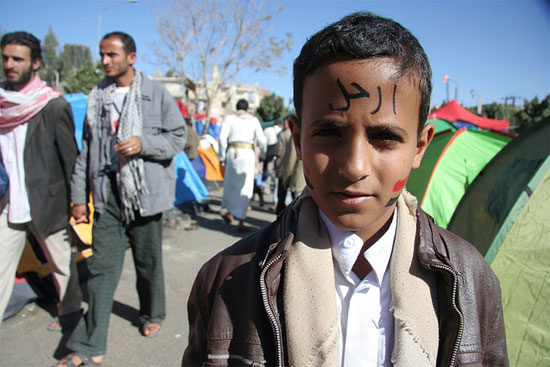
Yemen is another example of this trend. In March, tens of thousands of youth-led demonstrators demanded that their president resign. While numerous factors have sparked the “Arab Spring,” one driving force is Yemen’s dire demographic and environmental situation. Some experts say Yemen may be the first country to run out of groundwater. The average Yemeni woman has more than five children, and 45 percent of its population is below age 15. On May 18, Yemeni and international experts discussed these issues at the Wilson Center. Upcoming HELPS events include daylong conferences on Afghanistan and Nigeria.
There are solutions that can break the links between “youth bulges” and insecurity. In a recent video interview discussing the connection between demography and civil conflict, Elizabeth Leahy Madsen, a senior research associate at Population Action International, said, “Policies that have a major impact over time are ensuring education, especially for girls, and providing employment opportunities to the large and growing numbers of young people today.”
Dana Steinberg is the editor of the Wilson Center’s Centerpoint.
Photo Credit: Blue Ventures in Madagascar, courtesy of Garth Cripps. -
Book Launch: ‘Human Population: Its Influence on Biological Diversity’
›Measurements of “human population density and growth can be used to identify changes in the viability of native species, and more directly, in changes in ecological systems or habitat quality,” said Richard Cincotta, consultant at the Environmental Change and Security Program and demographer-in-residence at the Stimson Center, speaking at the book launch of Human Population: Its Influence on Biological Diversity.
Cincotta was joined by coeditor L.J. Gorenflo, associate professor of landscape architecture at Penn State University, and contributing author Christopher Small, research professor at the Lamont-Doherty Earth Observatory and adjunct professor at Columbia University, to discuss the book’s objectives, its diverse and multidisciplinary contributors, and its policy implications. [Video Below]
Establishing a Handbook for the Field
“Human Population: Its Influence on Biological Diversity establishes a handbook for the field,” said Cincotta. While the scientific volume is specifically geared towards researchers and conservation managers rather than policymakers, “there are a few Washington-type policy messages that are useful,” he added.
Human population affects biological diversity in multiple ways. While population density alone can be strongly indicative of the viability of different populations of native species, human activities and their chemical and energetic byproducts can also have a strong impact, even when human population density is low, said Cincotta.
Conserving Biodiversity in Different Settings
“Planned solutions, based on strategic actions, increasingly are essential,” said Gorenflo, a professor at Penn State University. “The days of letting nature take care itself are probably gone.” Gorenflo presented results from the two chapters he worked on: “Human Demography and Conservation in the Apache Highlands Ecoregion, U.S.-Mexico Borderlands” and “Exploring the Association Between People and Deforestation in Madagascar.”
“Population density seems to be a reasonably good indicator of biodiversity loss,” said Gorenflo. Data from the Apache Highland Ecoregion (a 12 million-hectare area located along the U.S.-Mexico border) indicate that biodiversity tends to drop off at population densities of more than 10 people per square kilometer. Conservation efforts in areas within the ecoregion that are at, or close to, this density threshold will likely encounter challenges to maintaining biodiversity, he said.
Human mobility is a major consideration, said Gorenflo: “Whereas high fertility can create population growth over generations, high mobility can create population growth in a matter of months or years.” In the Apache Highlands, for example, the 40 percent increase in population between 1990 and 2000 was largely caused by migration into U.S. cities in the region.
In Madagascar, Gorenflo and colleagues examined whether population growth and poverty were systematically driving deforestation and loss of biodiversity. Using data from the 1990s, they found that higher population density only slightly raises rates of deforestation and large increases in income only modestly decrease deforestation.
Not surprisingly, they found that the likelihood of deforestation decreased dramatically in protected areas. In addition, proximity to roads or footpaths was associated with significantly higher rates of deforestation. “Roads, footpaths, and protected areas are all policy decisions,” Gorenflo pointed out. “So when bilateral or multilateral organizations decide to invest in development in a place like Madagascar, they can look at these sorts of investments as being important.”
While there are some similarities to be drawn between regions’ experience with population and biodiversity, said Gorenflo, “every locality likely has a slightly different story; you need to do context-specific studies to get a real handle on what is going on.”
The Human Habitat
In his chapter, “The Human Habitat,” Christopher Small of the Lamont-Doherty Earth Observatory said his goal was “to set the stage for some of the more detailed studies by taking a look at the global distribution of human population.”
Using census data and satellite-derived maps of night lights to serve as a “proxy for development,” Small found that “people are everywhere, but they are not evenly distributed.”
At least half the world’s population lives on less than three percent of the inhabitable land, and most people live at densities between 100 and 1000 people per square kilometer. At both local and global scales, population density and city size are dominated by extremes: There are large numbers of small groups of people, and small numbers of large groups of people, he said.
“The environments where people live are more strongly correlated with features of the landscape than they are with climatic parameters,” said Small. While humans have effectively adapted to a range of climates, the majority of people tend to cluster close to rivers, at low elevations, and close to coastlines. Although it was once thought that three-quarters of the world’s population lived in coastal regions, Small’s results show that the actual number is close to half of these previous assumptions.
Understanding the spatial and environmental distribution of population and managing population growth may therefore help minimize negative impacts on specific habitats and biomes, said Small.
Image Credit: “View from a Madagascar Train,” courtesy of flickr user cr01. -
One in Three People Will Live in Sub-Saharan Africa in 2100, Says UN
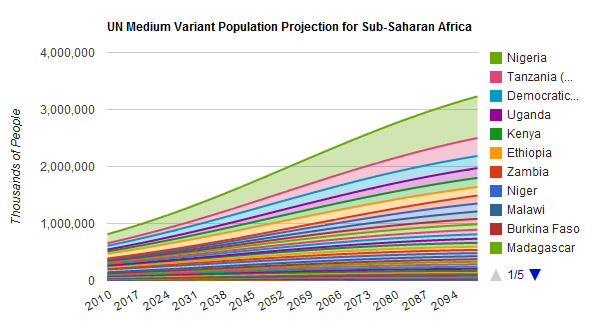
›June 8, 2011 // By Schuyler NullBetween now and 2100, three out of every four people added to world population will live in sub-Saharan Africa. That’s what the medium variant of the UN’s world population projections estimates.* As we noted in our previous post on the latest UN numbers, Nigeria leads sub-Saharan growth, but other countries will also grow by major multiples: Tanzania and Somalia will be 7 times larger; Malawi more than 8 times; and Niger, to grow to more than 10 times its current population.
-
Yemen Beyond the Headlines: Losing the Battle to Balance Water Supply and Population Growth
›Part three of the “Yemen Beyond the Headlines: Population, Health, Natural Resources, and Institutions” event, held at the Wilson Center on May 18.
Overlooked in most news coverage of Yemen’s crisis is the country’s struggle to manage its limited natural resources – particularly its rapidly depleting groundwater – in the face of soaring population growth. At the recent Wilson Center event, “Yemen: Beyond the Headlines,” Yemen’s ambassador to Germany, Mohammed Al-Eryani, and Daniel Egel of the RAND Corporation outlined Yemen’s shaky prospects for economic development without more sustainable agricultural practices and more efficient water management. [Video Below]
With a population of more than 24 million and a total fertility rate (TFR) of 5.5 – nearly double the average TFR for the region – Yemen’s population is projected to grow to 36.7 million by 2025 and jump further to 61.6 million by mid-century, according to the latest UN projections. While those figures may not seem large by global standards, given Yemen’s already limited stocks of arable land and groundwater, the country’s rapid rate of growth may quickly outpace its resources.
“Already in a Crisis”: The Groundwater Deficit
Yemen’s per capita water supply is falling fast in the face of booming population growth and agricultural consumption, said Al-Eryani, a water engineer who founded Yemen’s Ministry of Water and the Environment. While the commonly accepted threshold for water scarcity is 1700 cubic meters or less per capita, Yemen’s per capita renewable water availability is now in the neighborhood of 120 cubic meters, he said.
Meanwhile, water scarcity has been exacerbated by erratic precipitation that has hit rainfall-dependent farmers especially hard. In a country with no real rivers or perennial streams, rainfall harvesting has long enabled agricultural production, as evidenced by the country’s many intricately terraced hillsides – “the food baskets of Yemen,” said Al-Eryani.
Yemenis have coped with shifting precipitation patterns by drawing more groundwater for irrigation and other domestic uses. While drilling wells has provided some short-term relief, the practice is unsustainable in the long term, creating a “water deficit,” Al-Eryani said, that continues to grow each year.
In the populous Sanaa basin, home to the Yemeni capital, consumption outweighs the aquifer’s natural rate of recharge by a factor of five to one and groundwater levels have been plummeting at six meters per year, he said. With only minimal government regulation of drilling, the country’s groundwater situation is poised to worsen, one of the reasons Al-Eryani declared his country is “already in a crisis.”
Stalled Economic Development
Yemen’s stalled economic development is particularly pronounced outside of urban areas, “where the resources are,” said Daniel Egel, citing the country’s failure to build modern transportation infrastructure and develop other economic activities besides farming. He called for the international development community to focus on creating jobs in rural areas, particularly by increasing the financing available for non-agricultural businesses and by improving secondary roads. In addition, he warned development actors to be aware of how gender inequality and local social structures, such as tribes, affect development efforts.
Given the country’s dependence on agriculture, water scarcity poses a threat to Yemen’s food security and its economic development. Three out of every four Yemeni villages depend on rainfall for irrigation, Egel said, making them highly vulnerable to unexpected climate change-induced shifts in precipitation patterns. Water scarcity also weakens the financial stability of Yemeni households, with the cost of water “accounting for about 10 percent of income during the dry season,” he said.
Averting a “Domino Effect”
Al-Eryani asserted that water management policies will “have to be designed in piecemeal fashion,” as no one single action will avert a catastrophe. He suggested a number of steps to alleviate the country’s growing water crunch, including:- Focus on the rural population, which makes up 70 percent of the population, has the highest fertility rates, and are the most reliant on agriculture;
- Move development efforts outside of Sanaa to other regions of the country;
- Increase investment in desalination technology for coastal areas;
- Increase water conservation in the agricultural sector; and,
- Exploit fossil groundwater aquifers in Yemen’s sparsely populated eastern reaches.
“The battle to strike a sustainable balance between population growth and sustainable water supplies was lost many years ago,” Al-Eryani said. “But maybe we can still win the war if we can undertake some of these measures.”
See parts one and two of “Yemen Beyond the Headlines: Population, Health, Natural Resources, and Institutions” for more from this Wilson Center event.
Sources: UN Population Division, World Bank.
Photo Credit: “At the fountain,” courtesy of flickr user Alexbip. -
Yemen Beyond the Headlines: Governance, State Capacity, and the U.S.
›Part two of the “Yemen Beyond the Headlines: Population, Health, Natural Resources, and Institutions” event, held at the Wilson Center on May 18.
“Moving beyond Ali Abdullah Saleh has proved to be very challenging, not only for the Yemeni people, but for the neighboring countries and for the international community as a whole,” said former U.S. Ambassador to Yemen Edmund Hull, one of a number of speakers on governance and future challenges during the all-day conference, “Yemen Behind the Headlines: Population, Health, Natural Resources, and Institutions,” at the Woodrow Wilson Center. [Video Below]
Don’t Throw Out the Good With the Bad
Yemen’s protest movement is different than those of Egypt or Tunisia because neighboring countries, such as those in the Gulf Cooperation Council, are actively involved. “[They] don’t have the luxury of saying this is a purely Yemeni affair,” said Hull. “They have to identify where their national interests are and then they have to come up with a legitimate and effective way of protecting those interests.” Included in those national interests is dealing with the presence of Al-Qaeda in the Arabian Peninsula.
But, Hull said, “It would be a shame if, as part of this revolution, what was good in Yemen gets tossed out with what was bad.” Among the institutions that should be protected are the Social Fund for Development, a government development initiative designed to reduce poverty , and the Central Security Forces, “still a very necessary institution and one that has to be protected if other challenges in Yemen are to be met,” he said.
“It’s a mistake to over-focus on the end of a regime – yes, it’s important to get a transfer of power, but I would argue [that it is] equally important to institutionalize the forces that have led to this, as a safeguard against the counter revolution and as an impetus to meeting those many, many political challenges that Yemen faces.”
Going forward, Hull said that elections will be key: Yemen had good electoral experiences in 2003 and 2006 but the system has since suffered some “backsliding,” he said. He also emphasized the importance of letting the youth participate, protecting social networking systems and NGOs, instituting legal requirements to promote transparency, and freeing up and protecting the media. “Unless you have a media spotlight, abuses are going to accumulate,” he said.
Not a “Basket-Case”
“Yemen is not a basket case,” said Charles Schmitz, an associate professor at Towson University. “There have been substantial achievements that I think we need to take into account.” Among these achievements, he highlighted Yemen’s growth in life expectancy, literacy rates, and gross domestic product. The country’s population growth rate has also slowed over the past two decades, though its total fertility rate remains one of the highest in the region.
These gains were fuelled by two resource booms, Schmitz explained: mainly, remittances from the construction boom in the 1970s and oil production. However, oil production dropped off dramatically after peaking around 2001, and remittances have not been able to keep up with the growth of the economy.
“Yemen is in a very severe crisis,” Schmitz said. “The oil has stopped… the balance of payments has been going negative for the last couple of years… and the government appears to be dipping into the central bank.” As a result, he said there is a “very real” possibility of the currency – the riyal – collapsing. The currency represents trust in the government, of which there is none right now, he said.
An Opportunity for New Thinking
“The key variable to the future of the Yemeni economy is state capacity, and this is something Yemen has not done well thus far, largely because of the political crisis,” Schmitz said.
“I think we must be attuned to the reality around us,” said Jeremy Sharp, a specialist in Middle Eastern affairs with the Congressional Research Service. “Quite frankly, Yemen needs a lobby in this country. Yes we have a tight budget environment, but it’s also an opportunity for new thinking.”
“The degree and extent of U.S. engagement with Yemen…is based primarily on the perceived terrorist threat there,” said Sharp. “Our policy toward Yemen always seems to be one horrific terrorist attack away from public outcries for deeper U.S. involvement – i.e., military involvement.”
A Cycle of Transitions?
“We may be looking at cycles of transition in Yemen over the coming decades,” said Ginny Hill, an associate fellow with the Middle East and North Africa Programme at Chatham House. “Stable political settlements take time.” The street protestors are not going to get what they want in the short term, “but just two or three of them sitting in government or being involved in the negotiation process… is going to change the dialogue in Yemen,” she said.
The United States has difficult questions to answer, said Sharp: Who will control Yemen’s security forces down the line? How will the next leader deal with the U.S.-Yemen partnership? Will power be fragmented between civilian and military leaders? Will the next leader play the nationalist card and reduce cooperation with the United States to bolster their own public standing?
“In the absence of the degree of engagement that we need, the [U.S. government] aims high rhetorically,” said Sharp. “We speak about these things while pursuing our own national security goals on the ground. Perhaps this path is unsustainable and events will force the U.S. to pay even more attention to Yemen. Or perhaps we will continue to muddle along this path and never quite reach the brink, precipice, or impending crisis that is so routinely predicted in the media.”
See parts one and three of “Yemen Beyond the Headlines: Population, Health, Natural Resources, and Institutions” for more from this Wilson Center event.
Sources: UNICEF, World Bank.
Photo Credit: “Even small children…,” courtesy of flickr user AJTalkEng. -
Health Development: Providing Free Care and Overcoming Gender-Based Violence
›In The Lancet’s “How Did Sierra Leone Provide Free Health Care?,” author John Donnelly of the Ministerial Leadership Initiative attributes the unanticipated success of a free health care program for women and children in Sierra Leone to good organization, transparency, and a high degree of cooperation between the government, donors, and development partners. One distinctive factor that has contributed to the health system’s turnaround is the unusually high level of political will on the part of President Ernest Bai Koroma, writes Donnelly. Similar to Egypt’s health and population initiatives, Sierra Leone’s marked commitment, accountability, and investment as a host country has contributed highly to the success of its program and triggered further investment from donors.In “Systematic Violence: A Barrier to Achieving the Millennium Development Goals for Women,” from the Journal of Women’s Health, authors Joia S. Mukherjee, Donna J. Barry, Hind Satti, Maxi Raymonville, Sarah Marsh, and Mary Kay Smith-Fawzi assert that the elevation of women is integral to the achievement of the Millennium Development Goals, to which structural violence serves as a significant barrier. Murkherjee et al. recommend community-based programs to combat structural violence and prevent disease, such as the Partners in Health (PIH) program in Haiti. PIH trains community health workers, expands health care as a public good, and bolsters social determinants, which include increasing access to family planning and education, providing compensation for medical workers, and improving health infrastructure. -
Yemen Beyond the Headlines: Women’s Health and Well-Being, Foundations of a Fragile State
›Part one of the “Yemen Beyond the Headlines: Population, Health, Natural Resources, and Institutions” event, held at the Wilson Center on May 18.
“Ultimately, whether Yemen is able to achieve its goals for social and economic development, will to a large extent depend on its future population growth and size,” said Gary Cook, senior health advisor at the U.S. Agency for International Development, in his opening address on Yemen’s population and development challenges at the Woodrow Wilson Center. [Video Below]
Cook was joined on the opening panel of the all-day conference, “Yemen Behind the Headlines: Population, Health, Natural Resources, and Institutions,” by Dalia Al-Eryani, former project officer for Pathfinder International’s Safe Age of Marriage Project, and T.S. Sunil, professor of sociology at the University of Texas San Antonio, to discuss issues related to population, reproductive health, and child marriage. Drawing speakers and participants form the Middle East, Europe, and the United States, the conference was part of the Wilson Center’s HELPS Project, a multi-year effort to deepen understanding of links among health, environment, livelihoods, population and security.
Yemen’s Population and Development Challenges
Since 1950, the population of Yemen has increased from 4.3 million to 24 million, with an annual population growth rate above three percent, Cook said. High fertility drives Yemen’s rapid population growth, with an average total fertility rate (TFR) of 5.5 births per woman. Rates are even higher in rural areas and among women with limited or no education, he said.
Future population growth will have tremendous impacts on the country’s economy, education, health, and natural resources, said Cook, and “there is a very large gap between the high fertility assumption and the low fertility assumption.”
An additional 1.5 million new people will be added to the labor force and 29 percent less income per person will drop by 29 percent by 2035 if current fertility rates persist, said Cook. Though Yemen has a national population policy that outlines TFR targets of 3.3 in 2025 and 2.1 by 2035, the latest UN Population Division projections suggest these expectations are optimistic. Education and health demands and expenditures will increase greatly, while per capita arable land and water will decrease, exacerbating ongoing land and water scarcity in Yemen.
“We do not have enough local and external resources to address the needs of a rapidly expanding population,” said Cook. “Helping couples who want to limit and space their births will also help the nation,” he added.
Law, Culture, and Child Marriage
“Enforced by law and culture alike,” early marriage in Yemen is common, said Al-Eryani, with over 50 percent of Yemeni women married before they are 17 years old, and 14 percent before they turn 14. Opponents of child marriage argue that children are neither emotionally nor physically ready for marriage and that the practice increases health risks and lowers educational opportunities for girls.
Currently, Yemen has no minimum age for marriage law, and recent attempts to pass such a law have failed, said Al-Eryani. “The practice never really has been questioned.”
“There is a belief that child marriage is a good thing – both for the girl and for the family,” she said. Early marriages are a way to build family honor and tribal ties, and many poor families see opportunity for financial gain in the form of a dowry. “These families see no socially acceptable alternatives for the girl…and all of this is supported by the belief that Islam condones child marriage,” she said.
Through awareness sessions, health fairs, and school plays, the community-based Safe Age of Marriage Project has helped to change social norms around child marriage in two districts in Yemen.
After participating in the program, community members were significantly more likely to believe that delaying marriage gives girls more educational opportunities, empowers them to make decisions, and promotes healthy pregnancy and children, Al-Eryani said. Child marriage was banned in one of the communities, and the marriages of 53 girls and 26 boys were canceled as the result of the project. In the future, she hopes involving more religious and local leaders could further increase the program’s impact.
Youth and “The Reproductive Health Transition”
“When we talk about fertility transition, we only talk about the number of children born,” said Sunil. “A reproductive health transition takes into account not just total fertility rate, but a number of different dimensions.”
Women should have the freedom to decide if, when, and how often to reproduce, said Sunil, through access to safe, effective, affordable, and acceptable family planning methods. They also should have access to quality maternal health care throughout pregnancy and birth, he said.
“It’s a popular belief that Islamic societies with poor and limited resources are not compatible with a reproductive health transition,” said Sunil. “But the onset of a reproductive health transition is underway in Yemen.”
While the transition in Yemen is progressing more slowly than in other countries in the region, many positive trends can be seen among the country’s youth, said Sunil. Trends indicate a drop in fertility rates, especially among younger women; marriage of girls under 15 years old has declined; and contraceptive use among young women age 15 to 24 has increased significantly.
Government and international donor agencies “must capture the growing momentum among the younger cohort” and meet demands for better education, postponement of marriage, and healthcare services, said Sunil. Continued focus on adolescent reproductive health will be the key to achieving the reproductive health transition, he concluded. “From an economic and human perspective, the growing young population in Yemen is potentially a tremendous asset.”
See parts two and three of “Yemen Beyond the Headlines: Population, Health, Natural Resources, and Institutions” for more from this Wilson Center event.
Sources: Population Reference Bureau, UNICEF, U.S. Agency for International Development.
Image Credit: “Young girl with her mom – Sanaa,” courtesy of flickr user fveronsei1. -
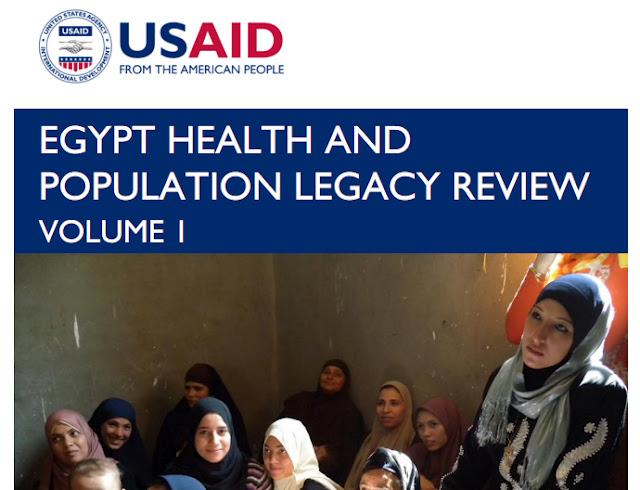
USAID Egypt’s Health and Population Legacy Review
›On May 23 the Middle East Program, ECSP, and the Global Health Initiative of the Woodrow Wilson Center, along with the Global Health Technical Assistance Project, hosted a panel of speakers discussing the past 30 years of the U.S. Agency for International Development’s health and population initiatives in Egypt, as outlined in the new Egypt Health and Population Legacy Review. Geoffrey Dabelko, director of ECSP and coordinator of the Global Health Initiative at the Wilson Center, moderated the event. [Video Below]
Peter McPherson, former administrator of USAID during the Reagan administration, and George Laudato, the administrator’s special assistant for the Middle East, presented on the historical context behind USAID in Egypt and the results of their efforts. McPherson pointed to three lessons that can be drawn from the recent report:- “Big payoffs” require long-term efforts; and
- Economic support for a country can have a dramatic impact; but
- The host country’s commitments and investments are still important.
Motaz Zahran, political counselor for the Embassy of Egypt, noted that USAID efforts were “just one sector of a fruitful partnership” between the United States and Egypt that he hoped would continue. He said the success story outlined by the report was reflective of improvements in coordination and addressing specific goals.
Other panelists outlined the successes of USAID in Egypt as related to their own areas of expertise. Leslie B. Curtin, co-author of the review and an expert in demographics and health outcomes, noted the dramatic improvements in a range of health sectors, in particular the rise in contraceptive prevalence and immunization rates and decrease in both maternal and infant mortality rates.
Nahed Matta, MD, senior maternal and newborn health officer at USAID, focused on improvements to the quality of maternal health, which she said were made possibly through better technology and increased fact-gathering to identify the key factors regarding maternal health trends. Sameh El-Saharty, MD, senior health policy specialist at the World Bank and Health Legacy Review Committee member, credited the increased number of health professionals in Egypt, better information gathering on health systems, and restructured models of health insurance, as successful strategies.
Concluding the session, Amie Batson, deputy assistant administrator for Global Health at USAID, discussed the lessons that other development initiatives can draw from the legacy of USAID efforts in Egypt. She highlighted the importance of country ownership, in which the developing country engages with other institutions and religious and political leaders at both national and local levels, and of policies that fund routine monitoring and evaluation. She also outlined the possibilities of innovation and south-to-south sharing on the local and international scale, referencing inroads made by two recent initiatives: the “MAMA” mobile device program, launched by Secretary Clinton in May 2011 to assist with disseminating maternal health information, and the Saving Lives at Birth initiative, launched by USAID in partnership with several other organizations in March 2011.
Laura Rostad is an intern for the Middle East Program at the Woodrow Wilson Center.
Image Credit: Adapted from cover of the Egypt Health and Population Legacy Review, courtesy of USAID; cover photo courtesy of Leslie Curtin.