-
Climate and Conflict: Where Environment, Ethnicity, and Socioeconomic Power Intersect
› As researchers investigate the connection between climate change and conflict, the relative power of communities and individuals attempting to cope with climate change has become a recurring theme. While climate change may not directly cause conflict, it may be inextricably woven into pre-existing conflicts of power, ethnicity, and economic interest.
 -
New Report Addresses Climate and Fragility Risks in the Lake Chad Region
›May 15, 2019 // By Truett Sparkman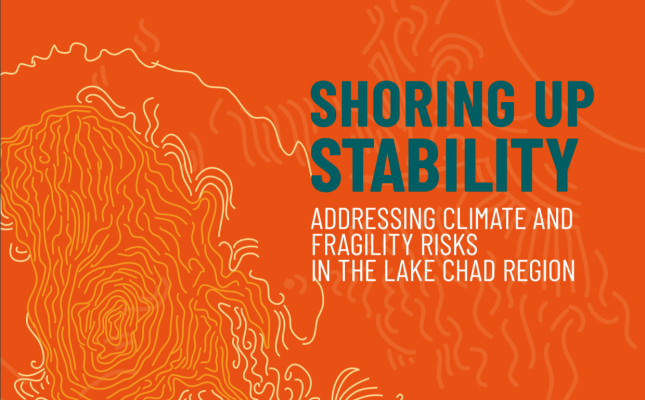
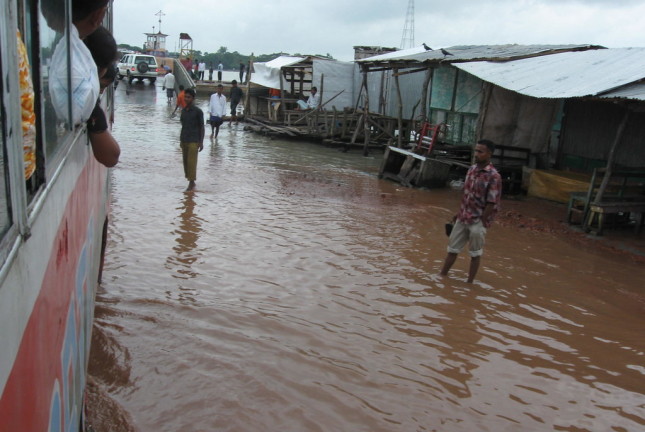
Contrary to popular belief, Lake Chad is not shrinking, according to Shoring up Stability: Addressing Climate and Fragility Risks in the Lake Chad Region, a new report from adelphi. This finding has profound implications for how the governments of countries bordering Lake Chad (Nigeria, Niger, Chad, and Cameroon) as well as the international community should address the conflict trap in which the people of the region are caught. “Supporting the people of the basin,” write the authors, “is not a function of saving Lake Chad from desiccation.”
-
A Warmer Arctic Presents Challenges and Opportunities
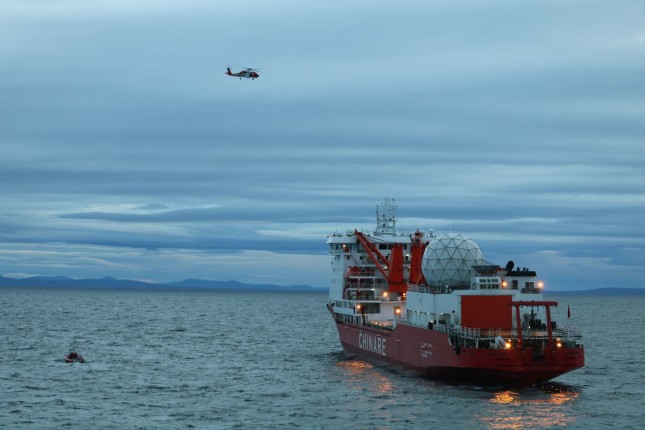
›As Arctic ice melts, we can physically see glaciers retreating. But what we can’t yet see is the exact effect climate change will have on the environment, humans, economies, and national security. Less ice for longer periods each year will likely bring opportunities and related challenges as Arctic and non-Arctic states jockey for position.
-
To Mitigate Climate-Fragility Risks, Build Preventative Capacity in Fragile States
›“When states face fragility and climate risks simultaneously, the risks and challenges are compounded,” according to The Intersection of Global Fragility and Climate Risks, a new global report commissioned by USAID, which was presented during a recent USAID Adaptation Community Meeting webcast. States facing major climate hazards, such as flooding, drought, and sea level rise, will be forced to contend with the cost of humanitarian and adaptation responses to mitigate the physical and livelihood risks threatening their populations. Fragile states struggling with issues of legitimacy in the social, economic, political, and security spheres may become overwhelmed by the process and cost of redirecting limited resources to address climate-induced disasters.
-
The “Push” Factor: Central American Farmers, Free Trade, and Migration
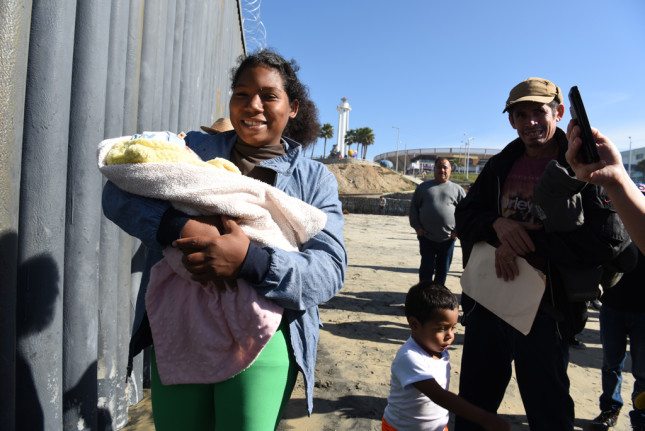
›April 17, 2019 // By Kyla PetersonThe number of migrants traveling from Central American countries (particularly El Salvador, Guatemala, and Honduras) destined for the United States has rapidly increased in recent years. In 2018, 87 percent of Central American immigrants came from those three countries, which account for most of the migrants at the U.S. southern border. Their numbers will likely only increase considering the Trump administration’s plan to cut around $700 million in aid to these three countries. The absence of aid will reduce countries’ ability to confront the violence, crime, and government instability within their borders—which act as some of the more notorious drivers of the movement north.
-
Fostering Citizen Enforcement and Rule of Law Could Cut Down Illegal Logging
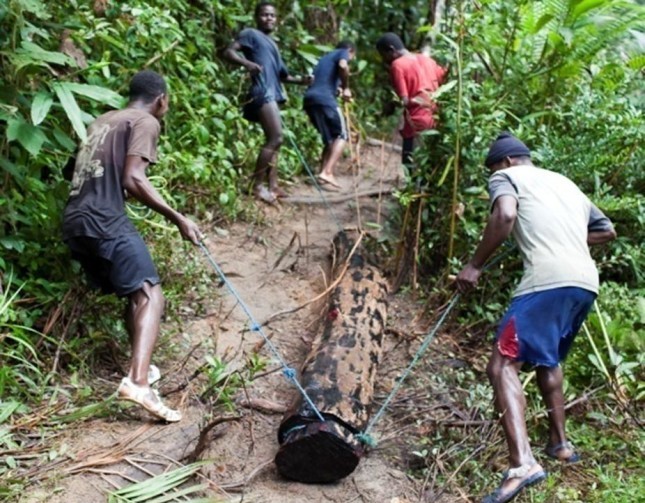
›“The trade in illegal timber products—those harvested and exported in contravention of the law of the producer country—is entangled in corruption, conflict, insecure land rights, and poor governance,” said Sandra Nichols Thiam, Senior Attorney of the Environmental Law Institute. She moderated a panel titled “Citizen Enforcement in the Forestry Sector” hosted by the Environmental Law Institute that explored illegal logging within the forest sector. Illegal harvesting of timber accounts for roughly 50 percent to 90 percent of forest activities in major producing countries within the Amazon Basin, Central Africa and Southeast Asia, said Thiam. This illegal timber trade is estimated to be worth from $30 billion to 100 billion dollars annually. Dismantling this extensive illegal enterprise would help promote biodiversity conservation, climate mitigation, human rights and sustainable development.
-
Better Water Security Translates into Better Food Security
›“Food production is the largest consumer of water and also represents the largest unknown factor of future water use as the world’s population continues to balloon, and we face increasing weather-related shocks and stresses,” said Laura Schulz, Acting Deputy Assistant Administrator in USAID’s Bureau for Economic Growth, Education and Environment. She spoke at “Feeding a Thirsty World: Harnessing the Connections Between Food and Water Security,” an event sponsored by the Wilson Center, Winrock International, the Sustainable Water Partnership, and USAID. Currently about 70 percent of global water goes to agriculture, a number that is projected to rise “as high as 92 percent,” said Rodney Ferguson, the President and CEO of Winrock International.
-
From Joseph Kony to Nile Perch: Complex Links Hook Armed Conflict to Fisheries
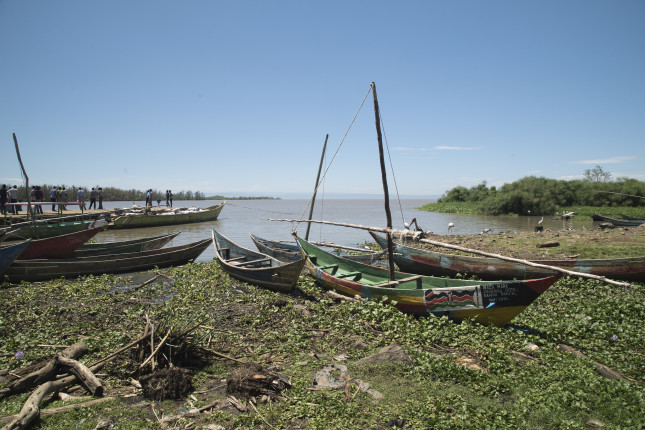
›In “Africa’s smallest war,” both Kenya and Uganda lay claim to Migingo Island, a tiny island in the waters of Lake Victoria. While the claims are over the island, the conflict is about something else entirely: Lates niloticus, also known as Nile perch, a tasty white fish that swims in the waters surrounding the island. The fish forms the backbone of the Lake Victoria economy but is increasingly hard to come by along the lakeshore. Catches are in decline, incomes are dropping, and the Ugandan government is taking increasingly harsh, militarized steps to help revive the fishery.
Showing posts from category security.
 As researchers investigate the connection between climate change and conflict, the relative power of communities and individuals attempting to cope with climate change has become a recurring theme. While climate change may not directly cause conflict, it may be inextricably woven into pre-existing conflicts of power, ethnicity, and economic interest.