-
Jay Gribble, Behind the Numbers
Four Steps to Thailand’s Demographic Dividend
›April 4, 2013 // By Wilson Center Staff
Thailand often is held up as a model of success for its efforts in family planning, but it’s amazing how quickly the country has transformed from rural and very poor to the modern economic powerhouse it is today in a matter of a few decades. Yet Dr. Kosit Panpiemras, former minister of finance and industry of Thailand, laid out the story of Thailand’s success in four succinct points. It wasn’t easy for Thailand to accomplish its goals, but the policies and investments the country made were strategic and targeted.
-
Demography and Political-Socioeconomic Change
›
In “On Demographic and Democratic Transitions,” published in the February edition of Population and Development Review, author Tim Dyson postulates that the so-called “demographic transition” – a two-step process in which diminishing mortality rates are followed by decreases in total fertility – is an important predictor of a society’s transition from autocracy to democracy. Specifically, Dyson suggests that the population surge resulting from a decline in mortality may tend to destabilize pre-democratic regimes, while a subsequent drop in fertility rates may empower women and raise the median age of a population, thus paving the way for democracy to emerge. Dyson demonstrates a statistically significant correlation between population aging and inclination toward democracy, echoing the work of New Security Beat contributor, Richard Cincotta.
-
Stewart M. Patrick, The Internationalist
Environmental Security Goes Mainstream: Natural Resources and National Interests
›March 29, 2013 // By Wilson Center StaffThe original version of this article, by Stewart M. Patrick, appeared on the Council on Foreign Relations’ The Internationalist blog.
Not long ago, concerns about environmental degradation were marginal in U.S. national security deliberations. What a difference climate change has made. Foreign policy officials and experts are starting to recognize profound linkages between planetary health, economic prosperity, and international security. These connections were on full view last Wednesday, when the Council on Foreign Relations (CFR) teamed up with Conservation International (CI) to convene a symposium, “Global Resources, the U.S. Economy, and National Security.”
-
Family Planning an Important Component of Resilience to Climate Change, Says Roger-Mark De Souza
›
“We believe that if you want to respond to critical development issues like climate change, that you need to address the social dimensions of resilience,” says Roger-Mark De Souza of Population Action International (PAI) in this week’s podcast.
“If you want to address climate change and you only look at mitigation, you are missing some of the important components,” he said. PAI, which advocates for better access to family planning in developing countries, starts from the standpoint that allowing couples to decide how many children they have leads to “investments in education and technology, providing opportunities for additional economic growth, enhanced development, and ultimately helping to build resilience and adaptive capacity.”.
-
After Cyclone Haruna, Blue Ventures Leverages Its PHE Program for Disaster Response in Madagascar
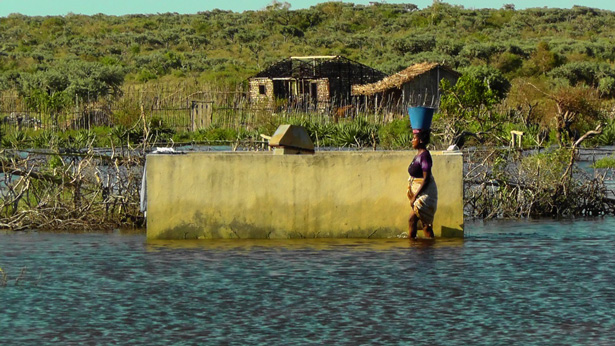
›Balbine is moving through her coastal village of Andavadoaka with a sense of urgency. Normally she works as a community-based distributor for Blue Ventures’ integrated population, health, and environment (PHE) program in southwest Madagascar, providing health information and products to her community. However, since Cyclone Haruna swept through the region several weeks ago, Balbine has been especially busy distributing diarrhea treatment kits to mothers caring for sick infants, providing families sleeping out in the open with mosquito nets to protect against malaria, setting up water filtering stations, and emphasizing the importance good hygiene practices.
-
Making ‘Healthy People, Healthy Environment’: A Look Inside Integrated Development
›“We need dynamic approaches. We can’t just keep going with the single sector approach and hoping that a conservation project will do really more than it’s intended to do,” said ECSP’s Multimedia Editor Sean Peoples in an interview with Dialogue at the Wilson Center. “These people are living integrated lives. How can we have integrated solutions for them?”
-
‘National Geographic’ Reports on “Water Grabbers” From Mali to India
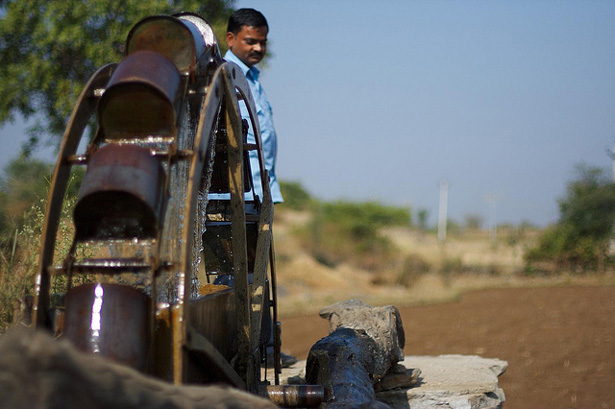
›Much ink has been spilled on the growing trend of global land grabs – land purchased en masse in developing countries like Ethiopia by foreigners mainly for agricultural export. But along with land, investors often also gain the right to use local water, and sometimes with little consideration for local livelihoods. Fred Pearce recently looked into these “water grabs” in a series for National Geographic.
-
Demographic and Environmental Dynamics Shape ‘Global Trends 2030’ Scenarios
›“However rapid change has been over the past couple decades, the rate of change will accelerate in the future,” states the newest quadrennial report from the National Intelligence Council (NIC), Global Trends 2030: Alternative Worlds. Released late last year, the report identifies the “game-changers, megatrends, and black swans” that may determine the trajectory of world affairs over the next 15 years, including demographic dynamics and natural resource scarcity. [Video Below]
Showing posts from category population.