-
Harnessing the Demographic Dividend: PRB’s ENGAGE Presentations Look to Empower, Educate
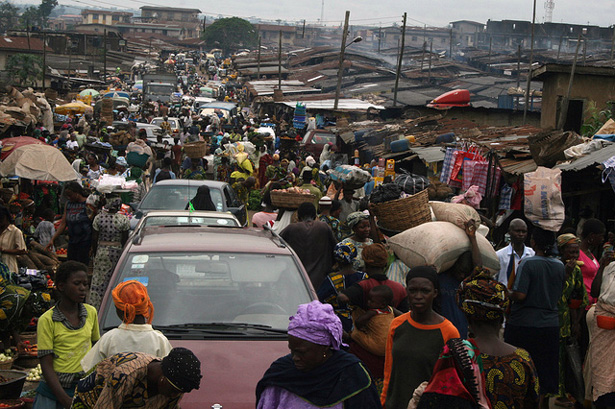
›The demographic dividend – the idea that a decline from high to low rates of population growth can lead to dramatic economic gains – has become something of a buzzword in development circles. Sub-Saharan Africa holds the single largest block of remaining high fertility countries and while headlines tend towards the dramatic about demographic shifts there, less column space has been devoted to examining the underlying issues causing these shifts or the other changes that will be necessary for countries to benefit from them.
-
Young People Are Transforming Afghanistan, Says Maiwand Rahyab
›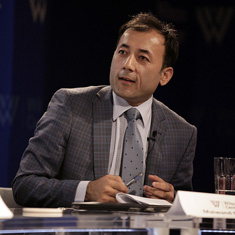
“I would like to challenge the conventional and popular perceptions about Afghanistan and expose a deeper story of commitment and determination, of struggle and success, of hope and change,” says Counterpart International’s Maiwand Rahyab in this week’s podcast.
Today – almost 12 years after the United States and its allies invaded Afghanistan – is the next generation of Afghans better off? With 26 percent of girls giving birth before age 18, 1 in 10 Afghan children dying before the age of five, and young people leaving the country in large numbers, this seems like a fair question.
-
Why Has the Demographic Transition Stalled in Sub-Saharan Africa?
›August 7, 2013 // By Elizabeth Leahy Madsen
In a recent post on the new United Nations population projections, I discussed the risk in assuming that countries in sub-Saharan Africa will progress through the demographic transition at a pace similar to other regions. Making this assumption is questionable because fertility decline in Africa has generally proceeded more slowly than in other parts of the world, with several cases of “stalls” and even small fertility increases over time.
-
Faster-Than-Expected Population Growth in Many “Feed the Future” Countries
›August 1, 2013 // By Kathleen MogelgaardCambodia to grow by nearly one-third by 2050; Kenya to more than double; Mali to swell to three times its current size. These were the population projections available when Feed the Future, President Obama’s global hunger and food security initiative, was beginning implementation in 19 focus countries around the globe in 2010.
-
Vulnerability View: GAIN Index Rates Climate Change Preparedness
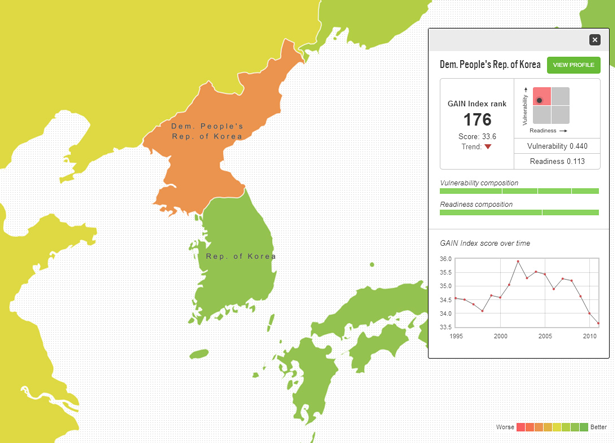
›According to the UN, the planet has warmed faster since the turn of the century than any other period on record. Sea-level rise has also increased pace to 0.12 inches a year – almost double the rate observed during the 20th century. This “unprecedented” rate of climate change is expected to disproportionally impact developing countries, whose socio-economic, political, and physical landscapes make them particularly vulnerable to the effects. The GAIN Index, an interactive mapping tool recently acquired by the University of Notre Dame, can help policymakers prepare for these changes by comparing the climate change vulnerability and readiness of countries around the world.
-
Natalia Machuca, USAID
New Demographic and Health Survey Shows Positive Results in Haiti
›July 30, 2013 // By Wilson Center StaffThe original version of this article, by Natalia Machuca, appeared on USAID’s Impact blog.
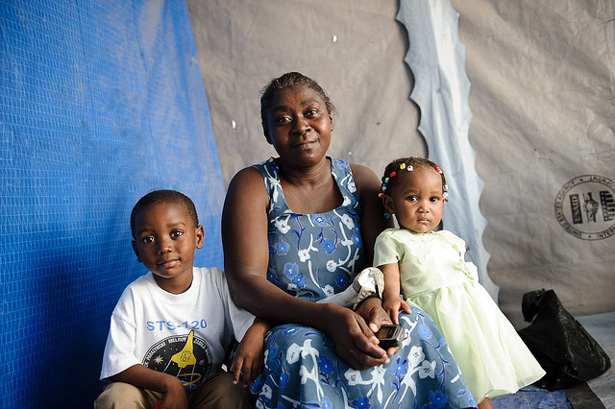
A newly released nationwide health survey of Haiti shows continuing positive trends on key health-care indicators in particular those of Haitian women and children. The latest survey, undertaken by the Haitian Ministry of Public Health and Population, was conducted in 2012 and compares with the prior survey done in 2006. It shows steady improvements among key indicators despite significant health challenges in Haiti due to the 2010 earthquake and cholera outbreak. Of note were improved indicators for child vaccination and malnutrition, infant and child mortality, women’s health, and contraception use. The report indicated no increase in HIV prevalence, which remained steady.
-
Miriam Temin: Migrant Girls, Forced or Not, Need Safety Nets
›“There’s a common myth that migrant girls are forced to move against their will, but in fact what we’ve found through our research is that most migrant girls are involved in the decision to move,” said the Population Council’s Miriam Temin in this week’s podcast.
Temin spoke at the launch of her and her colleagues’ new report, Girls on the Move: Adolescent Girls and Migration in the Developing World, about the economic incentives for girls to migrate and the risks involved for them.
-
Afghanistan’s Youth and the Risks of Taliban Return [Part One]
›As the United States approaches its 2014 deadline for military withdrawal from Afghanistan, one often overshadowed aspect of the conflict is the hard-won progress made by previously marginalized segments of the Afghan population, particularly women, girls, and young people.[Video Below]
Showing posts from category population.