-
An Update on Kenya’s Dwindling Lake Turkana as Ethiopian Dam Begins Operation
›A four-part video series produced by the Kenya Broadcasting Corporation (KBC) and supported by the Fund for Investigative Journalism gives an update on the beleaguered communities of Lake Turkana, the world’s largest desert lake that supplies vital ecosystem services and livelihoods to 300,000 people in northwestern Kenya. The lake is fed entirely by the Omo River, flowing south from Ethiopia, but a newly completed upstream dam has raised questions about the future.
-
Lessons From Africa’s Great Lakes on How Conservation Orgs Can Address Migration
›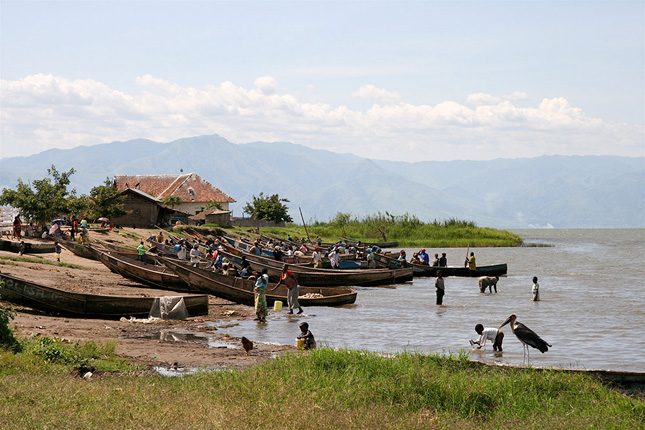
Migration is an important strategy for coping with environmental variability and change, but it can also place additional stress on ecosystems. Policymakers and practitioners are not always fully aware of these threats, nor fully prepared to manage them through appropriate interventions. Conservation professionals in the field therefore have a key role to play in reducing the harmful impacts that migration can have on the environment, and in mitigating any tensions that may emerge between migrant and host communities.
-
Ellen Starbird on the Allure of the Demographic Dividend and How to Achieve It
› “It has always surprised me actually how powerful this ‘demographic dividend’ framework seems to be,” says Ellen Starbird, director of USAID’s Office of Population and Reproductive Health, in this week’s podcast. But “for a lot of countries it’s a long way off.”
 -
4 Billion Face Regular Water Scarcity, and Three Climate Conflict Narratives
›In a study published in Science Advances, Mesfin M. Mekonnen and Arjen Y. Hoekstra estimate that over 4 billion people, approximately two-thirds of the world’s population, face severe water scarcity for at least one month out of the year – far greater than previous estimates of between 1.7 billion and 3.1 billion. The authors examined global water scarcity data from 1996 to 2005 on a monthly basis and at a more localized resolution to show how water scarcity affects different places at different times of year. -
It’s OK to Play With Your Food: What We Learned From a Global Food Security Game
›The year is 2022. Strong El Niño and La Niña events in successive years have drastically reduced wheat yields in India and Australia and increased the range of certain pests and plant pathogens in the Western Hemisphere. Moreover, a drought across North America has reduced corn and soybean yields significantly. Global commodity prices are up 262 percent over long-term averages. These price increases are compounding other social and economic challenges, contributing to social unrest in several food-importing nations.
-
What’s Next? A Report Out From the First Planetary Security Conference
›February 18, 2016 // By Gracie CookIn November 2015, experts from a variety of fields gathered at the Peace Palace in The Hague for the Planetary Security Conference, one of the first large-scale conferences on environmental security and what is hoped to be the start of an annual series. The conference report gives a sense of the diverse discussions held in the Netherlands.
-
Jagdish Upadhyay: Don’t Wait for the Demographic Dividend, Seize It
›“The demographic dividend is about inclusive growth, not just economic growth,” says Jagdish Upadhyay, chief of commodity security at the United Nations Population Fund (UNFPA), in this week’s podcast. “If it’s not inclusive, achieving the demographic dividend will be difficult.” -
Adapting to Climate Change in Cities May Require a Major Rethink
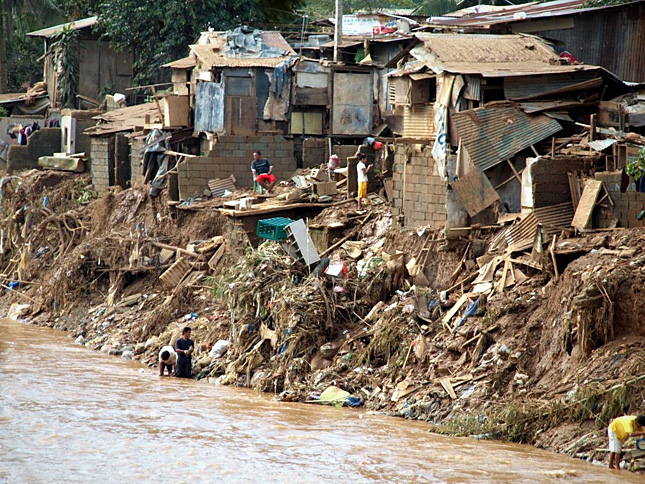
›Around the world, urbanization and climate change are transforming societies and environments, and the stakes could not be higher for the poor and marginalized. The 2015 UN climate conference in Paris (COP-21) highlighted the need for coordinated action to address the profound injustice of the world’s most disadvantaged people bearing the greatest costs of climate impacts. Among those at the COP were mayors from around the world advocating for the important role of cities in these efforts.
Showing posts from category population.
 “It has always surprised me actually how powerful this ‘demographic dividend’ framework seems to be,” says Ellen Starbird, director of USAID’s
 “The demographic dividend is about inclusive growth, not just economic growth,” says Jagdish Upadhyay, chief of commodity security at the United Nations Population Fund (UNFPA), in this week’s podcast. “If it’s not inclusive, achieving the demographic dividend will be difficult.”