• woodrow wilson center
  • ecsp

New Security Beat

Subscribe:
  • rss
  • mail-to
  • Who We Are
  • Topics
    • Population
    • Environment
    • Security
    • Health
    • Development
  • Columns
    • China Environment Forum
    • Choke Point
    • Dot-Mom
    • Friday Podcasts
    • Navigating the Poles
    • Reading Radar
  • Multimedia
    • Water Stories (Podcast Series)
    • Backdraft (Podcast Series)
    • Tracking the Energy Titans (Interactive)
  • Films
    • Water, Conflict, and Peacebuilding (Animated Short)
    • Paving the Way (Ethiopia)
    • Broken Landscape (India)
    • Scaling the Mountain (Nepal)
    • Healthy People, Healthy Environment (Tanzania)
  • Publications
  • Events
  • Contact Us

NewSecurityBeat

The blog of the Wilson Center's Environmental Change and Security Program
Showing posts from category population.
  • Without Water, No Sustainable Development: World Water Week 2015

    ›
    Guest Contributor  //  August 12, 2015  //  By Anders Jägerskog
    Little Girls Carry Water Containers

    The World Economic Forum recently named water crisis the world’s number one risk for the next 10 years for its potential impact on people and industry. Indeed, as the global community grapples with climate change – and environmental change of all kinds – understanding the fundamental nature if water to human society is crucial. The input report for this year’s World Water Week, released yesterday by the Stockholm International Water Institute, in fact argues that getting water management right is a prerequisite for sustainable development.

    MORE
  • Build It and They Will Come: New Approaches to Eliminating Fistula and Other Maternal Morbidities

    ›
    Dot-Mom  //  From the Wilson Center  //  August 11, 2015  //  By Francesca Cameron
    Fistula Photo Direct Relief 645

    Obstetric fistula and pelvic organ prolapse are two common maternal morbidities that impact thousands of women in developing countries each year but are often overshadowed by maternal mortalities. Obstetric fistula, a hole in the birth canal caused by obstructed labor, affects between 50,000 and 100,000 women each year, mostly in developing countries. Pelvic organ prolapse, which occurs when a woman’s pelvic organs slip out of place, is 10 times more common, according to Dr. Lauri Romanzi, who spoke at the Wilson Center on July 14. [Video Below]

    MORE
  • Engaging Decision-makers on Family Planning: Some Right IDEAs

    ›
    From the Wilson Center  //  August 10, 2015  //  By Carley Chavara
    IDEA Event at Wilson

    Just a few years ago, progress on global family planning and reproductive health policy seemed to be stuck in a rut. “For 20 years, development money for health had been directed to fight HIV and poverty, and as a result, momentum, interest, and funding for family planning had dwindled,” said Susan Rich, vice president of global partnerships for the Population Reference Bureau (PRB), at the Wilson Center on July 15. “Unmet need for family planning was high all over the world, but especially in Africa.” [Video Below]

    MORE
  • Providing for the Periphery: Anthony Speca on Development for Canada’s Resource-Rich Nunavut

    ›
    Friday Podcasts  //  August 7, 2015  //  By Carley Chavara

    speca-smallRich in natural resources, poor in nearly every human development indicator. The description applies to many of the most-conflict ridden states in the world, but also to a region often forgotten in global development circles: the Arctic North.

    MORE
  • The SDGs Are All About Integration – Good Thing PHE Programs Have Been Doing That for Years

    ›
    Guest Contributor  //  August 5, 2015  //  By A.Tianna Scozzaro, Cara Honzak & Cheryl Margoluis
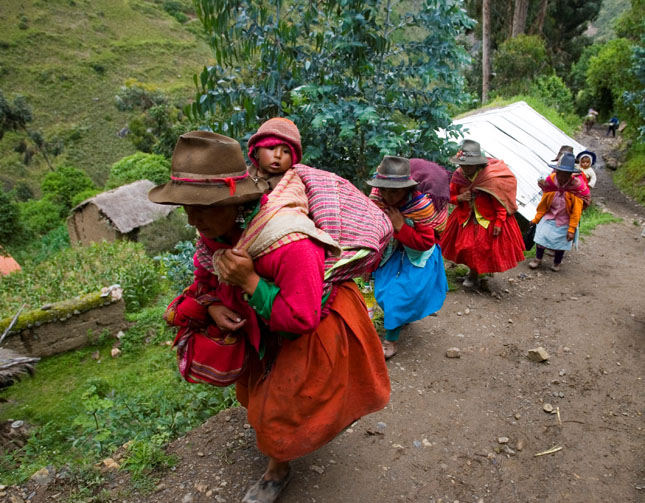
    scalingthemountain2

    Last week, the United Nations concluded one of the last negotiations on the road to adopting the Sustainable Development Goals in September. We’ve entered the home stretch of a process that has taken more than two years, bringing governments, civil society organizations, and communities together to define the development goals and targets that UN member states will be expected to aim for over the next 15 years.

    MORE
  • Roger-Mark De Souza: Focus on Urban Dynamics, Water Scarcity in Latin America and the Caribbean

    ›
    Friday Podcasts  //  July 31, 2015  //  By Linnea Bennett

    desouza-smallFor the past four decades, urbanization in Latin American and Caribbean countries has been on the rise. Today it’s one of the most urbanized regions of the world with 79 percent of the population living in towns and cities. By 2050, 9 out of 10 residents are expected to live in cities. This density and movement of people is critical to understanding the region’s water and climate change issues, says ECSP’s Roger Mark De Souza in this week’s podcast.

    MORE
  • Running Faster to Stand Still: New UN Population Projections Point to Challenges Ahead for SDGs

    ›
    July 29, 2015  //  By Schuyler Null
    Cairo-cityscape

    In most parts of the world, population growth is stagnant, even declining slightly, part of a decades-long and nearly universal shift towards smaller, healthier families. But the places where growth is still rapid continue to defy expectations about when they will “catch up.”

    MORE
  • Turning the Climate-Security Problem on Its Head: Geoff Dabelko Talks G7 ‘Climate for Peace’ Report

    ›
    On the Beat  //  July 29, 2015  //  By Linnea Bennett

    Dabelko_smallConversations around climate change often take place at the “30,000-foot level,” said Ohio University Professor and ECSP Senior Advisor Geoff Dabelko in a recent radio interview with WOUB Public Media, based out of Athens, Ohio. Emission reductions, carbon concentrations, global temperatures. But a certain amount of change is already baked into the system and impacts are playing at in different ways around the world already.

    MORE
Newer Posts   Older Posts
View full site

Join the Conversation

  • RSS
  • subscribe
  • facebook
  • G+
  • twitter
  • iTunes
  • podomatic
  • youtube
Tweets by NewSecurityBeat

Trending Stories

  • unfccclogo1
  • Pop at COP: Population and Family Planning at the UN Climate Negotiations

Featured Media

Backdraft Podcast

play Backdraft
Podcasts

More »

What You're Saying

  • Volunteers,At,The,Lagos,Food,Bank,Initiative,Outreach,To,Ikotun, Pan-African Response to COVID-19: New Forms of Environmental Peacebuilding Emerge
    Rashida Salifu: Great piece 👍🏾 Africa as a continent has suffered this unfortunate pandemic.But it has also...
  • A desert road near Kuqa An Unholy Trinity: Xinjiang’s Unhealthy Relationship With Coal, Water, and the Quest for Development
    Ismail: It is more historically accurate to refer to Xinjiang as East Turkistan.
  • shutterstock_1779654803 Leverage COVID-19 Data Collection Networks for Environmental Peacebuilding
    Carsten Pran: Thanks for reading! It will be interesting to see how society adapts to droves of new information in...

What We’re Reading

  • Rising rates of food instability in Latin America threaten women and Venezuelan migrants
  • Treetop sensors help Indonesia eavesdrop on forests to cut logging
  • 'Seat at the table': Women's land rights seen as key to climate fight
  • A Surprise in Africa: Air Pollution Falls as Economies Rise
  • Himalayan glacier disaster highlights climate change risks
More »
  • woodrow
  • ecsp
  • RSS Feed
  • YouTube
  • Twitter
  • Facebook
  • Home
  • Who We Are
  • Publications
  • Events
  • Wilson Center
  • Contact Us
  • Print Friendly Page

© Copyright 2007-2021. Environmental Change and Security Program.

Woodrow Wilson International Center for Scholars. All rights reserved.

Developed by Vico Rock Media

Environmental Change and Security Program

Woodrow Wilson International Center for Scholars

Ronald Reagan Building and International Trade Center

  • One Woodrow Wilson Plaza
  • 1300 Pennsylvania Ave., NW
  • Washington, DC 20004-3027

T 202-691-4000