• woodrow wilson center
  • ecsp

New Security Beat

Subscribe:
  • rss
  • mail-to
  • Who We Are
  • Topics
    • Population
    • Environment
    • Security
    • Health
    • Development
  • Columns
    • China Environment Forum
    • Choke Point
    • Dot-Mom
    • Friday Podcasts
    • Navigating the Poles
    • Reading Radar
  • Multimedia
    • Water Stories (Podcast Series)
    • Backdraft (Podcast Series)
    • Tracking the Energy Titans (Interactive)
  • Films
    • Water, Conflict, and Peacebuilding (Animated Short)
    • Paving the Way (Ethiopia)
    • Broken Landscape (India)
    • Scaling the Mountain (Nepal)
    • Healthy People, Healthy Environment (Tanzania)
  • Publications
  • Events
  • Contact Us

NewSecurityBeat

The blog of the Wilson Center's Environmental Change and Security Program
Showing posts from category population.

  • A River Runs Again: Reporting on India’s Natural Crisis

    ›
    From the Wilson Center  //  November 17, 2015  //  By Deepshri Mathur
    Broken Landscape River

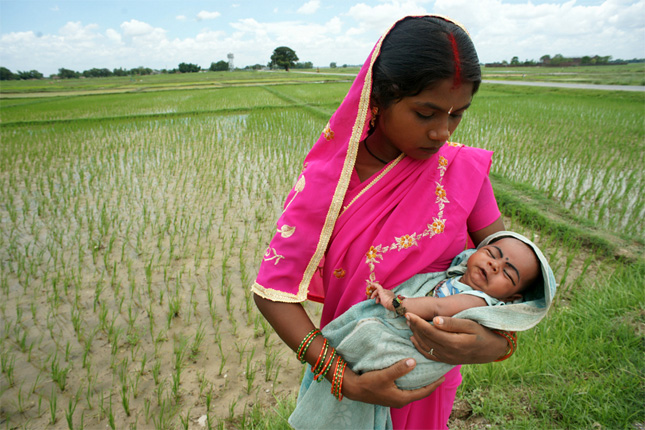
    The world’s second most populous country – projected to be first by 2022 – is developing faster than ever before, roiling the social, political, and environmental landscape. [Video Below]

    MORE
  • Falling Costs, Rising Opportunities: Scaling Up Renewable Energy in the Developing World [Part Two]

    ›
    From the Wilson Center  //  November 12, 2015  //  By Graham Norwood
    solar_India

    “Clean energy has gone from being the ‘right thing to do’ in combating climate change, to being the most cost-effective option for many energy-insecure countries,” said Carrie Thompson, deputy director of the U.S. Agency for International Development’s Regional Development Mission for Asia, during a day-long conference on renewable energy at the Wilson Center on October 27 (read part one of our coverage here).

    MORE
  • Long in the Background, Population Becoming a Bigger Issue at Climate Change Discussions

    ›
    Guest Contributor  //  November 10, 2015  //  By Robert Engelman
    Makoko Nigeria

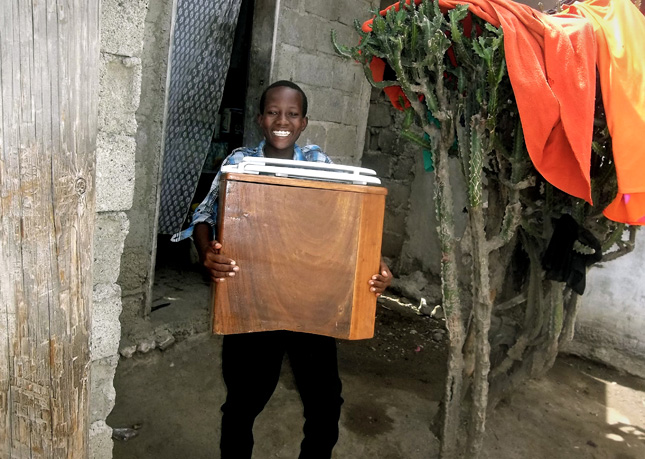
    As most of the world’s governments are puzzling out what they can offer to combat global climate change, a sensitive but critical aspect of the problem is coming into clearer focus: population. The word appears 20 times in a new 66-page synthesis of country pledges to cut greenhouse-gas emissions by the UN Framework Convention on Climate Change’s Secretariat. And those are the mentions of population in the context of size or growth, not the word’s more frequent use as a synonym for “people.”

    MORE
  • Military Leaders: Climate Change, Energy, National Security Are Inextricably Linked

    ›
    From the Wilson Center  //  November 9, 2015  //  By Schuyler Null
    oil fires

    In the midst of a minefield on day two of Desert Storm Task Force Ripper, Marine Corps Operations Officer Richard Zilmer stepped out of his armored personnel carrier, squinted up at the sky, and saw nothing but black from horizon to horizon. Iraqi forces, trying desperately to blunt the attack of coalition armies, had set fire to hundreds of Kuwaiti oil wells and oil-filled trenches.

    MORE
  • Finding the Path: Increasing Contraceptive Choice in Africa’s Most Populous Countries

    ›
    From the Wilson Center  //  November 2, 2015  //  By Deepshri Mathur
    community health worker

    More than 225 million women in developing countries want to avoid or delay pregnancy but are not using safe, modern, and effective contraceptive methods. Such a gap between women’s contraceptive behavior and reproductive goals is called an unmet need for family planning, and no region has more unmet need than sub-Saharan Africa. [Video Below]

    MORE
  • The “Gender-Equity Dividend,” and the Education Effect on Climate Change Adaptation and Mitigation

    ›
    Reading Radar  //  October 27, 2015  //  By Deepshri Mathur

    Untitled-1By comparing “first wave” developing countries, like Sweden and the United States, to “second wave” developers, like South Korea and Japan, Thomas Anderson and Hans-Peter Kohler of the University of Pennsylvania seek to explain why countries that underwent socioeconomic development in the first half of the 20th century have slightly higher fertility levels than those that developed later. Despite “both sets of countries attaining high income and generally low fertility, contemporary gender norms and levels of gender equity differ between them,” write Anderson and Kohler in a new study in Population and Development Review.

    MORE
  • A Little Bit of Sugar Helps the Pill Go Down: Resilience, Peace, and Family Planning

    ›
    October 26, 2015  //  By Roger-Mark De Souza
    Jharana Kumari Tharu - female community health volunteer in Bina

    Adapted from a commentary on “The Pill Is Mightier Than the Sword,” which appeared in the International Journal of Health Policy and Management.

    A recent article by Malcolm Potts, Aafreen Mahmood, and Alisha Graves of the University of California Berkeley’s OASIS Initiative notes that family planning has an important role to play in building peace by increasing women’s empowerment and their agency. “The pill is mightier than the sword,” as they put it.

    MORE
  • Climate Change Adaptation and Population Dynamics in Latin America and the Caribbean (Report)

    ›
    From the Wilson Center  //  October 14, 2015  //  By Kathleen Mogelgaard
    rio favela1

    Global climate trends indicate that our planet will continue warming into the next century, leading to more extreme climate conditions. The Latin America and Caribbean region is vulnerable to some of the most challenging aspects of climate change – sea-level rise, changes in precipitation, glacial melting, spreading of disease, and extreme weather events.

    MORE
Newer Posts   Older Posts
View full site

Join the Conversation

  • RSS
  • subscribe
  • facebook
  • G+
  • twitter
  • iTunes
  • podomatic
  • youtube
Tweets by NewSecurityBeat

Trending Stories

  • unfccclogo1
  • Pop at COP: Population and Family Planning at the UN Climate Negotiations

Featured Media

Backdraft Podcast

play Backdraft
Podcasts

More »

What You're Saying

  • Volunteers,At,The,Lagos,Food,Bank,Initiative,Outreach,To,Ikotun, Pan-African Response to COVID-19: New Forms of Environmental Peacebuilding Emerge
    Rashida Salifu: Great piece 👍🏾 Africa as a continent has suffered this unfortunate pandemic.But it has also...
  • A desert road near Kuqa An Unholy Trinity: Xinjiang’s Unhealthy Relationship With Coal, Water, and the Quest for Development
    Ismail: It is more historically accurate to refer to Xinjiang as East Turkistan.
  • shutterstock_1779654803 Leverage COVID-19 Data Collection Networks for Environmental Peacebuilding
    Carsten Pran: Thanks for reading! It will be interesting to see how society adapts to droves of new information in...

What We’re Reading

  • Rising rates of food instability in Latin America threaten women and Venezuelan migrants
  • Treetop sensors help Indonesia eavesdrop on forests to cut logging
  • 'Seat at the table': Women's land rights seen as key to climate fight
  • A Surprise in Africa: Air Pollution Falls as Economies Rise
  • Himalayan glacier disaster highlights climate change risks
More »
  • woodrow
  • ecsp
  • RSS Feed
  • YouTube
  • Twitter
  • Facebook
  • Home
  • Who We Are
  • Publications
  • Events
  • Wilson Center
  • Contact Us
  • Print Friendly Page

© Copyright 2007-2021. Environmental Change and Security Program.

Woodrow Wilson International Center for Scholars. All rights reserved.

Developed by Vico Rock Media

Environmental Change and Security Program

Woodrow Wilson International Center for Scholars

Ronald Reagan Building and International Trade Center

  • One Woodrow Wilson Plaza
  • 1300 Pennsylvania Ave., NW
  • Washington, DC 20004-3027

T 202-691-4000