• woodrow wilson center
  • ecsp

New Security Beat

Subscribe:
  • rss
  • mail-to
  • Who We Are
  • Topics
    • Population
    • Environment
    • Security
    • Health
    • Development
  • Columns
    • China Environment Forum
    • Choke Point
    • Dot-Mom
    • Friday Podcasts
    • Navigating the Poles
    • Reading Radar
  • Multimedia
    • Water Stories (Podcast Series)
    • Backdraft (Podcast Series)
    • Tracking the Energy Titans (Interactive)
  • Films
    • Water, Conflict, and Peacebuilding (Animated Short)
    • Paving the Way (Ethiopia)
    • Broken Landscape (India)
    • Scaling the Mountain (Nepal)
    • Healthy People, Healthy Environment (Tanzania)
  • Publications
  • Events
  • Contact Us

NewSecurityBeat

The blog of the Wilson Center's Environmental Change and Security Program
Showing posts from category population.
  • Myanmar’s Democratic Deficit: Demography and the Rohingya Dilemma

    ›
    Guest Contributor  //  April 12, 2016  //  By Rachel Blomquist & Richard Cincotta
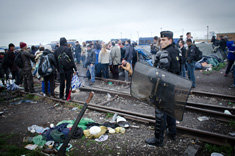
    Rohingya camp

    According to political demographers, who study the relationship between population dynamics and politics, two characteristics when observed together provide a rather good indication that a state is about to shed its authoritarian regime, rise to a high level of democracy, and stay there. Myanmar has both.

    MORE
  • In Tanzania, Empowering Communities to Address Population, Health, and Environment Issues Together

    ›
    Guest Contributor  //  March 28, 2016  //  By Mustafa G. Kudrati
    Kigoma

    Africa has its share of challenges, but it also leads the way in creative development responses. Take the Lake Tanganyika area in Tanzania. Daily life is hard. There are few roads. Cellphone service is patchy. You must travel by boat for seven hours to reach the nearest hospital. And if you have an obstetric emergency, there is no doctor in the village to help you.

    MORE
  • Call for Papers: Reducing Urban Poverty 2016 Graduate Student Paper Competition

    ›
    From the Wilson Center  //  March 23, 2016  //  By Allison Garland
    USL call for papers

    To encourage a new generation of urban policymakers and promote early career research, the Wilson Center, U.S. Agency for International Development, IHC – Global Coalition for Inclusive Housing and Sustainable Cities, World Bank, and Cities Alliance are sponsoring the 7th Annual Urban Poverty Paper Competition. The competition is open to graduate students working on topics related to urban poverty in the developing world.

    MORE
  • Creating a Water Ready World

    ›
    March 22, 2016  //  By Sherri Goodman
    Haiti-flood

    Sitting at my desk looking at bills to be paid, the first one on the stack is for the water company, emblazoned with the phrase, “Water is Life.” Yes, we all know that. But really, as my teenagers would say, “Duh, Mom. So what?”

    Well, here’s the “so what” on this World Water Day 2016.

    MORE
  • Global Stories From the Nexus of Gender and Climate Change Vulnerability

    ›
    March 21, 2016  //  By Gracie Cook
    darfur-water-roller

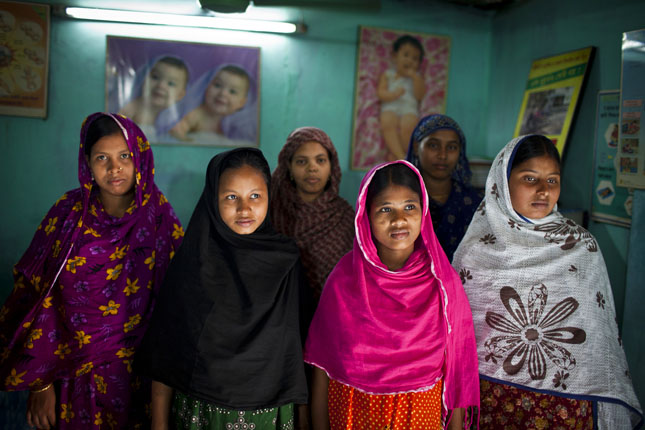
    Developing countries are in a pitched fight against the effects of climate change, and women, playing prominent roles in agriculture and household resource collection, are “at the front lines in the battle,” writes UN Framework Convention on Climate Change Executive Secretary Christiana Figueres, in a new report.

    MORE
  • Kabul Greenbelt Project Aims to Restore Some Luster to War-Ravaged Capital – and Resilience Too

    ›
    Guest Contributor  //  March 15, 2016  //  By Elizabeth B. Hessami
    Kabul-degredation3

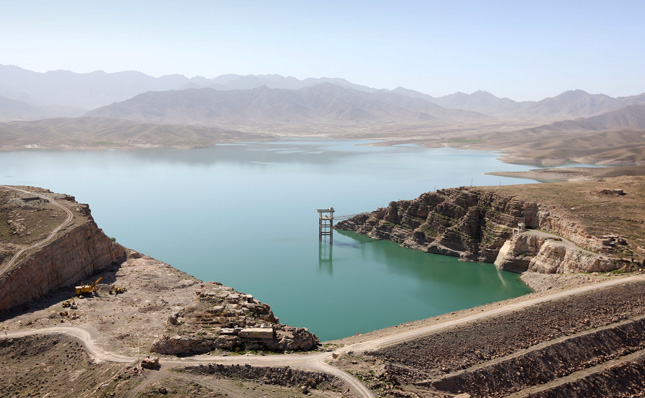
    It’s hard to imagine today, but Kabul was once ringed with grassy areas and shrubs, a few trees in areas too. Some of my husband’s favorite recollections of early 1970s Afghanistan are of simple family picnics in picturesque parks. Hours of lounging, grilling kebab, preparing rice, and conversing were a respite from the oppressive heat of the capital. Sometimes a picnic would become an all-night, extended family gathering. The Gardens of Paghman were a favorite destination with rows of pine trees, roses, and cool fountains. Pre-war family photos reveal neatly trimmed trees, bushes, and ample grassy areas for impromptu games. The family picnic is still popular among the Afghan diaspora. In the United States, Afghan community events are often held in parks, and involve large, multi-family picnics.

    MORE
  • India’s Young and Restless

    ›
    March 14, 2016  //  By Michael Kugelman
    Delhi street art

    When we think about countries on the Indian subcontinent with destabilizing demographics, Pakistan comes to mind immediately. First, it’s a country with a very young population. Almost two thirds of its nearly 200 million people are under 25, and the median age is about 22. Second, this youth cohort is highly susceptible to radicalization. Nearly every terrorist attack in Pakistan since 9/11 has been perpetrated by someone under 30. In recent years, the Wilson Center has focused on Pakistan’s youth demographic challenges in detail. India, however, needs to be included in this conversation as well.

    MORE
  • Parfait Eloundou-Enyegue on Re-Conceptualizing Education to Help Developing Countries Create Jobs

    ›
    Friday Podcasts  //  March 11, 2016  //  By Sean Peoples

    parfait-small“There is more to education than the picture that you typically see in most reports,” says Parfait Eloundou-Enyegue, professor of development sociology at Cornell University, in this week’s podcast. “And this picture comes from looking at education not as an outcome but as an institution.”

    MORE
Newer Posts   Older Posts
View full site

Join the Conversation

  • RSS
  • subscribe
  • facebook
  • G+
  • twitter
  • iTunes
  • podomatic
  • youtube
Tweets by NewSecurityBeat

Trending Stories

  • unfccclogo1
  • Pop at COP: Population and Family Planning at the UN Climate Negotiations

Featured Media

Backdraft Podcast

play Backdraft
Podcasts

More »

What You're Saying

  • Volunteers,At,The,Lagos,Food,Bank,Initiative,Outreach,To,Ikotun, Pan-African Response to COVID-19: New Forms of Environmental Peacebuilding Emerge
    Rashida Salifu: Great piece 👍🏾 Africa as a continent has suffered this unfortunate pandemic.But it has also...
  • A desert road near Kuqa An Unholy Trinity: Xinjiang’s Unhealthy Relationship With Coal, Water, and the Quest for Development
    Ismail: It is more historically accurate to refer to Xinjiang as East Turkistan.
  • shutterstock_1779654803 Leverage COVID-19 Data Collection Networks for Environmental Peacebuilding
    Carsten Pran: Thanks for reading! It will be interesting to see how society adapts to droves of new information in...

What We’re Reading

  • Rising rates of food instability in Latin America threaten women and Venezuelan migrants
  • Treetop sensors help Indonesia eavesdrop on forests to cut logging
  • 'Seat at the table': Women's land rights seen as key to climate fight
  • A Surprise in Africa: Air Pollution Falls as Economies Rise
  • Himalayan glacier disaster highlights climate change risks
More »
  • woodrow
  • ecsp
  • RSS Feed
  • YouTube
  • Twitter
  • Facebook
  • Home
  • Who We Are
  • Publications
  • Events
  • Wilson Center
  • Contact Us
  • Print Friendly Page

© Copyright 2007-2021. Environmental Change and Security Program.

Woodrow Wilson International Center for Scholars. All rights reserved.

Developed by Vico Rock Media

Environmental Change and Security Program

Woodrow Wilson International Center for Scholars

Ronald Reagan Building and International Trade Center

  • One Woodrow Wilson Plaza
  • 1300 Pennsylvania Ave., NW
  • Washington, DC 20004-3027

T 202-691-4000