-
8 Rules of Political Demography That Help Forecast Tomorrow’s World
›In a world rapidly churning out unpredictable political shocks, intelligence analysts occasionally need to clear their heads of the daily barrage of newsworthy events and instead work with simple theories that discern the direction and speed of trends and help predict their outcomes. Political demography, the study of population age structures and their relationships to political trends and events, has helped some analysts predict geopolitical changes in a world that, from time to time, appears utterly chaotic.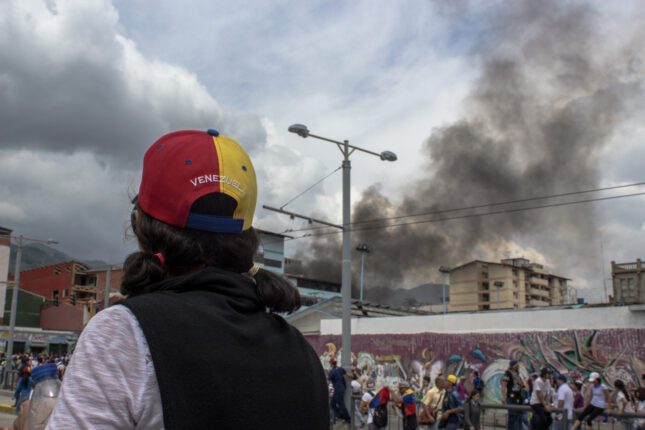
-
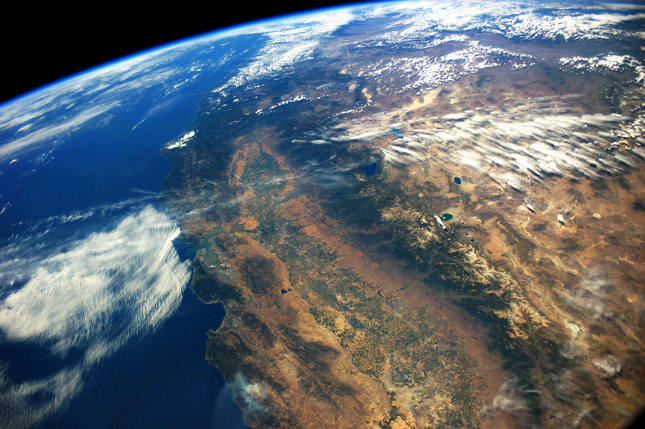
Historic Drought Prompts Water Innovation in California – Can It Be a Model?
›
Pray for rain. Mega-drought. Winter salmon run nearly extinguished. Sierra snowpack dismal. These were just some of the headlines in California newspapers over the last five years during a historic drought that elevated water security to the top of everyone’s minds.
-
Tamil Nadu Leads India’s Historic Turn to the Sun and Wind
›MADURAI, India – Before he agreed to serve as minister of state and take command of his country’s mammoth energy production and distribution sector, Piyush Goyal developed one of India’s most spirited political careers. “A man of ideas and competence,” according to First Post, a prominent news organization, Goyal is an accountant and lawyer who rose to the peak of Indian economic and political culture as an investment banker, member of parliament, and treasurer of the ruling Bharatiya Janata Party.
-
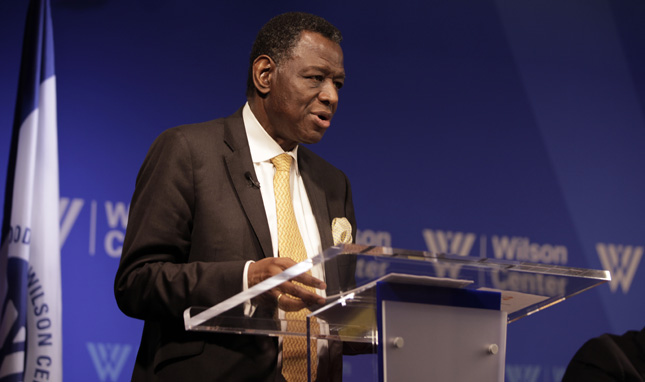
Dr. Babatunde Osotimehin, An Inspirational and Aspirational Leader for Today’s Youth, Has Passed
›June 6, 2017 // By Wilson Center StaffDr. Babatunde Osotimehin, the executive director of UNFPA and an inspiring leader in the global health community, passed at his home on June 4 at the age of 68.
-
Food Violence Shows Need for Both Development and Climate Resilience
›In March, the Trump Administration released a new budget proposal that would cut funding to the Department of State and U.S. Agency for International Development by 28 percent. The proposal also reduces funding to the United Nations for ongoing climate change efforts. At the same time, the White House is publicly considered withdrawing from the Paris Climate Accords, with a final decision anticipated any day. Critics both outside the administration and within have pointed to the drawbacks of these moves, but the sum of the policy changes could have an even greater impact than the individual parts.
-
The Deadly “Humanitarian Ping-Pong” of Refugee Rescue at Sea
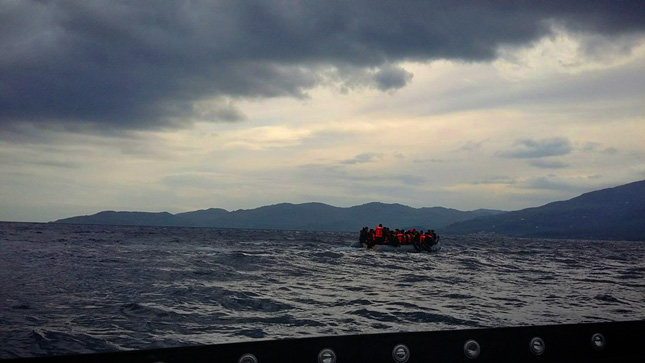
›In 2013, a boat capsized 61 miles from the Italian island of Lampedusa killing 268 refugees including 60 children. It was another horrific example of the risks taken by so many families fleeing violence in the Middle East and Africa. But recently released tapes of conversations with coast guard authorities reveal a deeper tragedy.
-
Michael Kugelman on Pakistan’s “Nightmare” Water Scenario
›“Water scarcity is a nightmare scenario that is all too real and all but inevitable in Pakistan,” says Michael Kugelman, deputy director of the Wilson Center’s Asia Program, in this week’s podcast. -
Wilson Center’s Lisa Palmer Launches ‘Hot, Hungry Planet’
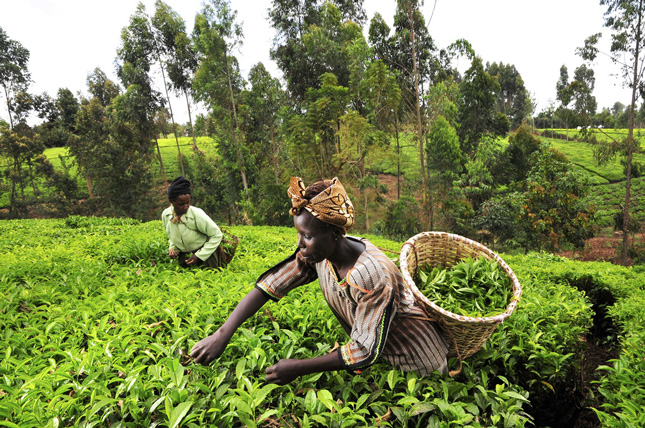
›A steadily increasing global population, growing food demand, and changing climate necessitate new kinds of thinking in agriculture but also fields like public health and energy, concludes a new book, Hot, Hungry Planet, by former Wilson Center Public Policy Scholar and current Senior Fellow at the National Socio-Environmental Synthesis Center Lisa Palmer.
Showing posts from category population.

 “Water scarcity is a nightmare scenario that is all too real and all but inevitable in Pakistan,” says Michael Kugelman, deputy director of the Wilson Center’s Asia Program, in this week’s podcast.