

Showing posts from category population.
-
Climate Change Not the Only Environmental Problem, Says U.K. Environment Secretary
›May 22, 2009 // By Rachel Weisshaar The Copenhagen climate conference will be “the most important gathering in human history,” said the United Kingdom’s environment secretary, Hilary Benn, at the Wilson Center on May 14, 2009 (full text of speech). While “an agreement on cutting emissions would be the biggest single step we could take to safeguard [natural] resources,” said Benn, “even such an agreement will not—indeed cannot—encompass all of the things we need to do to safeguard our environment.”
“The most glaring threat is that of dangerous climate change. But it is not the only example of the problems we create when we exploit the world’s resources unsustainably,” explained Benn.
“The spiraling price of food in 2008 was a wake-up call. Riots threatened political stability. Export bans threatened world trade. Wheat prices doubled, rice quadrupled. And another 75 million people were threatened by poverty and hunger,” Benn said.
Although food prices have fallen recently, continuing growth in the global population—expected to reach at least 9 billion by 2050—and rising standards of living in poor and middle-income countries mean that world food production will need to double by 2050. This demand for food—especially more meat and dairy products—will put increasing pressure on land and water. Conflicts could erupt over these scarce resources if they are not managed properly, Benn warned.
Already, wealthy governments and corporations are buying farmland in Africa and other parts of the developing world—leading to unrest. Widespread anger at South Korean company Daewoo’s proposal to purchase more than half of Madagascar’s arable land contributed to the ouster of former Malagasy President Marc Ravalomanana.
Benn highlighted an apparent Catch-22: “Development is the best way of lowering the rate of population growth and so, in turn, lowering the pressure on resources. But development also increases income, and therefore demand.”
The way to free ourselves from this cycle, Benn said, is to create an environmentally sustainable economy, so that economic development does not degrade the environment. He proposed:- Starting to build tomorrow’s sustainable economy even as we work to contain today’s economic crisis;
- Changing the incentives in our economies—through regulation and financial inducements—to promote environmentally sustainable choices;
- Creating the jobs that will power this new sustainable economy; and
- Working together as an international community to address water scarcity, food security, and biodiversity loss.
Benn called for U.S. leadership on climate change and other environmental issues: “We need America to apply all of its great energy to the task we, together, face.”
Photo: Hilary Benn. Courtesy of Dave Hawxhurst and the Wilson Center. -
Women’s Rights: A Silver Bullet for Development?
›May 21, 2009 // By Rachel WeisshaarAny veteran of the international development field will be familiar with the disclaimer that no single intervention, no matter how effective, is a “silver bullet.” But in The Means of Reproduction: Sex, Power, and the Future of the World, journalist Michelle Goldberg argues forcefully that there is one change that is key to solving environmental degradation, food insecurity, water scarcity, global health challenges, skewed gender ratios, poverty, and both under- and overpopulation: women’s empowerment.
Malthusian Anxieties
As Matthew Connelly documents in his book Fatal Misconception: The Struggle to Control World Population, the family-planning movement sometimes lapsed into questionable moral territory during its early years, when women’s rights were not among its chief motivations. Fortunately, it turns out that family planning is actually more successful when motivated by a larger desire to empower women than when spurred by fears of overpopulation (The Means of Reproduction, pp. 74-76; 84-85). Educated women are more likely to delay marriage, have fewer children, obtain good maternal care, and be less vulnerable to HIV/AIDS, write Caren Grown et al. in a literature review of gender equality and women’s health in The Lancet.
A Birth Dearth—or an Empowerment Dearth?
As Goldberg points out, empowering women is also the solution to slowing the rapid population decline being experienced in many European countries and some wealthy Asian ones. “In contemporary developed societies, birthrates are highest where support for working mothers is greatest, a fact conservatives simply ignore in their doomsday surveys of future European decrepitude,” says Goldberg (p. 204).
Thus, comparatively religious, socially conservative European countries like Italy and Poland have some of the lowest fertility rates on the continent (both 1.3 children per woman), while more secular countries like France and Sweden, with their generous paid parental leave policies, public day care, and after-school programs, have some of the highest (2.0 and 1.9, respectively).
Strong Women, Healthy Families
Women’s empowerment is key to human health. The more education a woman has, the healthier her children are likely to be, explains Goldberg (p. 75). In addition, as Grown et al. point out, “in societies such as Bangladesh, where husbands control most household resources, when women did own assets, household expenditure on children’s clothing and education was higher and the rate of illness among girls was reduced.”
But the connection between empowerment and health also works in the other direction: In sub-Saharan Africa, women constitute 57 percent of people living with HIV/AIDS—a direct result of women’s sexual, social, political, and economic subordination (pp. 224-225). Women often do not have the standing to refuse sex, or to demand that a man wear a condom. They also frequently lack the financial and educational resources needed to leave violent or unfaithful husbands (p. 225).
Bare Branches: Sex Ratios and Security
A preference for sons persists in many parts of the world—especially Asia—and the spread of ultrasound, which can detect the sex of a four-month-old fetus, has made sex-selective abortion hugely popular for couples seeking to have a son. But the growing imbalance between men and women has potentially grave security implications for countries such as China and India, warns Goldberg. As Valerie Hudson and Andrea den Boer point out, Indian states “with high sex ratios, such as Uttar Pradesh, have much higher violent crime rates than states with more normal sex ratios, such as Kerala.”
As Goldberg puts it, “as long as women lack an identity without a husband or a son, sex-selective abortion will continue to deform India’s—and Asia’s—demographics” (p.194). She isn’t hopeful about quick progress: “Like any democracy, India will probably find it easier to slouch toward disaster than to infuriate the defenders of patriarchy. Ultimately, though, unless the country finds a way to break through the encrustations of centuries of misogyny, its democracy itself could be in danger from an unmanageable excess of men” (p. 198).
Toward Nine Billion Hot, Hungry, Thirsty People
Goldberg’s take on the links among population, the environment, and security is admirably nuanced—although I would have appreciated a more extensive discussion of demographic security and population-environment links. She acknowledges that the food riots of 2008, combined with growing concern about water scarcity and climate change, may have generated more attention for family planning and reproductive health.
But she reminds us that the main population-related response to these problems—a commitment to decrease fertility in the developing world—misinterprets the causes. The food shortages were largely the result of growing consumption by middle-income people, combined with continued high consumption in the rich world. Climate change will undoubtedly become much worse if all people in the developing world start to live the high-carbon lifestyles we do in the West, but to date, climate change has been caused almost entirely by industrialized countries.
The Micro and the Macro
Goldberg’s storytelling skills are superb, making The Means of Reproduction both an exciting and enlightening read. She illustrates her broader arguments about women’s rights with compelling stories about individual women and men. She demands that we respect these people’s experiences while arguing powerfully against succumbing to the temptations of political correctness and relativism:
“In thinking about the situation of women in vastly different contexts, there are a number of dangers. One is assuming that Western ways are self-evidently superior and that all women would choose them, if only they could. But another is assuming that women in other cultures are so different from us that situations we would find intolerable—bearing child after child into grinding poverty; being utterly at the mercy of fathers, husbands, and brothers; having one’s clitoris sliced off with a razor—do not also cause them great pain” (p. 9).
Goldberg has pulled off an impressive feat: The Means of Reproduction is accessible enough to serve as an introduction to the debates around population and family planning, but complex enough to inform readers about the latest controversies and battlegrounds in the field. Goldberg does have an opinion, but it’s based on reams of research. Here’s hoping The Means of Reproduction finds a place in the canon.
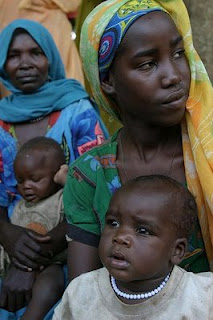
Photo: Women and children at the health post at Sam Ouandja refugee camp in the Central African Republic. Courtesy of Pierre Holtz/UNICEF and Flickr user hdptcar. -
Are Fences the Bridge to a Sustainable Future in Kenya?
›May 18, 2009 // By Brian Klein“Kenya is destroying itself,” Julius Kipng’etich, director of the Kenya Wildlife Service, told The Observer. “The population has reached an unsustainable level. We are killing ourselves by slowly destroying the forests and settling there.” Drought, poverty, and population growth have led large numbers of the rural poor to encroach on protected forests in search of arable land, reports The Observer, jeopardizing Kenya’s food and water security and hydroelectric energy production. The government’s inability to manage land tenure has further exacerbated the situation.
In response to these developments, a local conservation group called Rhino Ark has erected a 250-mile electric fence (see photo slideshow) around the Aberdare mountain range north of Nairobi. When members began the project in 1989, they were attempting to protect the area’s rhinoceroses. However, their efforts eventually grew into a broader campaign to safeguard the Aberdares’ critical water and forest resources.
Proponents of the Aberdare fence—including Nobel Peace Prize-winning environmentalist Wangari Maathai—contend that it serves multiple purposes. First, it discourages settlers from grazing livestock in the forest or felling trees to make way for crop cultivation. Other regions of the country—notably the Mau Forest Complex, the water source for millions of people in Kenya, northern Uganda, and southern Sudan—have suffered severe deforestation and degradation, with serious consequences for human and ecological health. Forests provide a wide spectrum of essential ecosystem services, such as regulating the water cycle, filtering groundwater, and sequestering atmospheric carbon.
The fence also mitigates human-wildlife conflict, argue its supporters. According to a recent 60 Minutes report, some Maasai herdsmen have resorted to poisoning lions and other predators to protect their livestock. Farmers have targeted elephants and other animals that trample crops to safeguard their livelihoods. As a result, wildlife populations—the lifeblood of the Kenyan tourism industry—have been devastated. A study published in the Journal of Zoology found precipitous declines in wildlife at Maasai Mara, one of Kenya’s most renowned national parks. Robin Reid, a co-author of the paper, explains, “There appears to be a ‘tipping point’ of human populations above which former co-existence between Maasai and wildlife begins to break down.”
Following Aberdare’s example, the Kenyan government is considering building thousands of miles of fencing around similarly vulnerable forests and parks. Yet fences may soon prove inadequate. The country’s population has grown from 10 million to 36 million over the past 45 years, and it could exceed 65 million by 2050, given that the decline in its fertility rate has stalled. In addition, its GDP per capita has steadily decreased, leaving more than 55 percent of citizens below the official poverty line.
With more people clamoring for more resources, a sustainable future will depend on robust community conservation programs and land-rights reform. Successful models of community conservation in East Africa include the Lion Guardians and Il Ngwesi Group Ranch, as well as other efforts discussed at the Wilson Center last year. A 2008 report from the Rights and Resources Initiative argues that authorities should shift away from traditional forms of conservation, which focus on excluding people from protected areas, in favor of approaches that empower local communities to care for and benefit from the land through customary tenure or individual property rights.
Finally, Nairobi should craft national forest management practices with an eye toward ongoing international climate negotiations. Policymakers are poised to include provisions for compensating developing countries for reducing greenhouse-gas emissions from deforestation and forest degradation in the next international climate treaty, to be concluded in Copenhagen this December. Kenya could benefit substantially if the government takes appropriate action.
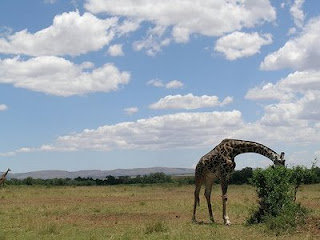
Photo: A giraffe in Maasai Mara, where their population has declined 95 percent over the last 15 years. Courtesy Flickr user angela7dreams. -
Projecting Population: A Risky Business
›May 6, 2009 // By Sean PeoplesAssumptions about human behavior drive our knowledge of future global population trends. Demographers analyze population and other survey data in order to forecast trends, but uncertainty colors these projections.
In the 2008 Revision of World Population Prospects, the UN Population Division projects that our planet will grow to 9.15 billion people by 2050. Yet this medium-variant projection is just one of several possible scenarios released in this latest round of number crunching. The low- and high-variant projections—7.96 billion and 10.5 billion, respectively—could instead become reality, given slight shifts in fertility rates in developing countries, where growth rates remain higher than in more developed nations. Although both developing and developed nations are susceptible to shifts in fertility rates, uncertainties are greater in the developing world due to factors such as inconsistent data collection, weak health system infrastructure, and low government capacity.
Elizabeth Leahy and I investigate the underlying assumptions behind population projections in an article in the May/June edition of World Watch magazine. By comparing three of the leading population-forecasting institutions, we find that small variations in assumptions can lead to significant differences in projections.
Uganda’s demographic outlook is a prime example. Between 1960 and 2005, Uganda’s population grew by 22 million people, while the country’s fertility rate fell by less than 3 percent. The UN medium-variant population projection assumes the country will buck precedent and experience a 61 percent fertility rate decline between 2005 and 2050, resulting in a population of 91 million people. The U.S. Census Bureau, on the other hand, assumes a less drastic fertility decline and projects a population of 128 million people by 2050. The International Institute for Applied Systems Analysis (IIASA), an Austrian institution that projects population on a regional basis, recently revised its population projections to reflect greater growth in sub-Saharan Africa due to stalling fertility decline and stagnant educational-attainment rates.
Fertility rates rarely decline when governments have not made the proper investments in health and education. The UN medium-variant projection is commonly cited as an inevitable scenario; few people know that one of its underlying assumptions is that access to modern contraception will continue to expand. Without real-world development investments to match these assumptions, a very different scenario could easily materialize. By empowering women, bolstering access to education, and providing comprehensive family-planning services to citizens, governments and policymakers can translate these assumptions into reality.
-
With Demography, the Devil Is in the Details—and the Assumptions
›May 6, 2009 // By Gib ClarkeA micro-economist friend of mine likes to say that macro-economists have correctly predicted nine of the last five recessions. In “The World’s New Numbers,” in the Spring 2009 Wilson Quarterly, Wilson Center Senior Scholar Martin Walker argues that demographers should be so lucky.
Problematic Projections
Demographers base their projections on complex models that incorporate current population numbers, fertility rates, age structures, and other variables. Predicting how many children women and their families will want to have in the future—across different countries and cultures—is not easy. The result is that different demographers get different results. To cover their backs, even the most esteemed organizations offer a range of projected population sizes; the United Nations, for example, says that world population in 2050 will be anywhere from 7.9 to 11 billion people.
As Walker points out, these calculations are often revised. Between 1998 and 2000, for example, the United Nations’ middle projection (or “best guess”) increased by 500 million people. Seemingly miniscule changes in fertility rates often produce big changes in later decades, as Sean Peoples and Liz Leahy explain in the current issue of World Watch magazine.
So Close, and Yet So Far
Why are the projections so far off? Human behavior—particularly the status of women and the availability of family planning—is notoriously hard to predict. Walker points out that the United Nations “rather daringly assumes” that global fertility will drop to 2.02 children per woman by 2050, and to 1.85 further in the future. He doesn’t discuss, however, that these projections are based on an increase in the availability, accessibility, and use of contraceptives in all parts of the world.
Since increased use of contraceptives is highly associated with increases in supply (assuming associated high-quality, culturally sensitive services are provided, including reproductive health education), the burden of reaching global fertility levels of 2.02 and 1.85 is on funders. But when adjusted for inflation, U.S. funding for family planning has declined by almost 40 percent since 1995. We won’t reach the middle UN projection without some significant commitments from the U.S. government and others.
Communicating Probability
With so many (changing) projections and so much nuance, how is demographic information communicated to the public? Poorly, says Walker, with the result that “sensationalist headlines soon become common wisdom.” This “wisdom” includes the belief that Western countries are having fewer babies, aging rapidly, and will soon strain their social safety nets to the breaking point; that mass immigration to Europe is changing the cultural landscape; and that population growth will continue unabated in developing countries for the foreseeable future.
Walker tackles these misconceptions masterfully, pointing to lesser-known or perhaps ignored data. For example, high levels of Arab and Muslim immigration to Europe are unlikely to continue, given that many of the sending countries are experiencing steep declines in birth rates. Meanwhile, birth rates have recently rebounded in several European countries, and social policies such as increasing female participation in the workforce and raising the retirement age may lessen the stress on social safety nets.
Walker does well to point out that 30 countries—mostly in sub-Saharan Africa—continue to grow rapidly, and that they are the least prepared to tackle the challenges associated with rapid growth, given their weak governments, poor economies, and inadequate health and education systems.
Why Bother?
Given the difficulty of making and interpreting projections, why bother with demographic “best guesses” at all? Because the size of a population—and its composition by age, gender, and other variables—impacts many areas, including health care, infrastructure, environmental degradation, and security. So while population projections and economic forecasts may be difficult to parse, basic demographic or financial literacy and the ability to see through sensationalized headlines are essential to understanding both. -
Cowboy Logging to Carbon Cowboys: Natural Resources in Indonesia and India
›May 6, 2009 // By Rachel Weisshaar“Indonesia’s forest loss continues more or less unabated, despite global concern for the resource and forest-dependent people, as well as a wealth of knowledge about the problems and solutions: poor governance, corruption, perverse incentives in the industrial sector,” said AAAS Science and Technology Policy Fellow Steve Rhee. Rhee was joined by Henrik Urdal of the International Peace Research Institute, Oslo (PRIO), who also studied the effects of environmental degradation on conflict in Indonesia, for “Demography, Environment, and Conflict in Indonesia and India,” an April 21, 2009 event sponsored by the Environmental Change and Security Program.
Parsing the Patterns: Population, Resources, and Conflict
Urdal argued that case studies have sometimes overstated the links among population, resource scarcity, and conflict. Researchers tend to choose cases where there is conflict and then look for a population or resource dimension. If you look hard enough, “it’s always possible to find some connection,” said Urdal.
However, quantitative studies are also imperfect, cautioned Urdal, because most of them use national-level data, which do not capture local dynamics. In addition, they have a tendency to ignore conflicts in which the state is not involved.
Two Sub-National Studies: India and Indonesia
Urdal sought to avoid these problems by using sub-national data and including political violence and riots, as well as armed conflict, in his quantitative studies of India and Indonesia. From 1956-2002, he found that high rural population growth and density, as well as declining agricultural wages, increased the likelihood of violence in Indian states. Surprisingly, those states with high rates of urban population growth were less likely to experience conflict.
In Indonesian provinces, Urdal and his colleagues found a relationship, albeit a weak one, between population growth and non-ethnic violence between 1990-2003. They also found an increased risk of non-ethnic violence in provinces with high population growth and high levels of inequality between different religious groups. However, there was no relationship between land scarcity and conflict.
Forests, Conflict, and Participatory Mapping in Kalimantan: Unintended Consequences
Forty million Indonesians—one-fifth of the population—depend on forests for their livelihoods, said Rhee. Yet much of Indonesia’s forests have never been surveyed, so the people who live there are considered squatters and receive little or no compensation from the logging and mining industries. This inequity has generated both violent and non-violent conflict between the indigenous dayaks, the government, and extractive-industry companies.
In an attempt to resolve some of this conflict, the Center for International Forestry Research initiated a participatory mapping project in 27 villages in the Malinau district of Kalimantan in 1999. Participatory mapping enables dayaks to establish land rights and negotiate compensation from companies.
Following the 1998 ousting of President Suharto, district governments, rather than the central government, began issuing timber permits. The villages in Malinau often used the maps they had created to justify their claims to the land. But the district government did not cross-check the claims, so this generated inter- and intra-village conflict—roadblocks, protests, and lock-ups of timber equipment.
Although the “cowboy logging” that characterized the late 1990s and early 2000s has largely ceased, Rhee believes it may be replaced by “carbon cowboys” seeking to capitalize on the UN Reduced Emissions from Deforestation and Degradation (REDD) program, which aims to reduce carbon emissions by paying governments to preserve forests. “With climate change, and the link between climate change and forests, -
Weekly Reading
›How Do Recent Population Trends Matter To Climate Change?, from Population Action International, offers the latest research from this constantly changing area of inquiry.
U.S. Global Health and National Security Policy, a timely report by the Center for Strategic and International Studies, examines major threats to human health and international stability, including HIV/AIDS, SARS, pandemic influenza, and bioterrorism.
In the coming decades, Russia will confront “accelerated population decrease; a dwindling of the working-age population; the general ageing of the population; the drop in number of potential mothers; a large immigrant influx; and a possible rise in emigration rates,” warns a new report from the UN Development Programme.
In The National Interest and the Law of the Sea, the Council on Foreign Relations’ Scott Borgerson argues that ratifying the Law of the Sea Convention is vital to protecting the United States’ national security, economic, and environmental interests.
David Sullivan of Enough debates Harrison Mitchell and Nicolas Garrett of Resource Consulting Services (RCS) on the links between conflict and mining in the Democratic Republic of the Congo (DRC). RCS recently published a report arguing that mineral extraction is key to DRC’s development and not the primary cause of conflict in North Kivu.
Responding to the ubiquitous Monsanto ads that ask, “9 billion people to feed. A changing climate. Now what?,” Tod Preston of Population Action International responds, “family planning and empowering women, that’s what!”
Water and War, a publication of the International Committee of the Red Cross (ICRC), outlines how the ICRC provides access to clean water during conflict and humanitarian disasters. -
Pakistan’s Daunting—and Deteriorating—Demographic Challenge
›Every day it seems the headlines bring new worries about the future of Pakistan. But among the many challenges confronting the nation—including a growing Taliban insurgency—one significant problem remains largely undiscussed: its rapidly expanding population.
Consider this: Pakistan’s population nearly quadrupled from 50 million in 1960 to 180 million today. It’s expected to add another 66 million people—nearly the entire population of Iran—in the next 15 years. UN projections predict that by the late 2030s, Pakistan will become the fourth most populous country in the world, behind India, China, and the United States.
And believe it or not, the demographic outlook for Pakistan got bleaker in recent weeks. The new medium-range UN projections for Pakistan’s total population have been raised to 335 million for 2050—45 million higher than the UN projection just two years ago. Why the change? Because birth rates aren’t falling as had been predicted—women in Pakistan have an average of four children—and unmet need for family planning remains high.
The case of education provides a snapshot of how these demographics affect Pakistan, from basic quality-of-life issues to the country’s overall stability. Even though the official literacy rate in Pakistan has increased from about 18 percent to 50 percent since 1970, the number of illiterate people has simultaneously jumped from 28 million to 48 million. The literacy rate for women stands at a shockingly low 35 percent.
As public schools have become increasingly overcrowded, more parents have turned to madrasas in an attempt to educate their children—or at least their sons. It’s no secret that some of Pakistan’s madrasas have ties to radical religious and terrorist-affiliated organizations.
So what does this portend for the future?
Even assuming large infusions of assistance from the United States, Pakistan’s public school system will become even more overwhelmed in the years ahead. Building enough schools and hiring enough teachers would be daunting in any country, let alone one facing as many challenges as Pakistan. It seems likely that enrollments in madrasas will swell, and more children will face a future with no schooling whatsoever. Clearly, this is not a recipe for a more stable and peaceful Pakistan.
Pakistan’s rapid population growth is not inevitable, however. A key driver is lack of access to family planning, which is symptomatic of the overall poor status of women and girls. More than 25 percent of Pakistani women have an unmet need for family planning—meaning the demand is clearly there—and nothing in the Koran prohibits its usage. In other majority-Muslim nations, such as Algeria, Bangladesh, and Iran, family planning has been prioritized and is widely used.
Unfortunately, family planning programs in Pakistan and many developing countries have suffered from both inattention and funding cuts in recent years. Traditionally, the United States has been a major source of funding and technical assistance, but since 1995, U.S. international family planning assistance has fallen 35 percent (adjusted for inflation), even as demand has increased.
Today, more than 200 million women—many of them in the most impoverished parts of the world—have an unmet need for family planning. In countries like Pakistan, the resulting rapid population growth makes it increasingly difficult to provide sufficient education, health care, housing, and employment—and depletes land, water, fisheries, and other vital natural resources.
The Obama administration recently proposed a new U.S. assistance strategy for Pakistan—and a key component is a significant increase in development and economic assistance. Let’s hope it will include an increase for family planning. It would be a wise investment in a brighter, more stable future—for Pakistan and for the world.
Tod Preston is vice president for U.S. government relations at Population Action International.
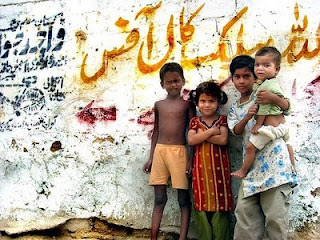
Photo: Children in Jinnah Colony, Karachi, Pakistan. Courtesy of Flickr user NB77.
 The Copenhagen climate conference will be “the most important gathering in human history,” said the United Kingdom’s environment secretary, Hilary Benn, at the Wilson Center on May 14, 2009 (
 Any veteran of the international development field will be familiar with the disclaimer that no single intervention, no matter how effective, is a “silver bullet.” But in
  “Kenya is destroying itself,” Julius Kipng’etich, director of the Kenya Wildlife Service, told
 “Indonesia’s forest loss continues more or less unabated, despite global concern for the resource and forest-dependent people, as well as a wealth of knowledge about the problems and solutions: poor governance, corruption, perverse incentives in the industrial sector,” said AAAS Science and Technology Policy Fellow Steve Rhee. Rhee was joined by Henrik Urdal of the International Peace Research Institute, Oslo (PRIO), who also studied the effects of environmental degradation on conflict in Indonesia, for “Demography, Environment, and Conflict in Indonesia and India,” an April 21, 2009
 Every day it seems the headlines bring new worries about the future of Pakistan. But among the many challenges confronting the nation—including a

