

Showing posts from category population.
-
Clinton, Congress Link Family Planning, Climate Change
›July 24, 2009 // By Meaghan ParkerEarlier this week in New Delhi, Secretary of State Hillary Clinton praised an “enlightening” roundtable discussion with India’s minister of environment for opening her eyes to climate change’s links to population and family planning.
“One of the participants pointed out that it’s rather odd to talk about climate change and what we must do to stop and prevent the ill effects without talking about population and family planning. That was an incredibly important point. And yet, we talk about these things in very separate and often unconnected ways,” said Clinton.
Congress is taking steps to tackle this issue. The version of the bill approved by the Senate Appropriations Committee last week links family planning and reproductive health to climate change.
On page 153, $628 million is alloted for “family planning/reproductive health, including in areas where population growth threatens biodiversity or endangered species or exacerbates human vulnerability to the effects of climate change.”
In addition, in the report accompanying the bill, the Senate committee “directs USAID to review the relationships between population growth and climate change to determine how experience in implementing population-environment activities applies to climate change adaptation and to efforts to increase the resilience of local communities to climate change.”
These comments certainly increase the volume on this overlooked link. Some background resources that might help those new to the discussion:- In the latest ECSP Report, Suzanne Petroni of the Summit Foundation proposes some ethical ground rules, calling for “a thoughtful and deliberative dialogue around voluntary family planning’s contribution to mitigating climate change.”
A recent PAI factsheet points out that “areas of high population growth and high vulnerability to climate change impacts overlap.” - Another handy factsheet includes a brief description of how community-based programs that integrate population-environment activities can strengthen resilience and reduce vulnerability to the effects of climate change.
- PAI’s working paper “Projecting Population, Projecting Climate Change” warns that “population growth is not adequately accounted for in the emissions scenarios” used by the IPCC.
- The Center for Global Development’s David Wheeler recently argued that family planning could be a relatively inexpensive part of solving the climate crisis.
- A paper in Global Environmental Change estimates the extra emissions of fossil carbon dioxide that an average individual in the United States causes when he or she chooses to have children.
- In the latest ECSP Report, Suzanne Petroni of the Summit Foundation proposes some ethical ground rules, calling for “a thoughtful and deliberative dialogue around voluntary family planning’s contribution to mitigating climate change.”
-
9.2 Billion Carbon Copies: The Impact of Demography on Climate Change
›July 21, 2009 // By Gib ClarkeAs the number of contributing factors to (and potential solutions for) climate change grows, one—population growth—is conspicuously absent from most discussions. For obvious reasons: After finally prevailing over climate change “skeptics,” why would U.S. climate advocates court more controversy by adding population, and thus family planning and even abortion, to the mix?
Because it could be an important—perhaps significant—and definitely cheap part of solving the climate crisis, argued David Wheeler of the Center for Global Development (CGD) at an ambitious June 23rd event in the CGD series on “Demographics and Development.” Covering both climate change and population issues, he offered a compelling economic analysis of the effectiveness of family planning and female education programs at addressing climate change. Equally impressive was Wheeler’s engaging style, including graphics and animations that could make Gapminder guru Hans Rosling blush.
Describing Pacala and Socolow’s oft-cited “wedge” theory of stabilizing emissions, Wheeler pointed out that slowing population growth is rarely discussed, compared to the more popular—and more costly—wedges related to reduced deforestation, energy efficiency and conservation, renewable electricity and fuels, and carbon capture and storage.
Wheeler argued that slowing population growth has great potential for reduce emissions at a lower cost. As population increases, so do emissions. As a country develops, its per-capita emissions increase, so population increases in more developed countries are especially important. As the middle class in the BRIC and other large developing nations grows, this sizable group of “New Americans” (to use Thomas Friedman’s term) will contribute more and more emissions.
Two interventions will contribute the most to slowing population growth: family planning and female education, said Wheeler. According to his calculations, a $10 billion increase in female education in the developing world would lead to a change in population growth substantial enough to achieve one of the stabilization wedges. Wheeler found that family planning and female education are among the most cost-effective strategies, as evidenced by their placement on the far left side of slides 22 and 25.
Though an economist by training, Wheeler did not make only financial arguments: He emphasized throughout his presentation that family planning and female education are worthy and necessary programs in their own right. And he pointed out the most glaring injustice of climate change: While people in developed countries have the largest carbon footprints, people in developing countries will disproportionately suffer the impacts. (Suzanne Petroni makes similar points in her ECSP Report 13 article, “An Ethical Approach to Population and Climate Change.”)
Tim Wirth, the president of the UN Foundation and the Better World Fund, called for more political and financial support for this link. Funding for family planning has fallen and support for female education is not as high as it should be. Reaching the unmet need of the world’s women would cost about $20 billion, and the U.S. “share” is $1 billion, an amount that many U.S. family planning leaders are advocating.
As CGD’s Rachel Nugent noted in her introduction, demography and climate are classic cases of long-term issues: difficult to understand and address. It is ironic and important, she said, that two such long-term issues are simultaneously at critical moments. The work of David Wheeler on population and climate change, along with that of Leiwen Jiang of Population Action International and Brian O’Neill of the National Center for Atmospheric Research, may help us find an important and inexpensive piece of an elusive and otherwise expensive pie.
More data is needed to confirm these initial findings. However, the devil may not be in the details but in the debate: convincing weary and wary climate warriors to take on a bit more controversy. -
Strength in Numbers: Can “Girl Power” Save Us From the Financial Crisis?
›July 15, 2009 // By Meaghan Parker To promote the 20th World Population Day on July 11, the United Nations Population Fund (UNFPA) tied this year’s theme—“Fight Poverty: Educate Girls”—to combating the ongoing financial crisis. It’s a no-brainer that, as UNFPA points out, “women and children in developing countries will bear the brunt of the impact.”
 -
Weekly Reading
›The U.S. Global Change Research Program, which integrates federal government research on climate change, released Global Climate Change Impacts in the United States this week. The report examines climate’s likely impacts on various regions of the country.
The Guardian examines ongoing conflicts over natural resources between indigenous people and governments.
In her final dispatch from the Bonn climate negotiations, Population Action International climate director Kathleen Mogelgaard notes the conspicuous absence of demography in international climate discussions.
A webcast is now available of the Johns Hopkins University-Population Reference Bureau symposium “Climate Change and Urban Adaptation: Managing Unavoidable Health Risks in Developing Countries.”
A new policy paper from the World Bank seeks to answer the question, “Do the households in game management areas enjoy higher levels of welfare relative to the conditions they would have been in had the area not been designated as a game management area?”
A Commission on Climate and Tropical Forests, led by John Podesta, president and CEO of the Center for American Progress, and Lincoln Chafee, former Republican senator from Rhode Island, has been formed to advise President Obama on how to reduce tropical deforestation through U.S. climate change policies, reports Mongabay.com. -
The Indian Ocean: Nexus of Environment, Energy, Trade, and Security
›June 5, 2009 // By Brian Klein“[F]or global trade, global food security, and global energy security, the Indian Ocean is critical,” says Amit Pandya in The Indian Ocean: Resource and Governance Challenges, the most recent addition to the Stimson Center’s Regional Voices: Transnational Challenges report series. “And it remains a stage for the pursuit of the global strategic and regional military interests of all world and regional powers.”
During a launch event on May 21, Pandya—the project director behind the series—sat with Stimson Director Ellen Laipson, Vice Admiral Kevin Cosgriff, USN (Ret.), and East-West Center in Washington Director Satu Limaye to reflect on the report and discuss the myriad challenges facing Indian Ocean states in the maritime resources and governance sectors.
The 21st Century’s “Center Stage”
The Indian Ocean’s international profile has been bolstered by the region’s rising economic prowess and political clout, significant resource wealth, and critical shipping routes—which transport the vast majority of oil leaving the Persian Gulf. Journalist Robert Kaplan recently labeled the region “center stage for the 21st century” because of its importance to global trade and energy, as well as the fact that it hosts the “dynamic great-power rivalry” between India and China.
The Stimson report is divided into two sections: the first comprises several articles written by authors from Indian Ocean littoral states, while the second includes pieces from Pandya and Laipson that analyze and interpret general trends in regional ocean governance.
Ocean Resources, Maritime Security
“In the last half-century, the production of fish and fish products in the Indian Ocean (IO) region has increased tremendously as a result of improvements in fish capture technology and rising demand caused by a growing global population,” write Edward N. Kimani et al. in their article in the report, which examines southwest Indian Ocean fisheries. These trends have precipitated conflict between small-scale artisanal fishers and industrial fishers, in addition to placing enormous pressure on ocean ecosystems. Effective management mechanisms must be implemented in order to address overfishing and its consequences for global food security and ecosystems. (A forthcoming documentary, The End of the Line, takes an in-depth look at overfishing.)
In a similar vein, Mak Joon Num’s contribution, “Pirates, Barter Traders, and Fishers: Whose Rights, Whose Security?”—roundly praised by speakers at the report launch—considers the diverse range of stakeholders operating in the Straits of Malacca and the Sulu Sea. Malaysian trawler fishers, Acehnese pirates, and Filipino barter traders compete to glean their livelihoods from the ocean. All are victims and predators in their own right, Mak Joon Num argues, and climate change, poverty, and a lack of coordinated ocean governance policies exacerbate the present problems of resource scarcity, disputed sovereignty, and unsustainability.
Shifting to the northwestern littoral states of the Indian Ocean, Mustafa Alani presses the case for a comprehensive maritime security compact in the Persian Gulf, which holds more than 30 percent of the world’s known oil deposits. The Gulf Cooperation Council provides the foundational structure for such an agreement, which would likely comprise several levels of cooperation, ranging from “soft security”—managing fishing and environmental degradation, search-and-rescue coordination, and marine transport—to “strategic security”—coordinating naval exercises and anti-terrorism operations.
Questions of Governance
In order to address these challenges, concerned states must put forth “more effort at the national level to integrate civilian and military aspects of maritime policy,” Laipson concludes in the report’s final lines. “We also need a fresh look at the regional and international levels to ensure that governance of the maritime realm strives to manage the complex interplay of human and natural activity and to maintain the Indian Ocean as a sustainable zone for commerce, energy, security, and peace.”
Population: A Missing Factor?
While the report does an excellent job of illuminating the resource and governance challenges in the Indian Ocean, it fails to substantively consider one factor that will have a profound influence on all others: population growth. Burgeoning populations in Indian Ocean states will have considerable consequences for resource management, governance, poverty, and security in the region, particularly in relation to migration, human trafficking, overfishing, and ecosystem health.
Photo: Artisanal fishers off the Malabar coast of India. Courtesy Flickr user mckaysavage. -
‘Earth 2100’ To Explore Climate, Natural Resources, Population Growth
›June 2, 2009 // By Rachel WeisshaarABC’s Earth 2100 documentary, airing tonight at 9:00 p.m. EST, will feature many ECSP speakers—including Jared Diamond and Peter Gleick—as well as the Center for a New American Security’s (CNAS) Clout and Climate Change War Game. Held in Washington, D.C., in July 2008, the war game focused on the national security implications of climate change.
Earth 2100 explores possible worst-case scenarios for this century that could be triggered by a “perfect storm” of population growth, resource depletion, and climate change. Environmental security expert Thomas Homer-Dixon tells host Bob Woodruff that “energy, climate food, population, economic pressures—any one of these challenges might be very serious in and of itself. But because they are happening all simultaneously, it’s going to be very difficult for our governments to cope.”
During the climate-change war game, “every country sort of hewed to what you would expect,” said CNAS Vice President for Natural Security Sharon Burke at an ECSP event earlier this year.
“The EU team spent the first two hours debating whether they could really be a country; the Indian team instantly came up with a negotiating strategy that sounded cooperative and brilliant but was completely impossible to execute; the Chinese team was, ‘No, we’re not going to do anything unless you pay us’; and the American team was keen to lead, only nobody was following,” she said.
One of the key lessons from the game, Burke added, was that “everything comes down to what China is prepared to do.” She also described insights from the war game in a New Security Beat guest post.
Several war-game participants are now members of the Obama administration, including Todd Stern, the lead U.S. negotiator on climate change; Michèle Flournoy, under secretary of defense for policy; and David Sandalow, assistant secretary for international affairs at the Department of Energy.
An ABC producer working on Earth 2100 consulted ECSP Director Geoff Dabelko earlier this year. -
Hans Rosling Animates DHS Data, Moves Debate
›June 1, 2009 // By Brian Klein“Statistics should be the intellectual sidewalks of a society, and people should be able to build businesses and operate on the side of them,” said Gapminder Foundation Director Hans Rosling at a discussion hosted by the Wilson Center’s Environmental Change and Security Program on May 26, 2009. In his spirited and often humorous remarks, Rosling praised the 25-year-old Demographic and Health Surveys (DHS) program, which is funded by the U.S. Agency for International Development (USAID) and implemented by Macro International, Inc., as “public-private partnership at its best.” The DHS program works with countries’ health ministries to collect data on family planning, child and maternal health, disease prevalence, and other health indicators, and makes the data freely available for public use.
The Beauty Behind the Data
Rosling uses Gapminder’s signature “moving bubble” Trendalyzer software—which Google purchased and made available as “Motion Chart”—to graphically demonstrate global health, economic, and environmental trends. Gapminder uses data from several sources, including DHS surveys, to generate its illuminating displays.
“Sweden, during the last hundred years, didn’t achieve [the] Millennium Development Goal rate” for yearly reductions in child mortality, Rosling explained. “We are putting goals for Tanzania, Bangladesh that [were] never…achieved by any country in West Europe or North America.” The remarkable thing, said Rosling, is that many low-income countries are achieving or even surpassing these demanding targets.
Free Access, Unified Formatting Are Top Priorities
Rosling stressed that access to data must be free, and admonished the World Bank, the Organisation for Economic Co-operation and Development (OECD), and others who charge for their statistics. “They say, ‘No, we can’t give the data to the people because they will make wrong comparisons, and they will make wrong conclusions,’” Rosling continued, “and I say ‘Yes, we call it freedom.’”
Rosling cautioned against “database-hugging disorder,” or statisticians’ tendency to guard their data because of concerns about budgets or misinterpretation. A better approach, he insisted, is to embrace innovations like the Creative Commons license, which encourages sharing information by offering a range of easy-to-understand legal protections and freedoms for creative works, data, and information.
In addition, “we don’t have a unified format for data,” Rosling said, and “that’s why the transaction costs are so enormously high, and that’s why those who put data together in unified format charge for it.” He cited YouTube as an excellent medium for broadening public distribution of data. To the audience’s delight, a live Google search for “sex, money, and health” returned a YouTube clip of one of his own presentations as its top hit.
Improving Lives With Data
“The worst environmental problem today is that two million children die of diarrhea [each year], and that billions of people drink their neighbors’ lukewarm feces,” said Rosling, and yet “water and sanitation data is very, very weak.” Collecting information from remote areas—often the most impoverished—is difficult. Measuring access to potable water is complicated because it requires community-based calculations, which do not fit into DHS’ household-centric methodology.
Rosling called upon young adults to work to “eradicate unnecessary disease and poverty in the world.” He also advocated improved post-graduate training in statistics, particularly in low-income countries.
Better statistical data will foment more effective solutions to development challenges—provided there are ambassadors like Rosling willing and able to unveil the beauty behind the numbers.
Photo: Hans Rosling. Courtesy of Dave Hawxhurst and the Wilson Center.
-
Weekly Reading
›Land grab or development opportunity? Agricultural investment and international land deals in Africa, a study conducted by IIED, FAO, and IFAD, is the first detailed study to examine large land acquisitions in sub-Saharan Africa.
The latest issue of Population and Environment (subscription required) includes articles on land, education, and fertility in Kenya; indigenous women and fertility in the Ecuadorian Amazon; and the impact of chemical exposure on sex ratios in Greece.
A partnership between local villages and the Bonobo Conservation Initiative has led to the establishment of a 1,847 square mile reserve in the Democratic Republic of the Congo, reports Mongabay.
A new article in the Encyclopedia of the Earth lists population growth rates (including births, deaths, and migration) by country, based on CIA data.
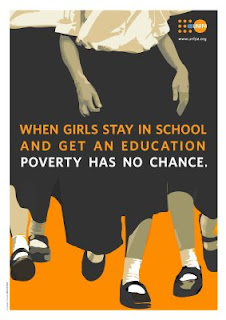 To promote the 20th World Population Day on July 11, the United Nations Population Fund (UNFPA) tied this year’s theme—
 “[F]or global trade, global food security, and global energy security, the Indian Ocean is critical,” says Amit Pandya in
  “Statistics should be the intellectual sidewalks of a society, and people should be able to build businesses and operate on the side of them,” said

