Showing posts from category population.
-
The “Condom King” speaks at TEDxChange on Poverty Reduction and a “9th MDG”
›“We have now found the weapon of mass protection,” said Mechai Viravaidya (a.k.a. the “Condom King”) at the recent TEDxChange event in New York. Viravaidya is the founder and chairman of the Population and Community Development Association and a former senator of Thailand. He spoke about his innovative approaches to addressing Thailand’s once high rates of poverty, child mortality, and HIV through the promotion of family planning and condom use.
-
Wilson Center Scholar Huma Yusuf on Pakistan’s Population Policy: Will it Work?
›October 8, 2010 // By Wilson Center StaffExcerpt from op-ed by Huma Yusuf in Dawn: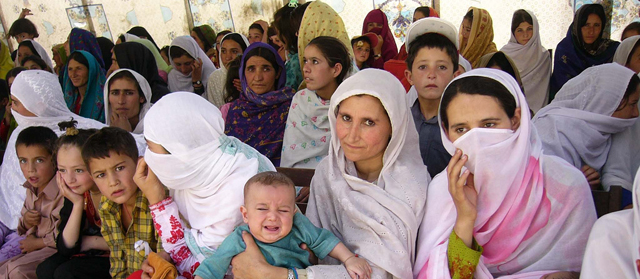
The best news Pakistanis have received in the past week comes in the form of the National Population Policy 2010. The policy recognises that demographics are the key to promoting economic development and security in Pakistan. It also prioritises family planning — particularly in an effort to promote birth spacing — as the best strategy for achieving ambitious population targets (2.1 births per woman in 2025).
In many ways, the story of Pakistan is one of a failure of family planning. Although the Family Planning Association of Pakistan was set up as early as 1952, we have seen a five-fold increase in our population between 1951 and 2009, from 34 million to 171 million.
The urgent need for revamped family planning service delivery cannot be understated. Although 96 per cent of married Pakistani women are aware of at least one modern contraceptive method, only 22 per cent are currently using modern contraceptives, while another eight per cent use less effective traditional methods. One quarter of married women want to wait before having another child, or do not want more children, but are not using contraception. And 24 per cent of married women admit that their last child was mistimed or unwanted.
Many Pakistanis bemoan the prevalence of abortion here (a 2004 Population Council study estimates that there are 890,000 abortions annually), but this too should be understood as a shortcoming of our government’s family planning service delivery. According to the 2006-07 Pakistan Demographic Health Survey, 65 per cent of women who had an abortion were over the age of 30, while 80 per cent had more than three children. In this context, the population policy’s emphasis on family planning is a welcome paradigm shift.
Continue reading on Dawn.
Photo Credit: Adapted from “chitral photos,” courtesy of flickr user groundreporter. -
Tackling Youth Unemployment, Instability in Kenya
›
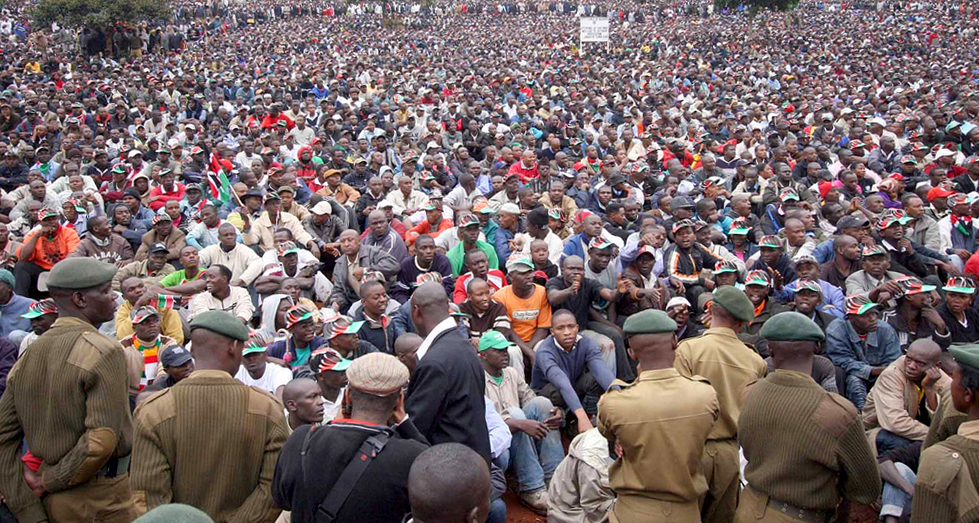
Today, Kenya’s youth unemployment rate stands at 65 percent, among the highest in the world. Three in five unemployed Kenyans are 15 – 35 years old. The situation is exacerbated by a shrinking economy, political instability, and pervasive income inequality.
Significantly, youth are engaged in the informal sector, which is largely unregulated and subjects workers to low earnings and long hours, without any formal contract. Suffering under a slow-growing economy, youth, whether well educated or uneducated, have increasingly turned to crime and violence, serving as watu wa mkono (handymen) to the ruling elite and intimidating and harassing their political opponents.Violence during Kenya’s disputed 2007 elections left approximately 1,133 people dead and 650,000 displaced from their land. Many of these atrocities were committed by youth, for sums as low as $6. With the 2012 elections fast approaching, Kenya risks renewed violence if its daunting youth unemployment rate is not properly addressed.
Against this backdrop, the Kenyan government has established the Youth Enterprise Development Fund (YEDF) and Kazi kwa Vijana (KKV), which means “jobs for youth,” to boost employment and entrepreneurship among people 18 to 35 years old.
Through YEDF, groups of up to 12 people can submit a business plan and apply for funding, as well as other services such as training, mentorship, and market access. The fund also connects youth with local and international job markets. KKV facilitates access to temporary, labor-intensive jobs for generally low wages, and also offers some business training.
Given the high poverty levels among youth in Kenya, temporary jobs can help young people learn the marketable skills they need to find decent work. But it’s not a long-term solution, as these low-paying jobs can also trap people in poverty, making crime and violence seem like the only viable exit.
Kenya would do well to learn from other countries’ efforts, where similar programs have long existed. For example, Italy’s Imprenditorialita Giovanile, or “Young Entrepreneurs’ Company,” and the UK’s Prince Trust exist solely to support young people’s start-up businesses.
Like Kenya’s efforts, these two programs provide training and mentoring to young people. However, they also have autonomy from their respective governments, which gives them freedom to operate without political interference and burdensome bureaucracy. Services are delivered by highly competent, successful entrepreneurs, who inspire youth to become entrepreneurs, not as an alternative to joblessness, but as a genuine career path with financial reward and work satisfaction. Through these programs, youth have managed to start and sustain viable businesses, and attain financial independence and stability.
Compared to these cases, Kenya’s KKV and YEDF fall short. Their activities overlap, and their objectives are too broad, which makes them unachievable within a reasonable timeframe.
They are also constrained by heavy government control. The prime minister’s office oversees KKV, while the Ministry of Sports and Youth Affairs manages YEDF. As a consequence, the programs are burdened by politics rather than buoyed with professionalism.
The tendency to treat youth as a homogenous group could isolate some young people who cannot fulfill YEDF’s requirements, such as a business development plan, a registered group, or an existing bank account. The rules should be more flexible and needs-based in order to benefit some of the needy and illiterate youth who require more rigorous training and support to succeed.
Finally, the programs’ near-sighted focus on temporary employment is but a bandage; Kenya needs long-term strategies to enable youth to access more rewarding and productive work.
Fundamentally, the problem requires properly planned, well-structured, and broad-based programs, and so far the government seems to be tinkering at the superficial level without a long-term, comprehensive plan. Accelerating economic growth is central to creating employment opportunities for youth, as well as providing market-driven education, training, and life skills.
In order to make a smooth transition to adulthood, young people require decent work and the ability to actively contribute to economic and political development and stability. Short of this, youth will remain at the margin of the economy, to serve as the violent watu wa mkono in 2012 and beyond.
Margaret Wamuyu Muthee is Programs Manager for Kenya’s University of Nairobi Center for Human Rights and Peace, and is currently an Africa Program Scholar at the Woodrow Wilson Center.
Photo Credit: Adapted from “Promulgation,” courtesy of flickr user ActionPixs (Maruko). -
Nicholas Kristof on Maternal Health Challenges and Opportunities
›After a Wilson Center Global Health Initiative event last year, New York Times columnist Nicholas Kristof spoke with ECSP Director Geoff Dabelko about the importance of maternal health issues and what can be done about it.
“You just know that if men had uteruses and were dying at this rate, every country would have a Minister of Paternal Mortality, the Security Council would be meeting…this would be a real international priority,” said Kristof. “It just should not happen that one woman dies a minute for reproducing.” He recently revisited this topic with a column titled, “Birth Control Over Baldness.”
The “Pop Audio” series offers brief clips from ECSP’s conversations with experts around the world, sharing analysis and promoting dialogue on population-related issues. Also available on iTunes. -
Google Data Maps Development Indicators
›If you have not had the (purely wonky) pleasure of playing with Google’s Public Data Explorer, do yourself a favor and direct your browser there now.
Born from Hans Rosling’s Gapminder, Google’s data explorer currently allows the user to choose from 24 different data sets, including information from the World Bank, U.S. Census Bureau, Eurostat, and Energy Information Agency. Users can then customize the dataset’s variables, save their work, and even embed the resulting chart, “unveiling the beauty of statistics for a fact-based world view,” as the Gapminder site puts it.
The example dataset above uses development indicators from the World Bank to show areas of the world where high fertility rate and heavy reliance on subsistence agriculture have persisted over time. It’s worth noting that many of the countries in the upper right of the graph are also where we find persistent conflict, and, if one accepts the predictions that Africa will see some of the most profound effects of climate change, they also face real risk of continuing instability as declining crop yields threaten livelihoods and population growth continues. -
The Tenth Parallel: Dispatches From the Fault Line Between Christianity and Islam
›The latitudinal tenth parallel — located 700 miles above the equator — constitutes a “faith-based fault line” between Islam and Christianity, said Eliza Griswold at the launch of her latest book, The Tenth Parallel: Dispatches from the Fault Line Between Christianity and Islam at the Wilson Center on September 16, 2010. The former Wilson Center public policy scholar traveled more than 9,000 miles to six countries along the line. One quarter of the world’s Muslim population lives north of the line, while one-fourth of the world’s Christian population lives south of it.
Religious Conflict and Environmental Peacemaking
The tenth parallel is vulnerable to intense religious conflicts, exacerbated by the imposition of colonial-era national borders. Griswold collected stories from tribal leaders, presidents, and missionaries that reveal subtle linkages between religious conflict, politics, and environmental change. “Every single religious conflict I saw had a worldly trigger, whether land, oil, or water,” she said, because these groups tend to self-identify along lines of religion, “even over any kind of ethnicity.”
In the town of Abiay, Sudan, Griswold described a fight “over who’s going to get that oil, and how they’re going to divide themselves. Religion comes in as an overlay, because the north pushes the people of the south farther south by saying, ‘Guess what? We need that land, and why? Because our Muslim people need that land for their cattle,’ but underneath that land runs a river of oil.”
But in these origins of conflict Griswold finds an avenue to peace: “Environmental challenges seem to work well in areas of religious conflict” as a neutral meeting ground, she said.
For example, in the Nigerian city Kaduna, where Christians and Muslims have clashed violently, two former mortal enemies and self-avowed fundamentalists work together to deprogram the youth they trained to protect their faith through violence. At the Interfaith Reconciliation Center, Pastor James (who lost an arm to a group of Muslims) and Imam Muhammed Nurayn Ashafa use practical aspects of living to encourage interfaith dialogue. During Griswold’s visit, it was fuel-efficient cookstoves, “because that’s one of the things Christians and Muslims fight about…whether land, water, oil.”
Such concrete examples of environmental peacemaking offer future policy options for mitigating conflicts in other areas. “The tenth parallel is one of the most sensitive environmental zones in the world…so do I think it’s replicable? Absolutely,” said Griswold.
The Changing Demographics of Religion
Today, “four out of five of the world’s one billion Muslims don’t live in the Middle East; they live in Africa and they live in Asia. More than half of them live along the tenth parallel, and about half of the world’s two billion Christians also live along the tenth parallel,” sais Griswold.
She explained that the migration of Islam to Africa stopped along the tenth parallel because of the tsetse flies and the devastating sleeping sickness they carried.
Later, colonial-era European missionaries arrived, many with “the express purpose of stopping Islam from winning Africa, from spreading south of the tenth parallel,” she said. For example, Britain’s division of Sudan restricted Muslims to the north and Christians to the south, where missionaries developed and constructed the southern Sudanese state.
“Many of these places are failed states…and religion has come in largely to fill the gaps,” said Griswold. “The world is breaking down on tribal lines and religion is the largest tribe there is, more so than ethnicity, more so than other global markers.”
Based on population projections, Griswold pointed out that “the center of Christianity, in 2050 will be on the tenth parallel…in Muslim Nigeria.”
Historical Echoes
Historically, aid and development work along the tenth parallel “was not a secular enterprise,” Griswold said, since most of the aid workers were Christian missionaries. “So there is a very long history and a very strong association between the West and Christianity in many, many places,” she pointed out.
This history has long affected American foreign policy and perceptions of the United States abroad. According to Griswold, “foreign policy [has] come to reflect the interests of selective groups of Americans.” For that reason, “we really need to call for caution in how we allow ourselves to be represented and in the diversity of voices that get out there,” she advised.
For example, the evangelical preacher Franklin Graham met with Bashir in 2003 to ask for the right to proselytize in northern Sudan. In exchange, Bashir hoped to avoid being added to “the American ‘hit list’ after Afghanistan and Iraq,” reported Griswold. Graham told her that in response he took out a George W. Bush re-election pin and said, “Mr. President, I understand you’ll be talking to my president later today. Why don’t you tell him you’re his first voter here in the Sudan?”
In the same vein, Griswold cautioned against perpetuating American ignorance of Muslim culture:We, especially in America, are extremely aware of this fight over who speaks for God. Because I think, when we see what’s happening on the steps of the Lincoln Memorial or at Ground Zero, we’re looking at a struggle inside of a broader Christian context between Franklin Graham and Barack Obama over who a true Christian is. And Islam becomes the easiest bogeyman. The quickest way to whip up fear in followers is to create a shared enemy.
“The single most important finding of the book,” Griswold concluded, “was that the clashes within religions, the clashes between Christians and Christians, Muslims and Muslims, over who has the right to speak for God, are the most important and most overlooked religious conflicts going on today.”
Shawna Cuan is an intern with the Environmental Change and Security Program. Edited by Meaghan Parker.
Photo Credit: “Farmer Harvests Sorghum Seeds in Sudan,” courtesy of flickr user United Nations Photo. -
Scarcity, Climate, Population, and Natural Resources
Integrated Analysis for Development and Security Policymakers
›Development, population, security, scarcity, climate, and natural resources: Increasingly, policymakers are realizing that the issues in this laundry list are inextricably linked. But how do policymakers break out of their institutional stovepipes to address these connections in an integrated way?
In an event hosted by the Environmental Change and Security Program on September 2, 2010, Alex Evans of New York University and Global Dashboard and Mathew Burrows of the National Intelligence Council (NIC) focused on the current state of integrated scarcity issues in the policymaking world.
A Developing Problem
“Why should we be worried with scarcity issues in the first place?” asked Evans. The crux of the problem, he said, is that people are simply consuming more across the board – particularly more energy, water, and food. In addition to general population growth, higher demand is driven by an expanding global middle class that is shifting to more Western-style diets and consuming more energy.
Globally, demand in key resources is outpacing supply:
You can’t address one of these scarcity issues without affecting another, argued Evans. In Haiti, for example, deforestation led to soil loss and erosion, thus degrading agricultural land. Deforestation also changed the country’s precipitation patterns. Together, these effects reduced food supplies even before the earthquake. Today, the UN estimates that more than 2.4 million people in Haiti are food-insecure.- Demand for oil is rising by a percentage point each year, and the International Energy Association has warned that investment is not keeping up;
- Demand for water will increase 32 percent by 2025, but one of the first impacts of climate change is expected to be less available water; and
- Demand for food will increase 50 percent by 2030, but food supplies are only growing by one percent annually.
Evans recommended that these concerns be better integrated into current development and aid efforts, focusing on five areas:
A New International System- Establishing land tenure and renewable resources;
- Exploring the overlaps between resilience and peacebuilding;
- Empowering women and stabilizing population growth;
- Improving agricultural investment; and
- Increasing general investment in the energy sector.
In addition to the physical dangers of scarcity, Evans pointed out that the perception of scarcity can drive what he sees as dangerous behavioral dynamics such as protectionism.
“Look at the way 30-plus countries slapped export restrictions on their exports of food in 2008,” said Evans. “It’s perceptions of scarcity driving irrational behavior, it’s fertile ground for panic and we need to factor that into our policymaking.” He called for a mechanism similar to NAFTA, which restricts sudden price changes, to help the global trade system become more resilient to changes in energy and food supplies.
Burrows pointed out that a big reason for the rising disparity between food, water, and energy demand and supply is the large “middle class” of emerging powers. “You are seeing this phenomenal change going on on the resource side, but at the same time, the international system is in great flux,” he said.
Scarcity will also affect the international legal system as well. “Of the world’s 263 transboundary river systems, 158 lack any kind of cooperative management framework,” said Evans, asking if they could be peacefully managed during times of scarcity. He offered another example: How will the U.N. Convention on the Law of the Sea handle coastlines that change with the climate? “We haven’t really begun to ‘stress test’ existing legal infrastructure, to look for these kinds of instances,” said Evans.
The biggest elephant in the “international room,” however, is how to settle the issue of carbon sharing, without which there can be little global cooperation on these issues that does not end in a zero-sum game, Evans said:For me the jury is still very much out on whether there are limits on growth per se, as a result of scarcity – I’m not convinced of that yet. But I think it is clear that there are obviously limits to how much carbon we can put in the atmosphere, how much oil there is, how much land and water is available, and so on. We can do a huge amount with efficiencies and new technologies, but I think we’re kidding ourselves if we think that efficiencies and new technologies get us off the hook all together from having to face up to the distributional questions, the questions of fair shares that arise in a world of limits.
Is Integrated Policymaking Possible?
Government has come a long way towards addressing scarcity, said Burrows, but serious structural issues remain because there are too many established, vested interests at stake. Often, the tactical takes priority over the strategic: “A lot of these issues, by their very nature, are long-range in character,” he said. “In my experience there are more policymakers that are simply focused on the tactical [and] fewer that take these longer-range perspectives.” In addition, he pointed out that the divide between government and the scientific community continues to impede policymakers’ understanding of the technological options available.
On the positive side, Burrows highlighted improved work by government planning offices, particularly in the intelligence community and the military. “If you compare Global Trends 2020 and Global Trends 2025…you’ll see a huge difference in terms of how we dealt with climate change, environment, and the resource issues,” said Burrows of the NIC’s reports. He said that the intelligence community is performing more long-range analyses, and that other countries like China are now starting similar global trends analyses.
Despite the silo problem, the best solution may not be in creating new government agencies and closing down others, said Evans. “I think instead perhaps we need to see the challenge as more creating shared awareness, common analysis; a common sense of objectives among existing institutional configurations. I think we may find we get better rates of return on that,” he said.
While U.S. and other governments are only beginning to grasp these issues, Burrows praised NGOs and think tanks, which “have played such a big part… in creating those sorts of networks and inter-relationships” that have raised the profile of scarcity issues.
While the political space for dealing with these issues is not there yet, Evans argued that it will eventually emerge – most likely after some kind of shock, because “after sudden-onset crises, people are often, for a short time, prepared to think the unthinkable.”
An adequate response requires readying integrated approaches to address the integrated problem of scarcity. “It’s necessary to have the solutions, so when the crisis hits, you can have some action, and I think we are doing that legwork,” said Burrows.
Sources: International Energy Agency, MSNBC, UN. -
Syria: Beyond the Euphrates
›September 28, 2010 // By Russell SticklorThe Middle East is home to some of the fastest growing, most resource-scarce, and conflict-affected countries in the world. New Security Beat’s “Middle East at the Crossroads” series takes a look at the most challenging population, health, environment, and security issues facing the region.
Across the Middle East, sustained population growth has strained government institutions, natural resources, and the social fabric of entire societies. In Syria, these problems have been particularly acute.
With a total fertility rate of 3.3 children per woman and a population growth rate of 2.45 percent, the country is slated to swell from 22.5 million people to 28.6 million by 2025, and upward to 36.9 million by mid-century, according to the Population Reference Bureau.
“We have a population problem, no question,” acknowledged Syrian economist and former World Bank official Nabil Sukkar in a recent interview with Reuters. “Unless we cope with it, it could be a burden to our development.”
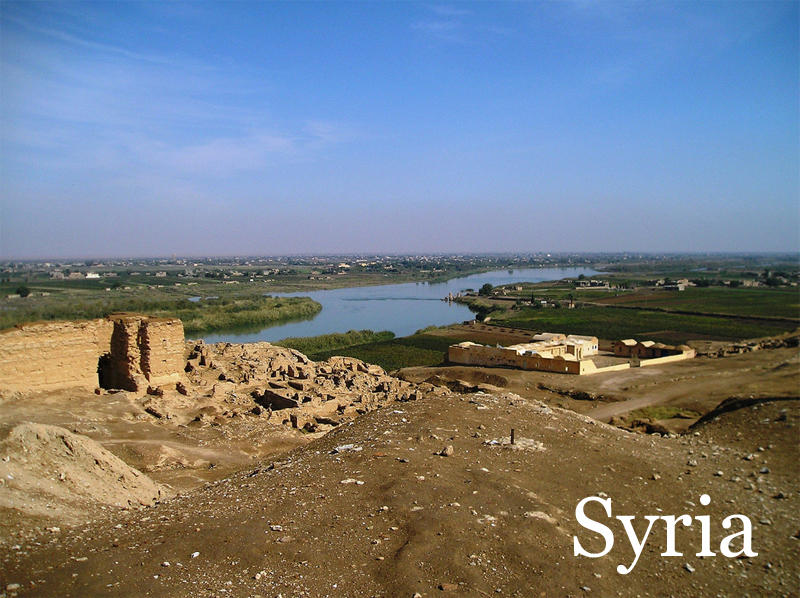
One of the biggest population problems threatening to derail Syria’s continued development is the scarcity of clean fresh water, which has troubling implications for both the security of the country and the region, since Syria shares key transboundary waterways, like the Euphrates River, with neighbors Iraq and Turkey.
As Syria grows more crowded, can Damascus find a way to encourage more efficient management and sustainable use of the country’s water? Or is greater conflict over the resource at home and in the neighborhood inevitable?
From Water Rich to Water Scarce
Historically, Syria has enjoyed plentiful groundwater resources and water from a number of rivers. Even today, Syria typically receives more annual precipitation per capita than seven other Arab nations, placing Syria 13th on a list of 20 released by the UN Development Programme’s 2009 Arab Human Development Report.
However, rapid demographic change, coupled with a series of severe droughts since 2006, has made life considerably more difficult for many Syrians. According to the UN, erratic rainfall in recent years has reduced Syria’s surface water supplies, inducing crop failures and livestock losses, and nudging millions — especially those involved in subsistence farming — into “extreme poverty.” In particular, wheat production has been hit hard, weakening the country’s food security and pushing farmers to migrate to urban centers.
Heading Underground
To cope with the drought, large- and small-scale farmers alike have increased their reliance on groundwater. But in a country where 90 percent of all water withdrawals are used for agriculture, Syria’s efforts are placing a huge strain on its aquifer health. And despite appearances, it’s not just the drought: Syria’s groundwater depletion problems have spanned decades, mirroring its population growth.
According to Syria’s National Agricultural Policy Center (NAPC), the number of wells tapping aquifers nationwide is thought to have swelled from just over 135,000 in 1999 to more than 213,000 in 2007. The rampant pumping — much of it illegal — has caused groundwater levels to plummet in many parts of the country, and raised significant concerns about the water quality in remaining aquifer stocks.
And demand continues to rise: NAPC reports that the amount of land irrigated by groundwater soared from roughly 650,000 hectares in 1985 to 1.4 million hectares in 2005, a trend that has only accelerated in the face of recent rainfall shortages.
Drawing down aquifers is worrisome as long as withdrawals outpace natural recharge. Some, known as “fossil aquifers,” lack natural inputs or outlets and will never refill — once drained, these aquifers are gone for good.
Avoiding the Hard Choices
For decades, Damascus did little to acknowledge or address the country’s growing problem of aquifer overuse. Government officials shied away from implementing robust policies that would have metered, taxed, or even simply monitored groundwater usage. In lieu of encouraging water-use conservation in the agricultural sector, Syria’s water managers instead focused on manipulating supply, by constructing dams or proposing plans to shuttle water between river basins. In doing so, they largely avoided imposing water austerity measures that almost certainly would have proven politically unpopular.
Belatedly, some efforts to mitigate Syria’s water issues are now underway. The country’s 2005 water-use code called for the licensing of all the country’s wells, threatening fines or prison terms for those caught illegally pumping groundwater. In 2008, Damascus took its campaign one step further, eliminating diesel subsidies that once facilitated groundwater removal.
But while these efforts have had some positive effect on groundwater-use trends nationwide, they could undermine stability in the short term. Illegal wells facilitate crop growth in many areas and help employ thousands in the agricultural sector, so shutting them down could heighten regional unemployment, and further weaken the country’s food security.
There Goes the Neighborhood?
With the future of Syria’s groundwater uncertain, there has been speculation that these internal water tensions might increase competition with neighboring countries for transboundary surface waters. The two countries most inextricably linked to Syria’s water crunch are Iraq and Turkey, who share the Euphrates with Syria.
Syria pulls roughly 85 percent of its water from the Euphrates, making the river a vital strategic resource. Yet water availability has historically been subject to the whims of Turkey, which controls the Euphrates’ headwaters.
Meanwhile, Iraq, which lies downstream of Syria, is also heavily dependant on the river. Understandably, as all three countries have seen their populations grow in recent decades, so too have tensions over controlling and sharing the Euphrates’ flow.
Despite Turkey’s long-standing resistance to international water-sharing pacts and penchant for large-scale hydroelectric projects, a new round of water diplomacy may help ease future tensions over the river. A recently created joint institute — backed by Iraq, Syria, and Turkey — is designed to provide a forum for the three countries to share data and policy ideas. Academics and water experts from the three countries will collaborate on efficient management, share best practices, and create a comprehensive map of the region’s water supplies.
The institute may be only a small step, but its emphasis on transparency is undoubtedly a move in the right direction. For Syria — sandwiched between two much larger countries — better communication with its neighbors is not only smart, but necessary to avoid conflict. But that won’t solve the country’s serious water scarcity problem. Leaders in Damascus should also continue to encourage conservation and more efficient use of water to stretch supplies to meet the needs of their growing population.
Sources: BBC, Global Arab Network, IRIN, Mideastnews.com, National Agricultural Policy Centre (Syria), Population Reference Bureau, Reuters, Syria Ministry of Agriculture, Syria Today
Photo Credit: “Euphrates and the Dig House Dura Europos,” courtesy of flickr user Verity Cridland.