Showing posts from category population.
-
New Insights Into the Population Growth Factor in Development
›“We have not found any country that has developed or gotten out of poverty while maintaining high birth rates,” said Martha Campbell, president of Venture Strategies for Health and Development. “Family planning is not a cost to a Ministry of Finance – it’s an investment,” said Malcolm Potts of the University of California Berkeley.
Campbell and Potts were joined by panelists Eliya Msiyaphazi Zulu, director and founder of the African Institute for Development Policy, and Jotham Musinguzi, director of the African Region at Partners in Population and Development, for a Wilson Center discussion of the implications of rapid population growth on human and economic development. [Video Below]
Africa’s Key Population Growth Challenges
“Africa’s population of one billion can reach between 1.8 and 2.3 billion by 2050, depending on how well the continent actually does in reducing fertility,” Zulu said. In 2010, Africa accounted for 15 percent of the total world population, but current estimates suggest this will grow to 23 percent by 2050.
“Rapid growth, young age structures, and urbanization are Africa’s main population challenges,” said Zulu. “Addressing these concerns is increasingly seen to be the key to the continent’s development prospects and realization of the Millennium Development Goals.” With 40 to 50 percent of populations in Africa under the age of 15, there is “high momentum for further population growth,” he said.
“Africa has a very high demand for fertility control, and the demand will undoubtedly increase,” said Zulu. “The main challenge, therefore, is not that of demand, but how to ensure those who are in need actually have access to contraception.” In many African regions, current rates of contraception use are as low as seven percent. In some areas, as many as 97 percent of women cannot afford the full cost of contraception, he said.
“It’s not just about reducing fertility,” said Zulu. Improving education and increasing labor force opportunities will not only help populations develop economically, but will also allow African countries to take full advantage of the demographic dividend, he said.
“The international development community should build on Africa’s success stories and support efforts to achieve universal access to family planning, expand public education on reproductive matters, improve the status of women, and improve the situation in urban settings,” Zulu concluded.
Family Planning and the MDGs
“Women are dying; children are dying. They shouldn’t be,” said Musinguzi. “By investing US$1 million in family planning, you can prevent 800 maternal deaths, 11,000 infant deaths, 14,000 deaths in children under five, and 360,000 unwanted pregnancies.”
“Women are clearly saying they have a need for family planning,” Musinguzi said. Presenting statistics from sub-Saharan Africa, he noted that 31 countries have a total fertility rate of more than five. Fourteen million unintended pregnancies occur each year, but only 25 percent of women use family planning. In Uganda, for example, the population has more than doubled in less than 20 years; women on average have more than six children each; and only 18 percent of married women use modern contraception.
“For a country trying to achieve the MDGs…the question of addressing total fertility rate is very important,” said Musinguzi. Reducing unmet need for family planning services can help African countries reduce the costs of achieving several of the Millennium Development Goals, including offering universal primary education; reducing child mortality; improving maternal health; combating HIV/AIDS, malaria, and other diseases; and ensuring environmental sustainability.
Policy Implications
“This is an urgent message – waiting 10 years to get family planning back on the international agenda will be enormously costly,” Potts said. “Of all the medical interventions that exist, contraception is the single most powerful. It is the only one that can have an impact on maternal and infant mortality, on the autonomy of women, on economic progress, on social stability and the rate at which we destroy the environment,” he said.
“Education and family planning are the driving mechanisms of development – they’re synergistic,” said Potts. “One of our needs is to get economists, family planning, and development experts on the same page.”
Sources: Guttmacher Institute, Population Action International, Population Reference Bureau.
Photo Credit: Untitled, courtesy of flickr user stttijn. -
Minister Izabella Teixeira at the Wilson Center
A Review of Brazil’s Environmental Policies and Challenges Ahead
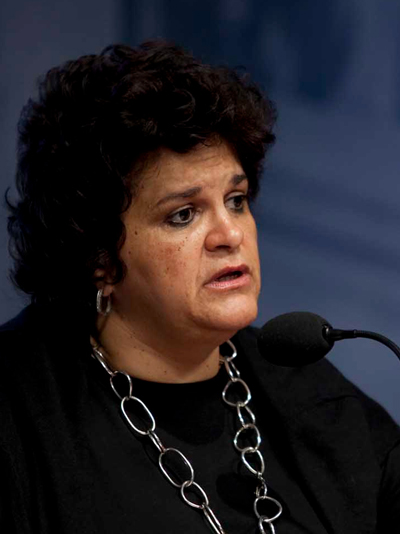
›Stressing the need for concrete, tangible institutional policies, Izabella Teixeira, Brazil’s Minister of the Environment, discussed the challenges and goals of her ministry at the Wilson Center on October 20. Sustainable development, not just conservation, must be the focus, and that requires bringing lots of different players to the table, taking into account not only environmental but also social and economic agendas. To do this, she argued, one must take the rather ephemeral and hypothetical notions of environmental stewardship and put them into the realm of a practicable, institutionalized framework, built on a social pact that engages all sectors of society. The foundation of sustainable development and environmental policy must be biodiversity, according to Teixeira. Central concerns, such as food and energy security and combating climate change, all rely on a diverse array of natural resources. These need to be conserved, but they must also be developed in a responsible, sustainable way. A legal international framework toward this end, covering access to biodiversity and genetic resources, has yet to be implemented. Developing and developed countries need to find a middle ground on allocating the benefits that accrue from the use of genetic resources found in areas such as the Amazon, and this agreement must then be linked into existing political institutions.
Teixeira noted the strides Brazil has made toward protecting its environment – including having set aside the equivalent of 70 percent of all protected areas in the world in 2009 and the establishment of the Amazon Fund. Nevertheless, Brazil must continue to protect and maintain these nature preserves, not just establish them. Creating a program that pragmatically implements international goals in a national context is an ongoing process, and countries like Brazil now need to focus on the “how” of implementing these goals, rather than just the “what.”
Teixeira also highlighted the complexity of formulating environmental policy that integrates all the various points of view that must be taken into consideration. At recent meetings to discuss transitioning to a low-carbon economy, 17 different cabinet ministers had to be present to coordinate government positions and policies. The complexity is due in part to the need to create alternatives, not just to prevent certain activities. For example, one must not only use legal enforcement to stop illicit deforestation, but also create paths to legal, sustainable logging. Once again, attempting to balance environmental, social, and economic concerns is difficult, to say the least, but crucial for long-term effectiveness.
Also a unique challenge for Brazil is the natural diversity that exists within such a large country. While much of the attention paid to the environment goes (rightly so) to the Amazon, there are many other biomes and local environments that must be taken into consideration, Teixeira observed.
The cerrado, Brazil’s enormous savanna, requires a different strategy than the Amazon, which is different than the coastal Atlantic forest. Furthermore, urban areas need their own environmental policies that can take into account issues of human development and population density.
To illustrate the need for an inclusive, well-thought-out policy, Teixeira discussed–rather frankly–the controversy surrounding the recent proposed amendments to the Forest Code. She argued that the proposal makes blanket changes that do not take into consideration differences in biomes, differences between large agribusinesses and family farms, and between historic, settled communities and recent developments. The implications of this proposal, according to the minister, could have enormous social costs. Teixeira said she believes that it would be virtually impossible to enforce the amended Forest Code if it was approved by Congress. She used this example to underscore her role in offering legislative alternatives that seek to provide a more nuanced, and ultimately more effective, institutional framework that can use Brazil’s many natural resources to help its population to the greatest extent possible.
J.C. Hodges is an intern with the Brazil Institute at the Wilson Center; Paulo Sotero is the director of the Brazil Institute.
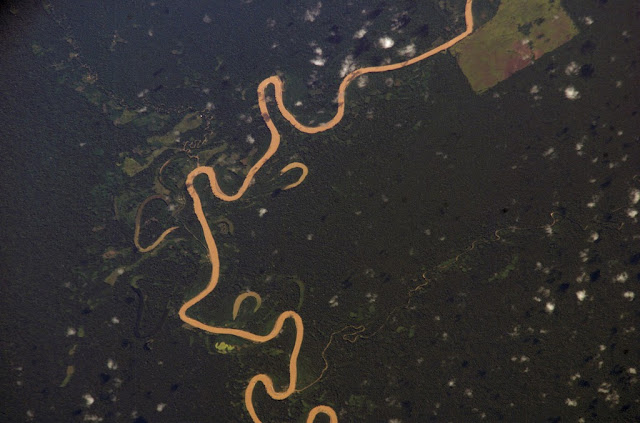
Photo Credit: “Rio Jurua, Brazil (NASA, International Space Station Science, 05/29/07),” courtesy of flickr user NASA’s Marshall Space Flight Center, and David Hawxhurst/Wilson Center. -
‘New Security Beat’ Goes Mobile and a Guide to ECSP Media Sources
›December 22, 2010 // By Schuyler NullThanks to a handy tool from Blogger, The New Security Beat now has a more mobile-optimized version that will load automatically if you visit the site from your phone. The formatting is lighter to ease your strained, possibly cubicle-choked 3G connections, and it is easier to navigate using touch. Alternatively (or just because it’s so cool) you can scan the QR code to the right to load it right up on your Android or iOS-powered device (no guarantees with Blackberry).
The Environmental Change and Security Program has a wealth of media resources available online which we try to make as accessible as possible straight from the blog, but just in case you’ve forgotten, here’s a comprehensive listing:Be sure to also follow ECSP on Facebook and Twitter to see and comment on posts as they roll out on The New Security Beat and keep abreast of the latest population, environment, and security-related news.
-
The Role of Population Dynamics in Climate Adaptation
›December 21, 2010 // By Wilson Center StaffThis post is a synthesis of a panel discussion at the UNFPA Population Dynamics and Climate Change conference in Mexico City with Marcia Castro, of the Harvard School of Public Health; Heather D’Agnes, of USAID; and Lori Hunter, of the University of Colorado at Boulder.
It is well-known that environmental change — including climate change — has important impacts on human health. However, it is less well understood how health systems shape the responses of individuals and households to environmental change. Population dynamics — such as fertility, migration, and mortality and morbidity — influence community health and greatly affect community resilience in the face of environmental changes, including the capacity to adapt to climate change.
Mortality and Morbidity
Morbidity and mortality dramatically shape a household’s ability to adapt its livelihood strategies to a changing climate. For example, in areas of high HIV prevalence, such as sub-Saharan Africa, adult mortality seriously undermines livelihood options. In the face of such loss, the household’s reliance on local natural resources intensifies. If environmental change reduces the amount of available resources, the household has fewer options for energy and sustenance.
Morbidity also affects adaptive capacity, and morbidity itself can be shaped by environmental change. For example, environmental scarcity can increase poverty, which can lead to an increase in risky transactional sex, further fueling the HIV pandemic. Malnutrition resulting from drought and environmental shocks can suppress the immune systems of HIV-positive people, making them more vulnerable to illness and less able to adapt to other external changes.
Fertility and Family Planning
Healthier households are more resilient households, so increasing access to health services, including reproductive health services, is essential for building adaptive capacity. High fertility poses challenges to a family’s livelihood and has negative health effects on women and children. Providing reproductive health services is an effective way to improve the capacity of these vulnerable groups to adapt to climate change. For example, a recent study argues that lowering fertility rates in the Himalayan region could increase community resilience to the predicted fluctuations in water quantity.
However, there is a high level of unmet demand for contraception across the globe. How can community adaptation programs help meet this need? Importantly, research from the Philippines suggests that integrating population, health, and environment programs in a package approach to community development is more effective than single-sector interventions. Including family planning and reproductive health services in community-based climate adaptation programs could not only more effectively meet the community’s needs, but could also improve its adaptive capacity better than health or climate programs alone.
Migration
Another population process, migration, can both impact health and affect the capacity for adaptation. For example, internal migration in the Brazilian Amazon appears associated with the spread of malaria, which negatively impacts the adaptive capacity of households. To mitigate climate change’s health impacts, states should more effectively plan settlements and health systems, including health impact assessments for infrastructure and development projects. (Editor’s Note – northern Nigeria and Niger present another example of similar climate-related migratory patterns that significantly impact health and economic resilience.)
In summary, the scientific evidence is clear that population dynamics — such as mortality, fertility, and migration — and environmental trends are linked. Projects intended to improve a community’s ability to adapt to a changing climate should consider and address these linkages in their design and implementation.
Sources: Foundation for Environmental Conservation, UNFPA, USAID.
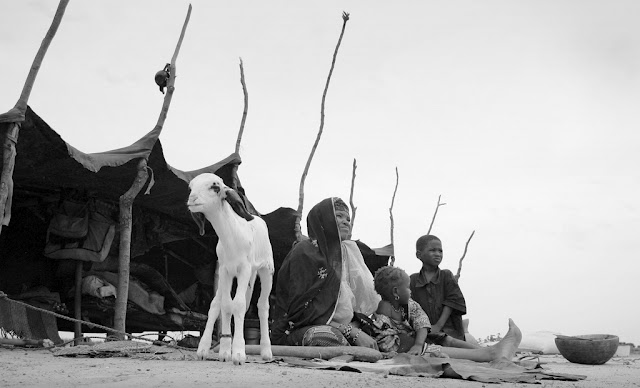
Photo Credit: “Toureg family in Niger,” courtesy of flickr user ILRI. -
Emily Gertz, Momentum Magazine
U of M’s ‘Momentum’ on Water Scarcity, Population, and Climate Change
›December 20, 2010 // By Wilson Center StaffExcerpted from the original article, “Water Tight,” by Emily Gertz in the University of Minnesota’s Momentum magazine.
The next time you stop off at a pub for a quick bite, think about this: It took around 630 gallons of water to make your burger. Your pint of beer used around 20 gallons. Manufacturing your blue jeans and t-shirt drank up about 1,218 gallons of water: 505 and 713 gallons, respectively.
Total: nearly 1,900 gallons of water – and that’s without fries on the side.
These quantities are the “water footprint” of each product: the total amount of freshwater used in its manufacture, including producing the ingredients.
For many products, that footprint is Paul Bunyan–sized: With water seemingly cheap and plentiful, there has been little incentive to try to keep it small.
But today, that’s changing. Even though much of the water we use for growing food and making products is replenished by natural hydrological cycles, freshwater will be less reliable and available in the coming century. Population growth is increasing both demand for water and pollution of potable supplies. At the same time, climate change is disrupting historical precipitation patterns, shrinking freshwater sources such as glaciers and snowpack, and creating unprecedented droughts and floods.
According to an analysis published in Nature in September 2010, the freshwater supplies of most of the world’s population are at high risk.
“If you look at the global distribution of people and the global distribution of threat levels to human water security, the places with the highly threatened water security represent about 80 percent of the world population, over four billion people,” says study co-author Peter McIntyre, assistant professor at the University of Wisconsin’s Center for Limnology.
In the United States, a 2010 analysis by the consulting firm Tetra Tech for the Natural Resources Defense Council found that more than 1,100 counties – fully two-thirds of all counties in the lower 48 states – will contend with higher water risk by 2050 due to climate change alone. Fourteen states can expect extremely serious problems with freshwater supply, including Florida, Mississippi, New Mexico, and California.
It’s not surprising, then, that businesses are increasingly considering their corporate water footprint. They encounter water risk – and opportunities to reduce it – at many stages of their operations, from growing crops to running retail stores. Factoring such risks into their present and future planning is helping companies present themselves as good environmental stewards to the public, and potentially reduce risks to their earnings from water scarcity.
“It’s often said that water is going to be the oil of the 21st century, in the sense of becoming an ever-more scarce commodity,” McIntyre says. “In the grand scheme of things, you can live without oil, but you can’t live without water. Water is fundamental for all life. And that’s certainly true for business as well.”
Continue reading on Momentum.
Sources: Natural Resources Defense Council, Nature.
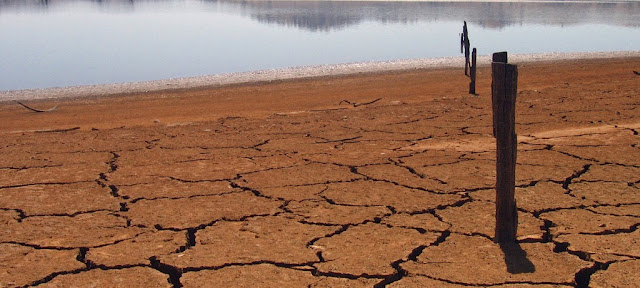
Photo Credit: Adapted from “Lake Hume at 4%,” courtesy of flickr user suburbanbloke. -
Too Few or Too Many? Joel E. Cohen on How Education Can Address Both
›December 17, 2010 // By Wilson Center Staff“So which is it: Is it too many people or is it too few people?” asks Joel E. Cohen of the Rockefeller University in this interview with ECSP. “The truth is, both are real problems, and the fortunate thing is that we have enough information to do much better in addressing both of those problems than we are doing – we may not have silver bullets, but we’re not using the knowledge we have.”
Cohen has studied the population-resources equation, trying to determine how best to support global demographics in a sustainable, equitable way. He points to the cross-cutting power of education to both curb rapid population growth in the developing world and ease the cost of aging populations in the developed.
“On continuing rapid population growth, we know that more education is associated with reductions in fertility,” said Cohen. And when combined with voluntary family planning, it’s also cheap “compared to the costs of having children that are not well cared for – the opportunity costs,” he said.
On aging, “we know that people who are educated well in their youth – both at primary, secondary, and especially tertiary levels – have better health in old age,” said Cohen. “So the costs of an aging population are diminished when people are educated. They take better care of themselves and they have options – they can use their minds as their bodies mature.”
Education is a long-term solution, but shorter-term policy options, like France’s bump of the retirement age to 62 that prompted rioting this fall, will also be necessary. “Sixty-two is only a way station,” Cohen said. “The retirement age has to move up, because people are living longer, they’re more productive, they’re in better health, and they’re going to have to keep working to take care of themselves.” -
Demographic Security Comes to the Hill
›December 16, 2010 // By Hannah Marqusee“We are now in an unprecedented era of demographic divergence,” said Population Action International’s Elizabeth Leahy Madsen at a September briefing held by Congressman John Tierney’s Subcommittee on National Security and Foreign Affairs and Congressman Russ Carnahan’s Subcommittee on International Organizations, Human Rights and Oversight.
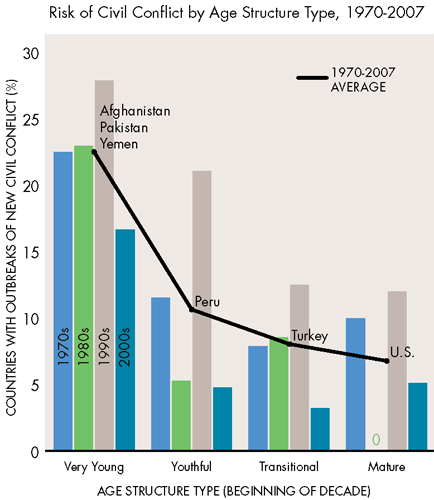
Eighty percent of the world’s conflicts occur in places where 60 percent or more of the population is under 30, and 90 percent of countries with young populations have weak governments, said Chairman Tierney in his opening remarks. He said that while such demographic trends “appear to be issues for the future…it is important that we start this dialogue today, so that we can make steps to address [them].” ECSP Director Geoff Dabelko and the Stimson Center’s Richard Cincotta joined Madsen on the panel titled, “The Effects of Demographic Change on Global Security,” at the Capitol Visitor Center.
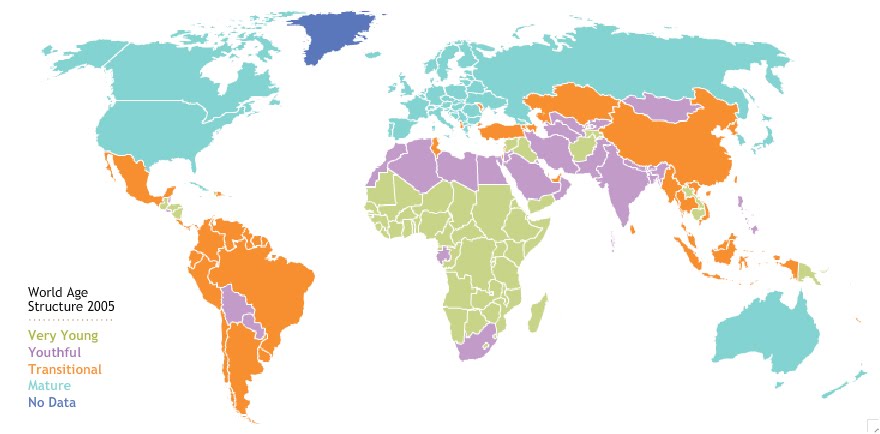
Youth Bulges and National SecurityThe countries of greatest security threat to the United States are also those with the youngest age structures and rapidly increasing populations, said Madsen. By next year, the world’s population will have reached seven billion, with 95 percent of that growth occurring in the developing world.
Large youthful populations can be a source of national strength because they provide innovation and manpower, said Dabelko, but without significant investment they may also contribute to state instability. When there are often few opportunities to obtain a job or an education for young people, there are low “opportunity costs” to joining a rebel group, said Madsen.
State instability can be affected by youth bulges, shifting religious or ethnic compositions, or food and water insecurity, but age-structural transitions are the strongest indicator of state performance, said Cincotta. Despite conventional wisdom, there is actually little evidence to link state failure with premature adult mortality due to AIDS or a high male-to-female ratio, he added.
It is not only developing countries with high fertility rates that face demographic difficulties, Cincotta noted. Countries such as Japan and Germany will soon have reached a “post-mature” age structure in which their aging populations and comparatively small workforces will tax state institutions and threaten economic stability.
Population Policies: Using “Soft Tools” to Improve National Security
Recently, leaders in the U.S. government have been paying increased attention to the linkages between demography and security through the “three Ds:” diplomacy, development, and defense. In 2008, the National Intelligence Council’s Global Trends 2025 included demographic assessments to analyze security trends, and this year, the National Security Strategy featured demographic trends along with the environment and other non-traditional areas.
Dabelko said that while this growing recognition signals progress, the “hard tools” of the traditional security community must be bolstered with “soft tools” commonly used by the international aid community, such as female empowerment, education, health services and youth employment.
Madsen argued that empowering the 215 million women with an unmet need for family planning worldwide through increased funding for voluntary family planning programs is a cost-effective way to shape population trends and ultimately reduce security threats.
“Demography is not destiny,” said Madsen. “Family planning has been an unsung signature of U.S. foreign assistance for decades.”
Similarly, Cincotta said that policies should help states transition out of youth bulges, and help countries with aging populations reform social institutions to protect older people.
Dabelko added that while progress has been made in acknowledging the linked nature of population trends and national security, there is significant room for improvement. Pointing to the successes of integrated population, health, and environment (PHE) programs, which provide environmental conservation and family planning services simultaneously, he called for similar programs to address population dynamics and conflict prevention. Long-term solutions call for coordinated resources and integrated strategies, he said.
Read the speakers’ full remarks: Chairman John F. Tierney, Richard Cincotta, Geoff Dabelko, and Elizabeth Leahy Madson (slides).
Sources: Guttmacher Institute, Population Action International, National Intelligence Council.
Image Credits: “World Age Structure 2005” and “Risk of Civil Conflict by Age Structure Type, 1970-2007,” courtesy of Population Action International. -
Judith Bruce on Empowering Adolescent Girls in Post-Earthquake Haiti
›“The most striking thing about post-conflict and post-disaster environments is that what lurks there is also this extraordinary opportunity,” said Judith Bruce, a senior associate and policy analyst with the Population Council’s Poverty, Gender, and Youth program. Bruce has spent time this year working with the Haiti Adolescent Girls Network (HAGN), a coalition of humanitarian groups conducting workshops focused on the educational, health, and security needs of the country’s vulnerable female youth population.
Gender-based violence has long been an issue in Haiti, but the problem became even more pronounced in the wake of the January earthquake. HAGN has sought to address the problem by concentrating its community-based programming on “high priority” groups, including girls who are disabled, serve as de facto heads of households, or are aged 10-14.
Bruce asserted that protecting and empowering young girls is critical because upon reaching puberty, “their access to a safe world shrinks dramatically.” With the post-disaster environment adding another layer of challenge, she said “there could be no ambiguity in anyone’s mind that we have to create dedicated spaces for girls who, at least for a few hours a week, feel secure to be themselves and to plan for their long-term safety as well as their development.”
The “Pop Audio” series is also available as podcasts on iTunes.