-
The World’s Toilet Crisis
›Forty percent of the world’s population – 2.6 billion people – do not have access to toilets, and some in the international aid community are finally dispensing with the euphemisms and calling this sanitation crisis what it is: “shit.”
In “The World’s Toilet Crisis” (trailer above), Adam Yamaguchi sets off in an episode of Current TV’s Vanguard program to tell the story of “the deadliest killer in the world…something no one wants to talk about.” All around the developing world, thanks in part to rapid population growth and poor development and environmental standards, “people are literally eating their own shit,” he said.
His journey takes him to India, where more people own cell phones, than toilets. The 55 percent of Indians who practice open defecation have contributed to another grim statistic: an estimated 840,000 children under the age of five die in India each year from diarrheal diseases.
India’s water quality is especially affected by lack of sanitation. In the documentary, Yamaguchi visits the Yamuna River, which is Delhi’s primary source of drinking water, and has become a “giant toilet” literally bubbling with methane gas. This phenomenon is not unique to India. Approximately 80 percent of sewage in developing countries goes untreated, polluting local water resources.
But it is women who feel the effects of lack of access to clean water and toilets most keenly. In 72 percent of households around the world, women are the primary water collectors, often travelling long distances for drinkable water. They face shame and harassment when going to the bathroom, causing them to suppress their need until dark, causing negative health effects. Waiting until nightfall also means that when women openly defecate, they often face molestation, violence, and rape. Teenage girls also often drop out of school once they begin to menstruate because toilets are not private, unsafe, or are simply nonexistent.
Reflecting on his motivations for making the documentary, Yamaguchi said that in order to expose this “global public health crisis,” he needed to be as graphic, shocking, and disgusting as possible.If you’re not grossed out by, or incensed by the fact that there is shit everywhere, you’re not really moved to act or change your ways. And that’s ultimately what’s happened in many places in the world. It’s a normal fact of life. You see it everywhere, and you think nothing of it. There are causes out there that are deep sexy causes or marketable causes. Shit or toilets – not the most marketable thing in the world.
“The World’s Toilet Crisis” forms part of a broader trend among sanitation advocates to use crude language to address a problem the international health and development community has traditionally shied away from talking about directly.
Tales of shit: Community-Led Total Sanitation in Africa, published shortly before World Toilet Day by the International Institute for Environment and Development, takes an equally direct approach to sanitation.
Community-Led Total Sanitation (CLTS) is an approach begun with great success by Dr. Kamal Kar in Bangladesh that relies on “triggering” to change community behavior. The report, which is prefaced by a three-page “International Glossary of Shit” listing the words for shit in other languages, emphasizes the need to “explicitly [talk] about and [make] visible the shit that is normally hidden beneath taboos and polite language.” By almost literally thrusting people’s shit right under their noses, communities learn what they have been ignoring: that they are “eating each others’ shit.”
Traditional sanitation programs often fail because “a high proportion of latrines constructed with subsidies are never used as toilets, but as storage space, animal shelters, or prayer rooms – the buildings are too high quality to be wasted on toilets!” says the report. CLTS, on the other hand, focuses on changing behavior at the community, rather than the individual level to create sustainable change that responds and adapts to a community’s distinct culture and needs.
“The World’s Toilet Crisis” shows the promise CLTS has of meeting the needs of the billions without toilets. In East Java, Yamaguchi joins a community leader to collect a “specimen” from a well-traveled river bank near the town, which he proceeds to show to a group of women in the town who are, predictably, revolted. The community then takes collective action to become “open-defecation free” and invest in toilets.
“The World’s Toilet Crisis” is not easy to watch, nor was it easy to film – seven minutes in, Yamaguchi vomits on the banks of the polluted Yamuna River. Disgust, however, is central to raising awareness and affecting change on both the community and global levels. As Yamaguchi explains, “You’re going to get grossed out by seeing this piece, and that’s part of the point.”
Sources: Community-Led Total Sanitation, Current TV, Earth Times, IIED, Water.org, World Toilet Organization, WHO, United Nations University.
Video Credit: “The World’s Toilet Crisis – Vanguard Trailer,” courtesy of Current TV’s Vanguard. -
Watch: Joel E. Cohen on Solving the Resource-Population Equation in the Developing World
›December 14, 2010 // By Wilson Center Staff“It’s very hard to put a number on a quantity that depends on future events, processes we don’t understand, and values that may change over time,” said Joel E. Cohenof the Rockefeller University in this interview with ECSP. “That doesn’t mean we have no problems and it doesn’t mean there’s nothing we can do.”
There are three schools of thought or proposed “panaceas,” when it comes to balancing natural resources and population, said Cohen: a bigger pie (new technology to increase productivity), fewer forks (reduced consumption), and better manners (reduced irrational market inequities and better governance).
In the 15 years since his book How Many People Can the Earth Support? was published, Cohen’s approach has changed. While the 1996 book lacked a definitive policy recommendation, he is now analyzing options. “The evolution of my thought has moved from ‘how many people can the Earth support?’ to ‘what do we need to solve problems?’” he said.
You need adequate child and maternal nutrition to produce potential problem solvers and you need education to give them the tools to do it with, said Cohen, who studied the impact of universal primary and secondary education with colleagues at the American Academy of Arts and Sciences.
“If you look at a map of stunting in the world, there are parts of South Asia and sub-Saharan Africa where more than half the children are stunted – that means two standard deviations [of] height below normal for their age,” said Cohen. “Those populations are handicapped at the starting gate because they don’t have the problem solvers.” -
Whither the Demographic Arc of Instability?
›December 14, 2010 // By Richard Cincotta
After the Berlin Wall came down in 1989, the demand for geostrategic mapping went up. Pentagon geographers revised maps almost monthly in order to keep pace with the rapid sequence of events – the toppling of Eastern Europe’s communist regimes, the rise of pro-Western liberal democracies in their place, and the reunification of Germany. Then came more borders, and even more maps: the breakup of the Soviet Union and the withdrawal of forces from former Warsaw-Pact states, the splintering of Yugoslavia and Czechoslovakia, and requests for accession to NATO. When, in the late 1990s, it became apparent that the end of the Cold War would have little effect on the emergence of civil and ethnic conflicts in Africa, Asia, and Latin America, and that a network of militant Islamist organizations had coalesced across Muslim Asia and Africa, strategic mapmaking shifted focus to identifying conditions in the Global South.
-
An Integrated Climate Dialogue
COP-16 Cancun Coverage Wrap-up
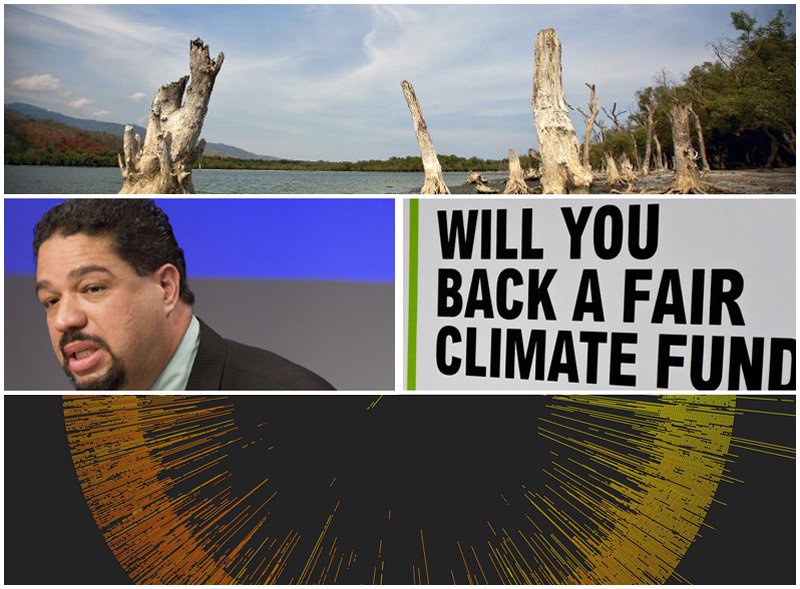
›December 13, 2010 // By Schuyler NullAfter focused last-minute negotiations, the UNFCCC COP-16 parties meeting in Mexico finally reached an agreement on a package being called “The Cancun Agreements” on Saturday. One of the most important impacts of the agreement (also referred to as the “balanced package”) is the establishment of a green climate fund which will help developing countries adapt to and mitigate the effects of climate change.
For more on the green fund as well as the integration of gender, population, development, and even a little bit of security in the broader climate dialogue, see The New Security Beat’s coverage of Cancun below.- Interview with Karen Hardee: Climate-Proofing Development
- Pop Audio: From Cancun: Roger-Mark De Souza on Women and Integrated Climate Adaptation Strategies
- Guest Contributor Alex Stark: From Cancun: Getting a Climate Green Fund
- The Number Left Out: Bringing Population Into the Climate Conversation
Kicking off our coverage was an email interview with Karen Hardee, visiting fellow with the Population Reference Bureau, on “climate-proofing” development. Hardee gives a brief overview of the UN National Adaptation Programmes of Action system and the current state climate adaptation integration in international development. She points out that one of the enduring positives from COP-15 was a renewed focus on financing tools that has permeated to the top levels of the UN.
Hardee also touched on the nascent but largely unfulfilled connection between population growth and resilience, noting that “of the first 41 programs submitted to the UNFCCC…37 noted that population growth exacerbated the effects of climate change, but only six explicitly stated that meeting an unmet demand for RH/FP should be a key priority for their adaptation strategy and only two proposed projects that included RH/FP.”
Next, Population Action International’s Roger-Mark De Souza was kind of enough to speak with us briefly over the phone from the conference itself, providing a run-down on a PAI-sponsored side event focusing on empowering women in climate debates.
“When you look at the negative impacts of climate change, the impacts on the poor and the vulnerable – particularly women – increase, so investing in programs that put women at the center is critical,” De Souza said.
Leaving gender issues, like child and maternal health and education, out of deliberations like those COP-16 are missed opportunities to get more “power for your peso,” he said.
Alex Stark, formerly of CNAS and now with the Adopt a Negotiator program in Cancun, provided an update and a strong argument for one of the most critical elements of the “balanced package” that many are hoping will come out of Cancun – the establishment of an international fund to help pay for adaptation and mitigation programs in developing countries.
Stark provides an insight into some of the chatter on the floor at COP-16 and also outlines the moral, development, and security advantages to supporting a green fund, pointing out that “by managing displacement, migration, and violent conflict driven by the effects of climate change, such as water scarcity, climate change adaptation can help bolster international security and stability.”
“Within the UN process itself,” she writes, “a robust, well-run, equitable green fund would help rebuild the trust lost between developed and developing countries at Copenhagen last year.”
Lastly, Bob Engelman, of the Worldwatch Institute, provides a broad argument for more inclusion of a key variable in climate debates – population (and not in the Ted Turner mold). He enumerates the common pitfalls of population debates, from sensitivities about personal choices to squeamishness about sexuality and reproductive health, and just plain gender bias.
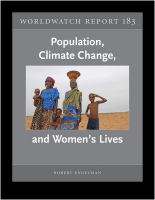
But despite these barriers, says Engelman, population – and not just growth but demographics too – matters in the climate debate and therefore needs to be part of the conversation (an argument he makes more comprehensively in a new report, Population, Climate Change, and Women’s Lives). Echoing De Souza, he concludes by pointing out that although the discussion may be difficult, the solution is relatively simple: “On population, the most effective way to slow growth is to support women’s aspirations.”
“As societies, we have the ability to end the ongoing growth of human numbers – soon, and based on human rights and women’s intentions,” Engelman said. “This makes it easy to speak of women, population, and climate change in a single breath.”
Sources: Population Action International, Slate, UN Framework Convention on Climate Change, The Washington Post, Worldwatch Institute.
Photo Credit: Adapted from “Trees Dead on Shore of Timor-Leste Lake,” courtesy of flickr user United Nations Photo; Roger-Mark De Souza, courtesy of David Hawxhurst/Wilson Center; “Will you back a climate fund?,” courtesy of flickr user Oxfam International; and “Met Office Climate Data – Month by Month (September),” courtesy of flickr user blprnt_van. -
Robert Engelman, Worldwatch Institute
The Number Left Out: Bringing Population Into the Climate Conversation
›December 9, 2010 // By Wilson Center StaffNumbers swirl around climate change.
So many parts per million of greenhouse gases in the atmosphere. So many gigatons of carbon dioxide emitted. So many degrees Celsius of temperature rise that we hope won’t happen. Yet one number rarely comes into play when experts or negotiators talk about the changing atmosphere and the warming of the planet: the number of humans putting heat-trapping gases into the air.
The original version of this article, by Robert Engelman, appeared on the Worldwatch Institute’s Transforming Cultures blog.The UK Met Office’s data set for September 2009 of more than 1,600,000 temperature readings from 1,700+ stations.
Numbers swirl around climate change.
So many parts per million of greenhouse gases in the atmosphere. So many gigatons of carbon dioxide emitted. So many degrees Celsius of temperature rise that we hope won’t happen. Yet one number rarely comes into play when experts or negotiators talk about the changing atmosphere and the warming of the planet: the number of humans putting heat-trapping gases into the air.
The relative silence isn’t hard to understand. Population is almost always awkward to talk about. It’s fraught with sensitivity about who has how many children and whether that is anyone else’s business. It’s freighted with sexuality, contraception, abortion, immigration, gender bias, and other buttons too hot to press into conversation. Yet two aspects of population’s connection to climate change cry out for greater attention – and conversation.
One is that population – especially its growth, but other changes as well – matters importantly to the future of climate change, a statement that as far as I can tell is not challenged scientifically. (The Intergovernmental Panel on Climate Change, for example, accepts the accuracy of the so-called Kaya identity, which names population among the four factors that determine emissions growth from decade to decade.) And, two, addressing population in climate-friendly ways is also fundamentally people-friendly, in that it involves no “population control,” but rather the giving up of control – especially control of women’s bodies by people other than themselves.A new Worldwatch Institute report, which I authored, offers details, findings, and recommendations on both the importance of population in climate change and how to address it. The report looks at some of the history of the population-climate link – in particular, interesting work by William Ruddiman, who hypothesizes that the agricultural revolution contributed to global warming thousands of years ago. And it addresses the common objection that population growth can’t be that important in greenhouse gas emissions growth because countries with high per capita emissions tend to have smaller families than low-emitting countries.
Equity in per capita emissions, I argue, is an essential goal – and without it, no global effort to shrink emissions can succeed. The imperative of an equal sharing of atmospheric carbon space is among the most powerful arguments for a smaller world population. When greenhouse gases other than carbon dioxide – such as methane and “black carbon” – are considered, per capita emissions gaps are not as wide as many writers believe. And the amount of all these gases that equal emitters can contribute without altering the atmosphere shrinks in direct proportion to population’s growth.
Arguments about population’s role in climate change are unnecessarily heated, however. Even if the growth of human numbers played only a minor role in emissions growth, it would be worth discussing – not because addressing population will somehow resolve our climate predicament, but because ultimately no other strategy on its own will either. We need the widest possible range of strategies – economic, political, technological, and behavioral – that are both feasible and consistent with shared human values.
On population, the most effective way to slow growth is to support women’s aspirations. Almost all women aspire to gain an education, to stand in equality with men, and to make decisions for themselves – including whether and when to give birth. Policies and programs to help women achieve these aspirations exist in many places. But they don’t get the attention, support and funding they deserve. And they are rarely seen as climate-change strategies.
As societies, we have the ability to end the ongoing growth of human numbers – soon, and based on human rights and women’s intentions. This makes it easy to speak of women, population, and climate change in a single breath.
Robert Engelman is vice president for programs at the Worldwatch Institute and the author of “Population, Climate Change, and Women’s Lives.” Please contact him if you are interested in a copy of the report.
Sources: UK Met Office, World Resources Institute.
Image Credit: Adapted from “Met Office Climate Data – Month by Month (September),” courtesy of flickr user blprnt_van, and report cover, courtesy of the Worldwatch Institute. -
Hans Rosling Double Feature: ‘The Joy of Stats’ on BBC and Population Growth at TED
›Hans Rosling, creator of Gapminder and professor of international health at Sweden’s Karolinska Institute, hosts a new documentary on the BBC called The Joy of Stats that takes a look at the breadth and depth of data available today to analysts and private citizens alike.
In the clip above, Rosling demonstrates his primary interest in world health, tracking life expectancy and income over the last 200 years to show both the remarkable progress that has been made but also the tremendous gap that remains between those at the top (the very rich and healthy) and those at the bottom (the very poor and sick).
Rosling has been a vocal (and visual) advocate for expanding people’s knowledge of the world by presenting statistics in innovative ways. “Statistics should be the intellectual sidewalks of a society, and people should be able to build businesses and operate on the side of them,” he said at a discussion at the Wilson Center in May 2009.
In particular, Rosling’s focus has been on health, poverty, and the developing world, where he’s advocated for increased focus on child and maternal health and education. “The role of the old West in the new world is to become the foundation of the modern world – nothing more, nothing less,” he said during a TED talk on population growth (see below) where he broke from his more flashy visuals and went analog – using IKEA boxes to illustrate population and consumption growth. “But it’s a very important role. Do it well and get used to it.”
Rosling’s Gapminder software has been incorporated into Google’s Public Data Explorer, where many development indicators from the World Bank, World Health Organization, and others can now be easily tracked by anyone. For more on Google Data and to see an example set of indicators (agriculture as a percentage of GDP vs. fertility rates over the last 50 years), check out this previous Eye On, on The New Security Beat.
Video Credit: “Hans Rosling’s 200 Countries, 200 Years, 4 Minutes – The Joy of Stats – BBC Four,” courtesy of BBC, via YouTube, and “Hans Rosling on global population growth,” courtesy of TED. -
From Cancun: Roger-Mark De Souza on Women and Integrated Climate Adaptation Strategies
›“When you look at the negative impacts of climate change, the impacts on the poor and the vulnerable – particularly women – increase, so investing in programs that put women at the center is critical,” said Roger-Mark De Souza, vice president of research and director of the climate program at Population Action International (PAI), speaking to ECSP from the UN Climate Change Conference in Cancun, Mexico. “There are a number of missed opportunities here in Cancun and in climate change deliberations overall that are not including women and are missing an opportunity to have a bigger bang for the buck, or power for the peso, as we say in Mexico.”
PAI hosted a side session with five panelists from Denmark, Ethiopia, Kenya, Suriname, and Uganda on “Healthy Women, Healthy Planet: Women’s Empowerment, Family Planning, and Resilience.” The session attracted more than 100 attendees and prompted incisive, informative questions, said De Souza.
“There was a call for additional research that is policy relevant that identifies some of the key entry points and added benefits at a country level,” said De Souza. “And there is a very strong call for youth partnerships from a number of youth advocates who are looking at medical and public health interventions and are desirous of including reproductive health programming as part of that.”
“One concrete next step for Cancun is to work with other civil society partners who are here who are tracking how gender is being integrated into the negotiating language, particularly with regard to financing mechanisms,” De Souza said.
Besides financing and the need for more research, De Souza said the key issues that emerged from the panel were: the importance of linking programs of different scales; ensuring women’s empowerment and ownership; and recognizing and replicating effective partnerships.
For more from Roger-Mark De Souza, see ECSP Focus Issue 19, “The Integration Imperative: How to Improve Development Programs by Linking Population, Health, and Environment.”
The “Pop Audio” series is also available as podcasts on iTunes. -
Managing the Mekong: Conflict or Compromise?
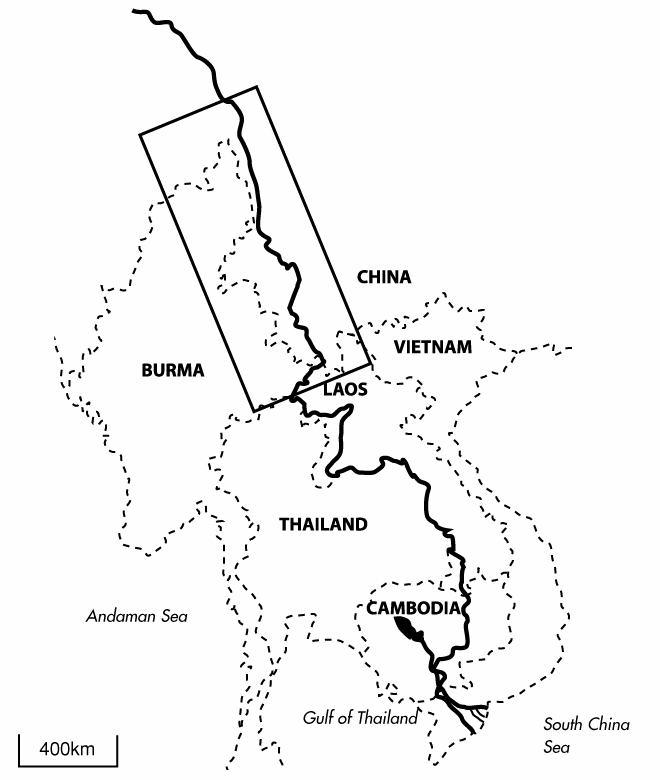
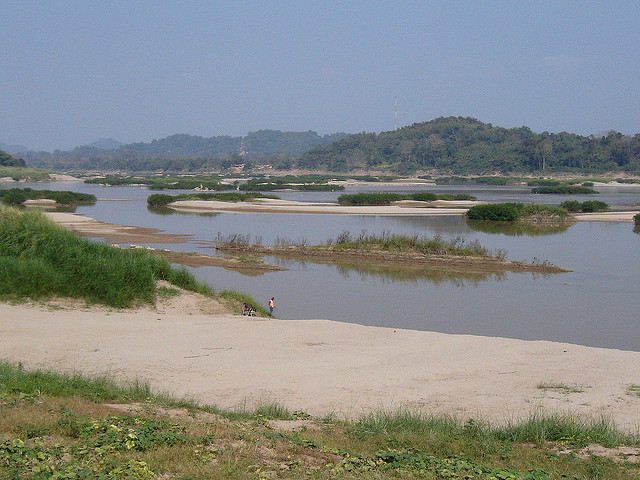
›December 1, 2010 // By Russell SticklorAt nearly 5,000 kilometers long, the Mekong River is one of Asia’s most strategically important transboundary waterways. In addition to providing water for populations in the highlands of southern China, the Mekong helps support some 60 million people downstream in Southeast Asia, where the river is a key component of agricultural production and economic development.
In recent years, however, the Mekong has emerged as a flashpoint for controversy, pitting China against a coalition of downstream nations that includes Thailand, Laos, Cambodia, and Vietnam. The countries of the Lower Mekong argue that Beijing’s construction of multiple dams on the Upper Mekong is robbing them of critical water resources, by decreasing both the quality and quantity of water that makes it through Chinese floodgates and spillways. China, however, mindful of soaring energy demand at home, has continued its campaign to harness the hydroelectric potential of the Upper Mekong and its tributaries – but at what cost to the environment and Beijing’s relationships with Southeast Asia?
China’s Hand on the FaucetChina’s total energy demand just recently passed the United States and is expected to continue to increase in the near-term – by 75 percent over the next 25 years, according to the International Energy Agency.
As a result, Beijing has been looking to bolster its energy security by reaching out to develop energy resources in Africa, Latin America, and the Middle East, as well as along the Mekong and in the East and South China Seas.
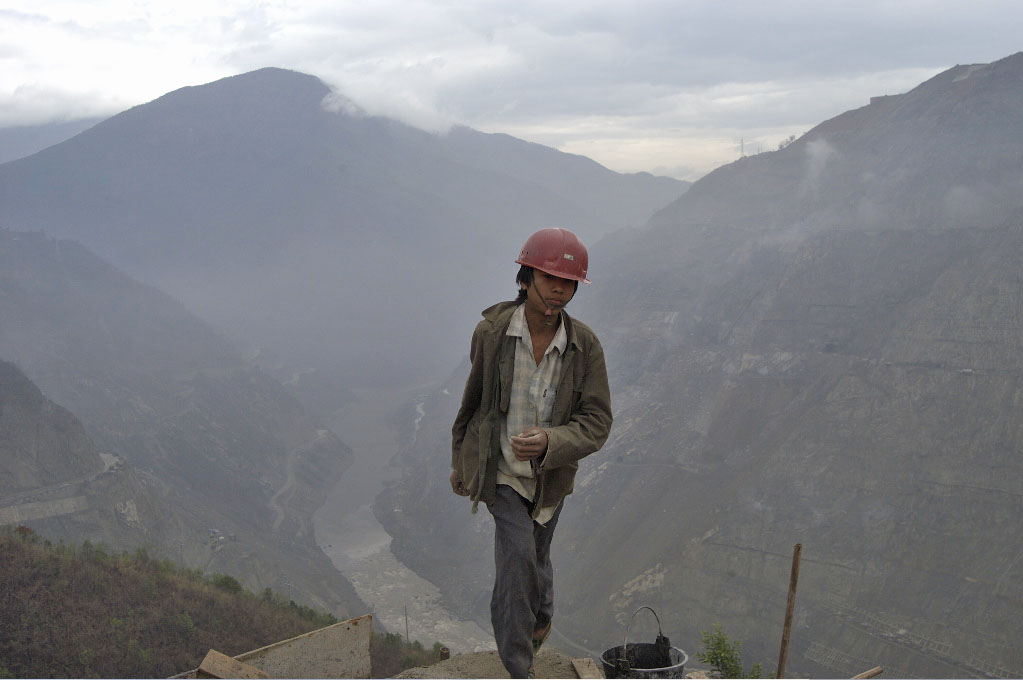
In that context, China’s aggressive hydroelectric development of the Upper Mekong — known in China as the Láncang Jiang (shown in the boxed area of the map at right) — makes perfect sense. The river’s sizeable elevation drops make it a rich source of energy; already, 15 large-scale dams have either been completed or are under construction on the Upper Mekong in Tibet and Yunnan.
Those dams also provide China with enormous geopolitical leverage over downstream nations. With little more than the flick of a switch, the Chinese government could substantially curtail the volume of flow entering the Lower Mekong basin. Doing so would of course be tantamount to an act of war, since depleted flow volumes in the Lower Mekong would hinder crop irrigation, jeopardize food security, and endanger the health of the region’s economically critical freshwater fisheries, which are among the world’s most productive. Chinese floodgates and spillways essentially give Beijing de facto control over Southeast Asia’s water security.
The View Downstream
To date, China has never threatened to deliberately reduce the flow of the Mekong to its downstream neighbors. Nevertheless, the perception of threat in Southeast Asian capitals remains high.
Already, a number of the region’s governments — represented formally through the Mekong River Commission, a 15-year-old organization that China still has not joined as a full-fledged member — have complained that completed or in-progress Chinese dams are resulting in less water entering their countries, a phenomenon that becomes particularly pronounced during periods of drought, as observed this summer. Further, there is also the issue of water quality. Since Chinese dams trap silt being flushed out of the Himalayas, that nutrient-rich material cannot be carried downstream, where it historically has helped create fertile soils in the floodplains of the Lower Mekong basin.Quality and quantity concerns aside, there are also structural issues concerning how Beijing goes about its business on the Upper Mekong. Since it is only a “Dialogue Partner” to members of the Mekong River Commission, China is not required to seek approval from downstream nations on hydroelectric development of the river’s Chinese stretch, even though that development has both direct and indirect implications for water security in the Lower Mekong basin. China has even shown a penchant for deliberate secrecy as it develops its stretch of the river, choosing to share a minimal amount of hydrological data with downstream neighbors and typically refraining from even announcing new dam projects.
“The Security Implications Could Hardly Be Greater”
Given its geographic position, Cambodia is particularly vulnerable to China’s stewardship decisions. With one of the poorest populations in Southeast Asia and also one of the highest fertility rates, at 3.3 births per woman, the potential for water scarcity issues is real. By mid-century, its population is projected to jump from its current 15 million to nearly 24 million.
“The government of Cambodia will be entirely at the mercy of Beijing,” said Wilson Center Scholar and Southeast Asian security expert Marvin Ott. “For Cambodia, the question becomes how they can curry China’s favor so as to avoid coercive use of the Mekong — or find some way of exerting counter-pressure on Beijing.”
Overall, population for mainland Southeast Asia is projected to rise from its current 232 million to 292 million by 2050. This growth will require increased agricultural output across the region and thus increased reliance on the waters of the Lower Mekong. The Lower Mekong nations’ shared dependency on the river and China’s continued unilateralism in the Upper Mekong could have serious repercussions for the region, said Ott:The security implications could hardly be greater for the downstream states. With the dams, China will have literal control over the river system that is the lifeblood of Laos, Cambodia, and Vietnam. The power this gives China is equivalent to an invasion and occupation of a country by the Chinese army.
For its part, the PRC maintains that water woes in the Lower Mekong are not its doing. In response to the chorus of Southeast Asian claims that China diverts or stores more than its fair share of water, Beijing’s typical refrain has been that blame for low water levels downstream lies not with Chinese water resource management but with heightened precipitation variability associated with climate change. Chinese water officials also contend that the Lower Mekong countries’ complaints are misdirected because water from the Chinese-controlled sections of the Upper Mekong basin accounts for less than 20 percent of the Mekong’s total flow volume by the time the river reaches its natural outlet in the South China Sea.
There are some indications, however, that China may be experimenting with a more open approach to engaging downstream nations. Earlier this year, China overturned precedent by offering top Southeast Asian government officials a tour of what had once been a top-secret hydro project, the mammoth Xiaowan dam. Some critics insisted Beijing’s fear of growing U.S. influence in the Lower Mekong helped motivate the rare show of transparency, while others said it was a means to curry favor with Southeast Asian nations so that they would support China’s controversial resource-development strategies in the South China Sea. Yet regardless of motive, Beijing’s move away from secrecy – if sustained – could do a great deal to smooth over regional tensions.
Dammed If You Do, Damned If You Don’t
Beyond some limited transparency, Beijing also hopes to mitigate concerns about development of the Upper Mekong by offering funding or logistical support for similar large-scale hydroelectric facilities on the Lower Mekong. The move has been largely welcomed by the Mekong River Commission countries, which envision dams of their own generating much-needed energy input for national grids, accelerating continued economic modernization, and enhancing flood control. As of 2009, there were 12 dam projects for stretches of the Mekong south of the Chinese border and many more planned for key tributaries.
The danger in such deal-making is that the environmental costs will be lost in the shuffle. A series of major dams would fundamentally alter the Mekong’s hydrology, which could lead to the degradation of sensitive riverine ecosystems, the disruption of upstream migratory routes for fish that serve as local dietary staples, and the decline of fresh water fisheries that form the backbone of many local economies.
Given the long-term effects on the food, environmental, and economic security of the Lower Mekong heartland, Beijing’s attempt to ease water tensions with a new round of dam construction may end up doing far more harm than good. Unfortunately, with both China and the Mekong River Commission countries currently viewing the dam proposals as something of a win-win, planning and construction are likely to move forward over the coming years.
Sources: Financial Times, Foreign Policy, International Institute for Strategic Studies, Los Angeles Times, Mekong River Commission, National Geographic, New Asia Republic, Phnom Penh Post, Population Reference Bureau, Stimson Center.
Photo Credits: “Xiaowan Dam Site (Yunnan Province, China, 2005),” (Top) courtesy of flickr user International Rivers; Map (Middle) courtesy of International Rivers; “Thailand – Isaan, Mekong River,” (Bottom) courtesy of flickr user vtveen.
Showing posts from category population.