Showing posts from category population.
-
Environmental Action Plans in Darfur: Improving Resilience, Reducing Vulnerability
›Many villagers in Baaba, a community of 600 in South Darfur, remember a shady forest of mango and guava trees that provided food and a valuable income for the villagers and a pleasant picnic spot for people in Nyala, the nearby state capital. Over the last decade, that forest has degraded into eroded brush dotted by the occasional baobab – a transformation that is unfortunately a familiar sight throughout Darfur.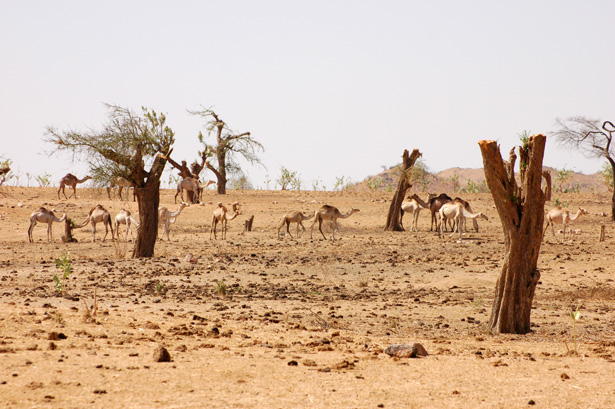
Most of Baaba’s trees have become firewood and charcoal for the people living in nearby internally displaced persons (IDP) camps. Baaba’s residents, who themselves returned from the camps to try to rebuild their lives at home, struggle to coax enough food from the soil, which has largely eroded away following deforestation. Afraid to venture any further than necessary from home for fear of violence and banditry in the countryside, they farm and graze the same land year after year without fallow periods – further depleting the soil and driving yields ever lower.
Baaba is like hundreds of Darfuri villages, which face a brutal mix of insecurity and environmental decline that leaves them one poor harvest away from being forced into the IDP camps. Baaba, however, is also a pilot participant in a new approach – the Community Environmental Action Plan – that aims to rehabilitate the local environment, enable people to sustainably manage natural resources, and ultimately to make communities more prosperous and resilient.
Most of Darfur has always been marginal land where farming and herding provide a meager livelihood and natural resources are few. Even before war broke out in 2003, soaring population growth (total population has quintupled since the 1970s) was putting intolerable pressure on the land, water, and trees of Darfur. The conflict in Darfur has since heavily disrupted traditional methods for sharing and maintaining natural resources, leading to environmental devastation. The worsening effects of climate change – though hard to separate from local environmental depletion – are also beginning to disrupt weather patterns and farming. The disheartening result is that even where fighting has subsided and displaced persons return home, they often find that the land no longer sustains them.
Traditional humanitarian aid and infrastructure projects are ill-suited to help, since persistent insecurity deprives humanitarian actors of access to communities for weeks or months at a time. Environmental decline didn’t start the humanitarian crisis in Darfur, but it threatens to prolong it and put a sustainable peace out of reach.
Community Environmental Action PlansThe International Organization for Migration (IOM), mandated to work on IDP and return issues in Darfur, aimed to address these challenges with Community Environmental Action Plans (CEAPs) in three pilot villages. CEAPs build comprehensive local capacity, enabling communities to manage natural resources sustainably and address environmental problems themselves without relying on outside support. The ultimate goal is to build the resilience and adaptive capacity of vulnerable communities. IOM worked with Baaba and two other villages to implement CEAPs, in partnership with the Swiss-based environmental NGO ProAct, the UN Environment Programme (UNEP), the government of South Darfur, and Darfuri environmental organizations. The project, funded by the Government of Japan, ran from early 2009 until mid-2010.
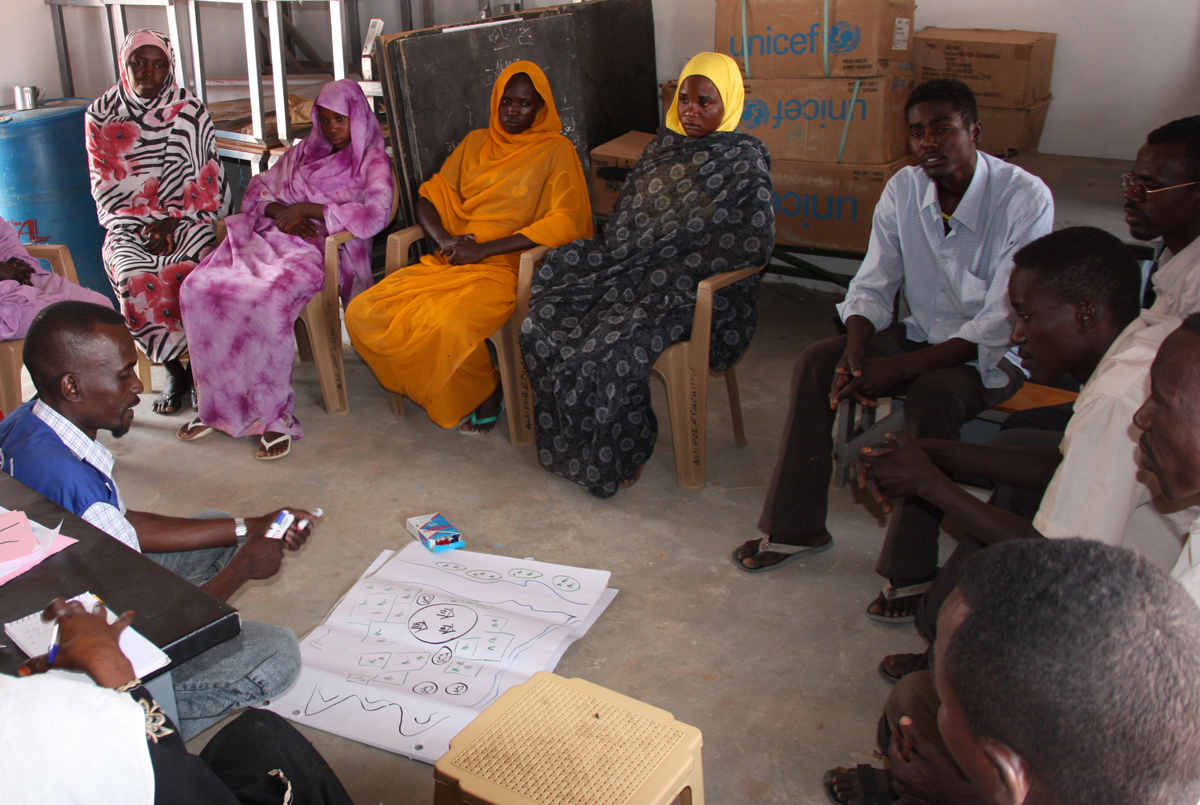
The CEAP process trains communities to understand the connections between a healthy ecosystem and a prosperous community and to promote livelihoods by rehabilitating the environment. Each participating village formed a CEAP governance committee, which was then trained to understand the environment as a single integrated system and to see how damaging one resource like trees can devastate other ecosystem services – such as pollination, groundwater retention, and soil fertility – that enable and promote human livelihoods. The communities then identified essential needs, including reforestation, water harvesting, and improved sanitation, and worked with IOM to develop appropriate responses. These activities were all implemented by the villages themselves, with technical and material support from IOM and its partners.
Building Local Capacity
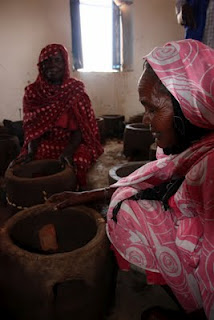
The communities built low-tech but highly productive tree nurseries, producing and planting over 200,000 seedlings to restore damaged land and provide a sustainable wood supply. Local women learned how to make highly fuel-efficient stoves using locally available materials, cutting their need for firewood and allowing them to sell stoves in the nearby Nyala market.Farmers received extensive training in sustainable agriculture techniques, including water harvesting, composting, agro-forestry, and intercropping (mixing complementary plant species together in the same fields). Volunteers were trained in effective hygiene practices and built latrines for each household. Water committees were trained to repair and maintain the villages’ indispensable but fragile water hand pumps, ensuring a more reliable source of drinking water. Each of these activities was governed by a community committee, including women and youth, trained to manage the projects for the benefit of the entire community and continue the work after the project’s end.
Through this approach, all three villages significantly boosted their livelihoods and agricultural productivity while becoming less dependent on the unsustainable exploitation of their fragile environment. The CEAP approach benefits greatly from focusing on capacity-building and local implementation, which fosters a strong sense of community ownership that persists after the project ends. Equally important, CEAPs attempt to address most or all of a community’s environmental issues simultaneously, reducing the risk that neglected environmental problems – particularly agricultural failure – will critically destabilize and displace a community in the future.
A Replicable Model
CEAPs aren’t a panacea, particularly in the conflict-prone areas where they are most needed. Insecurity, particularly a series of abductions of humanitarian workers from several organizations in 2010, cut off IOM’s access to the communities late in the project. Though the core activities were completed by working through local partners with more reliable access, the security situation left few opportunities for follow-up activities. Longer-term threats, particularly unrestrained population growth – which requires a comprehensive approach that includes addressing unmet need for family planning services – could undo much of the good that CEAPs accomplish.
Though insecurity prevented IOM from continuing the project, other organizations including UNEP are implementing and refining the CEAP approach elsewhere in Darfur and other regions in sub-Saharan Africa. As climate changes intensifies and the potential for related conflicts looms, the CEAP approach should be considered as a powerful and flexible tool to rehabilitate the environment and strengthen vulnerable communities.
Paul Rushton is a consultant for the International Organization for Migration, Sudan, and worked as a Programme Officer managing the CEAP projects in South Darfur from 2009 to 2010.
Sources: International Organization for Migration, UN.
Photo Credit: Camels graze in a destroyed and degraded village in Western Darfur, courtesy of UNEP; and pictures from CEAP sites in Southern Darfur, courtesy of Paul Rushton. -
Watch: Eric Kaufmann on How Demography Is Enhancing Religious Fundamentalism
›May 24, 2011 // By Schuyler Null“There’s a belief, often amongst political scientists and social scientists, that demography is somehow passive and that it doesn’t really matter,” said Eric Kaufmann, author of Shall the Religious Inherit the Earth: Demography and Politics in the 21st Century and professor at Birkbeck College, University of London in this interview with ECSP. “Part of the message of this book is that demography can lead to social and political change.”
“In this case what I’m looking at is the way that demography can change the religious landscape,” Kaufmann said. “It can actually enhance the power of religion, especially religious fundamentalism in societies throughout the world.”
“Purely secular people, who have no religious affiliation, they are leading the move towards very low levels of fertility, even down to the level of one child per woman,” Kaufmann said. On the other hand, fundamentalists are reacting to this trend and deliberately deciding not to make the demographic transition, he said. “In doing so, the gap between secular and religious widens” and is actually more pronounced in places where the two groups collide.
“You can see this in the Muslim world,” said Kaufmann. “If you look at urban areas such as the Nile Delta and Cairo, in those urban cities, women are who are most in favor of Shariah have twice the family size of women who are most opposed to Shariah, whereas in the Egyptian countryside, the difference is much less because they haven’t been exposed to the same modernizing pressures.”
These dynamics affect the Western world as well, especially when you factor in migration, said Kaufmann: “The fact that almost all the world’s population growth is occurring in the developing world, which is largely religious, means that a lot of people are moving from religious parts of the world to secular parts of the world,” he said. “That effects, for example, countries like the United States or in Western Europe, which are receiving immigrants, and it means in the case of Western Europe – which is a very secular environment – that immigrants bring not only ethnic change but on the back of that, religious change; they make their societies more religious.” -
Mapping Population and Climate Change
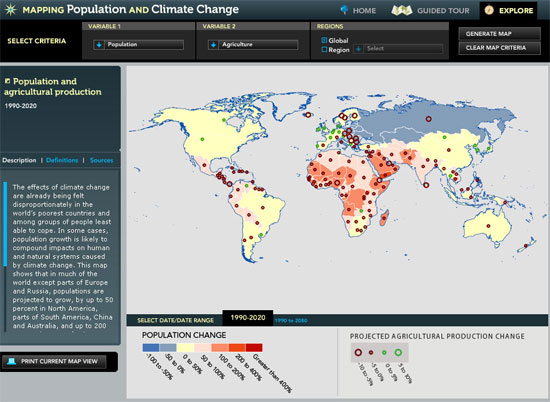
›Climate change, population growth, unmet family planning needs, water scarcity, and changes in agricultural production are among the global challenges confronting governments and ordinary citizens in the 21st century. With the interactive feature “Mapping Population and Climate Change” from Population Action International, users can generate maps using a variety of variables to see how these challenges relate over time.
Users can choose between variables such as water scarcity or stress, temperature change, soil moisture, population, agriculture, need for family planning, and resilience. Global or regional views are available, as well as different data ranges: contemporary, short-term projections (to the year 2035), and long-term projections (2090).In the example featured above, the variables of population change and agricultural production change were chosen for the time period 1990-2020. Unfortunately, no country-specific data is given, though descriptions in the side-bar offer some helpful explanations of the selected trends.
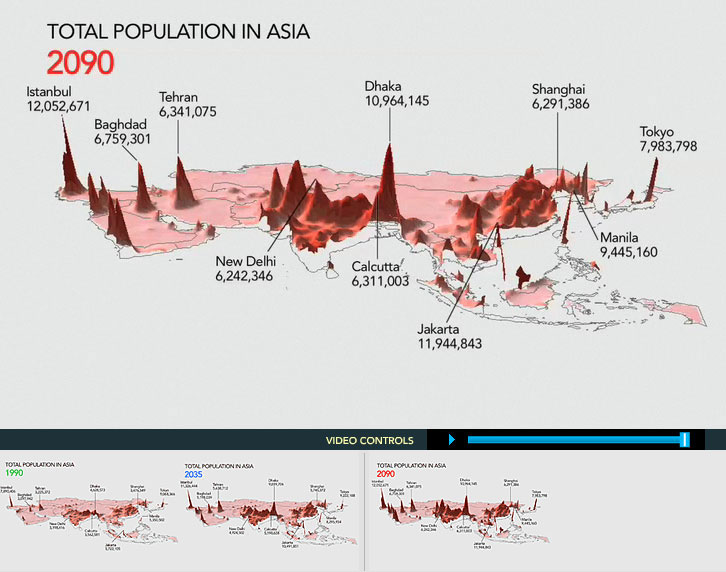
In addition, users can view three-dimensional maps of population growth in Africa and Asia for the years 1990, 2035, and 2090. These maps visually demonstrate the projected dramatic increases in population of these regions by the end of the century. According to the latest UN estimates, most of the world’s population growth will come from Africa and Asia due to persistently high fertility rates.
Image Credit: Population Action International. -
Climate Change, Development, and the Law of Mother Earth
Bolivia: A Return to Pachamama?
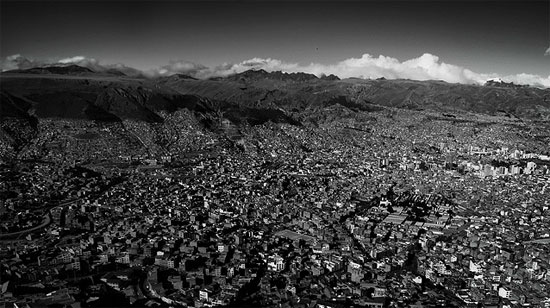
›May 20, 2011 // By Christina DaggettIn Bolivia, environment-related contradictions abound: shrinking glaciers threaten the water supply of the booming capital city, La Paz, while unusually heavy rainfall triggers deadly landslides. The government is seeking to develop a strategic reserve of metals that could make Bolivia the “Saudi Arabia of lithium,” while politicians promote legal rights for “Mother Earth” and an end to capitalism.
This year has been particularly turbulent. In La Paz, landslides destroyed at least 400 homes and left 5,000 homeless. While the rain has been overwhelming at times, it has also been unreliable – an effect of the alternating climate phenomena La Niña and El Niño, experts say, which have grown more frequent in recent years and cause great variability in weather patterns. Bolivia has endured nine major droughts and 25 floods in the past three decades, a challenge for any country but particularly so for one of the poorest, least developed, and fastest growing (with a total fertility rate over three) in Latin America.
Environmental Justice or Radicalism?
Environmentalism has become a major force in national politics in part as a response to the climatic challenges faced by Bolivia. A new law seeks to grant the environment the same legal rights as citizens, including the right to clean air and water and the right to be free of pollution. (Voters in Ecuador approved a similar measure in 2008.) The law is seen as a return of respect to Pachamama, a much revered spiritual entity (akin to Mother Earth) for Bolivia’s indigenous population, who account for around 62 percent of the total population.
Though groundbreaking in its scope, the new law may prove difficult to enforce, given its lack of precedent and the lucrative business interests at stake (oil, gas, and mineral extraction accounted for 70 percent of Bolivia’s exports in 2010).
On the global stage, President Morales has issued perhaps the most aggressive calls yet for industrial countries to do more about climate change and compensate those countries that are already experiencing the effects. Bolivia refused to sign both the Copenhagen and Cancun climate agreements on grounds that the agreements were too weak. In Cancun, Morales gave a blistering speech:We have two paths: Either capitalism dies or Mother Earth dies. Either capitalism lives or Mother Earth lives. Of course, brothers and sisters, we are here for life, for humanity and for the rights of Mother Earth. Long live the rights of Mother Earth! Death to capitalism!
Bolivia’s stance has alienated potential allies: In 2010, the United States denied Bolivia climate aid funds worth $3 million because of its failure to sign the Copenhagen Accord.
Going… Going… Gone
Bolivia’s Chacaltaya glacier – estimated to be 18,000 years old – is today only a small patch of ice, the victim of rising temperatures from climate change, scientists say. Glaciologists suggest that temperatures have been steadily rising in Bolivia for the past 60 years and will continue to rise perhaps a further 3.5-4˚C over the next century – a change that would turn much of the country into desert.
Other Andean glaciers face a similar fate, according to the World Bank, which estimates that the loss of these glaciers threatens the water supply of some 30 million people and La Paz in particular, which, some experts say, could become one of the world’s first capitals to run out of water. The populations of La Paz and neighboring El Alto have been steadily growing – from less than 900,000 in 1950 to more than 2 million in 2011 – as more and more Bolivians are moving from the countryside to the city, putting pressure on an already dwindling water supply.
If the water scarcity situation continues to worsen, residents of the La Paz metropolitan area may migrate to other areas of the country, most likely eastward toward Bolivia’s largest and most prosperous city, Santa Cruz. Such migration, however, has the potential to inflame existing tensions between the western (indigenous) and eastern (mestizo) portions of the country.
Rising Prices, Rising Tension
The temperature is not the only thing on the rise in Bolivia; the price of food, too, is increasing. According to the World Food Program, since 2010, the price of pinto beans has risen 179 percent; flour, 44 percent; and rice, 33 percent. Shortages of sugar and other basic foodstuffs have been reported as well, leading to protests.
In early February, the BBC reported President Evo Morales was forced to abandon his plans to give a public speech after a group of protestors started throwing dynamite. A week later, nation-wide demonstrations paralyzed several cities, according to AFP, closing schools and disrupting services.
The Saudi Arabia of Lithium?
One way out for Bolivia’s economic woes might be its still nascent mineral extraction sector. Bolivia possesses an estimated 50 percent of the world’s lithium deposits (nine million tons, according to the U.S. Geological Survey), most of which is locked beneath the world’s largest salt flat, Salar de Uyuni. The size of these reserves has prompted some to dub Bolivia a potential “Saudi Arabia of lithium” – a title, it should be noted, that has also been bestowed upon Chile and Afghanistan.
Demand for lithium, which is used most notably in cell phones and electric car batteries, is expected to dramatically increase in the next 10 years as countries seek to lower their dependence on fossil fuels. Yet, some analysts have wondered if Bolivia’s lithium is needed, given the quality and current level of production of lithium from neighboring Chile and Argentina.Others have questioned whether Bolivia has the necessary infrastructure to industrialize the extraction process or the ability to get its product to market, though Bolivia recently signed an agreement with neighboring Peru for port access. In an extensive report for The New Yorker, Lawrence Wright writes that “before Bolivia can hope to exploit a twenty-first century fuel, it must first develop the rudiments of a twentieth-century economy.” To this end, the Bolivian government last year announced a partnership with Iran to develop its lithium reserves – a surprising move, given Morales’ historical disdain for foreign investment.
Nexus of Climate, Security, Culture, and Development
The Uyuni salt flats are both a potent economic opportunity and one of the country’s most unspoiled natural wonders. How will Bolivia – a country of natural bounty and unique indigenous tradition – balance the need for development with its stated commitment to environmental principles?
Large-scale extraction may be worth the environmental cost, a La Paz economist told The Daily Mail: “We are one of the poorest countries on Earth with appalling life-expectancy rates. This is no time to be hard-headed. Without development our people will suffer. Getting bogged down in principles and politics doesn’t put food in people’s mouths.”
“The process that we are faced with internally is a difficult one. It’s no cup of tea. There are sectors and players at odds in this more environmentalist vision,” said Carlos Fuentes, a Bolivian government official, to The Latin American News Dispatch.
Sources: American University, BBC News, Bloomberg, Change.org, Christian Science Monitor, The Daily Mail, Democracy Now, Green Change, The Guardian, Instituto Nacional de Estadística de Bolivia, IPS News, Latin America News Dispatch, MercoPress, The New York Times, The New Yorker, Population Reference Bureau, PreventionWeb, Reliefweb, Reuters, SAGE, Tierramerica, USAID, U.S. Geological Survey, UNICEF, Upsidedownworld, Wired UK, The World Bank, Yahoo, Yes! Magazine.
Photo credit: “la paz,” courtesy of flickr user timsnell and “Isla Incahuasi – Salar de Uyuni, Bolivia,” courtesy of flickr user kk+. -
Ten Billion: UN Updates Population Projections, Assumptions on Peak Growth Shattered
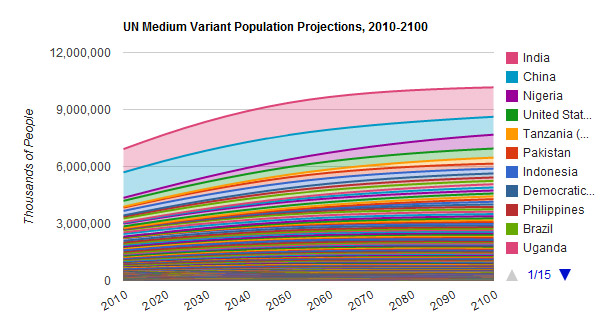
›May 12, 2011 // By Schuyler NullThe numbers are up: The latest projections from the UN Population Division estimate that world population will reach 9.3 billion by 2050 – a slight bump up from the previous estimate of 9.1 billion. The most interesting change however is that the UN has extended its projection timeline to 2100, and the picture at the end of the century is of a very different world. As opposed to previous estimates, the world’s population is not expected to stabilize in the 2050s, instead rising past 10.1 billion by the end of the century, using the UN’s medium variant model.
-
Family Planning as a Strategic Focus of U.S. Foreign Policy
›May 11, 2011 // By Wilson Center Staff“Family Planning as a Strategic Focus of U.S. Foreign Policy,” by Elizabeth Leahy Madsen, was an input paper for the Council on Foreign Relations report, The Role of U.S. Family Planning Assistance in U.S. Foreign Policy. Excerpted from the introduction:
Comprehensive policies that incorporate demography, family planning, and reproductive health can promote higher levels of stability and development, thereby improving the health and livelihood of people around the world while also benefiting overarching U.S. interests. U.S. foreign aid will be more effective if increased investments are made in high population-growth countries for reproductive health and family planning programs. These programs are cost-effective because they help reduce the stress that rapid population growth places on a country’s economic, environmental, and social resources.
Family Planning and Reproductive Health Programs
Family planning and reproductive health programs have successfully reduced the world’s population growth rate, propelled economic development, and improved women’s lives across the world. When people, and especially women, are given the opportunity and technology to limit their family size, they often choose to do so.
Population trends are motivated by three demographic forces: fertility, mortality, and migration. Although they can have dramatic effects on national and local populations, mortality and migration in particular have relatively little influence globally. Across the world, mortality rates have declined to a point where most children born today live to reach their own reproductive years, though much work remains to reduce the effect of communicable diseases and improve nutrition among the young. Meanwhile, three percent of the world’s population currently lives outside of their birth-countries. Therefore, while migration is increasing and an important demographic force, it does not occur at a scale large enough to significantly affect global-level demography.
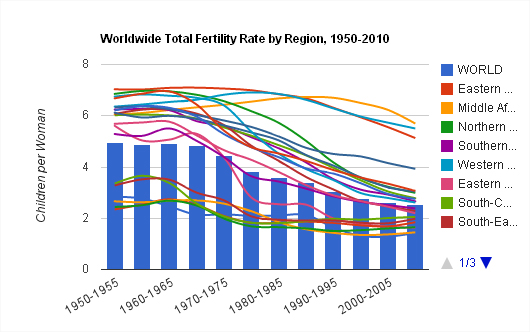
Fertility rates currently are – and in the short-term will remain – the most important driver of global demographic trends. The total fertility rate, or average number of children born to each woman, has been estimated at 2.7 for the period between 2000 and 2005, a decline from 3.6 children per woman in the early 1980s. Given this decline, population projections generally assume future declines in fertility rates. For example, the widely cited “medium-fertility variant,” which is the United Nations’ projection of a world population growing from 6.9 billion in 2010 to 9.1 billion by 2050, relies upon an assumption that the global fertility rate will decline by 24 percent to two children per woman. However, if fertility rates remain constant at current levels, the world’s population would reach 11 billion by 2050. Fertility rates, whether they decline or remain at current levels, are not distributed evenly among countries and regions.
Continue reading or download the full report, “Family Planning as a Strategic Focus of U.S. Foreign Policy,” from the Council on Foreign Relations. -
Population and Environment Connections: The Role of Family Planning in U.S. Foreign Policy
›May 11, 2011 // By Geoffrey D. Dabelko“Population and Environment Connections,” was an input paper for the Council on Foreign Relations report, Family Planning and U.S. Foreign Policy: Ensuring U.S. Leadership for Healthy Families and Communities and Prosperous, Stable Societies.
Current global population growth rates are not environmentally sustainable and the increasing demands of a growing global population are increasingly straining supplies of food, energy, and water. The expected consequences of climate change will stress resources further. Population growth dynamics compound challenges presented by increased resource consumption from a rising global middle class, making the world’s population, and the quality and quantity of natural resources, top priorities for governments and the public alike.
Governments and multilateral organizations must recognize the relationship between resource demand, resource supply, and resource degradation across disparate economic and environmental sectors. Formulating appropriate and effective responses to growth-induced resource complications requires both a nuanced understanding of the problem and the use of innovative approaches to decrease finite resource consumption.
Family planning and integrated population, health, and environment (PHE) approaches offer opportunities to address such concerns. These efforts recognize the importance of population-environment linkages at the macro-level. They also operate at the household, community, and state levels, empowering individuals and decreasing community vulnerability by building resilience in a wider sustainable development context. PHE approaches embrace the complex interactions of population, consumption, and resource use patterns. To paraphrase Brian O’Neill, a leading scholar on population-climate connections, PHE approaches offer a way forward that is neither a silver bullet nor a red herring. Addressing population-environment links is an essential step to tackling global sustainability crises.
Download “Population and Environment Connections” from the Council on Foreign Relations. -
Isobel Coleman, Council on Foreign Relations
Report: Family Planning and U.S. Foreign Policy
›May 10, 2011 // By Wilson Center StaffThe original version of this brief, by Isobel Coleman of the Council on Foreign Relations, is based on the report, Family Planning and U.S. Foreign Policy: Ensuring U.S. Leadership for Healthy Families and Communities and Prosperous, Stable Societies, by Isobel Coleman and Gayle Lemmon.Click here for the interactive version (non-Internet Explorer users only).
U.S. support for international family planning has long been a controversial issue in domestic politics. Conservatives tend to view family planning as code for abortion, even though U.S. law, dating to the 1973 Helms Amendment, prohibits U.S. foreign assistance funds from being used to pay for abortion. Indeed, increased access to international family planning is one of the most effective ways to reduce abortion in developing countries. Investments in international family planning can also significantly improve maternal, infant, and child health. Support for international voluntary family planning advances a wide range of vital U.S. foreign policy interests – including the desire to promote healthier, more prosperous, and secure societies – in a cost-effective manner.
Saving Lives of Mothers and Children
More than half of all women of reproductive age in the developing world, some 600 million women, use a form of modern contraception today, up from only 10 percent of women in 1960. This has contributed to a global decline in the average number of children born to each woman from more than six to just over three. Despite these gains, an estimated 215 million women globally – particularly in sub-Saharan Africa and southern Asia – are sexually active but are not using any contraception, even though they want to avoid pregnancy or delay the birth of their next child. With the world’s population poised to cross the seven billion mark later in 2011, and expected to grow by nearly 80 million people annually for several more decades, global unmet need for family planning is likely to increase.
Studies have shown that contraception could reduce maternal deaths by a third, from approximately 360,000 to 240,000; reduce abortions in developing countries by 70 percent, from 35 million to 11 million; and reduce infant mortality by 16 percent, from 4 million to around 3.4 million.
For a woman in the developing world, the lifetime risk of dying from pregnancy is still one of the greatest threats she will face. In developed countries, 1 out of 4,300 women will lose her life as a consequence of pregnancy, compared to sub-Saharan Africa, where that figure soars to 1 in 31, and Afghanistan, where the lifetime risk of dying from pregnancy is 1 out of 7.
Unsafe abortions are one factor contributing to high maternal death rates. As of 2008, 47,000 abortion-related maternal deaths occur annually, accounting for 13 percent of all maternal deaths. Filling the unmet need for modern family planning would lead to a reduction in mistimed pregnancies and a significant decline in abortions and abortion-related health complications. In 2000 alone, if women who wished to postpone or avoid childbearing had access to contraception, approximately 90 percent of global abortion-related and 20 percent of obstetric-related maternal deaths could have been averted.
Maternal mortality has a devastating and irreversible effect on children and families. Indeed, countries with the highest maternal mortality rates also experience the highest rates of neonatal and childhood mortality. When a mother dies, her surviving newborn’s risk of death increases to 70 percent.
Family planning presents an opportunity to curb maternal and under-five deaths not simply by giving women of all ages the ability to determine their family size, but by enabling women to delay pregnancy until at least age 18 and to space and plan their births. In this way, modern contraceptive methods help women avoid high-risk pregnancies. Studies suggest that short pregnancy intervals (when the pregnancy occurs less than twenty-four months after a live birth) are associated with an increased risk of maternal and under-five mortality. In fact, if all mothers were to wait at least 36 months to conceive again, it is estimated that 1.8 million deaths of children under five could be prevented annually.
Enhancing International Security
While much of the developed world is experiencing population stability or even decline, many countries in the developing world continue to see rapid population growth. Population imbalances have emerged as a serious issue affecting economic opportunity, global security, and environmental stability. Ongoing civil conflicts, radicalism, weak governance, and corruption are endemic problems for many fragile states. While high fertility rates are not the cause of their problems, they do complicate the challenges these countries face in trying to reduce poverty, achieve per capita income growth, provide education and productive opportunities for youth, and address increasing shortages of natural resources.With the world’s population poised to cross the 7 billion mark later in 2011, and expected to grow by nearly 80 million people annually for several more decades, global unmet need for family planning is likely to increase.
Yemen, for example, has the highest rate of unmet need for family planning of any country. Its population has doubled in less than 20 years, and it has the world’s second-youngest population. High fertility – around six children per woman – taxes Yemen’s infrastructure, education and health systems, and environment. In addition, its labor force is growing at a pace much faster than the growth of available jobs, resulting in high youth unemployment. Increasing access to family planning would help improve Yemen’s long-term prospects for achieving per capita growth and stability. Conversely, continued high fertility rates will only deepen Yemen’s current crises.
Many countries experiencing fast population growth – like Yemen – do not have the capacity to harness the potential of their young populations. In these cases, high fertility rates can lead to a vicious cycle of poverty at the community, regional, and national levels. Rapidly growing populations are also more prone to outbreaks of civil conflict and undemocratic governance. Eighty percent of all outbreaks of civil conflict between 1970 and 2007 occurred in countries with very young populations. Demographers have shown that the statistical likelihood of civil conflict consistently decreases as countries’ birth rates decline.
Countries with the highest population growth rates face real resource constraints, particularly arable land and clean water. As of 2010, 40 percent of populations in more than 35 countries have insufficient access to food, with the largest concentration in central and eastern sub-Saharan Africa. Given that many of these food-insecure countries will continue to experience significant population growth in decades ahead, malnutrition will remain a challenge.
Continue reading at the Council on Foreign Relations or download the full report, Family Planning and U.S. Foreign Policy: Ensuring U.S. Leadership for Healthy Families and Communities and Prosperous, Stable Societies.
Isobel Coleman is a senior fellow for U.S. foreign policy; director of the Civil Society, Markets, and Democracy Initiative; and director of the Women and Foreign Policy Program at the Council on Foreign Relations.
Sources: Council on Foreign Relations, Population Action International, Population Reference Bureau, UNFPA, World Health Organization.
Chart Credit: Arranged by Schuyler Null, data from UN Population Division, World Population Prospects, 2010 Revision.