-
COVID-19 Adds to Challenges of Curbing Child Marriage
›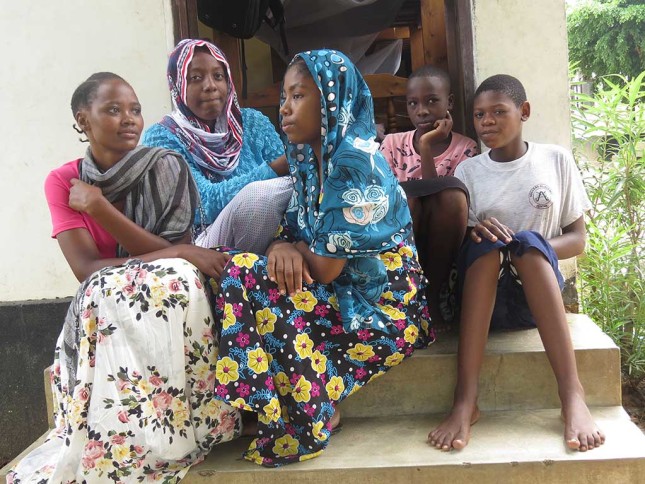
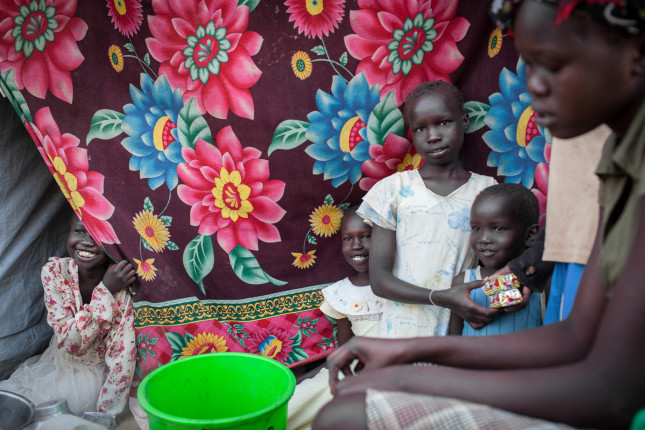
When Mwanahamisi Abdallah’s mother announced plans to marry her off to a stranger, the 14-year-old Tanzanian girl burst into tears. She had no desire to marry—especially after learning the man already had three wives. Remembering advice from a teacher, she phoned authorities to intervene. They blocked the wedding and eventually delivered Mwanahamisi from her village in southeastern Lindi region to a girls’ shelter in Dar es Salaam.
-
The First Political Order: How Sex Shapes Governance and National Security Worldwide (Book Launch)
›
“What you do to your women you do to your nation state. And so, if you decide to curse your women, we argue that you will curse your nation state as well,” said Valerie Hudson, University Distinguished Professor and Holder of the George H.W. Bush Chair at the Bush School of Government and Public Service at Texas A&M University, at the launch of The First Political Order. Co-authored by Hudson, Donna Lee Bowen, Professor Emerita at Brigham Young University, and P. Lynne Nielson, Professor of statistics at Brigham Young University, The First Political Order is the culmination of 2 decades of research on the linkages between the status of women and the status of nation-state security.
-
A Tale of Two Transitions: Education, Urbanization, and the U.S. Presidential Election
›Rather than delve into issue opinion polling, or assess presidential campaign strategies, political demographers assume that political change is the predictable product of a set of mutually reinforcing social, economic, and demographic transitions, which can be tracked using data. But is this true in a country like the United States that has been in the advanced stages of these development transitions for decades? If these transitions are as important as demographers believe, could their variation among the 50 states explain the outcome of the recent U.S. presidential election? If so, what could they tell us about America’s electoral future?
-
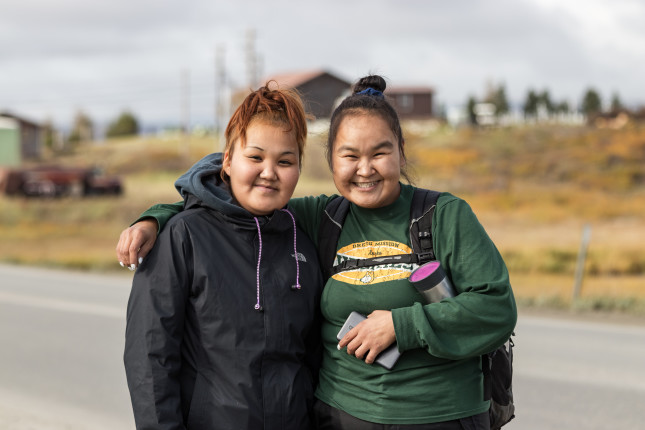
Interdisciplinary Solutions Will Improve Alaska Native Maternal Health (Part 2 of 2)
›Dot-Mom // Navigating the Poles // November 18, 2020 // By Deekshita Ramanarayanan, Michaela Stith, Marisol Maddox & Bethany JohnsonThe United States is in the midst of a maternal health crisis. Indigenous and Alaska Native peoples are 2.3 times more likely to die from pregnancy-related complications than their white counterparts. In Alaska, unequal socio-economic status, lack of access to hospitals and quality health services, systemic racism, and a history of colonization drive these disparities in maternal health outcomes. “Weathering”—the deterioration of communal health outcomes caused by persistent socio-economic disadvantages—contributes to many poor maternal health outcomes for Alaska Native women. On top of these systemic problems, climate change impacts threaten to widen the existing disparities for Alaskan Native women.
-
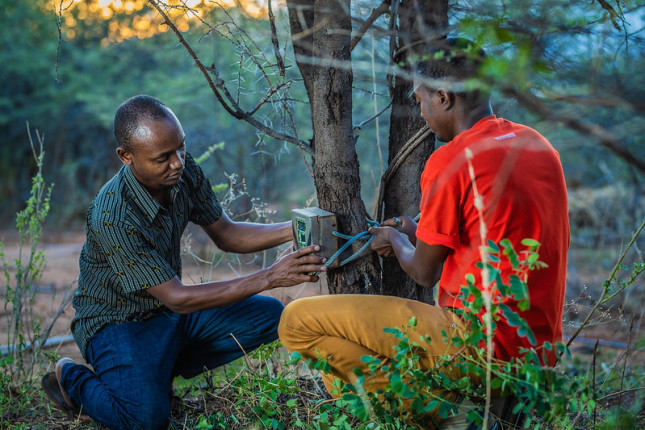
Why Securing Youth Land Rights Matter for Agriculture-Led Growth in Africa
›Africa’s “youth bulge” represents both an enormous challenge and a tantalizing opportunity for the continent. With over 60 percent of Africans under the age of 35, governments are under increasing pressure to grasp the “demographic dividend” youth represent to boost agricultural productivity, enhance food security, and expand economic opportunities for young men and women. Each year, about 10-12 million young Africans aged 15-24 enter the labor market, but only 3.1 million formal wage jobs are generated, pushing millions of youth into low paying and precarious informal employment.
-
Women Transforming Peace: Evaluating Progress 20 Years After Resolution 1325
›“Despite national action plans and legislation in 84 countries, women remain undervalued in peacebuilding, and we know today [women are] seriously underrepresented in peace processes,” said Kathleen Kuehnast, Director of Gender Policy and Strategy at the United States Institute of Peace (USIP), at a recent event with USIP and the U.S. Civil Society Working Group on Women, Peace and Security (U.S. CSWG).
-
Why Secondary Cities Deserve More Attention
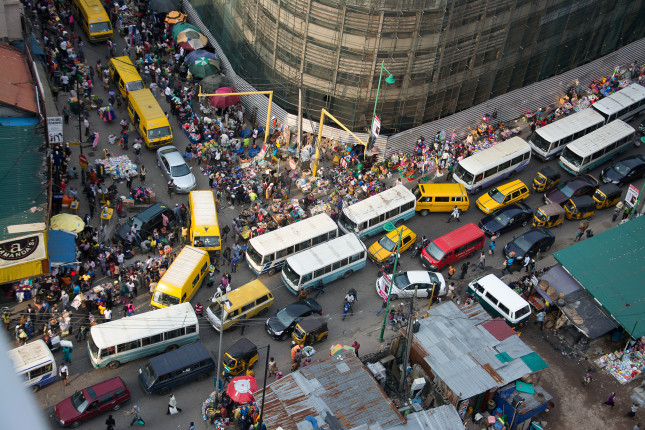
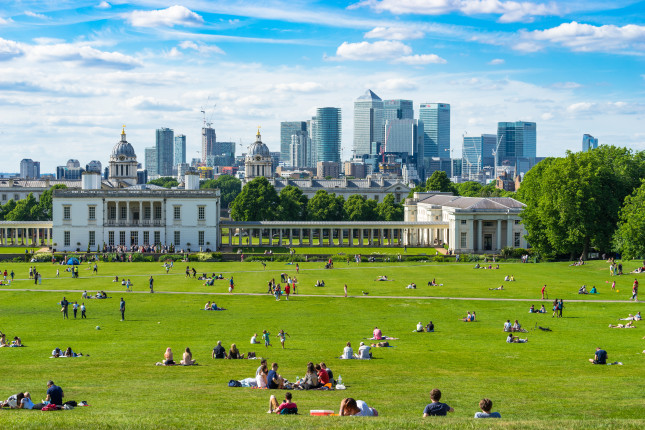
›Mention London, Rome, or New York, and people immediately conjure up Big Ben, the Colosseum, the Statue of Liberty. Beijing, Cairo, Mumbai? Check. They’ve heard of them. Megacities, the ones with lots of history, lots of people, and an oversized impact on the economy and culture, tend to be well-known.
Fewer people may know much about Addis Ababa, Dhaka, Lagos, or São Paulo — yet many would recognize the names. But who knows or has been to Darkhan, Mongolia or Santa Fe, Argentina or Boké-Kamsar in Guinea?
-
Climate Migration and Cities: Preparing for the Next Mass Movement of People
›Amid the COVID-19 pandemic, communities across the globe are experiencing unprecedented climate disasters.
According to modeling by ProPublica, the Pulitzer Center, and The New York Times Magazine, in the event that governments take “modest action to reduce climate emissions, about 680,000 climate migrants might move from Central America and Mexico to the United States by 2050.” That number leaps to above a million people in a scenario where no action is taken. The impacts of climate change on people’s decision to move are not constrained to the developing world, or even across borders. A recent study found that one in 12 Americans currently residing in the southern U.S. will move to California and the Northwest over the next 45 years because of climate influences.
Showing posts from category population.