Showing posts from category *Main.
-
Bringing PHE to a Muslim Community in Tanzania
Abdalah Overcomes the Odds
›This PHE Champion profile was produced by the BALANCED Project.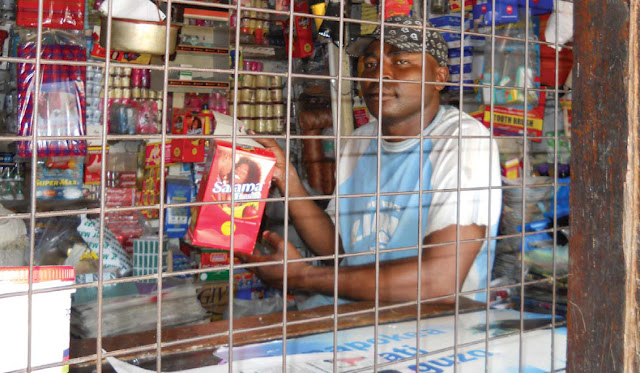
“Now, people can plan their families and know how to use a condom,” says Abdalah Masingano as he proudly tells how his community has come to accept integrated population, health, and environment (PHE) activities.
The 35 year-old Abdalah is a PHE provider. He lives near the Saadani National Park (SANAPA) — one of Tanzania’s newest, and the only terrestrial park with a contiguous marine area in southeastern Tanzania. Saadani is home to the rare Roosevelt Sable antelope and the nesting grounds for several endangered species of marine turtles. One of the largest threats to biodiversity in this area is the clearing of mangroves and coastal forests for firewood and charcoal-making. About 95 percent of households in the area depend on firewood for cooking and most use a three-stone fireplace that utilizes only about 10 percent of its energy potential. These are just some of many pressures that people living around the park place on the biodiversity-rich forest and marine resources of the area.
Abdalah and his 31 year-old wife have two children: a 14-year-old boy and a six-year-old girl. His wife has been on the pill for four years. For two years now, Abdalah has been selling condoms in his village store. He made this decision for simple reasons. He saw that people needed condoms for both family planning and health, and he had come to understand the linkages between the behaviors of people living in the area and the health of the environment.
Abdalah gained this understanding when he was recruited to become a PHE provider by the Tanzania Coastal Management Partnership as part of its work through the USAID-supported BALANCED Project, which is promoting PHE implementation in biodiversity-rich countries. In a two-day training, Abdalah learned about integrated PHE and the links between population (family planning), health, and the environment. He has been educating villagers ever since.
“In the past, it was difficult for people to plan their families because they were embarrassed,” recalls Abdalah. As a PHE provider, Abdalah delivers integrated PHE messages to his fellow villagers. After attending the BALANCED training, Abdalah learned that promoting family planning makes sense for reasons beyond health. Forest and marine resources found both around and inside the Saadani are heavily exploited by local villages – and from a biodiversity conservation perspective, reducing population pressures is just one critical step in protecting this biodiversity.
When people visit his shop, Abdalah takes the opportunity to explain the population and environment connection. Because deforestation is a particular problem in the area where Abdalah lives and works, he promotes the use of fuel-efficient stoves.
Showcasing his own stove, his explains that by using a simple clay stove – which is made locally – a household can save almost 1.5 tons of fuelwood annually and reduce by 50 percent the time women spend collecting fuelwood. At the same time, he reminds villagers that when they plan their families they help keep mothers and children healthy. Healthier families also tend to put fewer pressures on – and thus keep healthier – the very natural resources they depend on for food and income.
Initially, Abdalah’s Muslim neighbors were unhappy with him promoting family planning and condom use. They believed what he was doing encouraged sex and prostitution. “They thought I was lost,” he explains smiling. Fortunately, his wife has been very supportive of him despite the discouraging reactions of his fellow villagers early on in his efforts.
Today, Abdalah’s perseverance has paid off. He now sells more than 200 condoms monthly and takes the time to demonstrate to his customers how to use them properly. When there is the opportunity, he also refers his customers to the local health dispensaries for additional family planning services and commodities. Abdalah believes people respect him now. “I feel good because I am able to help,” he concludes. That “help” impacts both the health and well-being of his fellow villagers and the health and well-being of the environment. Abdalah and his wife plan to have their third child two years from now.
This PHE Champion profile was produced by the BALANCED Project. A PDF version can be downloaded from the PHE Toolkit. PHE Champion profiles highlight people working on the ground to improve health and conservation in areas where biodiversity is critically endangered.
Sources: Darfur Stoves Project, IPS News, TSN Daily News, UN.
Photo Credit: Abdalah showing a box of condoms for sale in his small shop by Juma Dyegula, courtesy of the BALANCED Project. -
Peter Gleick on Peak Water
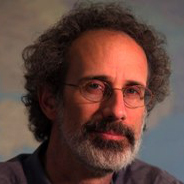
› “The purpose of the whole debate about peak water is to help raise awareness about the nature of the world’s water problems and to help drive toward solutions,” says the Pacific Institute’s Peter Gleick. But Gleick asserts that in the same way certain countries have been contending with “peak oil” concerns in recent years, they may soon also have to deal with “peak water” as well.
Unlike oil, water is largely a renewable resource, but countries in Asia, the Middle East, and elsewhere are pumping groundwater faster than aquifers can replenish naturally. Gleick explains “there will be a peak of production in many of those places and eventually the food that we grow with that water or the widgets that we make from the factories that use that water will be nonsustainable and production will have to drop.”
The world’s surface and groundwater resources can be used sustainably even in the face of continued global population growth, says Gleick, but only “if we are careful about the ecological consequences and the efficiency with which we use it.” However, to date, he says, “those issues have not adequately been brought into the discussion about water policy.”
The “Pop Audio” series is also available as podcasts on iTunes. -
Research Findings and Programmatic Implications
Gender-Based Violence in the DRC
›In the Democratic Republic of the Congo (DRC), “armed conflict has resulted in mass displacement and widespread sexual violence; the problem is that it hasn’t always been quantified,” said Dr. Lynn Lawry, senior health stability and humanitarian assistance specialist at the U.S. Department of Defense. Presenting findings from the first cross-sectional, randomized cluster study on gender-based violence in the DRC, Lawry was joined at the Wilson Center by Heidi Lehmann, director of the Gender-based Violence Unit at the International Rescue Committee, and Dr. Nancy Glass, associate professor at the Johns Hopkins School of Nursing and associate director at the Johns Hopkins Center for Global Health. “We found that sexual violence in these areas is conflict-related, prevalent, systematic, and widespread,” said Lawry. [Video Below]
Study Finds “Female Perpetrators”
The first of its kind in the region, the population-based, quantitative study covers three districts in the DRC and a total of 5.2 million adults. It comprehensively assesses gender-based violence, including its prevalence, circumstances, perpetrators, and physical and mental health impacts.
Overall, the study found that 2.1 million women and 1.3 million men in the region had suffered sexual violence. Nearly three-quarters of all sexual violence reported was a direct result of conflict. In the study region, 20 percent of the population fought in conflicts, and 48 percent of these combatants were female.
Further, 39 percent of female survivors and 15 percent of male survivors reported female perpetrators. “These findings challenge the paradigm of male perpetrator and female victim,” said Lawry. “Policymakers and donors should adjust societal paradigms of sexual and gender-based violence and also direct attention to female perpetrators and male survivors.” Survivors of sexual violence in conflict, both male and female, are more at risk of later becoming perpetrators, particularly if unrecognized and untreated. To “break the cycle of violence,” prevention and response programs should address the needs of survivors and combatant perpetrators of both genders.
“Community-related violence is a general crime; conflict-related violence is a war crime,” Lawry said. While many efforts have focused on the Congolese military, she called for the DRC government and the International Criminal Court to also investigate and prosecute members of rebel groups, who were found to be the main perpetrators of sexual violence and other human rights abuses in this study.
Prevention: The Best Response
“Meeting the immediate consequences of violence is not enough,” said Lehmann. To effectively address gender-based violence, programs must provide medical and social services, promote social empowerment, respond to emergencies, and take part in advocacy and coordination efforts.
In the DRC, programs supported by the International Rescue Committee serve approximately 350 to 400 survivors per month, 75 percent of whom report that the perpetrators are members of armed groups.
Scaling up is a major challenge. “Providing essential services alone require enormous investment, and there is no common understanding of comprehensive programming,” said Lehmann. “We recognize that a program alone cannot solve all of these problems, especially in the DRC.”
“Good response is about prevention,” concluded Lehmann. She recommended supporting robust, long-term programming; integrating gender-based violence prevention efforts into other sectors; and investing in partnerships. “We are not going to end the violence unless Congolese women and girls are part of the conversation.”
Pigs for Peace: A Holistic Approach
Health care, economic development, and social programs should be integrated “to provide a holistic and comprehensive approach” to the problem of gender-based violence, said Glass. “Rape destabilizes families and communities,” she said.
Survivors rarely get immediate treatment for their injuries and trauma, or the risk of HIV, STIs, and infertility. “Many rural primary health centers and hospitals have been looted of medicines and materials by rebels and soldiers,” said Glass. Conflict in the DRC has also caused health care professionals to leave unstable rural areas, and poor roads and limited transportation make it unsafe and expensive to seek care.
To rebuild families and communities, “women and men need to regain their economic resources to provide for the future of their family and community,” said Glass. Pigs for Peace, for example, has supplied more than 100 women — many of them rape survivors — and their families with pigs to set them on the path to recovery through psychological, social, and economic empowerment. This program aims not only to supplement household income, but to reduce the stigma of rape as survivors become productive parts of their families and communities.
Photo Credit: “Congo kivu,” courtesy of flickr user andré thiel. -
Water as a Strategic Resource in the Middle East
‘Clear Gold’ Report From CSIS
›“The real wild-card for political and social unrest in the Middle East over the next 20 years is not war, terrorism, or revolution – it is water,” begins the CSIS Middle East Program’s latest report, Clear Gold: Water as a Strategic Resource in the Middle East, by Jon B. Alterman and Michael Dziuban.
The authors contend that with growing populations, groundwater depletion, not the more traditional questions about transboundary river governance, poses a “more immediate and strategically consequential challenge,” particularly because many Middle Eastern governments have deflated the true cost of water to help spur growth and garner popularity.
In the accompanying video feature above, much-troubled Yemen is outlined as one of the most at-risk countries for water-induced instability. The narrator notes that “with Yemen’s population growing fast and almost half of agricultural water going towards the narcotic leaf qat instead of food, experts think that Sanaa [the capital] could run out of water in seven years or less and the rest of the country may not be far behind.”
In an interview with Reuters in 2008, Yemeni Water and Environment Minister Abdul-Rahman al-Iryani said the country’s burgeoning water crisis is “almost inevitable because of the geography and climate of Yemen, coupled with uncontrolled population growth and very low capacity for managing resources.”
Yemen is a particularly abject example because water availability is only one contributor in a long list of domestic problems, including a large youth population, gender inequity, immigration from the Horn of Africa, corruption, ethnic tensions, and terrorism.
The narrator concludes that “Yemen is the most worrisome example but clearly not the only one.” Alterman and Dziuban also point to Jordan and Saudi Arabia as states vulnerable to groundwater depletion.
For more on the Middle East’s current and future environmental security issues, be sure to check out The New Security Beat’s “Crossroads” series, with features on Iraq, Israel, Jordan, Lebanon, Syria, and Yemen.
Video Credit: “Clear Gold: Water as a Strategic Resource in the Middle East,” courtesy of CSIS. -
New Insights Into the Population Growth Factor in Development
›“We have not found any country that has developed or gotten out of poverty while maintaining high birth rates,” said Martha Campbell, president of Venture Strategies for Health and Development. “Family planning is not a cost to a Ministry of Finance – it’s an investment,” said Malcolm Potts of the University of California Berkeley.
Campbell and Potts were joined by panelists Eliya Msiyaphazi Zulu, director and founder of the African Institute for Development Policy, and Jotham Musinguzi, director of the African Region at Partners in Population and Development, for a Wilson Center discussion of the implications of rapid population growth on human and economic development. [Video Below]
Africa’s Key Population Growth Challenges
“Africa’s population of one billion can reach between 1.8 and 2.3 billion by 2050, depending on how well the continent actually does in reducing fertility,” Zulu said. In 2010, Africa accounted for 15 percent of the total world population, but current estimates suggest this will grow to 23 percent by 2050.
“Rapid growth, young age structures, and urbanization are Africa’s main population challenges,” said Zulu. “Addressing these concerns is increasingly seen to be the key to the continent’s development prospects and realization of the Millennium Development Goals.” With 40 to 50 percent of populations in Africa under the age of 15, there is “high momentum for further population growth,” he said.
“Africa has a very high demand for fertility control, and the demand will undoubtedly increase,” said Zulu. “The main challenge, therefore, is not that of demand, but how to ensure those who are in need actually have access to contraception.” In many African regions, current rates of contraception use are as low as seven percent. In some areas, as many as 97 percent of women cannot afford the full cost of contraception, he said.
“It’s not just about reducing fertility,” said Zulu. Improving education and increasing labor force opportunities will not only help populations develop economically, but will also allow African countries to take full advantage of the demographic dividend, he said.
“The international development community should build on Africa’s success stories and support efforts to achieve universal access to family planning, expand public education on reproductive matters, improve the status of women, and improve the situation in urban settings,” Zulu concluded.
Family Planning and the MDGs
“Women are dying; children are dying. They shouldn’t be,” said Musinguzi. “By investing US$1 million in family planning, you can prevent 800 maternal deaths, 11,000 infant deaths, 14,000 deaths in children under five, and 360,000 unwanted pregnancies.”
“Women are clearly saying they have a need for family planning,” Musinguzi said. Presenting statistics from sub-Saharan Africa, he noted that 31 countries have a total fertility rate of more than five. Fourteen million unintended pregnancies occur each year, but only 25 percent of women use family planning. In Uganda, for example, the population has more than doubled in less than 20 years; women on average have more than six children each; and only 18 percent of married women use modern contraception.
“For a country trying to achieve the MDGs…the question of addressing total fertility rate is very important,” said Musinguzi. Reducing unmet need for family planning services can help African countries reduce the costs of achieving several of the Millennium Development Goals, including offering universal primary education; reducing child mortality; improving maternal health; combating HIV/AIDS, malaria, and other diseases; and ensuring environmental sustainability.
Policy Implications
“This is an urgent message – waiting 10 years to get family planning back on the international agenda will be enormously costly,” Potts said. “Of all the medical interventions that exist, contraception is the single most powerful. It is the only one that can have an impact on maternal and infant mortality, on the autonomy of women, on economic progress, on social stability and the rate at which we destroy the environment,” he said.
“Education and family planning are the driving mechanisms of development – they’re synergistic,” said Potts. “One of our needs is to get economists, family planning, and development experts on the same page.”
Sources: Guttmacher Institute, Population Action International, Population Reference Bureau.
Photo Credit: Untitled, courtesy of flickr user stttijn. -
Minister Izabella Teixeira at the Wilson Center
A Review of Brazil’s Environmental Policies and Challenges Ahead
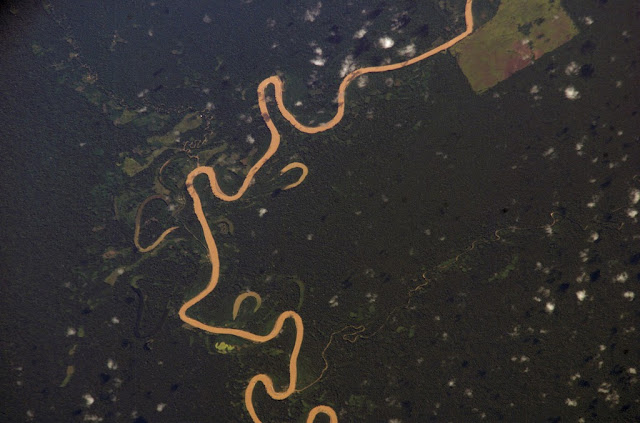
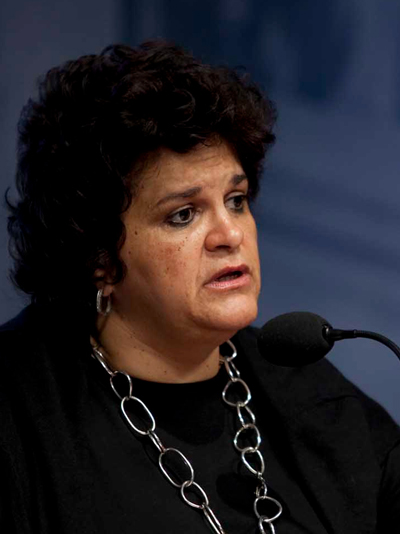
›Stressing the need for concrete, tangible institutional policies, Izabella Teixeira, Brazil’s Minister of the Environment, discussed the challenges and goals of her ministry at the Wilson Center on October 20. Sustainable development, not just conservation, must be the focus, and that requires bringing lots of different players to the table, taking into account not only environmental but also social and economic agendas. To do this, she argued, one must take the rather ephemeral and hypothetical notions of environmental stewardship and put them into the realm of a practicable, institutionalized framework, built on a social pact that engages all sectors of society.The foundation of sustainable development and environmental policy must be biodiversity, according to Teixeira. Central concerns, such as food and energy security and combating climate change, all rely on a diverse array of natural resources. These need to be conserved, but they must also be developed in a responsible, sustainable way. A legal international framework toward this end, covering access to biodiversity and genetic resources, has yet to be implemented. Developing and developed countries need to find a middle ground on allocating the benefits that accrue from the use of genetic resources found in areas such as the Amazon, and this agreement must then be linked into existing political institutions.
Teixeira noted the strides Brazil has made toward protecting its environment – including having set aside the equivalent of 70 percent of all protected areas in the world in 2009 and the establishment of the Amazon Fund. Nevertheless, Brazil must continue to protect and maintain these nature preserves, not just establish them. Creating a program that pragmatically implements international goals in a national context is an ongoing process, and countries like Brazil now need to focus on the “how” of implementing these goals, rather than just the “what.”
Teixeira also highlighted the complexity of formulating environmental policy that integrates all the various points of view that must be taken into consideration. At recent meetings to discuss transitioning to a low-carbon economy, 17 different cabinet ministers had to be present to coordinate government positions and policies. The complexity is due in part to the need to create alternatives, not just to prevent certain activities. For example, one must not only use legal enforcement to stop illicit deforestation, but also create paths to legal, sustainable logging. Once again, attempting to balance environmental, social, and economic concerns is difficult, to say the least, but crucial for long-term effectiveness.
Also a unique challenge for Brazil is the natural diversity that exists within such a large country. While much of the attention paid to the environment goes (rightly so) to the Amazon, there are many other biomes and local environments that must be taken into consideration, Teixeira observed.
The cerrado, Brazil’s enormous savanna, requires a different strategy than the Amazon, which is different than the coastal Atlantic forest. Furthermore, urban areas need their own environmental policies that can take into account issues of human development and population density.
To illustrate the need for an inclusive, well-thought-out policy, Teixeira discussed–rather frankly–the controversy surrounding the recent proposed amendments to the Forest Code. She argued that the proposal makes blanket changes that do not take into consideration differences in biomes, differences between large agribusinesses and family farms, and between historic, settled communities and recent developments. The implications of this proposal, according to the minister, could have enormous social costs. Teixeira said she believes that it would be virtually impossible to enforce the amended Forest Code if it was approved by Congress. She used this example to underscore her role in offering legislative alternatives that seek to provide a more nuanced, and ultimately more effective, institutional framework that can use Brazil’s many natural resources to help its population to the greatest extent possible.
J.C. Hodges is an intern with the Brazil Institute at the Wilson Center; Paulo Sotero is the director of the Brazil Institute.
Photo Credit: “Rio Jurua, Brazil (NASA, International Space Station Science, 05/29/07),” courtesy of flickr user NASA’s Marshall Space Flight Center, and David Hawxhurst/Wilson Center. -
The Cholera Quandary
›The original version of this article first appeared in the Stimson Center Spotlight series, November 19, 2010.
Cholera is usually seen as one of the most devastating infections of the 19th century. Trade routes carried cholera from India to the great cities of Europe and the United States. Disease, fear, and political unrest spread in great waves that cost millions of lives. After much destruction, it was only with science and resources that certain populations were able to curb the epidemic.One of the most celebrated lessons in the history of public health involves a cholera outbreak in London in 1854 and efforts by John Snow – celebrated as the father of epidemiology – to control it. At the time, it was not clear that cholera was a waterborne bacterial infection that caused severe diarrhea and vomiting, and sometimes fatal dehydration. Snow proved that the outbreaks decimating communities spread from contaminated water. Water and sanitation services had virtually eliminated cholera epidemics in the developed world by the early 1900s.
Today, cholera has been nearly eradicated in the developed world, but continues to be endemic in poorer countries. Risks seem to be rising as larger populations are crowded into unsanitary conditions. The World Health Organization (WHO) estimates three to five million illnesses and 100,000-200,000 deaths from cholera each year. If caught early, infections are treatable with inexpensive oral rehydration solutions. For much of the world, these options are unavailable or underused – the mere presence of cholera serves as an indicator of a country’s socioeconomic status and health system capabilities.
The cholera epidemics that are currently menacing countries on three different continents – Asia, Africa, and North America – raise tough questions about what is required to protect the world’s vulnerable populations. We know how to predict the crisis of cholera, prevent outbreaks, and contain them when they occur. To control cholera, what is needed is not cutting-edge technologies, but will, transparency, and resources – and where cholera appears, at least one of these three factors has failed.
Currently, cholera outbreaks in Pakistan, Haiti, and Nigeria are piling misery upon misery. Cholera in post-flood Pakistan comes as no surprise. When floodwaters left millions homeless and without access to clean drinking water in a region where cholera remains endemic, health officials could have reasonably assumed infected human waste would seep into water supplies and spread disease. The inability of health networks on the ground to prevent and then detect cholera demonstrates cracks in the country’s health system. What is apparent here is a lack of will and resources. Disease surveillance is especially vital in a post-disaster scenario where steps can be taken, such as treating water with chlorine, to prevent an outbreak.
Haiti had been free of cholera for at least 50 years, but the disease struck and spread rapidly 10 months after the devastating January 2010 earthquake. It reached Haiti’s capital and spread to its neighbor, the Dominican Republic. Since October, more than 114,000 people have become ill and more than 2,500 have died (Editor’s note: updated since original publication).
Haiti lacked resources for basic infrastructure even prior to the earthquake; the cholera crisis is not only costing lives, but also diverting aid from “building back better.” But regardless of the source of the cholera strain, if basic infrastructure and resources to protect Haiti’s vulnerable populations had been in place, cholera’s re-emergence would have been far less devastating.
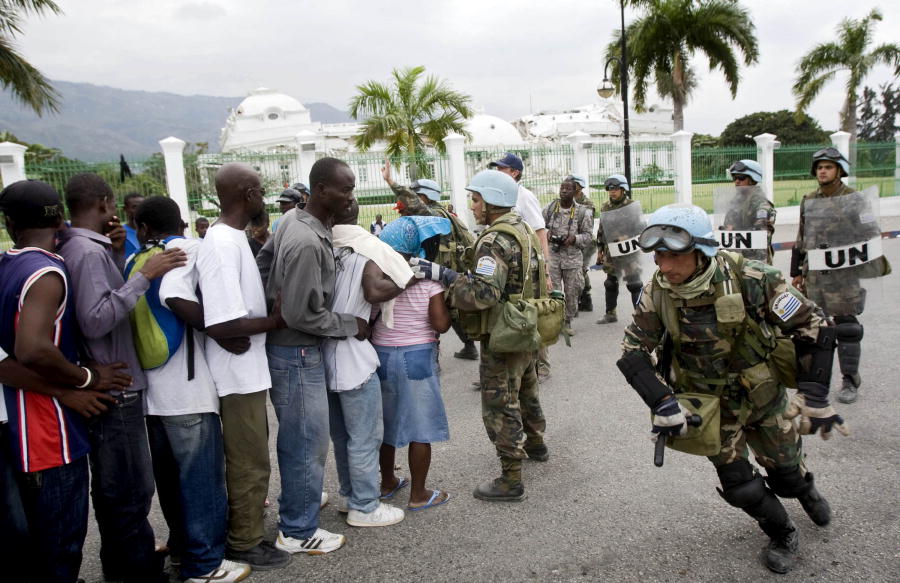
This particular outbreak draws attention to the practical and political challenges of identifying health risks in humanitarian workers and peacekeepers, many of whom come from developing countries themselves. Evidence suggests that peacekeepers from Nepal, housed at a UN base, may have been the source of the outbreak clustered around the Artibonite River. Cholera outbreaks frequently exacerbate frictions between communities and aid workers – suspicions that have led to riots and murder more than once in recent years. At least two people were killed in Haiti in riots with peacekeepers during November.The delayed decision by the UN to investigate whether the outbreak originated with peacekeepers may have conserved resources for the race to stave off more cases, but did little to build trust between communities and foreign workers. Further violence and protests surrounding the recent disputed presidential election in Haiti do little to ease the devastation and in fact, threaten the relief effort. There has been discussion in Congress of cutting direct aid and suspending visas for Haitian officials until the dispute as been resolved. The Organization of American States is now reviewing the results.
In Africa, Nigeria is experiencing its worst cholera outbreak since 1991, and the disease is crossing borders. An onslaught of cases raised the 2010 death toll to more than 1,500 fatalities out of 40,000 cases. This mortality rate is three times higher than the seasonal cholera outbreaks of 2009, and seven times higher than 2008. Despite Nigeria’s oil wealth, most of the population is impoverished. Two-thirds of rural Nigerians lack access to safe drinking water and fewer than 40 percent of people in cholera-affected areas have access to toilet facilities, according to the Nigerian Health Ministry. A combined lack of will, transparency, and resources mean that cholera epidemics occur annually, and in clusters throughout sub-Saharan Africa.
A century and a half after John Snow’s discovery, we know how to control cholera. Globally, the resources exist, but the question of a collective will remains. For those who lack clean water to drink, to wash, or even proper toilets, the gap between knowing and doing is not easily closed. The international community has shown repeatedly that it can confront cholera outbreaks like those in Haiti, Pakistan, and Nigeria in the midst of crisis. The question remains as to how those efforts can eliminate the conditions that fostered outbreaks in the first place. The answer is not as riveting as the causes that often receive funding: basic infrastructure and resources. Roads, wells, clean water, toilets, education, and the willingness to recognize that if the foundation is not sound, nothing will be able to stand. Sometimes the simplest problems are the most difficult to solve.
Sarah Kornblet is a research fellow at the Global Health Security Program at the Stimson Center. Her research focuses on the International Health Regulations, health systems strengthening, global health diplomacy, the intersection of public health and security, and the potential for innovative and dynamic health policy solutions in developing countries.
Sources: Agence France-Presse, BBC, Washington Post, World Health Organization.
Photo Credit: “UN Peacekeepers Provide Security During Port-au-Prince Food Distribution,” courtesy of flickr user United Nations Photo. -
Those Who Would Carry the Water
›December 24, 2010 // By Mark NepoThis article will appear as the introduction in the forthcoming Fetzer Institute and Wilson Center publication, Our Shared Future: Environmental Pathways to Peace, based on an event cosponsored at the Wilson Center in January 2009.
It is fitting to say “welcome,” since this timeless greeting originally meant “come to the well.” Let me try to describe the well we are coming to. We are at once trying to gather the best experience and thinking of current environmental practice, to help advance the issue of water as a resource, and to use environmental work around water as a case study for the lessons and challenges of global community engagement. In convening leading practitioners and thinkers in the field of environmental peace-building and focusing on the ever-present issue of water, we hope to surface the strengths of human resources and how they impact the emerging global community.
In truth, the issues that bring us here have been present in the human condition forever. They are spoken to in every tradition. A few stories will help create a context for our time together.
If we turn to the Hindu tradition, we learn that Saraswati is the goddess of knowledge, music, and the arts. Her name means “the one who flows” and legend has it that she was born of the Saraswati River, which is an invisible river that carries the waters that sustain all life. From the earliest times, in many traditions, the waters that sustain all life refer to both natural resources and human and spiritual resources; actual water and the water we have come to know since the beginning of time as wisdom and love.
In Hindu lore, Saraswati’s ageless counterpart on earth is the serpent-demon, Vritrassura, who is driven to hoard all the Earth’s water. And so the endless struggle begins; at least this is one tradition’s beginning. Thankfully, in the Rig-Veda, the sacred collection of Sanskrit hymns, we are given hope as Saraswati – with help from her brother Ganesh, the provider and remover of obstacles, and Indra, the god who connects all things – kills the demon who would hoard the Earth’s water.
But clearly, throughout the ages, those who would carry the water and those who would hoard the water have appeared again and again and again. This is why we are here. Unspoken or not, unaware or not, we are by care and kinship of the lineage that would carry the water.
If we turn to the Haitian tradition, we find a very telling teaching story called The Chief of the Well. This story speaks of a time of drought when the streams are dry and the wells are parched. There is no place to get water. The animals meet to discuss the situation and decide to ask God for help. God creates a well that will have endless water as long as one of the animals serves as caretaker and welcomes all who would come in need. The lizard Mabouya volunteers. But intoxicated with his newfound power, Mabouya becomes a gatekeeper, not a caretaker, and sends everyone in need away. Eventually, God replaces the lizard with the frog who croaks to all, “Come! This is God’s well! The hole in the ground is yours, but the water belongs to God.” And we are left, in each generation, to discover what is ours and what is God’s, and to understand what turns the caretaker in us to the gatekeeper?
If we can accept our role as caretakers of resources that outlive us, then the history of the acequia might be relevant. An acequia (a-sā’kē-e) is a community-operated waterway used for irrigation. It is the name for a sluiceway or gravity chute that flows down a mountainside, providing water for a village. The Spanish word acequia, which means “ditch or canal,” comes from the Arabic al saqiya, which means “water conduit.” The Islamic occupation of Spain, beginning late in the eighth century, brought this technique of irrigation to Spain.
Acequias were then brought to the Americas by the Spanish, only to find their indigenous counterparts already in use. Particularly in the Andes, northern Mexico, and the modern-day American Southwest, acequias exist as the outgrowth of ancient systems created to carry snow runoff or river water to villages and distant fields. Many South American villages have settled around the mouth of an acequia that begins high and out of sight in the crags of a mountain. There, the source-water collects all winter near the top and, in spring, with the thaw, it streams into the village.
In many of these South American villages, as in Peru for example, there is an annual ritual in which an entire village climbs the acequia in early spring to clear the rocks and tree limbs and snake nests that during the winter have blocked the path of water that the village depends on. This ancient pragmatic ritual of clearing the acequia provides a powerful model for how community can care for its natural resources together.
In fact, keeping the acequia clear and flowing is a useful metaphor for interdependence and cooperation. The life of the acequia and our responsibility to keep its path of flow clear represents a cycle of natural and human erosion and cleansing that is intrinsic to life on earth. Therefore, keeping the acequia clear – both the actual acequia and the acequia of humanity – bears learning how to do well.
With all this in mind, I am drawn to lift up one more story. It comes from Éliane Ubalijoro, a professor at McGill University in Montreal, who as a Rwandan is working with the generation there orphaned by the genocide. After the mass killings, those surviving were confined to refugee camps. In this particular settlement, women had to cross a dark field outside of the camp and risk being raped to get water for their children, which they did repeatedly. This difficult situation points to the complex levels of the issues before us; all of which demand our attention.
First, we might consider access to the water itself. With regard to the conservation and preservation of natural resources, we are asked to solve the perennial question: How do you bring the water to those who need it? At this level, a direct solution might be to move the water supply inside the refugee camp.
Under this, however, we might consider access to the human resources. What is blocking the human acequia? With regard to conflict transformation and peace-building, we are compelled to ask: What are the values implicit in this situation by which the refugee camp guards put the water outside of the camp in the first place in order to create the opportunity to rape the women?
This leads to the work of education, the work of clearing the human acequia. So with regard to the development of social equity, we are now compelled to ask: What are the assumptions and traditions in this community that enable them to believe that exploiting women is not only permissible but entitled? How do we clear the human acequia so that wisdom and compassion can flow?
Finally, we might consider the conservation and preservation of human resources. For at the heart of this insidious atrocity is the resilience and courage and love of these women who went into the dark to get water for their children knowing the violation that awaited them. What kind of deep water is this and how can we insure access to this resource?
This story from Rwanda is one more example that shows how natural resources and human resources are inextricably linked. One central question before us is: How do we tend all levels at once? How do we develop multiple strategies? How do we convene and surface the wisdom of all frames?
Part of our inquiry here is to take our turn in trying to understand how natural resources and human resources are so linked. What blocks their access? What lets them flow together and sustain life? How do we understand the water of humanity and the water of the earth and how both kinds of water are shared or not in the world today?
We could say that knowledge flows like water between countries and communities. If this is so, then each of you is such water. We are here to drink from you and people like you, and to understand the currents that run between us and beneath us; to insure the clear flow of natural and human resources into the world; and to keep the global acequia clear; to embody and to further the art and science of carrying the water in all its forms to those who need it.
Mark Nepo is the author of The Book of Awakening as well as the forthcoming As Far As the Heart Can See.
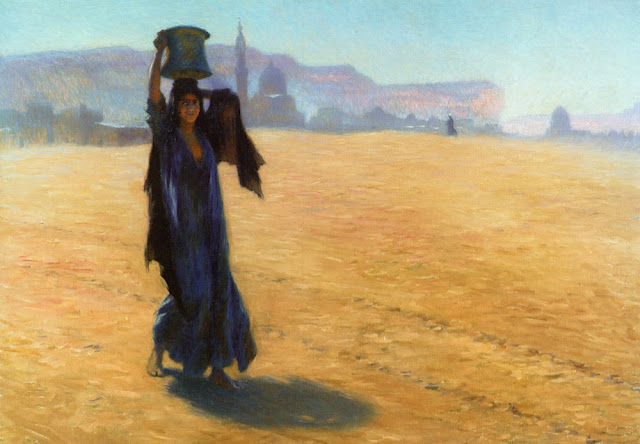
Photo Credit: Adapted from “The Water Carrier,” courtesy of flickr user Portrait Artist – Enzie Shahmiri.