-
COVID-19 Heightens Mental Health Conditions for Vulnerable Communities
›
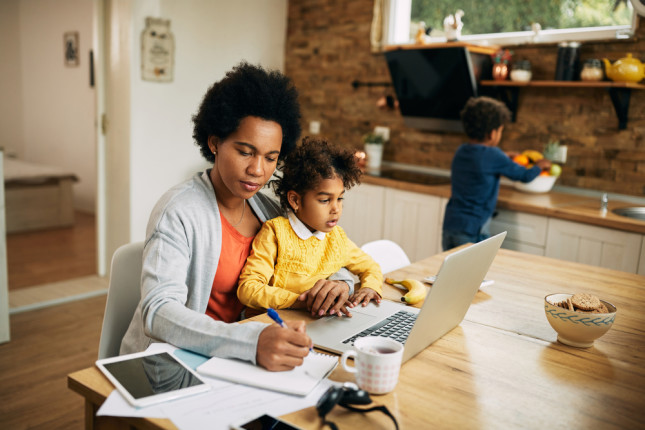
The COVID-19 pandemic has created universal impacts on mental health. Anxiety, depression, and other conditions have worsened as financial instability, isolation, gender-based violence, and other factors generated by this crisis have contributed to poor mental health – especially for youth, LGBTQ+ populations, and pregnant/postpartum women. Yet despite the global attention focused on mental health, overall conditions have only worsened in vulnerable communities.
-
New Global Health & Gender Policy Brief: The Global Care Economy
›
Care work makes all other work possible. It is also the fastest-growing sector of work in the world—projected to add 150 million jobs by 2030. The COVID-19 pandemic has amplified the importance of care work. It has also exposed how women perform most caregiving work, which is unpaid, underpaid, and/or undervalued. Globally, women and girls contribute more than 70 percent of total global caregiving hours (paid and unpaid) and perform more than 75 percent of unpaid care work. The inordinate amount of unpaid care work women and girls perform prevents them from earning a paid income, which contributes to greater gender inequities worldwide.
-
Gender Inequality in Mexico’s Fractured Public Health System
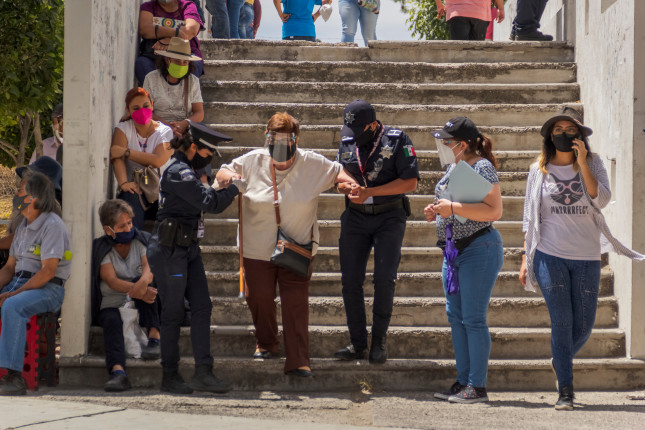
›Dot-Mom // From the Wilson Center // Guest Contributor // April 20, 2022 // By Samantha Kane JiménezIn recent years, Mexican women have experienced a significant downgrade in the quality and accessibility of public healthcare – and not due to the COVID-19 pandemic – said Irene Tello, Executive Director of Mexican impunity watchdog Impunidad Cero, at a recent event hosted by the Wilson Center’s Mexico Institute. The expert panel agreed that the greatest barriers for Mexican women seeking medical attention lie in the current government’s nearsighted health policies and mismanagement of the public health sector.
-
66th Session of the Commission on the Status of Women: Six Pillars to Support Midwives
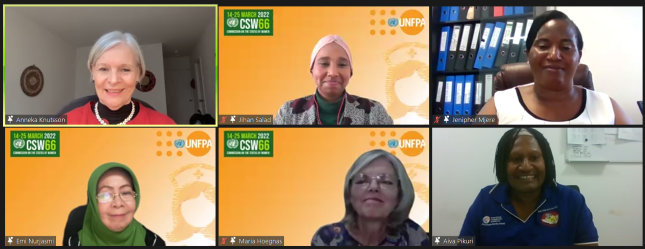
›“When women can decide on the timing and spacing of their births, are treated with respect, and offered quality of care across the life course—they are not only able to survive, they, their families, and their communities are able to thrive and flourish. By directly and indirectly contributing to women’s empowerment, midwives are contributing to strengthen economic and productive and equitable societies,” said Dr. Julitta Onabanjo, Director of the Technical Division at the United Nations Population Fund (UNFPA), New York, at a recent event hosted by UNFPA as part of the 66th Session of the Commission on the Status of Women. Midwives and midwifery experts convened to discuss the important role that midwives play in the improvement of gender equality, women’s economic empowerment, and climate justice.
-
The Climate Solutions That Play Double-Duty
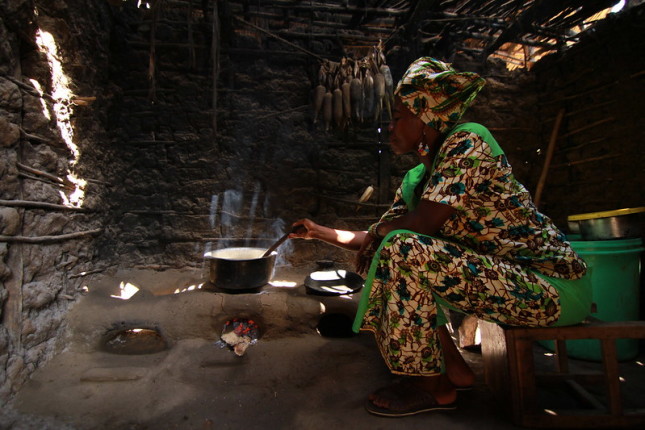
›Finance for climate action is growing—however, much of this money is being invested in wealthier nations, while the regions where funds are needed most are often overlooked and underfunded by both public and private institutions. The good news for funders is that there are climate solutions that not only significantly reduce greenhouse gas emissions, but also create cascading social and public health benefits for communities on the frontlines of the climate crisis. For those looking to get the biggest return on their investment—for both people and planet—we offer two particularly promising solutions: ramp up funding for clean cooking and electricity where they matter most.
-
Break the Bias: Breaking Barriers to Women’s Global Health Leadership
›We need to ensure that diversity is shaping and influencing global health decision-making and this is what we mean when we call for gender transformative leaders, said Dr. Roopa Dhatt, Executive Director of Women in Global Health, at an International Women’s Day event hosted by Women in Global Health to launch the first-ever book on women’s leadership in global health. “We’re calling for diverse leadership with intersectionality looking at transforming power and really making sure we’re going to the root drivers of inequities and driving systems change,” said Dr. Dhatt. Some 28 authors and 11 interviewees from 17 countries across 6 regions came together to write this rallying call to redress gender inequity in health leadership. Women and Global Health Leadership: Power and Transformation explores barriers and facilitators to women’s global health leadership; showcases the personal, professional, and political journeys of women leaders across global health sectors including government, academia, and civil society; and offers pragmatic solutions to increasing women’s representation at all levels of leadership, said Dr. Rosemary Morgan, Associate Scientist at the Johns Hopkins Bloomberg School of Public Health.
-
Raising Momentum for Integrating Respectful Maternity Care in Humanitarian Settings
›Greater than one third of all women experience mistreatment during facility-based childbirth. Mistreatment, particularly in humanitarian settings, may include verbal or physical abuse, poor patient-provider rapport, a lack of information about maternal and newborn health (MNH) services for both pregnant women and providers, lack of privacy within facilities, challenges with receiving informed consent from women for medical procedures due to language and cultural barriers, and denied or delayed care. Such mistreatment can stem from historical tensions between populations seeking care and health workers (both foreign and local) as well as systemic mistreatment of providers who are burned out and possibly carry their own biases. Evidence shows that some women delay seeking care, or avoid care entirely because of social fears stemming from negative stigma or negative perceptions of their situation.
-
The Lasting Effects of the COVID-19 Pandemic on Women’s Work, Health, and Safety (New Report)
›While the COVID-19 pandemic has affected the lives of many around the world, its effects on women have been particularly devastating. Even before the pandemic, women are highly affected by violence. Since the pandemic, rates of gender-based violence have risen, while uptake of critical health services have decreased. Women, especially low-income women, women of color, and migrant women, are also more likely to work in jobs that are underpaid, undervalued, and unprotected, and they comprise the majority of the frontline or “essential” workforce, which includes grocery and food retail workers, health care workers, and care workers.
Showing posts from category global health.