-
Foresight for Action | Weathering the Storm: Improving Predictive Capabilities for Extreme Weather and Water Events in the Caribbean
›For two weeks, Hurricane Dorian, one of the strongest hurricanes to make landfall in the Pacific, decimated large swaths of the Caribbean displacing 70,000 people and killing at least 50. Natural disasters like Hurricane Dorian in the Caribbean have only been worsening over the last decade, a trend often attributed to warming oceanic and atmospheric temperatures.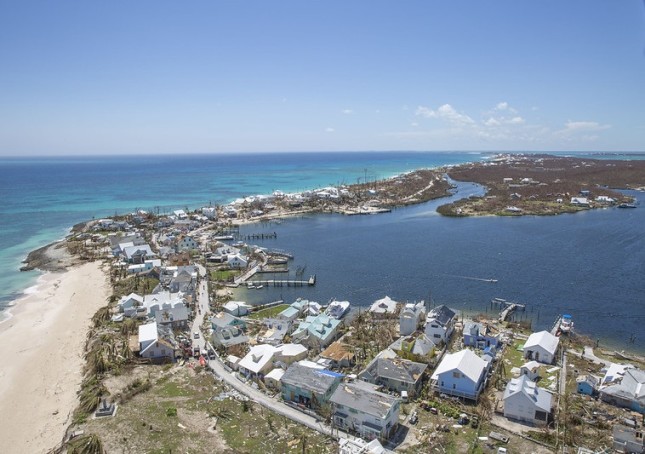
-
CODE BLUE: Addressing NCDs in Maternal Health Starts with Increasing Access and Reducing Disparity
›
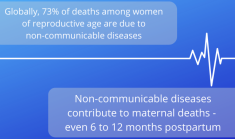
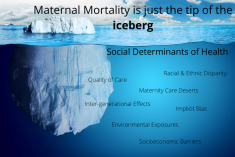
We’ve got a crisis impacting our mothers and a crisis impacting our babies, said Dr. Lisa Waddell, Senior Vice President of Maternal Child Health and NICU Innovation and Impact Deputy Medical Director at the March of Dimes, at a recent Wilson Center event launching the Maternal Health Initiative’s CODE BLUE series, developed in partnership with EMD Serono, a business of Merck KGaA, Darmstadt, Germany. She was referring to non-communicable diseases (NCDs), which impact maternal health in the United States and globally. NCDs kill 18 million women of reproductive age each year, accounting for two in every three deaths among women.
-
Safe from the Start: Addressing Gender-Based Violence in Times of Conflict and Crises
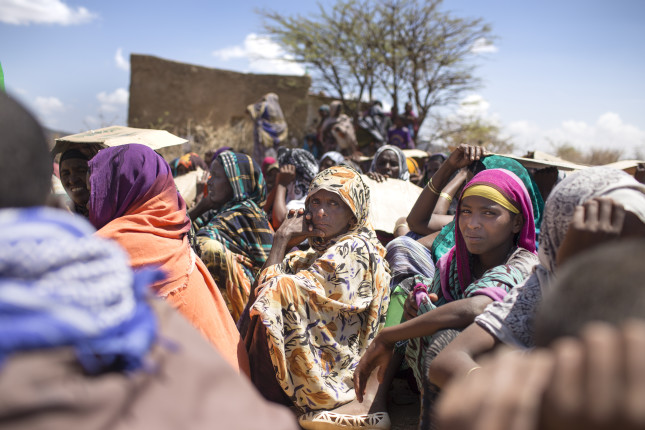
›“As a leader in providing global humanitarian aid, the United States must be a leader in protecting all aid recipients,” said Congresswoman Chrissy Houlahan (D-PA-6) at a recent event on Capitol Hill about gender-based violence in humanitarian settings. A violation against human rights, gender-based violence (GBV) is deeply rooted in gender inequality. It’s a global phenomenon that involves sexual, physical, and/or psychological violence, including child marriage, female genital mutilation, and other harmful practices.
-
By, for, and of the People: How Citizen Science Enhances Water Security
›In the Peruvian Andes, where cropland is irrigated and water availability is variable at best, knowledge of highland hydrology is crucial to survival. However, until recently, the locals did not have adequate information to be able to use their water efficiently. So the community worked with a nonprofit to develop a non-specialist/non-researcher run data-gathering project to monitor the water in the region to optimize its use: in short, they developed a citizen science project.
-
Which Demographic “End of History”?
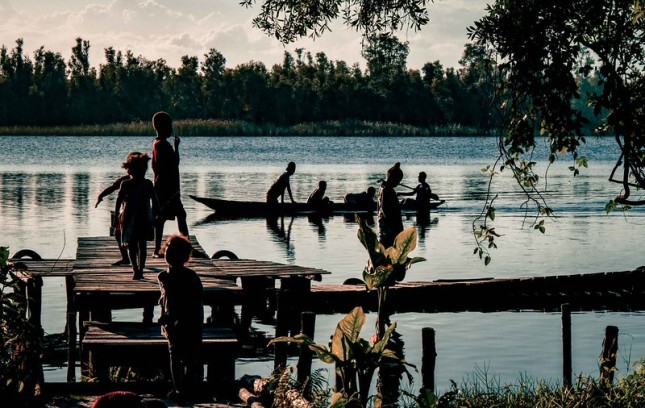
›First published 30 years ago in the National Interest, Francis Fukuyama’s landmark essay, “The End of History?,” argued that, with the fall of fascism and communism, no serious blueprint for modern-state development lay open, save for those paths that would ultimately embrace both political and economic liberalism. Over the past two decades, movement toward this ideal end-state has trickled to a halt. Instead, the political elites of Eurasia’s regional powers—Russia, Turkey, Iran, and China—have crafted stable illiberal regimes that borrow whatever they need from free-market economics, electoral politics, nationalism, and religion. Their ascent has produced a form of “non-endpoint stability”—two mutually antagonistic camps: one composed of liberal democracies, the other a mix of illiberal hybrids. As long as these camps remain stable, the international system falls far short of Fukuyama’s theoretical end of history. -
Three Trends to Track in Population-Environment-Security
›Exactly 25 years ago the international community met in Cairo for the 1994 International Conference on Population and Development. In the aftermath of the Cold War, ethnic conflict seemed to be exploding globally and research on the role of population growth and resource scarcity found an eager audience among policy makers struggling to understand this new international disorder. ECSP’s founding in that same year positioned the program as a leader in bringing together the scholarly and policy communities around non-traditional security issues over the last 25 years. The last two-and-a-half decades have brought tremendous change in population trends, environmental change, and the security landscape. Over the next 25 years three trends will shape the agenda of those working on the nexus of population-environment-security issues. -
To Address Security in Africa, Focus on the Citizen: Ambassador Phillip Carter III on the Connections between Development and Security
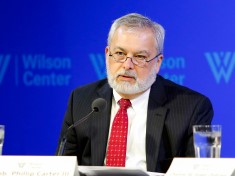
›To address the security challenges facing Sub-Saharan Africa we need to shift the focus from a concept of state security to one of citizen security, says Ambassador Phillip Carter III (ret.), former Ambassador to the Ivory Coast and the Republic of Guinea, in this week’s Friday Podcast. “Our current strategy of a military response to terrorist organizations or criminal networks is inadequate at best, and probably unsustainable at worst,” says Carter. “To me, the greatest security threat in Africa is poor or bad governance.” -
CODE BLUE: The Importance of Integrating Care for Maternal Health and Non-Communicable Disease
›“Non-communicable diseases have been the leading cause of death for women for at least the past 30 years but are often underreported and undertreated,” said Priya Kanayson, Policy and Advocacy Manager at NCD Alliance at a recent Wilson Center event on the impact of non-communicable diseases (NCDs) on maternal health. The event marked the official launch of the Maternal Health Initiative’s CODE BLUE series, developed in partnership with EMD Serono, a business of Merck KGaA, Darmstadt, Germany. Globally, in 2018, 73 percent of deaths among women were due to NCDs, amounting to 18 million women of reproductive age dying per year due to NCDs. The compounding effects of NCDs complicate women’s experiences in many unseen ways, and the rise and gravity of NCDs pose a growing and often overlooked challenge to maternal health worldwide.
Showing posts from category featured.
 First published 30 years ago in the National Interest, Francis Fukuyama’s landmark essay, “
 Exactly 25 years ago the international community met in Cairo for the
  To address the security challenges facing Sub-Saharan Africa we need to shift the focus from a concept of state security to one of citizen security, says Ambassador Phillip Carter III (ret.), former Ambassador to the Ivory Coast and the Republic of Guinea, in this week’s Friday Podcast. “Our current strategy of a military response to terrorist organizations or criminal networks is inadequate at best, and probably unsustainable at worst,” says Carter. “To me, the greatest security threat in Africa is poor or bad governance.”