

-
Mapping Climate Security: New Dashboard Tool Visualizes Complex Vulnerability in Asia
›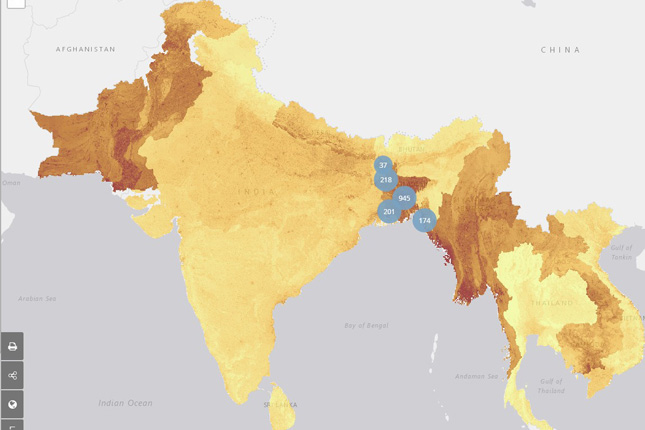
In many parts of South and Southeast Asia, high population density and vulnerability to climate change combine with low levels of household resilience and poor governance to increase security concerns and the potential for political instability. To help identify risks and hotspots in this critical region, the Complex Emergencies and Political Stability in Asia (CEPSA) program at the University of Texas-Austin recently launched the Complex Emergencies Dashboard, which integrates raw data and modeling with mapping technology, allowing users to visually analyze regional security issues. The project was funded by the Department of Defense’s Minerva Initiative, which also supported similar work by the university’s Climate Change and African Political Stability (CCAPS) program.
-
Coastal Resilience on Capitol Hill: Protecting the United States’ Infrastructure, Economy, and Security
›
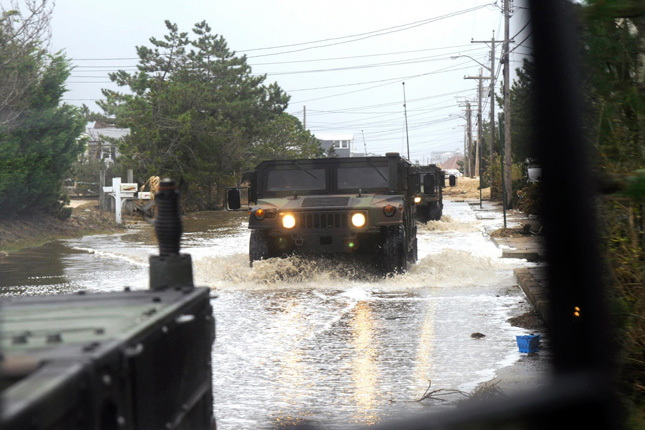
Every dollar invested in preparing for natural disasters could save seven dollars, said Alice Hill, Research Fellow at the Hoover Institution, at a recent briefing on Capitol Hill. Catastrophic events like Superstorm Sandy present significant financial risks to U.S. businesses, the federal treasury, and the global economy. These complex emergencies have taught us that “everything is connected: our transportation system failed, our health sector failed,” said Hill, in the wake of these storms.
-
From Day One: Malawi President Joyce Banda on Girls Ages 0-10
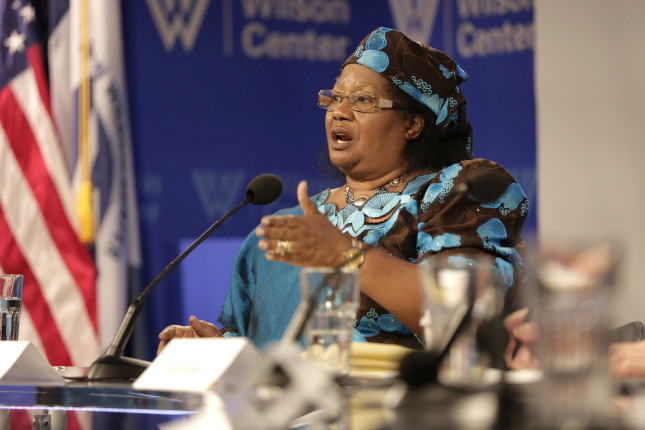
›“Over 130 million girls around the world are not in school through no fault of their own,” said Her Excellency Joyce Banda, former president of the Republic of Malawi, at the launch of her new book, From Day One: Why Supporting Girls Aged O to 10 Is Critical to Change Africa’s Path, at the Center for Global Development.
-
Franklin Moore: Fostering Local Innovation Through Community Organization
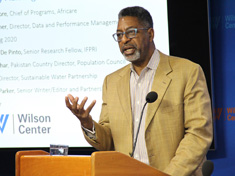
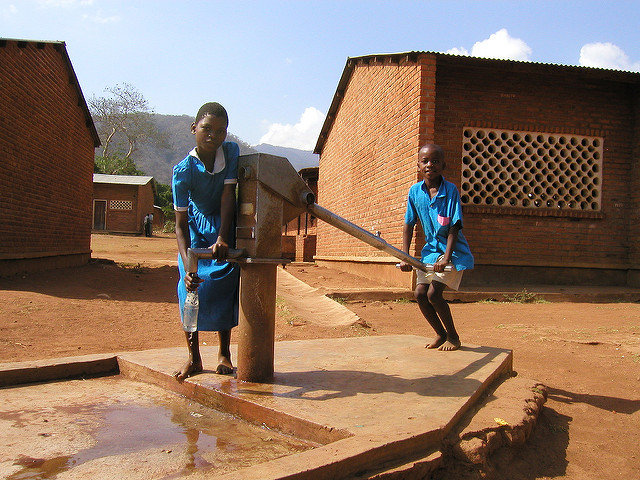
›Africare’s work has been built on a “strong belief that community mobilization and local capacity building and innovation are the cornerstones of successful development, and that, for us, includes resilience,” says Franklin Moore, Chief of Programs for Africare, in a podcast from a recent Wilson Center event. “Community engagement, capacity building, and looking at locally driven behavior and social change is what empowers communities.” -
China’s Waste Import Ban: Dumpster Fire or Opportunity for Change?
›In early January of this year, China’s “National Sword” policy banned imports of non-industrial plastic waste. The ban forces exporting countries to find new dumping grounds for their waste, which is estimated to total nearly 111 million metric tons by 2030. China’s decision has exposed deep structural flaws and interdependencies in the global waste management system. Western countries that have long depended on China to take their garbage are now struggling to deal with mounds of plastic trash, while China lacks the low-priced labor needed to effectively sort and process waste.
-
Women and Cancer in India
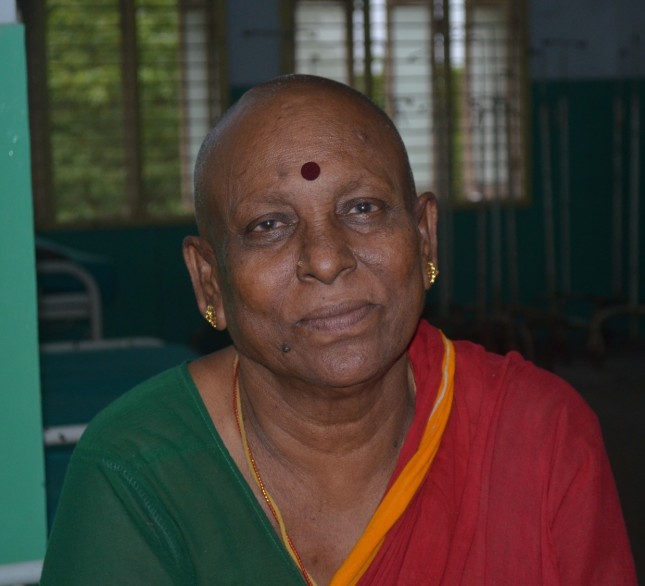
›As India faces an emerging cancer crisis, how do South Indian women conceptualize what causes reproductive cancers—and how to cure them? New qualitative research from Cecilia Van Hollen, a medical anthropologist and Wilson Center Public Policy Fellow, illuminates the complex perceptions and personal experiences of women in Tamil Nadu, the first state to integrate cancer screening into its primary health care system.
-
Family Planning Can Mean Big Progress for the Sustainable Development Goals—And Here’s How
›As the UN High-Level Forum on Sustainable Development continues this week, member states and civil society are taking a hard look at countries’ progress toward securing safe drinking water, sanitation, and adequate housing. Achieving these and the other Sustainable Development Goals (SDGs) requires recognizing the synergies among them—including the role that reproductive health and family planning can play. You may ask, “Why does family planning matter for the SDGs not related to health?” The answer is that it is one of the most cost-effective investments for achieving the SDGs. Increasing access to family planning provides sweeping social, economic, and environmental benefits for every dollar spent.
-
Everybody Counts: New Podcast Series on How Global Population Trends Shape Our World
›From mass urbanization to massive refugee flows, high fertility to record low birth rates, global population is changing in unprecedented ways. “Everybody Counts,” a new podcast series hosted by Rhodes College Professor and Wilson Center Global Fellow Jennifer D. Sciubba, launches a lively and thoughtful conversation about the ways human population shapes our world and how we live today.
Showing posts from category featured.
 Africare’s work has been built on a “strong belief that community mobilization and local capacity building and innovation are the cornerstones of successful development, and that, for us, includes resilience,” says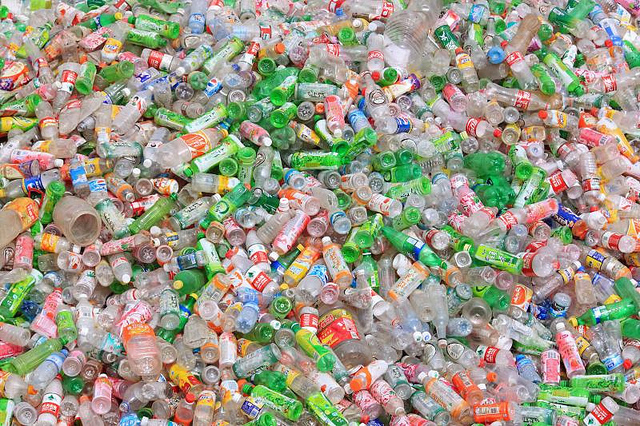
 From
From 

