-
Why Climate Change Will Exacerbate Inequalities and Grievances in Iraq
›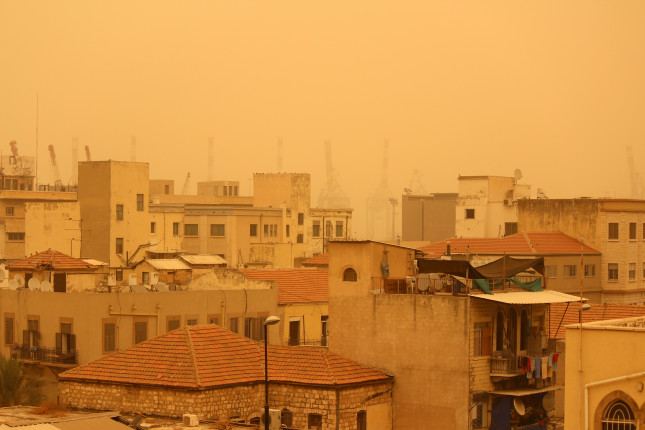
The UN Environment Programme has ranked Iraq as the fifth most vulnerable country to climate change. In recent years, it has increasingly witnessed extreme heatwaves with temperatures reaching above 50°C. Iraq’s mean annual temperature also is predicted to increase by two degrees Celsius by 2050.
-
System Shock: Russia’s War and Global Food, Energy, and Mineral Supply Chains
›
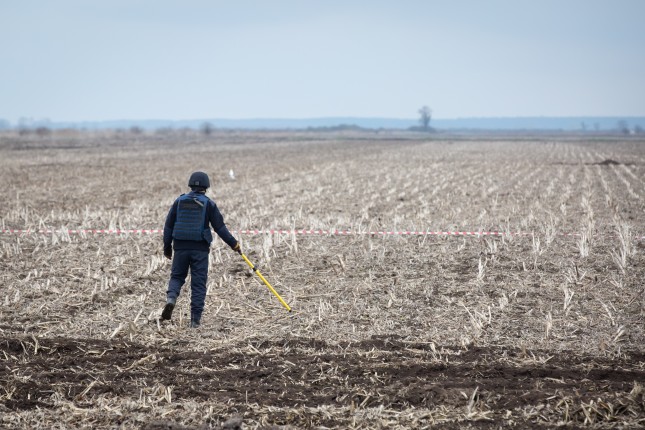
Russia’s invasion of Ukraine is sending shockwaves through global systems for natural resources like food, oil and natural gas, and critical minerals. But a recent Wilson Center event assessing the fallout of the conflict also looked to the deeper implications and lessons from the crisis.
-
Silatech’s Hassan Al-Mulla on Tackling Youth Unemployment in the MENA Region
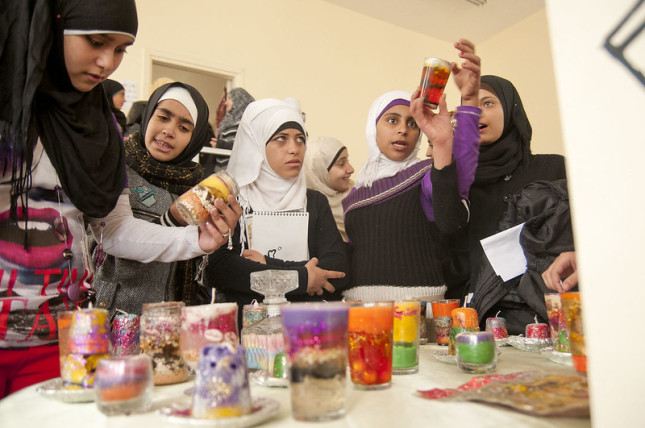
›The MENA region is experiencing a confluence of stressors, from ongoing instability to intensifying climate-related issues like water insecurity. At the recent Doha Forum, ECSP’s Lauren Risi sat down with Hassan Al-Mulla, CEO of Silatech, to discuss what his organization—an international non-profit NGO focusing on youth economic empowerment—is doing to address some of these challenges.
-
Grains and Hydrocarbons: The Middle East and the War in Ukraine
›May 3, 2022 // By Achref ChibaniThe war in Ukraine is likely to have immediate effects on many countries in the MENA region. Ukraine is an important global producer of sunflower oil and grain, and alongside Russia, it provides a third of the world’s wheat and barley. Russia’s invasion also will severely disrupt food transport logistics within Ukraine and across its borders due to the suspension of shipping from Ukraine’s commercial ports.
-
Preventing Water Conflict Through Dialogue
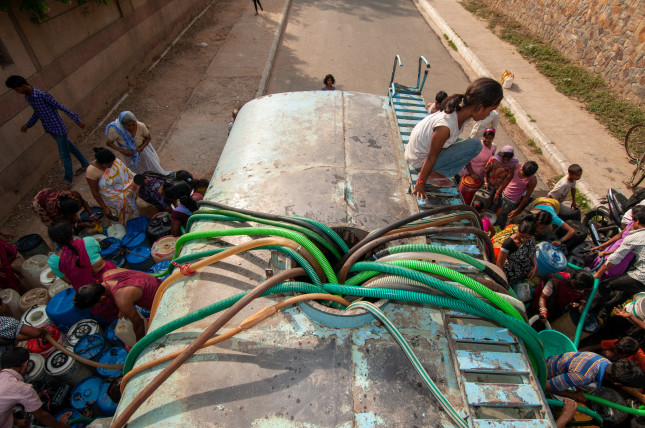
›When considering the potential effects of “backdraft” on climate change responses, the question of the world’s water future may be the most salient of all—especially as we examine water supplies and freshwater ecosystem health.
-
Valerie M. Hudson on How Sex Shapes Governance and National Security Worldwide
›“The very first political order in any society is the sexual political order established between men and women,” says Valerie M. Hudson, a University Distinguished Professor at Texas A&M, in today’s Friday Podcast, recorded at a recent Wilson Center launch of the book, The First Political Order: How Sex Shapes Governance and National Security Worldwide. Co-authored by Hudson, Donna Lee Bowen, Professor Emerita at Brigham Young University, and P. Lynne Nielson, a statistics professor at Brigham Young University, the book investigates how the relationship between men and women shapes the wider political order. “We argue, along with many other scholars, that the character of that first order molds the society, its governance, and its behavior,” says Hudson. -
The Top 5 Posts of August 2020
›As Beijing prepares to host the 2022 Winter Olympics, China’s environmental activities are once again on center stage. The Wilson Center’s China Environment Forum took the top spot this month with Karen Mancl and Richard Liu’s coverage of the new program report, “Closing the Loop on China’s Water Pollution,” which details what China can learn from New York, Washington, D.C., and Singapore, to advance its wastewater and carbon reduction targets.
-
Population Age Structure: The Hidden Factor in COVID-19 Mortality
›Until several months ago, demographers regarded a youthful age structure as an unequivocally detrimental demographic characteristic. Where more than half of the population is younger than age 25, countries are unable to attain high levels of economic and human capital development and face an increased risk of some forms of civil conflict. Yet, so far, during the ongoing pre-vaccine stage of the COVID-19 pandemic, the most age-structurally mature countries have been hardest hit by the disease. These countries are generally urbanized, wealthy, well-educated, and include a large proportion of seniors. And, somewhat surprisingly—despite being equipped with advanced medical technologies—these countries are experiencing the highest rates of mortality from complications related to COVID-19.
Showing posts from category featured.
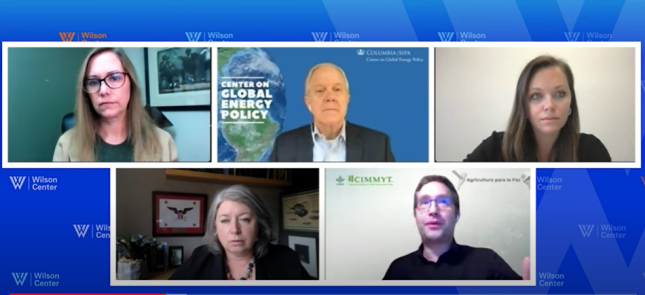
 “The very first political order in any society is the sexual political order established between men and women,” says Valerie M. Hudson, a University Distinguished Professor at Texas A&M, in today’s Friday Podcast, recorded at a recent Wilson Center launch of the book,