-
Building Sustainable Cities in a Warmer, More Crowded World
›January 3, 2013 // By Laurie Mazur
The future is urban – but is it sustainable?
For decades – centuries, really – warnings have been issued: The burgeoning human population will outgrow the planet’s capacity to sustain us. The formula seems simple. More people equals fewer resources and greater environmental damage.
-
New Support for International Family Planning: The Significance of the London Summit
›December 21, 2012 // By Carolyn LamereAt a major summit in London this summer the Bill and Melinda Gates Foundation launched one of the most significant efforts yet to revitalize commitments around the world towards providing universal access to family planning. More than 220 million women around the world – mostly in developing countries – want to delay or avoid pregnancy but are not using effective methods of contraception. Meeting the unmet needs of these women could save the lives of hundreds of thousands of mothers and millions of infants, not to mention significantly impact the future of human development. But the last decade has been a period of relative neglect by international donors.
-
National Research Council Produces Climate and Security Analysis at Request of U.S. Intelligence Community
›
The CIA may have shut down its dedicated climate change center earlier this year, but a recently released report sponsored by the intelligence community reaffirms the deep connection between climate change and national security. New threats to U.S. national security – like increased food and water insecurity and more natural disasters requiring humanitarian assistance – have emerged as climate change creates unprecedented changes in the global environment.
-
Beyond Carbon Credits: TIST Combines Reforestation, Health, and Livelihood Efforts
›Carbon offsets have fallen in and out of favor since they were established with the Kyoto Protocol in 1997. Critics say they allow wealthy organizations to placate consumers and claim their products are “green” without making any real, lasting changes. But, if the scheme works properly, some action is supposed to be taken somewhere, so what is it like at one of these credit-producing organizations?
-
Managing the Planet: The World at Seven Billion
›Population growth “is highly concentrated in what are today the poorest and least well-governed areas of the world,” said George Mason University professor Jack Goldstone at the Wilson Center on December 5.
Goldstone was joined by Suzanne Ehlers, president and CEO of Population Action International (PAI), and Matthew Erdman, population-health-environment technical advisor at USAID, to discuss the implications of seven billion people and counting for the environment as part of the joint Wilson Center-George Mason University Managing the Planet series. [Video Below]
-
National Intelligence Council Releases ‘Global Trends 2030’: Prominent Roles Predicted for Demographic and Environmental Trends
›“We are at a critical juncture in human history, which could lead to widely contrasting futures,” writes the chairman of the National Intelligence Council (NIC) Christopher Kojm in the council’s latest forward-looking quadrennial report, Global Trends 2030: Alternative Worlds, released yesterday.
This year, principal author Mathew Burrows and his colleagues focus on a series of plausible global scenarios for the next 20 years and the trends or disruptions that may influence which play out. Among the most important factors in these projections are demography and the environment.
-
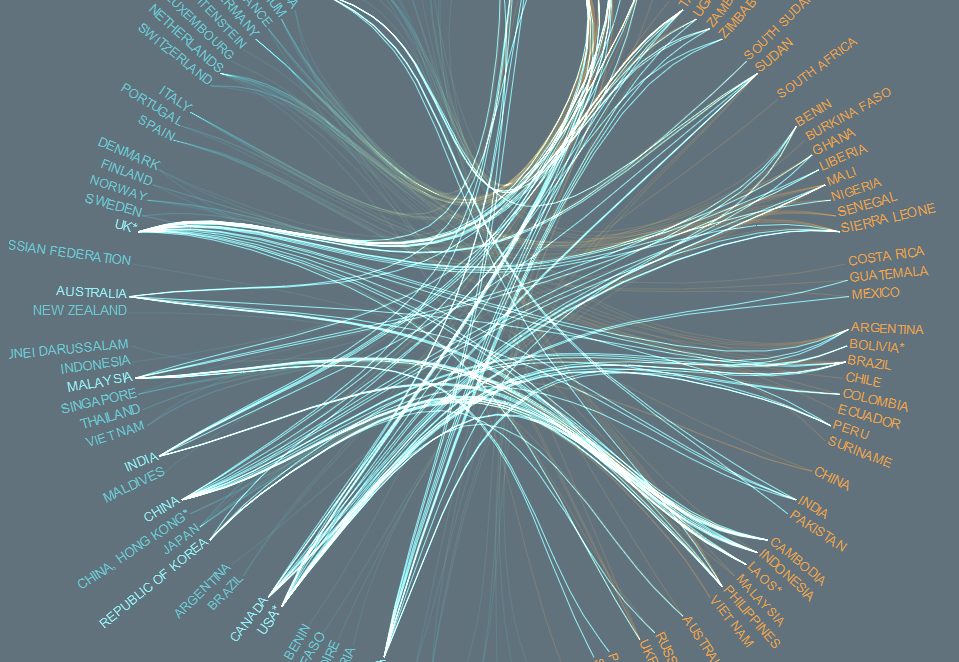
The Land Matrix Visualizes Ebbs and Flows of Global “Land Grabs”
›Over the past few years, large-scale acquisition of land by foreign or domestic firms, be they public or private, have been making headlines. But although these “land grabs” have received a great deal of attention, their details remain largely unknown. Which countries are the primary investors? Which are the main targets? What is the land used for?
-
CCAPS Looks to Map Climate-Related Aid in Africa
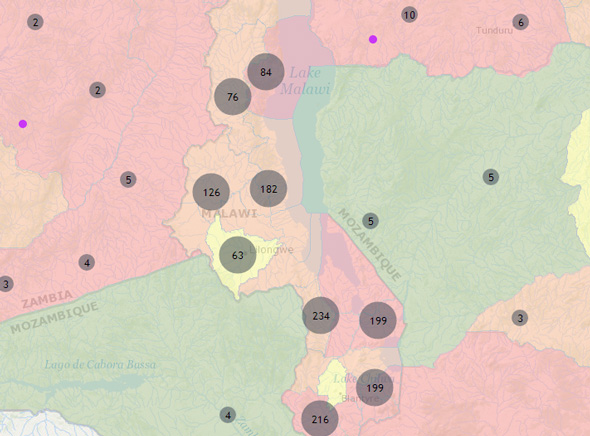
›Adapting to the effects of climate change is increasingly becoming an important component of many international development efforts. But how that integration occurs and what it looks like is an open question. To help answer that, the Climate Change and African Political Stability Program (CCAPS) at the University of Texas at Austin recently released a new database that for the first time tracks all the climate-related aid in one country – Malawi.
Showing posts from category featured.