• woodrow wilson center
  • ecsp

New Security Beat

Subscribe:
  • rss
  • mail-to
  • Who We Are
  • Topics
    • Population
    • Environment
    • Security
    • Health
    • Development
  • Columns
    • China Environment Forum
    • Choke Point
    • Dot-Mom
    • Friday Podcasts
    • Navigating the Poles
    • Reading Radar
  • Multimedia
    • Water Stories (Podcast Series)
    • Backdraft (Podcast Series)
    • Tracking the Energy Titans (Interactive)
  • Films
    • Water, Conflict, and Peacebuilding (Animated Short)
    • Paving the Way (Ethiopia)
    • Broken Landscape (India)
    • Scaling the Mountain (Nepal)
    • Healthy People, Healthy Environment (Tanzania)
  • Publications
  • Events
  • Contact Us

NewSecurityBeat

The blog of the Wilson Center's Environmental Change and Security Program
Showing posts from category featured.
  • Can Coffee Make Yunnan a Model for Chinese Agricultural Reform?

    ›
    China Environment Forum  //  April 10, 2013  //  By David Tyler Gibson

    Yunnan province is a microcosm of the intertwined natural resource challenges facing China. Dams, development, deforestation, drought, and climate change threaten China’s most biodiverse province – all while it increases its exports of agricultural products and electricity to China’s coastal provinces. These competing demands bring into question the sustainability of China’s development paradigm and the country’s environmental security.

    MORE
  • Bouncing Back: How Do Population Dynamics and Social Cohesion Affect the Resilience of Societies?

    ›
    From the Wilson Center  //  April 9, 2013  //  By Carolyn Lamere

    ‘Toward Resilience’ is a series on the meaning of global resilience and vulnerability today.

    “The scale and the impact of disasters today can be greater than anything we’ve previously experienced,” said Laurie Mazur at the Wilson Center on March 18. “The proliferation of disasters has gotten a lot of people talking about resilience, about how we can lessen our risk and how we can recover more quickly from disasters of all kinds.” [Video Below]

    MORE
  • New Partnerships for Climate Change Adaptation and Peacebuilding in Africa

    ›
    From the Wilson Center  //  April 8, 2013  //  By Schuyler Null

    “There is a huge gap between climate science, policymakers, and the end-users, in terms of understanding climate change and adaptation, and how that relates to conflict or peace,” concluded 26 experts from more than 10 countries across sub-Saharan Africa at the Wilson Center last fall. But “climate change adaptation is crucial to achieving Africa’s aspirations for peace, security, and sustainable development.”

    MORE
  • On Building a Better (and More Resilient) World: Complexity, Community, and the Precautionary Principle

    ›
    April 3, 2013  //  By Laurie Mazur

    ‘Toward Resilience’ is a series on the meaning of global resilience and vulnerability today.

    From the 2004 Indian Ocean tsunami to Superstorm Sandy, the last decade has seen an incredible array of natural disasters. Of course, disasters of all kinds are nothing new, but, thanks to the growing scale and interconnectedness of the human enterprise – and the damage we have done to the natural world – the frequency, scale, and consequences of today’s calamities are truly without precedent.

    MORE
  • After Cyclone Haruna, Blue Ventures Leverages Its PHE Program for Disaster Response in Madagascar

    ›
    Beat on the Ground  //  Guest Contributor  //  March 28, 2013  //  By Laura Robson

    ‘Toward Resilience’ is a series on the meaning of global resilience and vulnerability today.

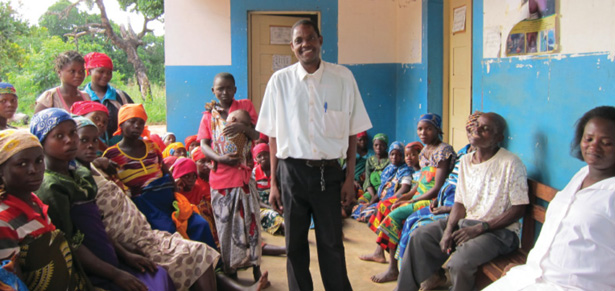
    Balbine is moving through her coastal village of Andavadoaka with a sense of urgency. Normally she works as a community-based distributor for Blue Ventures’ integrated population, health, and environment (PHE) program in southwest Madagascar, providing health information and products to her community. However, since Cyclone Haruna swept through the region several weeks ago, Balbine has been especially busy distributing diarrhea treatment kits to mothers caring for sick infants, providing families sleeping out in the open with mosquito nets to protect against malaria, setting up water filtering stations, and emphasizing the importance good hygiene practices.

    MORE
  • ‘National Geographic’ Reports on “Water Grabbers” From Mali to India

    ›
    On the Beat  //  March 26, 2013  //  By Carolyn Lamere

    Much ink has been spilled on the growing trend of global land grabs – land purchased en masse in developing countries like Ethiopia by foreigners mainly for agricultural export. But along with land, investors often also gain the right to use local water, and sometimes with little consideration for local livelihoods. Fred Pearce recently looked into these “water grabs” in a series for National Geographic.

    MORE
  • Demographic and Environmental Dynamics Shape ‘Global Trends 2030’ Scenarios

    ›
    From the Wilson Center  //  March 25, 2013  //  By Maria Prebble

    “However rapid change has been over the past couple decades, the rate of change will accelerate in the future,” states the newest quadrennial report from the National Intelligence Council (NIC), Global Trends 2030: Alternative Worlds. Released late last year, the report identifies the “game-changers, megatrends, and black swans” that may determine the trajectory of world affairs over the next 15 years, including demographic dynamics and natural resource scarcity. [Video Below]

    MORE
  • World Water Day Focuses on Cooperation in the Face of Growing Stress

    ›
    March 22, 2013  //  By Schuyler Null

    Cooperation, not conflict; that’s the theme of this year’s World Water Day. Collaboration over water has been the rule rather than the exception over the past 70 years, UNESCO explained in the launch of their International Year for Water Cooperation initiative earlier this year (which the rest of the UN is thoughtfully supporting).

    But the fact that there’s need for such an initiative shows that water conflict and other water issues are not far from the minds of global policymakers. Scarcity, drought, climate change, food security, disease – water impacts people and their governments in so many ways. Here’s a rundown of some of our best related posts.

    MORE
Newer Posts   Older Posts
View full site

Join the Conversation

  • RSS
  • subscribe
  • facebook
  • G+
  • twitter
  • iTunes
  • podomatic
  • youtube
Tweets by NewSecurityBeat

Trending Stories

  • unfccclogo1
  • Pop at COP: Population and Family Planning at the UN Climate Negotiations

Featured Media

Backdraft Podcast

play Backdraft
Podcasts

More »

What You're Saying

  • Volunteers,At,The,Lagos,Food,Bank,Initiative,Outreach,To,Ikotun, Pan-African Response to COVID-19: New Forms of Environmental Peacebuilding Emerge
    Rashida Salifu: Great piece 👍🏾 Africa as a continent has suffered this unfortunate pandemic.But it has also...
  • A desert road near Kuqa An Unholy Trinity: Xinjiang’s Unhealthy Relationship With Coal, Water, and the Quest for Development
    Ismail: It is more historically accurate to refer to Xinjiang as East Turkistan.
  • shutterstock_1779654803 Leverage COVID-19 Data Collection Networks for Environmental Peacebuilding
    Carsten Pran: Thanks for reading! It will be interesting to see how society adapts to droves of new information in...

What We’re Reading

  • Rising rates of food instability in Latin America threaten women and Venezuelan migrants
  • Treetop sensors help Indonesia eavesdrop on forests to cut logging
  • 'Seat at the table': Women's land rights seen as key to climate fight
  • A Surprise in Africa: Air Pollution Falls as Economies Rise
  • Himalayan glacier disaster highlights climate change risks
More »
  • woodrow
  • ecsp
  • RSS Feed
  • YouTube
  • Twitter
  • Facebook
  • Home
  • Who We Are
  • Publications
  • Events
  • Wilson Center
  • Contact Us
  • Print Friendly Page

© Copyright 2007-2021. Environmental Change and Security Program.

Woodrow Wilson International Center for Scholars. All rights reserved.

Developed by Vico Rock Media

Environmental Change and Security Program

Woodrow Wilson International Center for Scholars

Ronald Reagan Building and International Trade Center

  • One Woodrow Wilson Plaza
  • 1300 Pennsylvania Ave., NW
  • Washington, DC 20004-3027

T 202-691-4000