-
USAID Administrator Rajiv Shah on Public-Private Partnerships and the Future of Aid
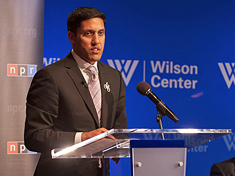
› What’s the best way for America’s chief development agency to help other countries reach prosperity and democracy? Increasingly, it’s creating partnerships not just with other governments, but with the private sector too, says USAID Administrator Rajiv Shah in this week’s podcast.
 -
From Victoria to Chilwa: Integrated Development in Two African Lake Basins
›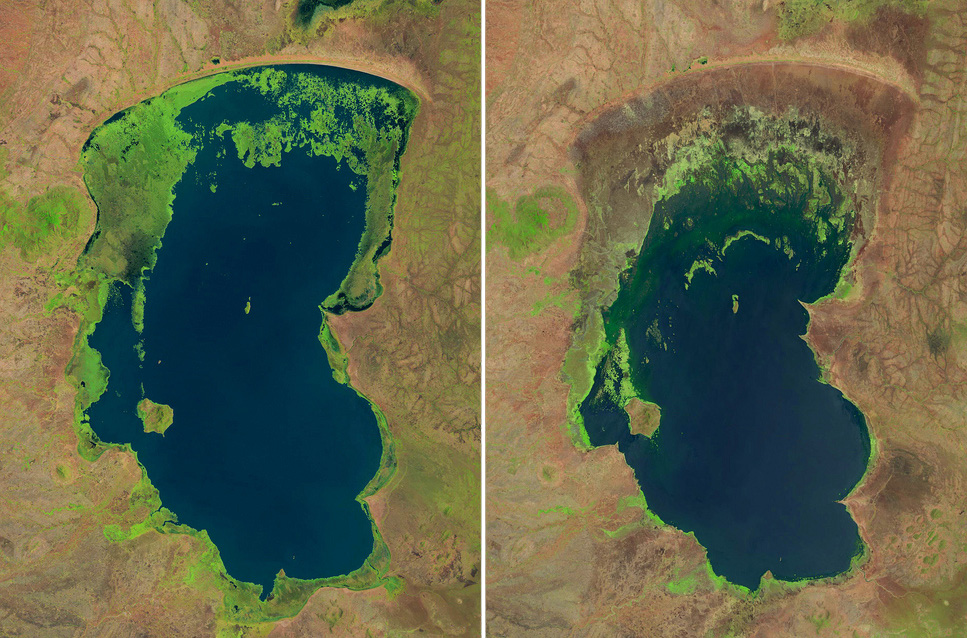
In Lake Victoria and Lake Chilwa basins, interconnected development challenges defy sectoral boundaries, said experts at the Wilson Center on February 10. According to Deepa Pullanikkatil of Leadership for Environment and Development and Doreen Othero of the Lake Victoria Basin Commission, growing populations, shrinking resource bases, and persistent human health concerns demonstrate the need for integrated development approaches that combine population, health, and environmental (PHE) interventions. “We need different sectors working together to achieve the greater goal,” said Pullanikkatil. [Video Below]
-
20 Years After Doomsday Predictions, China Is Feeding Itself, But Global Impacts Remain Unclear
›How has China managed to feed nearly one-quarter of the world’s population with only seven percent of the world’s arable land?
In 1995, Lester Brown forecasted doom and gloom for China’s ability to produce enough grain for its people, in his popular book, Who Will Feed China? He hypothesized that China would be forced to buy grain from abroad, thereby seriously disrupting world food markets.
-
For Environmental Peacebuilding and Development Work, Collaboration Pays Dividends
›Many recurring problems in natural resource management are the result of missing a key point: ecosystems and human systems are inextricably linked and dynamic, changing constantly. We are part of a socio-ecological system, not external to it, as many previously thought. In the “age of man” – the Anthropocene, as some scientists call the current era – cross-sectoral collaboration is needed to make substantial headway in tackling complex challenges, such as natural resource-related conflict and climate change.
-
After Chance Meeting, New Population, Health, and Environment Program Is Born in Madagascar
›Against the stunning backdrop of Marojejy National Park, I recently crossed paths with a conservationist from a very different background, working on the opposite side of Madagascar. But, it turns out, the communities we work with face many of the same challenges, and our meeting spawned a new population, health, and environment (PHE) program.
-
System Shock: To Prevent the Next Disaster, Change the Paradigm
›In the wake of natural disasters, the idea that systematic change might be needed to prevent future crises often takes a backseat to restorative efforts. But as disasters become more common, there is often a blurring of disaster response and development initiatives.
-
Bouncing Forward: Why “Resilience” Is Important and Needs a Definition
›As policymakers respond to the threat of climate and environmental change, the concept of resilience has found itself at the center of discussion. Few scientists and policymakers, however, can come to a consensus on how to define, evaluate, and build resilience.
-
Basket Case No More? Bangladesh’s Successes Portend Resilience in Face of Change
›This past December, Bangladesh turned 42, bringing the country Henry Kissinger once predicted would become a “basket case” into comfortable middle age (though perhaps this analogy breaks down for countries like Switzerland, age 722).
Showing posts from category featured.
 What’s the best way for America’s chief development agency to help other countries reach prosperity and democracy? Increasingly, it’s creating partnerships not just with other governments, but with the private sector too, says USAID Administrator