-
National Security and the Accelerating Risks of Climate Change (Report Launch)
›
Climate change poses a serious threat to U.S. national security and is becoming a “catalyst for conflict” in vulnerable countries, according to a panel of retired military leaders speaking at the Wilson Center on May 15. [Video Below]
-
Partnering on Climate Change Adaptation, Peacebuilding, and Population in Africa
›June 12, 2014 // By Lauren Herzer Risi
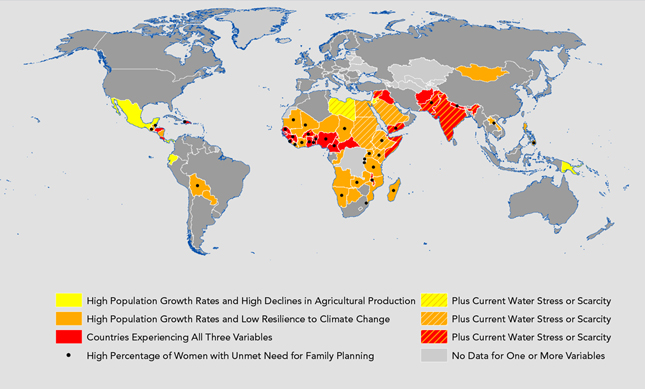
Rapid population growth can be a contributing factor to climate change vulnerability and should be considered in climate adaptation and peacebuilding efforts, said the Wilson Center’s Roger-Mark De Souza at a workshop on climate change adaptation and peacebuilding hosted by the Institute for Security Studies (ISS) in Addis Ababa.
-
CNN Profiles the Work of Conservation Through Public Health in Uganda
›Reporting on long-term, complex human-environment interactions can be daunting. As the saying goes, “if it bleeds, it leads,” and slow, sometimes-distant changes rarely make headlines. Yet, earlier this year CNN International’s African Voices program took a stab at it, diving into the world of integrated development in a three-part profile of Conservation Through Public Health (CTPH), a Ugandan NGO that is working to preserve one of Central Africa’s most important biodiversity hotspots while strengthening the health and wellbeing of nearby communities.
-
How Do We Bounce Back Better? 2015 a Critical Year for Global Resilience, Climate Efforts
›According to NASA and a team of scientists from the University of California, significant portions of the West Antarctic ice sheet have begun an unstoppable slide towards oblivion, slowly melting in warmer-than-usual ocean currents that have been eating away at their bases. [Video Below]
-
What Can Governments Do About Falling Birth Rates?
›“We have a fairly unique moment in the history of the world,” said Steven Philip Kramer, a professor at National Defense University, at the Wilson Center on April 17. “There’s never been a time when people have voluntarily produced fewer children than is necessary for sustaining the population.” [Video Below]
-
Getting Specific About Climate Conflict: Case Studies Show Need for Participatory Approaches to Adaptation
›May 28, 2014 // By Moses JacksonWill climate change cause conflict? That question, which has sparked heated debates in academia and the media, resists simple answers. But is climate change already contributing to conflict in some places? If so, how exactly? And more importantly, what should be done about it? These questions were the focus of a 2013 preliminary report produced for USAID by international development firm Tetra Tech ARD, which examines the climate-conflict nexus in Uganda, Ethiopia, and Peru.
-
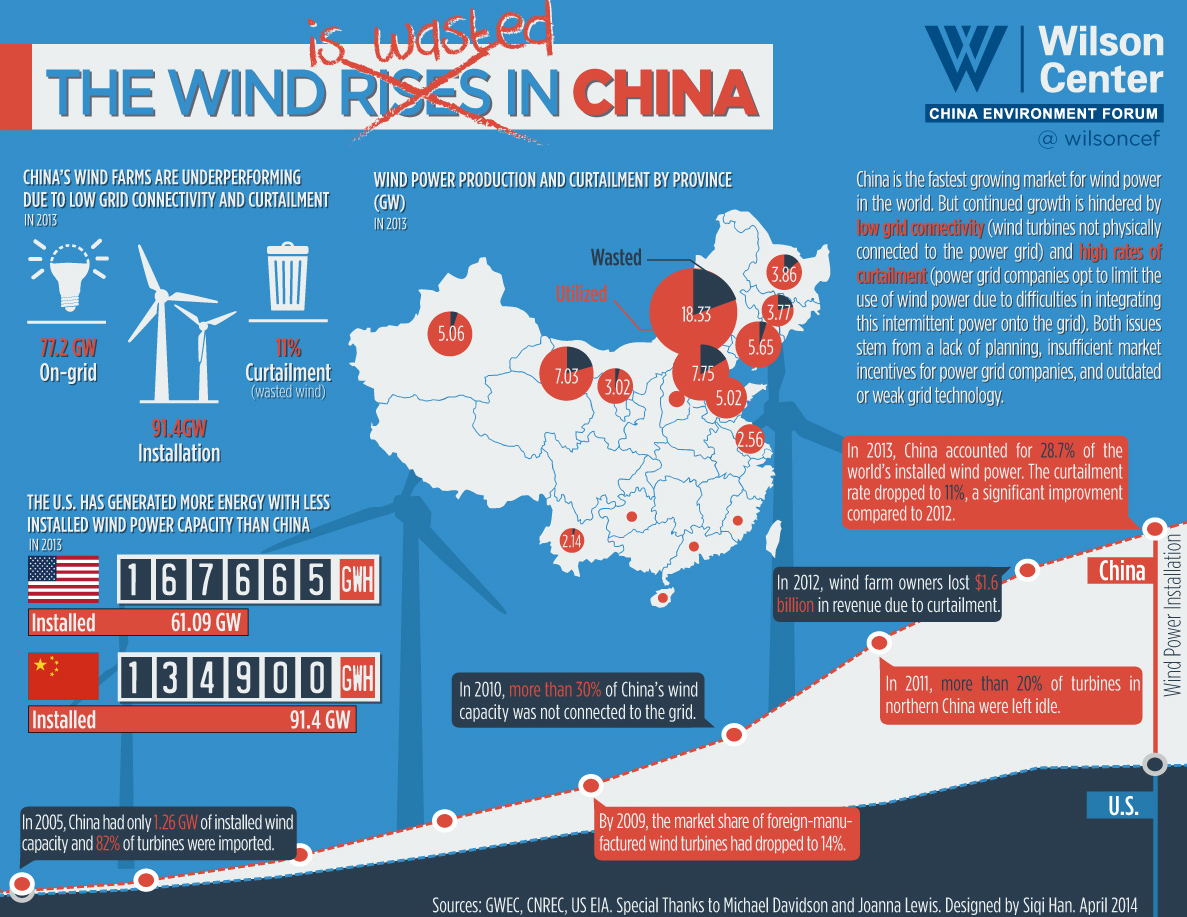
Infographic: Waste, Poor Planning Blunt China’s Wind Energy Ambitions
›China leads the world in installed wind power by a wide margin, but last year, when it came to actual generation, China produced 20 percent less electricity from wind than the United States.
-
Among Climate Threats, Military Leaders See Population Growth, Natural Resources as Key Factors
›May 22, 2014 // By Kathleen MogelgaardIn 2007, an influential analysis by 11 retired generals and admirals characterized climate change as a “threat multiplier” that could aggravate the conditions for conflict. Last week, in a follow-up report launched at the Wilson Center, members of the CNA Corporation’s Military Advisory Board framed climate change as a more direct and immediate risk, calling it a “catalyst for conflict.”
Showing posts from category featured.