-
Mohamed’s Story: The Climate Conflict Trap in the Lake Chad Basin
›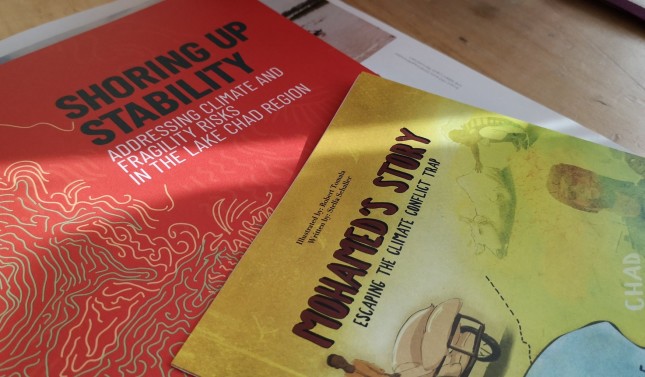
Years ago, Mohamed’s family had enough to eat, despite being poor. His daughter owned a vegetable stall at a bustling market in northeastern Nigeria. The family had options: during the dry season, when Lake Chad was shallow, Mohamed could farm; and during the wet season, he could fish or graze his cattle.
-
Two Divergent Paths for Our Planet Revealed in New IPCC Report on Oceans and Cryosphere
›
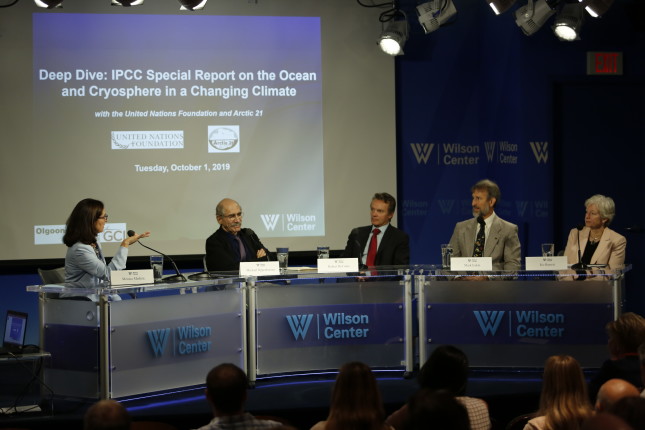
The world’s ocean and cryosphere have been absorbing the heat from climate change for decades, said Intergovernmental Panel on Climate Change (IPCC) Vice Chair Ko Barrett at a recent Wilson Center event on the IPCC’s Special Report on Oceans and Cryosphere. “The consequences for nature and humanity are sweeping and severe,” she said.
-
Gordon Mumbo on Water and Livelihoods in the Mara River Basin
›Friday Podcasts // Water Security for a Resilient World // Water Stories (Podcast Series) // November 15, 2019 // By Benjamin DillsThis article is part of ECSP’s Water Security for a Resilient World series, a partnership with USAID’s Sustainable Water Partnership and Winrock International to share stories about global water security.“If you live in the developed world or in some urban centers, then the supply of water is guaranteed,” said Gordon Mumbo, team leader for Sustainable Water for the Mara River Basin, a project of Winrock International and USAID’s Sustainable Water Partnership, in this week’s Water Stories podcast. When you wake up, you expect water to flow from your tap. “If you don’t find it flowing, you get upset and will probably call the utility company.” But people living in the Mara River Basin don’t have that luxury. “They have to walk to the river to get water and bring it home,” said Mumbo.
-
Investing in Women’s Empowerment Essential to Achieving Peace, Security in Africa
›Africa in Transition // From the Wilson Center // November 14, 2019 // By Brigitte Hugh & Deekshita RamanarayananA country can achieve sustainable peace and security only if women are included, said Monde Muyangwa, Director of the Wilson Center’s Africa Program at a recent Wilson Center event on the role of women in promoting peace and security in Africa. “And I would argue that part of the challenges that we face on the African continent, the insecurity that we face in parts of the African continent,” she said, “is precisely because not all segments of society are included.”
-
What Changes When We See Women
›To commemorate the 25th anniversary of the Wilson Center’s Environmental Change and Security Program, I have a prediction: by ECSP’s 50th anniversary, the idea that one could discuss national and international security without examining the situation, status, and security of women will be seen as laughably naïve. Over the next twenty-five years, I predict that every “Intro to International Relations” and “Intro to National Security” class (and every QDR and QDDR) will begin by examining the critical linkage between what is going on with women and what is going on with nation-states. -
Foresight for Action | Improving Predictive Capabilities for Security Risks Related to Extreme Weather Events
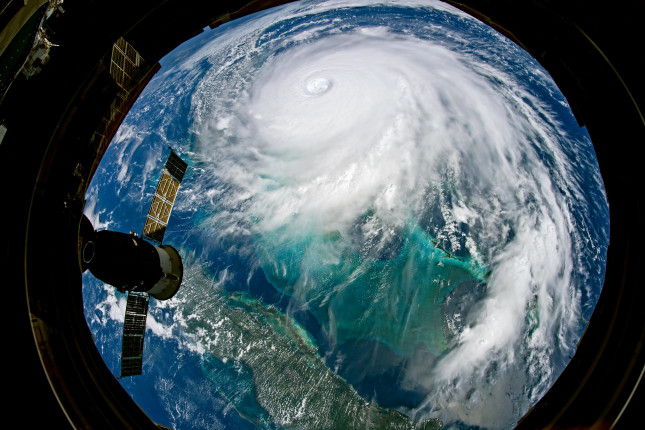
›Evidence that extreme weather, water, and climate events pose critical security risks to the U.S. homeland, national security, and global stability has been mounting in recent years. From destabilizing droughts in Africa to devastating hurricanes and flooding in the United States, we are clearly seeing an increase in not only the frequency and severity of these events, but also their physical, social, and economic impacts.
-
The Environment Has Become a Hostage of Armed Conflict
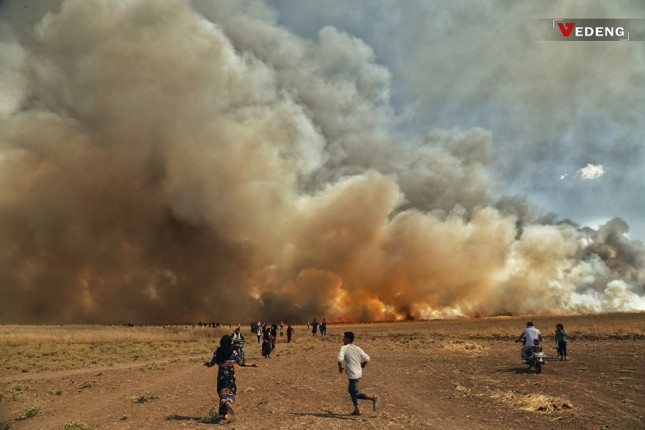
›This year, 2019, marked a new nadir for the environment that may reflect an ominous trend in warfare: Environmentally sensitive targets are being weaponized and taken hostage. Farmland went up in flames and burning oil tankers dominated the headlines, serving as a stark reminder of conflict’s ripple effects.
-
Permafrost Melt, Rising Seas, and Coastal Erosion Threaten Arctic Communities
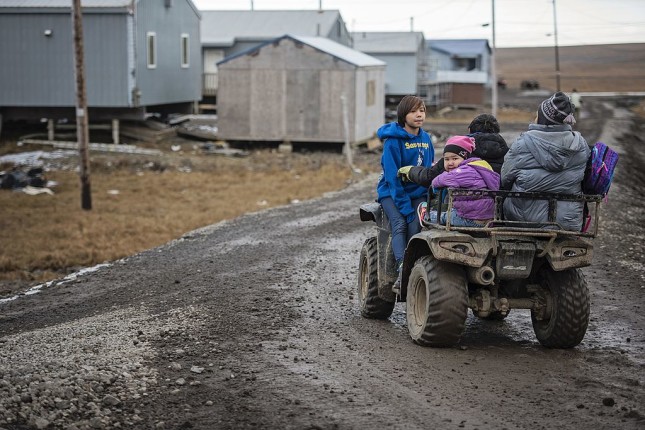
›November 5, 2019 // By Shawn Archbold“In 1959, he knew it was coming,” said Delbert Pungowiyi, a Yupik native of Savoonga, Alaska, on St. Lawrence Island in the Bering Sea in an interview at the Wilson Center’s 8th Syymposium on the Impacts of an Ice-Diminishing Arctic on Naval and Maritime Operations. “He prepared me my whole life for this. It is a crisis.”
Showing posts from category featured.
 This article is part of ECSP’s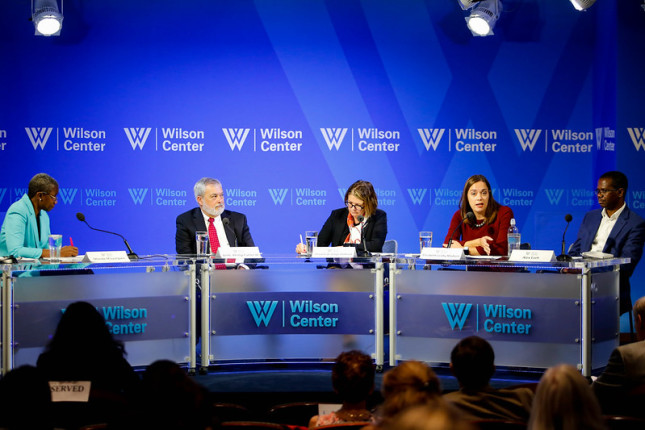
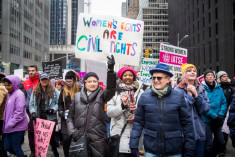 To commemorate the 25th anniversary of the Wilson Center’s Environmental Change and Security Program, I have a prediction: by ECSP’s 50th anniversary, the idea that one could discuss national and international security without examining the situation, status, and security of women will be seen as laughably naïve. Over the next twenty-five years, I predict that every “Intro to International Relations” and “Intro to National Security” class (and every QDR and QDDR) will begin by examining the critical linkage between what is going on with women and what is going on with nation-states.