-
Old Dangers, New Modes: Climate Change and Human Trafficking
›
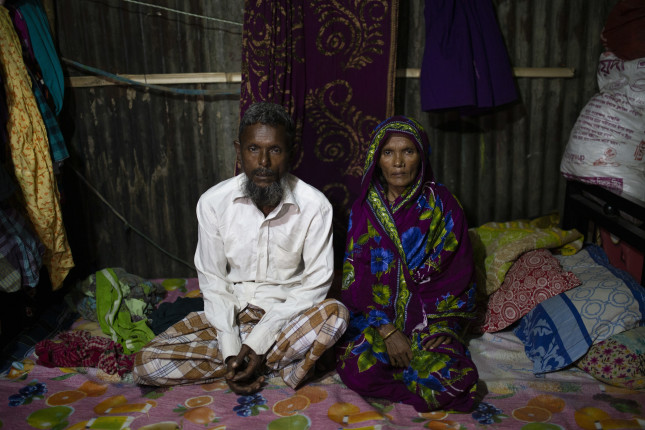
For thousands of years, natural factors like rainfall and temperature helped determine the fate of economies and societies. For thousands of years, humans also engaged in human trafficking and kept one another as enslaved people. But as human prosperity increased exponentially beginning in the 19th century, it may have seemed that such concerns were relics of the past.
-
America Reenters Competition for Global Nuclear Energy Markets
›
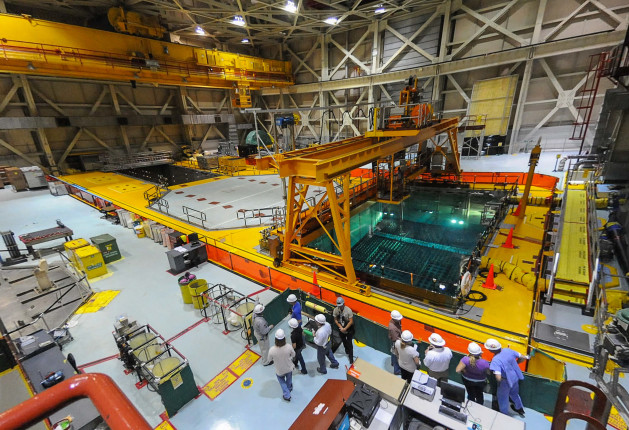
During the 2010s, the United States was on the verge of permanently losing competitiveness in global nuclear energy markets. This weakness threatened American geopolitical goals, with Russia further extending its nuclear market dominance and China eyeing reactor exports across the Belt and Road.
-
Investigating Climate Migration: Global Realities and Resilience
›Climate change has become part of our daily lexicon. Rarely does a week pass when a hurricane, drought, wildfire, or some other climate disruption is not front page news. These headlines often offer dire predictions of mass migration as well—a bracing vision of hordes of people moving to greener pastures, often found further inland and further north, where some political leaders leverage the narrative to push their own agendas.
-
Environmental Management: A Critical Tool for Environmental Peacebuilding
›On July 28, 2022 the United Nations General Assembly (UNGA) voted—by a count of 161 in favor, with 8 abstentions — that living in a clean, healthy, and sustainable environment is a human right. Building on the similar declaration by the UN Human Rights Council in October 2021, the UNGA has now reinforced the notion that the growing assaults on human health through environmental hazards are transgressions against the basic rights and freedoms of people.
-
Ukraine’s Environment in Time of Conflict: Damage, Data and the Rule of Law
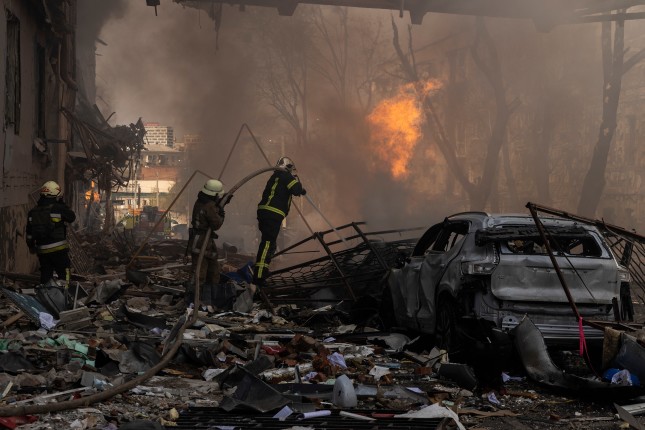
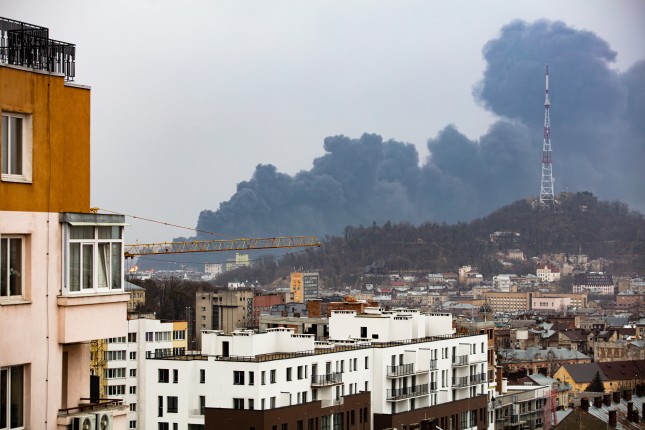
›When Russia invaded Ukraine on February 24, 2022, it was not only a geopolitical and humanitarian disaster. The conflict has detrimentally impacted the environment.
War and environmental damage are inextricably linked, but the invasion of Ukraine has caused further deterioration in pre-existing environmental issues. “Before 2014, Ukraine was already a country which faced environmental challenges,” observed Ian Anthony, Director of the Stockholm International Peace Research Initiative’s European Security Program (SIPRI) at a December 14 webinar titled Beyond War Ecologies: Green Ways forward for Ukraine. “Russia’s first aggression in 2014 exacerbated problems. The second aggression extended some of the problems to other parts of Ukraine and not just to Donbas.”
-
Water @ Wilson Event | Water, Peace, & Security: New Tools for a New Climate
›Water sustains life on our planet. And access to clean and safe water is foundational to society. So why has it only been in recent years that water has risen to the top of discussions of climate and security? Richard W. Spinrad, the Under Secretary of Commerce for Oceans and Atmosphere and NOAA Administrator, says that one of the biggest reasons is the major impact that climate-related changes in precipitation like droughts and extreme rainfall are having across the globe: “We’re starting to see things like we’ve never seen before. The nature of storms is changing: We saw five feet of rain fall in Hurricane Harvey. Five feet.” -
Slow Down? Environmental Regulators Tap the Brakes on China’s High-Speed Rail
›China Environment Forum // Guest Contributor // Vulnerable Deltas // December 15, 2022 // By Xiao MaChina’s high-speed railway (HSR) is the most recent poster child for the country’s rapid development, with more HSR tracks than the rest of the world combined. Since 2004, the Chinese government has invested more than 10 trillion RMB to build a 40,000-kilometer (km) network of trains that zip between stations at speeds reaching 350 km/hr (or 220 miles per hour). Not to be outdone, by 2035 the government aims to expand this train network by 75 percent to help the country reach its transport connectivity and low-carbon transportation goals.
-
Warfare and Global Warming
›The world has plenty of reasons to avoid conflict already. Yet attendees at the recently-concluded COP27 climate conference in Sharm el-Sheikh, Egypt were presented with another compelling argument: Warfare is bad for global warming. So much so, in fact, that Ukraine’s delegation to the conference organized a special session at the conference of parties on “War Related Emissions,” bringing along a tree trunk bearing scars from Russian shell fragments as tangible evidence.
Showing posts from category environment.