Showing posts from category environment.
-
IPPF and Partners Connect Reproductive Rights With the Environment and Development
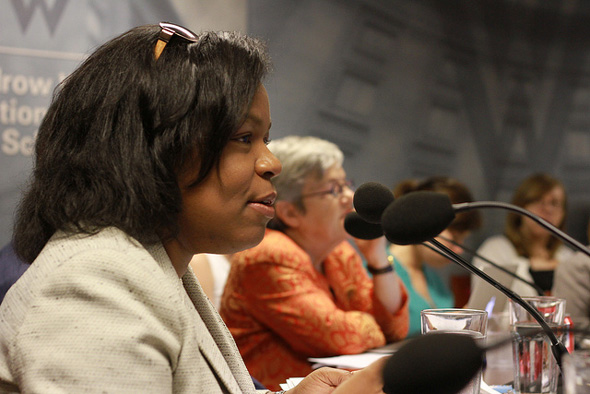
›A new framework for sexual and reproductive health is needed, argued panelists in a recent event at the Wilson Center, and the Rio+20 conference on sustainable development would have been the place to start. An international consensus around women’s human rights was developed at the International Conference on Population and Development in Cairo in 1994, but Carmen Barroso, director of the International Planned Parenthood Federation’s Western Hemisphere Region, said there has been slow implementation, little funding, and furthermore the world has changed significantly since then.
Barroso was joined by Latanya Mapp Frett, vice president of Planned Parenthood Global, as well as two representatives of Planned Parenthood partner organizations, Marco Cerezo of FUNDAECO and Ben Haggai of Carolina for Kibera.
New challenges to the reproduce rights landscape include the rapid spread of HIV/AIDS and decreased funding for international programs. But new opportunities include rapid dissemination provided by the internet and globalization and a subsequent mobilization of youth. “Young people are the largest cohort in history,” Barroso said in an interview with ECSP, both in absolute numbers and in percent of the population. “We have a historical opportunity [to incorporate] them in these decision-making processes.” Additionally, gender and health issues are incresaingly seen by many as linked with the environment and development.
Intersection of Health and the Environment
Marco Cerezo’s FUNDAECO (Foundation for Ecodevelopment and Conservation) is an example of Planned Parenthood’s partnership with other organizations. Based, in rural Guatemala, they shifted from primarily focusing on conservation and sustainable development to incorporating women’s health after finding a vicious cycle of poverty, high fertility, and environmental degradation in the places they worked.
Women’s health was so dire it was holding development back, Cerezo said. “Sustainable community development will not be possible without the education, empowerment, and support to rural women,” they write in their mission statement.
FUNDAECO now acts as a model for the intersection between reproductive health and the environment. Cerezo reported that once women are healthy and empowered through clinics established by FUNDAECO, they become more active in all aspects of the community, including ecological preservation.
Building Healthy Communities
Ben Haggai, who works in Nairobi’s biggest slum, Kibera, further reiterated the need for integrated programs. Carolina for Kibera has a number of programs to improve the quality of life for residents, he said, and has a particular focus on youth with sports associations and education programs.
Youth are the best reproductive health educators, Haggai said, as they are able to talk frankly with their peers. The NGO trains peer youth educators to reach out to community members about reproductive health and other issues like substance abuse. Since the young people work as volunteers, Haggai said, they are motivated only by a desire to improve their communities.
A Natural Intersection
Latanya Mapp Frett agreed that sexual and reproductive health aligns quite naturally with issues of sustainability. “We try to work in the countries overseas in Latin America and Africa where we focus particularly on non-traditional health sectors,” she said in an interview with ECSP following the panel. “One of those sectors is the environment.”
While emphasizing that contraceptive use is a cost-effective way to ensure sustainable development, Mapp Frett cautioned against framing sexual and reproductive health only in the context of reducing fertility. While this may have been common in the past, she noted, it’s important to ensure that women have the right to make childbearing choices for themselves.
Mapp Frett also urged policymakers in the United States to look to developing countries for intersections between development, the environment, and reproductive health. She said that Planned Parenthood’s partner organizations, including FUNDAECO and Carolina for Kibera, have found these connections and successfully partnered with already existing networks like churches to more effectively reach the community.
Translating Into Effective Action
Each member of the panel spoke about the challenge of articulating the need for sexual and reproductive health programs to people outside the field. Barroso mentioned research conducted by Brian O’Neill which found that meeting the current unmet need for contraception would slow population growth enough to reduce emissions by 17 percent.
Cerezo emphasized the importance of consensus among the staff of a given organization, saying it is difficult to make a case to agronomists and farmers if a culture clash exists within the institution. Haggai agreed, adding that focusing on reproductive issues is an important measure of prevention which helps protect both the environment and the health of women in a community.
For Mapp Frett, women’s reproductive and sexual health is indivisible from other aspects of development. “As you talk about sustainable development, you talk about ensuring that women are empowered to make sure that our earth is sustainable,” she said.
Assessing Rio+20
The panel took place before the UN Conference on Sustainable Development got underway in Rio. Participants had high hopes for a renewed focus on gender and reproductive rights at the conference. Unfortunately, language on reproductive rights was first weakened and then omitted entirely from the final outcome document (see the account written by ECSP’s Sandeep Bathala at Rio for more on the conference).
While pressure from the Vatican and the G-77 kept reproductive health out of the outcome document, it was not entirely forgotten at the conference. A number of side events highlighted the importance of reproductive rights, especially in the context of the environment and development.
Hillary Clinton also re-affirmed U.S. commitment to access to contraception and reproductive health care. “Women must be empowered to make decisions about whether and when to have children,” she said at the conference on Friday. “And the United States will continue to work to ensure that those rights are respected in international agreements.”
Clinton shared the urgency expressed by the panelists at the Wilson Center. “There is just too much at stake, too much still to be done,” she said. “We simply cannot afford to fail.”
Event Resources:Sources: FUNDAECO, UN Conference on Sustainable Development, U.S. Department of State.
Photo Credit: Sean Peoples/Wilson Center. -
Alexandra Cousteau on the Global Water Crisis and Choosing Between the Environment and the Economy
›Above is a short discussion filmed after a full dialogue TV episode last week; for the full interview, please visit the Wilson Center.
“We have serious issues that we need to address, yet we’re largely unaware of them because water seems so abundant,” said Alexandra Cousteau in an interview at the Wilson Center. “That myth of abundance is finally reaching an age of limits.”
Cousteau spoke with John Milewski of the Wilson Center’s dialogue TV program, after an event on the recent global water security assessment by the U.S. intelligence community. She discussed the work of her organization, Blue Legacy, which seeks to raise awareness of the ‘global water crisis’ – from degrading quality to growing scarcity and the proliferation of water refugees.
Global Water Crisis
“Traditionally our understanding of the global water crisis has been very narrow,” said Cousteau. “We have talked about it mostly in terms of the very real water and sanitation crisis that is happening in the developing world.” Without minimizing the severity of the situation in developing countries or oversimplifying the tangled nature of their problems, she characterized these water and sanitation struggles as fundamentally “solvable.”
Cousteau argued that there are also substantial water problems in the United States. Pollution due to runoff and over-utilization of major riverways are threats that are much different from those in the past.
“In Nixon’s time, when he signed the Clean Water Act, it was because rivers like the Potomac were in such bad shape, and they could see it from their office windows,” she said. “But the threats to our water are different today…before, it was industrial effluent, and what we were putting in the water that we could see. The Hudson River would change color daily based on the paper mills and what color paper they were printing that day.”
Today, chemicals may impact water quality without changing the appearance of water: “You don’t see it, the water can be perfectly transparent.”
Blue Legacy Expeditions
Cousteau has taken two expeditions with Blue Legacy to highlight water issues around the world. The first in 2009 was global; Cousteau and her team traveled from India to Botswana and beyond. Throughout the voyage, she worked to make her travels accessible to the general public and was surprised at her success.
“It was an experiment, but it worked. And when we came back to the United States, we got a lot of feedback, and one of the things people said was, ‘Gosh, that was an incredible adventure, thanks for taking us along for the ride! Clearly, there is a global water crisis, now I understand that. I’m just so relieved it’s not happening in America.’ And I thought, ‘Oh my Lord, I guess we have an expedition to do in America!’”
Her 2010 North America expedition focused on issues ranging from the over-exploited Colorado River to the polluted Mississippi, and sought to make water problems personal “at a time when our demand on water is at a tipping point.”
The Environment and the Economy
Cousteau’s interview was particularly timely in light of global economic troubles which have led some to say the environment should take a backseat. Cousteau said this doesn’t have to be the case. She emphasized the interconnected nature of the environment and the economy, saying that policymakers don’t have to choose to focus on one or the other.
“We feel like we have to make a choice between the economy and the environment, and that’s a false dilemma. A healthier environment is a more prosperous economy. And when we fail to realize that we don’t have to sacrifice one to have the other, then I think we wind up sacrificing a lot of the quality of life and the opportunity that we take for granted.”
Video Credit: Dialogue/Wilson Center and Alexandra Cousteau. -
Population Projections: Breaking Down the Assumptions
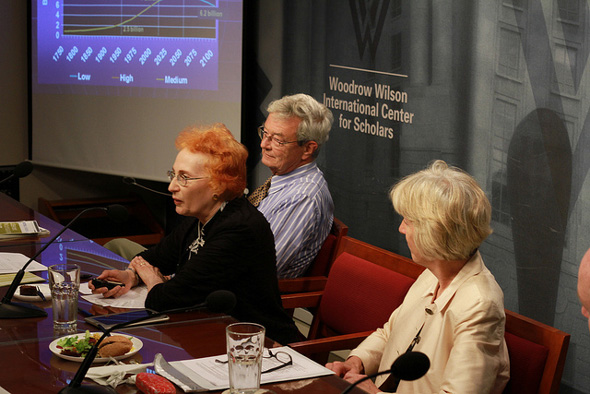
›“The seventh billion [person] was added in 12 years, and that could be the story for the eighth billion – and that gets people who think that growth has stopped,” said Carl Haub, senior demographer at the Population Reference Bureau. Haub was joined by Hania Zlotnik, former director of the UN Population Division, and Rachel Nugent of the University of Washington’s Department of Global Health on June 5 to speak about the assumptions behind the UN population projections. While each of the panelists noted the utility of projections, they also cautioned against seeing them as inevitable. [Video Below]
Meeting the Projections
As a former top official in the UN’s Population Division, Zlotnik spoke about how much is riding on the projections. “The experts tell me that to feed nine billion people, living better than the standards of living that we have today, one needs to increase agricultural production or all the production of food by about 70 percent and that is a challenge, but it might be feasible. But if the numbers go higher…I think it’s impossible,” she said.
The medium variant projection by the UN that gets the world to that nine billion figure is not a given – it builds in expected action on and improvement of many demographic indicators. Zlotnik pointed to the global unmet need for family planning, for example, which “is especially high in the high fertility countries,” and suggested that the current rate of increase in contraceptive use is insufficient.
She calculated the number of years it would take many of these countries to meet their unmet need at their current rate of uptake and found “the number of years for a lot of these poorer countries that have high fertility would be very long – 40 years, some of them, 80 years, 100 years – because the increased contraceptive prevalence has been so small.” At that rate, population growth in these countries will far surpass the UN medium variant.
The perception that population growth is no longer an issue contributes to the problem, Zlotnik said. People see that only 18 percent of the world population lives in countries with high population growth and assume “there’s no longer a population problem.” But she emphasized the power of exponential growth, arguing that even a small proportion growing at a rapid rate can have a large impact.
Questioning Assumptions
Haub pointed out several instances where assumptions in the methodology behind the projections create uncertainty.
For example, there is a lack of data in many low-income countries. “A date, let’s say 2000, 2005 – it’s the past, but it may be a projection. It may be based on a census in 1990,” he said. If it’s wrong, that error may not be corrected until another census, but it will still be relied on for country-level projections.
He also noted that certain assumptions about desired family size sometimes do not bear out on the ground. One of the key methods to slowing population growth is to provide women and couples with the means to choose how many children they wish to bear. But in many fast-growing countries, women wish to have large numbers of children. In Niger, for example, women say their ideal family size is over nine children. Such women are less likely to use contraception, no matter how accessible it is, as they value larger families.
“It has been – I guess conventional is a good word – to assume that birth rates are going to come down the way they did in the rich countries,” Haub noted. But there has been a “stall” for many developing countries, which he suggests is caused by fast initial uptake from urban women followed by much slower uptake by rural women. These dynamics, however, are relatively new and therefore are not always well incorporated into current projections.
The Economic Impact of Population Changes
While Haub and Zlotnik looked at the assumptions made before the projections are made and the importance and means to reach these projections, Nugent focused on the economic implications of lower fertility and the demographic transition.
She suggested that increased control over fertility can positively impact a country’s economy. Women are given the opportunity to “invest their time in acquiring skills and investing time in the labor market and that affects their earnings…[and] their ability to control resources and make decisions within the household” as they spend less time caring for children, she said.
The labor market changes as well, as fewer children are born into a given generation. This can reduce “demand on economic resources [and] demand on environmental resources,” and the increased investment in human capital allowed by smaller family sizes can lead to a healthier population.
Nugent concluded by pointing out key areas of intervention most likely to decrease both fertility and mortality and allow countries to reap the positive economic benefits of fertility decline. She suggested a focus on “complementary investments in education and health,” especially with regard to “poor and marginalized populations,” which can in fact impact the country as a whole. Finally, she recommended focusing on proven “evidence-based programs [and] service-delivery programs.”
Educating Policymakers
Each of the panelists cautioned against relying on population projections without taking action to make them come true.
“Maybe the best thing to do if you’re giving a presentation is to show the UN’s constant fertility variant first and scare people half to death and then say, ‘but if 117,000 things go right, [the medium variant projection] is what will happen,” said Haub, addressing the common tendency to view the UN projections as destiny.
Similarly, Nugent warned against viewing the demographic transition as inevitable. “There’s a certain sense…that [the demographic dividend] is kind of an automatic thing that happens, and that really has to be addressed,” she said, adding that “it’d be quite interesting to show some scenarios of what would need to be done…in order to get some benefits from that dividend.” (See also Elizabeth Leahy Madsen’s recent article on achieving the dividend.)
Zlotnik reiterated that the UN does not in fact know what the future will bring. “It’s not that we know what the world is going to do, but we hope that [the projections] will get the message out – if this doesn’t happen, you’re in trouble.”
Event ResourcesPhoto Credit: Sean Peoples/Wilson Center. -
Pop at Rio+20: Reproductive Rights Missing From Outcome Document – Assessing the Disappointment
›June 22, 2012 // By Sandeep BathalaAs heads of state get ready to sign on to the outcome document here in Rio, all eyes are on next steps – especially for the reproductive health and integrated development communities, which have seen their hopes of mainstreaming their issues with the sustainable development agenda dashed.
The final outcome document can be found here. USA Today reports that opposition from a group of countries in the 11th hour stripped the text of critical reproductive rights language:An initial draft of this conference’s outcome document stated, “We are committed to ensure the equal access of women and girls to education, basic services, economic opportunities, and health care services, including addressing women’s sexual and reproductive health and their reproductive rights.”
Absent entirely is any explicit connection between reproductive rights, population dynamics, and sustainable development.
In the final draft, the stronger wording “We are committed to ensure the equal access” was switched to the weaker “We are committed to promote the equal access.” The reference to reproductive rights was deleted altogether, after opposition from the G-77, a negotiating bloc of developing countries at the United Nations, and the Holy See.
But others, as we have heard repeatedly throughout the conference, insist that gender issues and reproductive rights have a strong and vital connection to sustainable development. Yesterday, USAID, the Aspen Institute, and the Center for Environment and Population held a discussion in the U.S. tent on this very issue, titled “Making Population Matter: The Demographic Dividend and Sustainable Development.”
As Vicky Markham of the Center for Environment and Population reports on RH Reality Check, the side-event aimed to demonstrate the effects of population dynamics, both positive and negative:We have the largest youth demographic ever in the history of the world, and most developing nations have a “youth bulge.” This can be seen as a challenge, or opportunity, particularly if the focus is on providing development programs for child survival, family planning, reproductive health, and education. The importance of women’s empowerment was also central. But it’s not a given; it’s an opportunity only if we pay attention to these issues to increase the benefits of the “demographic dividend.”
The demographic dividend, as described by USAID Deputy Administrator and panelist Donald Steinberg in blog post earlier this week, “is an opportunity that arises when a country transitions from high to low rates of fertility and child and infant mortality.” But it’s not just about ensuring access to family planning and reproductive health; youth-focused economic and education policies are also needed: “Maximizing the dividend requires social and economic policies that reinforce inclusion, equity, and opportunity across the entire population,” he writes. USAID is making a point of creating youth-focused policies for this reason, he said in Rio.
Carmen Barroso, regional director of the International Planned Parenthood Federation’s Western Hemisphere Region, pointed out that Latin American countries could not take advantage of the demographic dividend before recent societal changes occurred, including decreased fertility, increased urbanization (which leads to smaller families), and greater schooling and employment of women.
Seventy percent of world population growth is likely to be generated by Africa this century, said Eliya Msiyaphazi Zulu, executive director of the African Institute for Development Policy – and it is the only continent projected to continue to grow in the next century, he said. He called for redefining growth as more than GDP as that measure does not consider environmental degradation and its costs: “We must have other means to measure development.”
As heads of state and negotiators consider their positions at this conference – which many were hoping would make a much stronger statement – they might do well to ponder today’s comments from Secretary of State Hillary Clinton:While I am very pleased that this year’s outcome document endorses sexual and reproductive health and universal access to family planning, to reach our goals in sustainable development we also have to ensure women’s reproductive rights. Women must be empowered to make decisions about whether and when to have children. And the United States will continue to work to ensure that those rights are respected in international agreements.
Sources: RH Reality Check, UN, U.S. Department of State, USA Today, USAID.
Now none of this is an abstract discussion. There is just too much at stake, too much still to be done. And many of you visited the U.S. Center here in Rio and saw practical solutions related to some of the work I’ve discussed and other goals we hold in common. We believe solutions require action by all of us. Governments, yes; let’s do our part. Let’s do more than our part.
Photo Credit: YouthPolicy.org. -
Climate-Conflict Thresholds and Water as a Casualty of Conflict
›While numerous studies have examined the perils faced by businesses operating in conflict-affected or high-risk locations, Water as a Casualty of Conflict: Threats to Business and Society in High-Risk Areas, written by Kristina Donnelly, Mai-Lan Ha, Heather Cooley, and Jason Morrison, is the first such report to focus specifically on water. The report – a collaborative effort between the UN Global Compact and the Pacific Institute – aims to provide a framework for understanding the conflict-water-business nexus by first tracing the ways in which conflict and high-risk areas can adversely impact local and regional water systems and then illustrating the challenges such impacts can pose to businesses in conflict-affected or high-risk areas. Water as a Casualty of Conflict was published online this week and was introduced at a Rio+20 Corporate Sustainability Forum panel session.In an article titled “Climate Change and Violent Conflict,” appearing in the May 18th edition of Science, authors Jürgen Scheffran, Michael Brzoska, Jasmin Kominek, Michael Link, and Janpeter Schilling attempt to sort out some of the controversy surrounding the intersection of climate change and violent conflict. They urge greater interdisciplinary research to identify and provide solutions for possible “tipping points” where the impacts of climate change may prove too great for human adaptive capacity. Such research has been scarce due to difficulties in collecting sufficient data. Moreover, the authors note that many of the extant studies on climate change and conflict are flawed because of how they define violent conflict. The commonly-used Uppsala Conflict Data Program and Peace Research Institute Oslo (UCDP-PRIO) Armed Conflict dataset, for instance, excludes by definition many riots, protests, incidences of livestock theft, and other violent or potentially violent behaviors. This is problematic because, as the authors point out, “in recent decades, climate variability may have been more associated with low-level violence and internal civil war – which fall below the UCDP-PRIO definition cutoff – than with armed conflict or war between countries.” -
Pop at Rio+20: Text Finalized, Population-Sustainable Development Links Left Out?
›June 21, 2012 // By Sandeep BathalaWhile I was visiting with youth peer educators yesterday with the Brazilian Society for Family Welfare in the Cachoeirinha favela (see Vicky Markam’s post for details – we were on the same trip), UN member states reached consensus in the Rio+20 negotiations. But, according to reports, although the outcome document includes some mention of reproductive health, gender equality, and women’s empowerment, it fails to explicitly recognize the link between reproductive rights and sustainable development.
Many women’s rights and health observers have, from the start, encouraged this link.
Karen Newman, speaking to ECSP in April during the Planet Under Pressure conference – a precursor to Rio – said she hoped this week would offer an opportunity to look at “sustainable development in the round” and “re-identify family planning as a core development priority,” given its human rights and health implications and relationship to population growth.
Jenny Shipley (Former Prime Minister of New Zealand) wrote just yesterday on CNN that “we are at a moment in history where we still have time to make a difference. It is essential that the global discussion in Rio not be blind to the potential solutions that access to voluntary family planning could offer to many of the world’s problems.”
“We can no longer afford this outrageous oversight, driven by old-fashioned tradition, discrimination, and pure ignorance,” said Gro Harlem Brundtland (Former Prime Minister of Norway and Former Head of the World Health Organization) at a side event on Monday. “Now is the time to agree to unleash the largest untapped potential for sustainable development and stop all discrimination against women and girls.”
But now that preliminary agreement on the outcome text has been reached, reports have filed in that the connection many were hoping for is absent. Zonibel Woods, blogging on RH Reality Check, wrote:From the start of the negotiations, gender equality and women’s human rights, including reproductive rights, have continuously been challenged by a few governments, claiming that [these] had “nothing to do with sustainable development.”
The lack of consensus among the wider international community may also undercut efforts to highlight reproductive rights in the post-2015 Millennium Development Goals/Sustainable Development Goals framework and as governments ready for the follow-on to the International Conference on Population and Development in 2014. A concrete link to “sustainable development,” whatever form that takes, would help ensure that reproductive health is not side-lined.
This debate continued until the last few hours of the negotiations. In the end, the text includes a re-affirmation of both the Cairo and Beijing agreements, but it falls short by failing to recognize that reproductive rights are also critical to the achievement of sustainable development. If a woman cannot decide if and when to have children and if she is not provided with the reproductive health care that is her human right, it is challenging to contribute to sustainable solutions for the planet.
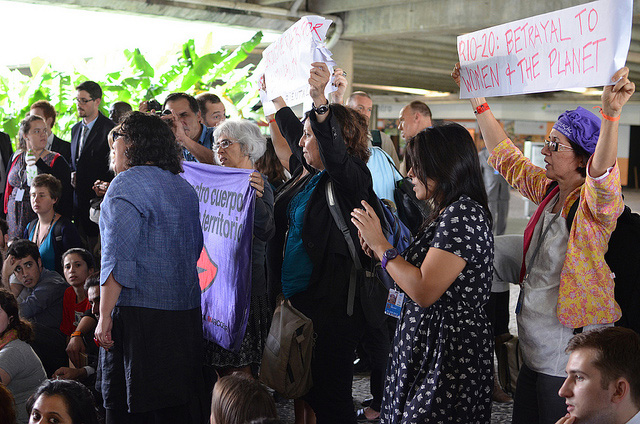
Immediately following the adoption of the text, women gathered and protested at Rio Centro, the main venue for the conference, and advocacy continues.
Heads of state will in all likelihood sign on to the outcome document by tomorrow (it could technically still be changed, but that appears unlikely). I will keep you posted on the final outcome and will be taking notes at a side-event this afternoon by USAID, the Aspen Institute, and Center for Environment and Population on the demographic dividend and sustainable development, which promises to be spirited given today’s news. You can tune in live to the webcast of that event at 2:30 EST on Ustream.
Sources: AllAfrica, Aspen Institute, CNN, IRIN, RH Reality Check, U.S. Department of State, USAID.
Photo Credit: United Nations Photo. -
Laurie Goering, AlertNet
Pop at Rio+20: Brazil a Model for Slowing Population Growth, Say Experts
›June 21, 2012 // By Wilson Center StaffThe original version of this article, by Laurie Goering, appeared on AlertNet.
Rosimere Lopes knows what she does not want in life.
The 23-year-old, who lives in Cachoeirinha, a hillside slum in Rio’s gritty North Zone, was born when her mother was just 16, and grew up taking care of her five younger brothers and sisters while her mother worked.
As a result of missing so much education, she’s still trying to finish high school. But she has accomplished one important thing – she has no children of her own yet, despite having a regular boyfriend.
“My mother got pregnant at 16 so I know the consequences. I don’t want that,” she said. “I want to do better.”
In the last decade, Brazil has undergone a family planning revolution. In 2000, the country’s birthrate was 2.4 children per woman, already dramatically down from decades past. Today it has dropped to 1.9 children, below replacement level and on a par with many developed countries.
That slowdown, built on making available better information and contraceptives, and on growing urbanization, is increasingly looked at as a model by experts around the world trying to find ways to dampen population growth and consumption – both linked to accelerating climate change and resource scarcity.
Continue reading on AlertNet.
Sources: UN Population Division.
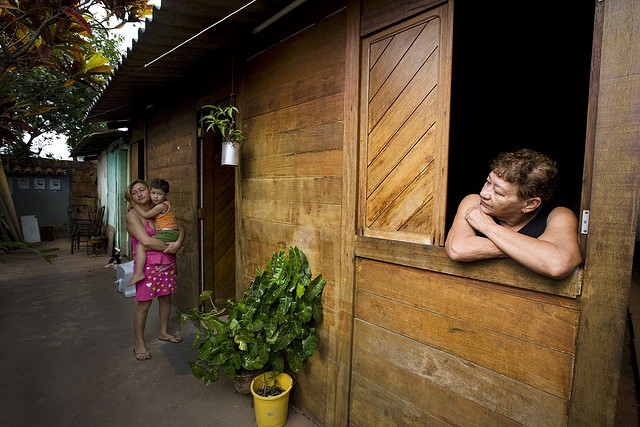
Photo Credit: A grandmother, mother, and child in Brasilia, courtesy of flickr user babasteve (Steve Evans). -
Vicky Markham, RH Reality Check
Pop at Rio+20: Favelas and Protests
›June 20, 2012 // By Wilson Center StaffThe original version of this article, by Vicky Markham, appeared on RH Reality Check.
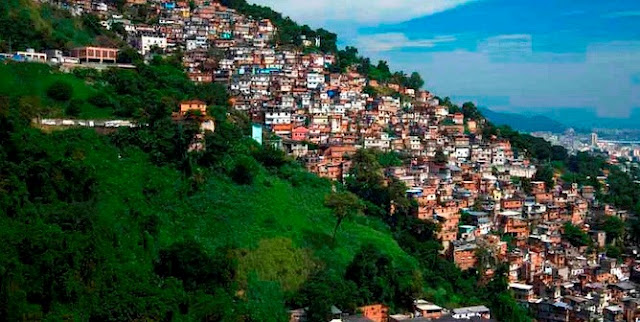
This morning I ventured the opposite direction from Rio Centro where the UN Rio+20 negotiations are taking place, and travelled with colleagues to the Cachoeirinha (I was told it means “waterfall”) favela in Rio de Janeiro. These shantytowns are quite common in Rio, well over one million strong, located within and around the city limits. This particular one has 37,000 residents.
We made the trip to visit the Brazilian Society for Family Welfare (BEMFAM) reproductive health and family planning clinic there, and were treated to a gathering of youth already discussing the facts of life, and more, with a BEMFAM counselor. This is especially poignant because youth in Brazil, similar to youth worldwide, are key to the issues we are debating here at the UN Rio+20 meetings just a few miles away. The Brazilian youth demographic, and the world’s, is the largest ever in history – it’s called the “youth bulge” – and from favelas, to cities, suburbs and rural areas everywhere, they represent the decision makers for the world’s future at all levels.
Here at the BEMFAM clinic, an affiliate of the International Planned Parenthood Federation’s array of family planning clinics worldwide, youth have weekly meetings and can come in daily if needed for their reproductive health needs. We entered to find about 25 adolescents sitting in a circle in very animated discussion about how they viewed sexuality, reproductive health, being young, their feelings and emotions about this period in their life. Through translators we learned so much from these adolescents and young adults, and once revealed I can’t help but feel how similar they are to our own youth. They cared about their friends, family, (how much their parents don’t know), going to college, getting jobs, raising families, school, and having fun. One glaring difference that emerged however is accessibility to many of their hopes and dreams – resources to come by any of their plans are scarce, and few will likely see college or even jobs from what they told us. This however did not make them dour or negative; they were bright, committed, compelling, cheerful, very well-spoken, and passionate about all they relayed to us.
Continue reading on RH Reality Check.
Photo Credit: “Riocinha Favela – Rio de Janeiro Brazil,” courtesy of flickr user David Berkowitz.