• woodrow wilson center
  • ecsp

New Security Beat

Subscribe:
  • rss
  • mail-to
  • Who We Are
  • Topics
    • Population
    • Environment
    • Security
    • Health
    • Development
  • Columns
    • China Environment Forum
    • Choke Point
    • Dot-Mom
    • Friday Podcasts
    • Navigating the Poles
    • Reading Radar
  • Multimedia
    • Water Stories (Podcast Series)
    • Backdraft (Podcast Series)
    • Tracking the Energy Titans (Interactive)
  • Films
    • Water, Conflict, and Peacebuilding (Animated Short)
    • Paving the Way (Ethiopia)
    • Broken Landscape (India)
    • Scaling the Mountain (Nepal)
    • Healthy People, Healthy Environment (Tanzania)
  • Publications
  • Events
  • Contact Us

NewSecurityBeat

The blog of the Wilson Center's Environmental Change and Security Program
  • Vicky Markham, RH Reality Check

    Pop at Rio+20: Favelas and Protests

    June 20, 2012 By Wilson Center Staff
    The original version of this article, by Vicky Markham, appeared on RH Reality Check.

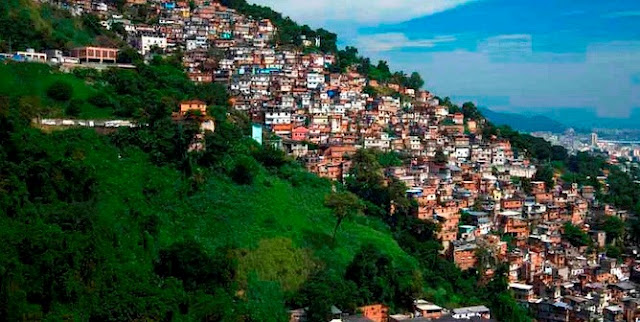
    This morning I ventured the opposite direction from Rio Centro where the UN Rio+20 negotiations are taking place, and travelled with colleagues to the Cachoeirinha (I was told it means “waterfall”) favela in Rio de Janeiro. These shantytowns are quite common in Rio, well over one million strong, located within and around the city limits. This particular one has 37,000 residents.

    We made the trip to visit the Brazilian Society for Family Welfare (BEMFAM) reproductive health and family planning clinic there, and were treated to a gathering of youth already discussing the facts of life, and more, with a BEMFAM counselor. This is especially poignant because youth in Brazil, similar to youth worldwide, are key to the issues we are debating here at the UN Rio+20 meetings just a few miles away. The Brazilian youth demographic, and the world’s, is the largest ever in history – it’s called the “youth bulge” – and from favelas, to cities, suburbs and rural areas everywhere, they represent the decision makers for the world’s future at all levels.

    Here at the BEMFAM clinic, an affiliate of the International Planned Parenthood Federation’s array of family planning clinics worldwide, youth have weekly meetings and can come in daily if needed for their reproductive health needs. We entered to find about 25 adolescents sitting in a circle in very animated discussion about how they viewed sexuality, reproductive health, being young, their feelings and emotions about this period in their life. Through translators we learned so much from these adolescents and young adults, and once revealed I can’t help but feel how similar they are to our own youth. They cared about their friends, family, (how much their parents don’t know), going to college, getting jobs, raising families, school, and having fun. One glaring difference that emerged however is accessibility to many of their hopes and dreams – resources to come by any of their plans are scarce, and few will likely see college or even jobs from what they told us. This however did not make them dour or negative; they were bright, committed, compelling, cheerful, very well-spoken, and passionate about all they relayed to us.

    Continue reading on RH Reality Check.

    Photo Credit: “Riocinha Favela – Rio de Janeiro Brazil,” courtesy of flickr user David Berkowitz.
    Topics: Brazil, demography, development, education, environment, family planning, gender, Pop at Rio+20, population, poverty, Rio+20, youth

Join the Conversation

  • RSS
  • subscribe
  • facebook
  • G+
  • twitter
  • iTunes
  • podomatic
  • youtube
Tweets by NewSecurityBeat

Trending Stories

  • unfccclogo1
  • Pop at COP: Population and Family Planning at the UN Climate Negotiations

Featured Media

Backdraft Podcast

play Backdraft
Podcasts

More »

What You're Saying

  • Volunteers,At,The,Lagos,Food,Bank,Initiative,Outreach,To,Ikotun, Pan-African Response to COVID-19: New Forms of Environmental Peacebuilding Emerge
    Rashida Salifu: Great piece 👍🏾 Africa as a continent has suffered this unfortunate pandemic.But it has also...
  • A desert road near Kuqa An Unholy Trinity: Xinjiang’s Unhealthy Relationship With Coal, Water, and the Quest for Development
    Ismail: It is more historically accurate to refer to Xinjiang as East Turkistan.
  • shutterstock_1779654803 Leverage COVID-19 Data Collection Networks for Environmental Peacebuilding
    Carsten Pran: Thanks for reading! It will be interesting to see how society adapts to droves of new information in...

Related Stories

No related stories.

  • woodrow
  • ecsp
  • RSS Feed
  • YouTube
  • Twitter
  • Facebook
  • Home
  • Who We Are
  • Publications
  • Events
  • Wilson Center
  • Contact Us
  • Print Friendly Page

© Copyright 2007-2021. Environmental Change and Security Program.

Woodrow Wilson International Center for Scholars. All rights reserved.

Developed by Vico Rock Media

Environmental Change and Security Program

Woodrow Wilson International Center for Scholars

Ronald Reagan Building and International Trade Center

  • One Woodrow Wilson Plaza
  • 1300 Pennsylvania Ave., NW
  • Washington, DC 20004-3027

T 202-691-4000