Showing posts from category environment.
-
Pop at Rio+20: Getting Women’s Rights on the Agenda
›June 19, 2012 // By Sandeep BathalaHere we are on my second day of side events at Rio+20 and the Aspen Institute, International Planned Parenthood Federation, and the United Nations Foundation convened a high-level moderated dialogue this morning to raise the profile of human development, gender, and reproductive health at the main conference.
Rio+20 is an unprecedented opportunity to draw attention to sustainable development and the role women’s rights and voices play in it. The Aspen/IPPF/UN Foundation event was timely as some negotiators are questioning the link between women and sustainable development in the 11th hour instead of reaffirming the commitments made 20 years ago at international conferences in Rio, Cairo, and Beijing.
High-level leaders, including Gro Harlem Brundtland (Former Prime Minister of Norway), Musimbi Kanyoro (President and Chief Executive Office of the Global Fund for Women), Tewodros Melesse (Director General of the International Planned Parenthood Federation), Mary Robinson (Former President of Ireland and President of the Mary Robinson Foundation – Climate Justice), and Tim Wirth (President of the United Nations Foundation), spoke to the role of women’s empowerment and family planning in the global discussion of sustainable development.
Some highlights from the meeting:
Brundtland noted that the next increment of economic growth could come fully from women’s empowerment. Family planning is a cross-cutting and cost-effective way to ensure this possibility.
Kanyoro further emphasized that for development organizations, women, more than any other partner, have the potential to enable sustainable growth.
Melesse discussed the role of addressing the special needs of young women. “If they are not met, we will have failed at sustainable development,” he said.
Robinson argued that family planning must be mainstreamed in international conferences, like Rio+20 and the annual UN climate COPs, as a human rights issue. Women’s issues cannot be add-ons in outcome documents – they have to be front and center. “We know what works,” she said, referring to effective reproductive health efforts and their ability to advance human rights and sustainable development
Wirth spoke passionately about the basic rules of diplomacy: do no harm and no backsliding. He remarked that hard earned gains from previous UN documents, although limited, must not be lost. They must be considered as statements from governments around the world and as resounding affirmation of the rights of women, he said.
For more, see Vicky Markham’s thoughts on the meeting at RH Reality Check too.
Stay tuned to see whether official negotiations in Rio – which start tomorrow – will heed these calls.
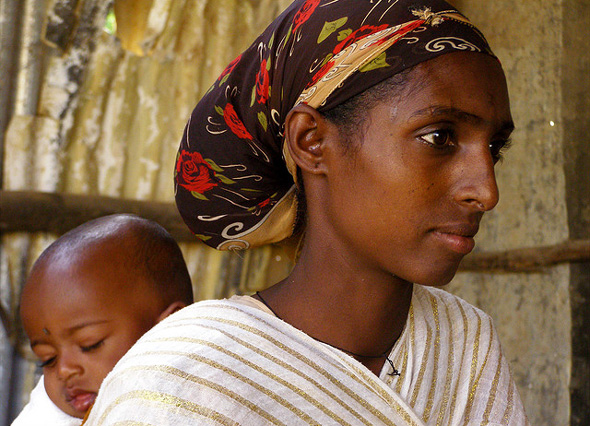
Photo Credit: “Etiopía,” courtesy of flickr user subcomandanta. -
Royal Society Launches ‘People and the Planet’ Study
›“This is a time of rapid and multifaceted change in both population and the planet,” said Parfait Eloundou-Enyegue, a member of the U.K. Royal Society’s People and the Planet working group and contributing author to the report of the same name launched at the Wilson Center on June 4. “The question that the report is trying to address is whether we can actually envision a world in which we can sustainably and equitably meet the consumption needs of seven billion people, and the more to come.” [Video Below]The Royal Society is a self-governing fellowship of scientists that fosters research to address pressing social issues and better inform policy on a global scale. Eloundou-Enyegue, also an associate professor of development sociology at Cornell University, was joined by fellow working group member and African Institute for Development Policy Director and Founder Eliya Msiyaphazi Zulu to discuss their assessment of growing population and consumption pressures on global wellbeing.
Current Trends Are Unsustainable
“The current trends of global population growth and material consumption and the concomitant changes in the environment are unsustainable,” said Zulu.
On the population side, “you have changes that are affecting not just the size, the growth of the population, but also changes in family structure, in the population distribution, [and] population movement,” said Eloundou-Enyegue.
On the consumption side, “beyond the increase in consumption itself, there’s also a dramatic rise in aspiration,” he continued. “People are in greater contact and this tends to encourage…an increasing aspiration to mimic or to emulate the consumption standard of the more industrialized countries.”
Limits to Equitable Growth
When measuring consumption, which itself tends to be a misplaced barometer of wellbeing, according to Eloundou-Enyegue, there is a “disproportionate focus on GDP.”
Using GDP growth as a measure of consumption and wellbeing both “misses a lot of the economic production that’s not mediated through the market,” and “counts as positive things that are damaging to the planet,” he said.
The People and the Planet report marks a departure from the traditional consumption framework by asking “about the relevance of growth – is growth what we ought to be after?”
“The report tried to make a distinction between two types of consumption – the consumption of material resources and the consumption of goods and services – that are all relevant to wellbeing but have different implications for the environment,” Eloundou-Enyegue said. “So there is a need to think about how to shift or to favor consumption that is less damaging to the environment.”
Not an “Either-Or” Proposition
There is “a tendency to look at population and consumption when you’re addressing the impact of the environment in an either-or format, as if you had to choose either population as being the main culprit or consumption,” said Eloundou-Enyegue. “The reality is that they all have to be integrated and considered jointly.”
At the same time, there is “a tendency to shy away from population issues when you set development goals because they tend to be controversial,” he said. And yet, said Zulu, “there’s no question about it, the global population growth needs to be slowed down and ultimately stabilized for both people and the planet to flourish.”
The vast majority of future population growth is expected to come from Africa. Based on the United Nation’s medium variant projection, 70 percent of global population growth over the rest of the century will come from the continent.
That projection, however, belies a big assumption: “that the high fertility countries now will follow the same pattern in decline in fertility as the countries that have [already] achieved lower fertility had [in the past],” said Zulu, which “may actually not be the case.”
“You might actually find a situation where fertility might stabilize around three to four children in some of the…least developed countries,” he said, “and if that happens, it means that actually we stand a much, much bigger chance of getting to the high variant [of 15.8 billion by 2100] than we often tend to assume.”
In spite of that dire warning, however, Zulu said that “we should recognize that demography is not destiny, that through…appropriate socioeconomic and health policies and investment, we can actually slow down population growth.”
The report concludes that voluntary and non-coercive “reproductive health and family planning programs are urgently required,” said Zulu. “There is also a need for strong political leadership and financial commitment to make sure that these programs and services reach out to all women around the world who need them.”
Have We Missed the Boat Again?
Part of the urgency from the working group is because, so far, commitments to reproductive health appear to be falling short. It is the international community’s responsibility “to make sure that women have the contraceptives that they need in order to achieve their fertility aspirations,” said Zulu, but some of the most important agenda-setting events in global development over the past 20 years have sidelined population, reproductive health, and family planning.
The Millennium Development Goals, for instance, “tried to stay clear of population,” said Eloundou-Enyegue, even though “all the indicators that I see are either intrinsically demographic or have a strong demographic component.”
“If you think about stratification and the reproduction of inequality and poverty across generations and the role that differential fertility and reproduction plays, there’s no way you can sidestep population,” he continued. “If you’re talking about maternal mortality and child mortality…it doesn’t make sense to set population aside.”
Now, as the international community prepares for the upcoming Rio+20 summit, “there’s been a big struggle to get…consideration of population issues” on the agenda, said Zulu.
“Population is at the peripheral of all those discussions,” said Zulu. When in Nairobi for a preparatory conference earlier this year, Zulu said UNFPA Executive Director Babatunde Osotimehin “told me that he was quite alarmed that there was hardly any mention of population in all those discussions. And he asked me the question, ‘have we missed the boat again?’”
That concern reinforces the main argument of People and the Planet, said Zulu: there is an “urgent need to reduce material consumption of the richest, and increase consumption and healthcare for the poorest 1.3 billion people.”
“We’re talking about having the majority of people in the world being able to flourish, being able to lead decent lives.”
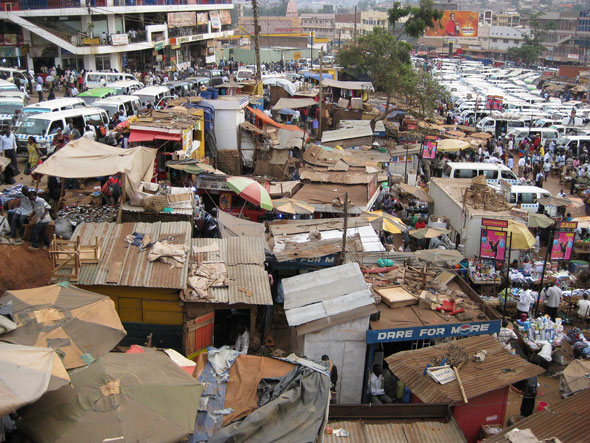
Event Resources:Photo Credit: “Market_Kampala, Uganda,” courtesy of the Hewlett Foundation. -
Pop at Rio+20: Cairo, Rio, and Beyond
›June 18, 2012 // By Sandeep BathalaGreetings from Rio de Janeiro! I will be blogging from the UN Conference on Sustainable Development throughout the week, tracking the inclusion of reproductive health and rights in the agenda.
Population dynamics have significant influence on sustainable development but the two have not always been seen as connected.
This year’s conference is the follow-on to the original UN Earth Summit held in Rio in 1992 (thus Rio+20). The resulting documents from that conference – Agenda 21, the Rio Declaration on Environment and Development, and the Statement of Principles for the Sustainable Management of Forests – were adopted by more than 178 governments and have done much to set the sustainable development agenda over the last two decades. Population dynamics were largely left off the table and instead were taken on separately, and in parallel, at the International Conference on Population and Development in Cairo in 1994.
This year, watchers from across the spectrum are eager to see these two issues talked about in a more integrated fashion. The official proceedings don’t start until the 20th, but side events have already begun.
At the first of Population Action International’s side events, appropriately named “From Rio to Cairo to Rio…and Beyond,” Eliya Zulu, executive director of the African Institute for Development Policy, said that virtually all development policies in sub-Saharan Africa cite population growth as an inhibitor to sustainable development and efforts to alleviate poverty, ensure food security, and preserve the environment. Furthermore, climate change is increasingly seen as a major threat to sustainable development in Africa. Policymakers in the region recognize the linkages between population, climate change, and sustainable development; however, little integration of these issues – operationally or conceptually – has been achieved.
Michael Herman, a technical adviser on population and economic development at the United Nations Population Fund, reminded audience members that demographic projections, like those predicting 10 billion by mid-century, are not destiny: population growth or decline is affected by policies, which should include human rights-based access to voluntary family planning.
Doris Mpoumou, an international policy officer at International Planned Parenthood Federation’s Western Hemisphere Regional Office, concluded the event by describing efforts to ensure that the Rio+20 outcome document being negotiated recognizes several key points. First, that population dynamics influence production and consumption rates; second, that population dynamics are relevant to the management of resources and sustainable development planning; and third, that population dynamics should be carefully integrated into development strategies and environmental planning with a focus on human rights.
Stay tuned here for more updates from Rio+20 and follow us on Twitter. I’ll be at every population-environment event I can get to and will also be visiting a favela with IPPF to see first-hand the ways Brazilians cope with the challenges of sustainable development.
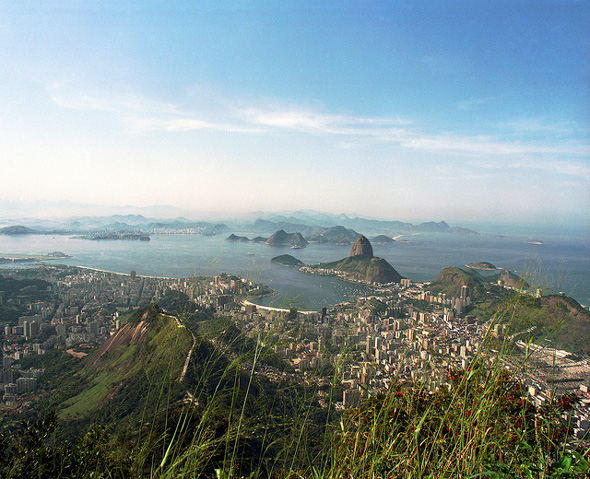
Photo Credit: View of Rio de Janeiro from a mountain in Tijuca National Forest, courtesy of Michos Tzovaras/UN Photo. -
Kirk Talbott, State of the Planet
Burma at a Crossroads for Peacebuilding and Natural Resource Governance
›June 18, 2012 // By Wilson Center StaffThe original version of this article, by Kirk Talbott, appeared on the Columbia University Earth Institute’s State of the Planet blog.
After a half-century of authoritarian rule, armed conflict against millions of ethnic minorities, and natural resource plunder, Burma, also known as Myanmar, now stands at a crossroads. As conditions for peace coalesce and civil society begins to blossom, there is hope once more for Burma’s people.
Burma’s quasi-civilian government, led by reformist Thein Sein, has initiated a series of surprising political openings and continues to engage actively with Nobel laureate Aung San Suu Kyi, now a member of parliament. Civil society and international relations are flourishing in contrast to conditions just one year ago. In May, the United States suspended economic sanctions and President Obama appointed a U.S. Ambassador for the first time in decades.
A new set of challenges emerge, however, around sharing the benefits and responsibilities of governing the country’s diverse wealth of natural resources. Nestled strategically between China and India, Burma has been isolated from the world’s attention since a coup in 1962. Its military government has consolidated a brutal grip on power through the sale of its rich timber, mineral, natural gas, and other resources, primarily to China and Thailand. This practice expanded after 1995, when the regime brokered a series of cease fire agreements with several ethnic armies along mountainous border areas. (For the first time in 60 years the Karen National Union joined almost all other major ethnic armies in agreeing to a cease fire, with the notable exception of the Kachin Independence Army.)
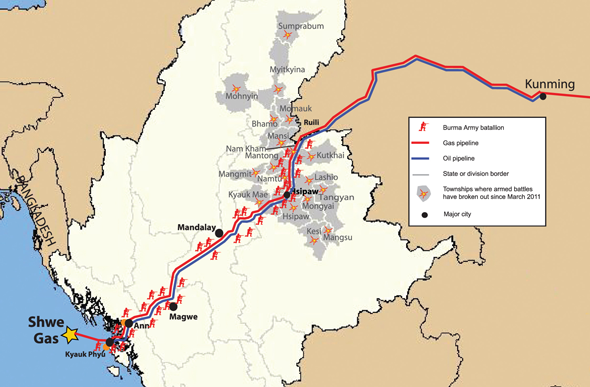
Oil and gas revenues fund the Tatmadaw, Burma’s half-million-strong army, one of Asia’s largest. Currently the huge offshore Shwe and Yadana natural gas reserves provide more than 90 percent of the nation’s foreign exchange. Chinese and Thai companies fund extensive pipeline, hydro-power, and transport networks as Burma becomes a potential regional economic corridor and natural resources production hub. China looms large in the geo-political equation investing over $12 billion in Burma in 2011.
Continue reading on State of the Planet.
Image Credit: Shwe gas line map, courtesy of Shwe Gas Movement. -
Sex and Sustainability on the Road to Rio+20
›When it comes to the public conversation about sustainable development, we can’t tell the story with only half the world’s population. Women’s voices are key – and women must have a seat at the table. Earlier this week I was honored to join Musimbi Kanyoro of the Global Fund for Women and Carmen Barroso of International Planned Parenthood Federation to brief bloggers and reporters about the linkages between sex and sustainability. The three of us are heading down to the landmark Rio+20 conference to track the inclusion of reproductive health and rights in the sustainable development agenda.
Some highlights from our call:- Musimbi noted that though the linkages between the environment – particularly climate change – and reproductive health issues can be contentious, we must remember that we are talking about real people with real needs – not abstract ideas.
- Carmen argued that women’s health and rights should be included in the upcoming Sustainable Development Goals, because health is intrinsic to sustainability, and reproductive rights are intrinsic to health.
- Musimbi remarked that climate change, urbanization, energy, and food security are all connected to population, our planet, and reproductive health. She highlighted the need for an open discussion about these linkages, especially for the 200 million women who want access to family planning.
- I pointed out that development projects that address population, health, and environmental issues are making a difference in remote communities around the world.
Follow me to Rio+20 here on the blog and the New Security Beat Twitter feed.
Image Credit: Adapted from UNSCD 2012 official logo. -
Africa on the Move: The Role of Political Will and Commitment in Improving Access to Family Planning
›Excerpted below is the adapted abstract, by lead authors Eliya Msiyaphazi Zulu and Violet Murunga. The full report is available for download from the Wilson Center’s Africa Program.
Despite commitments to the program of action for the 1994 International Conference on Population and Development and Millennium Development Goal 5 (focused on maternal and reproductive health), little progress has been made in improving access to family planning and slowing rapid population growth in Africa. Lack of political will has been highlighted among the key factors behind the lackluster performance in addressing these sensitive development issues. However, the situation is changing with some African governments embracing family planning as a key tool for improving child and maternal health, slowing population growth, preserving the environment, and enhancing broader efforts to alleviate poverty.
This study examines factors that have propelled the change in attitudes of some political leaders to champion family planning, assesses how such political will has manifested in different contexts, and explores how political will affects the policy and program environment. Mixed policy analysis methods were employed, including desk review of policy and program documents and stakeholder interviews conducted in Ethiopia, Malawi, and Rwanda – three countries that have made phenomenal progress in increasing contraceptive use in the recent past.
Lessons from this study will help galvanize efforts to improve access to reproductive health services in countries where little progress is being made. The results provide useful insights on the dawn of a new Africa where strategic political leadership is playing an increasingly valuable role in overcoming the continent’s longstanding development shackles. The study shows that political will is mainly changing due to increased availability of evidence showing that high population growth undermines efforts to alleviate poverty and hunger as well as investments in the quality human capital that least development countries desperately need in order to transform their economies.
The high sensitivity about childbearing and suspicions regarding the intentions of western development partners in promoting family planning in order to slow population growth are dissipating as more Africans are opting to have fewer children and demanding family planning. This study points to the need for global development partners to be much more cognizant of the drivers of Africa’s emerging success and focus their development assistance on enhancing, nurturing, and highlighting local leadership traits, capacities, and systems that are producing positive results, as well as support governments that have embraced family planning to ensure that no woman has an unwanted pregnancy due to lack of family planning.
Download the full report from the Wilson Center. -
Gidon Bromberg at TEDx on Peacebuilding Through Water in the Middle East
›“Cooperation over water is not a privilege, it’s a necessity,” said Gidon Bromberg, co-director of Friends of the Earth Middle East, in a TEDx talk at Yale. He sees the shortage of water in Jordan, Israel, and Palestine as an opportunity to bring these contentious communities together – even more so during this period of upheaval in the region.
Water woes have long contributed to regional tensions, said Bromberg. Water rights between Israel and Palestine were supposed to be settled during the Oslo accords in 1993, but negotiations were unsuccessful and water discussions were consequently left unfinished. The lack of formal negotiations caused each side to seize whatever resources they could Although Jordan was not part of the negotiations, it does share water resources with Israel and the West Bank and thus has been impacted by the lack of formal allocation processes. Both Jordan and Israel have diverted flow of the Jordan River into dams and irrigation projects. As a result, the Jordan River has lost 98 percent of its historic flow and the Dead Sea has lost one-third of its surface area.
Today, Israel has restricted Palestinian water use such that Palestinians have access to water only once a week in winter and once every three weeks in the summer, leading them to store water in containers on their roofs, Bromberg said. Though mismanagement is as much to blame as conflict, he notes, Palestinians chafe under the limitations.
Yet Friends of the Earth Middle East has used this difficult situation to educate the public, propose reforms, and build trust between Palestinian, Jordanian, and Israeli communities. Bromberg highlighted “fear of a small but vocal minority on both sides” as a key factor in preventing dialogue between the communities, but insists that water can bring people together. Neighboring communities have to work together, he said, “not because they’re best friends,” but to improve their own water situations.
Friends of the Earth provides that opportunity with their Good Water Neighbors project and hopes the trust built between communities extends beyond water issues as well. Since communities have strong motives to solve these problems, they work together more effectively than high-level politicians who may not be as apt to collaborate.
A positive update on the state of the Jordan River given in an interview with ECSP in October suggests that Bromberg may be on to something.
Sources: Amnesty International, Friends of the Earth.
Video Credit: TEDx. -
PHE and Community-Based Adaptation to Climate Change: Stronger Together
›Over the past several years, community-based adaptation has emerged alongside national and regional climate change initiatives as a strategic, localized approach to building resilience and adaptive capacity in areas vulnerable to climate change.