• woodrow wilson center
  • ecsp

New Security Beat

Subscribe:
  • rss
  • mail-to
  • Who We Are
  • Topics
    • Population
    • Environment
    • Security
    • Health
    • Development
  • Columns
    • China Environment Forum
    • Choke Point
    • Dot-Mom
    • Friday Podcasts
    • Navigating the Poles
    • Reading Radar
  • Multimedia
    • Water Stories (Podcast Series)
    • Backdraft (Podcast Series)
    • Tracking the Energy Titans (Interactive)
  • Films
    • Water, Conflict, and Peacebuilding (Animated Short)
    • Paving the Way (Ethiopia)
    • Broken Landscape (India)
    • Scaling the Mountain (Nepal)
    • Healthy People, Healthy Environment (Tanzania)
  • Publications
  • Events
  • Contact Us

NewSecurityBeat

The blog of the Wilson Center's Environmental Change and Security Program
Showing posts from category development.
  • The Role of the Private Sector in Solving Asia’s Environmental Emergency: Interview With Mark Clifford

    ›
    China Environment Forum  //  May 14, 2015  //  By Ilaria Mazzocco
    haze

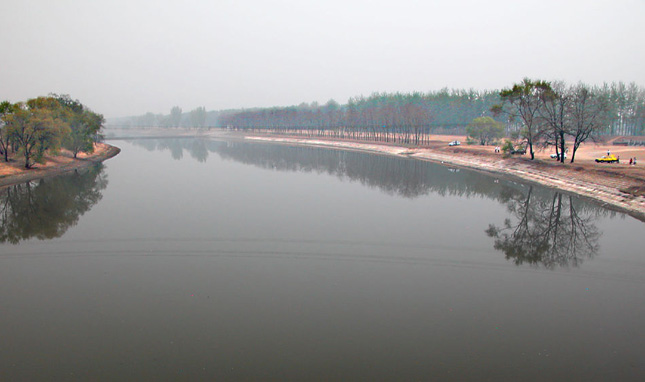
    From smoggy skies to rancid rivers and staggering slums, environmental challenges loom large for Asia. While much has been said about the role of government and NGOs in achieving a sustainable future, Mark Clifford, executive director of the Asia Business Council, believes companies are an indispensable but often overlooked part of the solution.

    MORE
  • The Dark Side of Development: Displacement, Eviction in World Bank Projects and Ethiopia

    ›
    Reading Radar  //  May 13, 2015  //  By Theo Wilson

    OaklandWith the help of international aid, foreign land grabs in the Gambella region of Ethiopia have resulted in environmental degradation, more severe economic and social inequality, and human rights abuses, according to a new study by the Oakland Institute. We Say The Land Is Not Yours collects testimony from victims of “villagization,” a policy of forced displacement started under the military Derg dictatorship and, according to many, continued to this day under the guise of land investment.

    MORE
  • What’s Behind West and Central Africa’s Youthful Demographics? High Desired Family Size

    ›
    May 11, 2015  //  By Elizabeth Leahy Madsen
    Ghana mother

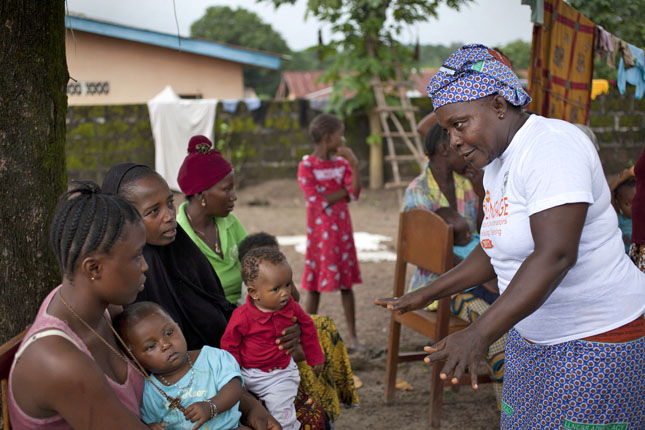
    Sub-Saharan Africa is often characterized as an outlier in terms of population dynamics and reproductive health. While women are having fewer children around the world, even prompting some places to begin worrying about aging populations, the demographic transition is proceeding more slowly in Africa. Fertility rates in North and Southern Africa have declined to around three children per woman, but the three other sub-regions of the continent – East, Central, and West Africa – retain much higher fertility, between five and six children per woman. Whether, and how quickly, fertility rates decline in these regions over the next few decades will in large part determine the peak of world population. These regions’ demographic trajectories also have important implications for health, governance, food security, economic development, land use, climate vulnerability, and even security.

    MORE
  • Under Modi, India’s Climate Goals Tied to Clean Energy Development

    ›
    Choke Point  //  Guest Contributor  //  May 8, 2015  //  By Dhanasree Jayaram
    modi-merkel

    India occupies a precarious position in the global climate change order. It trails only China, the United States, and the European Union in total emissions, but per capita emissions are far lower. India’s Prime Minister Narendra Modi won the 2014 elections on a strong pro-development platform and continues to wave this flag at all levels, making energy security a major priority and pledging to expand the country’s coal mining industry. But he also insists he will work with the international community on mitigating climate change. During a recent visit to France, Germany, and Canada, he declared, “India will set the agenda for the upcoming Conference of Parties” in Paris this fall.

    MORE
  • Banning Garrett: Getting Urbanization Right Can “Solve a Lot of Big Problems”

    ›
    Friday Podcasts  //  May 8, 2015  //  By Carley Chavara
    garrett-small

    The world is changing quickly thanks to a convergence of megatrends, says Singularity University’s Banning Garrett in this week’s podcast, but urbanization could be the most critical. “If we get it right in cities, we can solve a lot of big problems,” he says.

    MORE
  • Katie Millar, Maternal Health Task Force

    Global Experts Highlight Importance of Midwives to Maternal Health

    ›
    Dot-Mom  //  May 7, 2015  //  By Wilson Center Staff
    midwife

    The original version of this article, by Katie Millar, appeared on the Maternal Health Task Force blog.

    May 5 was the International Day of the Midwife, an opportunity for the global community to come together to recognize the incredible impact midwives have on maternal and newborn health and decreasing mortality. Want to know more about what global leaders are doing to strengthen midwifery?

    MORE
  • Roger-Mark De Souza Talks Global Population Dynamics on ‘Radio Times’

    ›
    On the Beat  //  May 7, 2015  //  By Linnea Bennett
    urban pop

    From aging populations in East Asia, Europe, and the United States to youth in sub-Saharan Africa, changing demographics have implications for the entire global community, said Roger-Mark De Souza, director of population, environmental security, and resilience at the Wilson Center in an April 20 interview for WHYY’s Radio Times in Philadelphia.

    MORE
  • Measuring the SDGs: Investments in Mapping, Geospatial Data Collection Critical to Success

    ›
    Guest Contributor  //  May 5, 2015  //  By Alex Fischer
    particulate-matter_asia

    To ensure no one is left behind by the next generation of global development goals, a comprehensive mix of robust data is needed to measure progress and guide investments. A recent report coordinated by the Sustainable Development Solutions Network estimates the world will need to spend roughly $1 billion a year to sustain and enhance the statistical systems supporting and evaluating progress towards the Sustainable Development Goals (SDGs), the successors to the Millennium Development Goals expected to guide the development agenda for the next 15 years.

    MORE
Newer Posts   Older Posts
View full site

Join the Conversation

  • RSS
  • subscribe
  • facebook
  • G+
  • twitter
  • iTunes
  • podomatic
  • youtube
Tweets by NewSecurityBeat

Trending Stories

  • unfccclogo1
  • Pop at COP: Population and Family Planning at the UN Climate Negotiations

Featured Media

Backdraft Podcast

play Backdraft
Podcasts

More »

What You're Saying

  • Volunteers,At,The,Lagos,Food,Bank,Initiative,Outreach,To,Ikotun, Pan-African Response to COVID-19: New Forms of Environmental Peacebuilding Emerge
    Rashida Salifu: Great piece 👍🏾 Africa as a continent has suffered this unfortunate pandemic.But it has also...
  • A desert road near Kuqa An Unholy Trinity: Xinjiang’s Unhealthy Relationship With Coal, Water, and the Quest for Development
    Ismail: It is more historically accurate to refer to Xinjiang as East Turkistan.
  • shutterstock_1779654803 Leverage COVID-19 Data Collection Networks for Environmental Peacebuilding
    Carsten Pran: Thanks for reading! It will be interesting to see how society adapts to droves of new information in...

What We’re Reading

  • Rising rates of food instability in Latin America threaten women and Venezuelan migrants
  • Treetop sensors help Indonesia eavesdrop on forests to cut logging
  • 'Seat at the table': Women's land rights seen as key to climate fight
  • A Surprise in Africa: Air Pollution Falls as Economies Rise
  • Himalayan glacier disaster highlights climate change risks
More »
  • woodrow
  • ecsp
  • RSS Feed
  • YouTube
  • Twitter
  • Facebook
  • Home
  • Who We Are
  • Publications
  • Events
  • Wilson Center
  • Contact Us
  • Print Friendly Page

© Copyright 2007-2021. Environmental Change and Security Program.

Woodrow Wilson International Center for Scholars. All rights reserved.

Developed by Vico Rock Media

Environmental Change and Security Program

Woodrow Wilson International Center for Scholars

Ronald Reagan Building and International Trade Center

  • One Woodrow Wilson Plaza
  • 1300 Pennsylvania Ave., NW
  • Washington, DC 20004-3027

T 202-691-4000