• woodrow wilson center
  • ecsp

New Security Beat

Subscribe:
  • rss
  • mail-to
  • Who We Are
  • Topics
    • Population
    • Environment
    • Security
    • Health
    • Development
  • Columns
    • China Environment Forum
    • Choke Point
    • Dot-Mom
    • Friday Podcasts
    • Navigating the Poles
    • Reading Radar
  • Multimedia
    • Water Stories (Podcast Series)
    • Backdraft (Podcast Series)
    • Tracking the Energy Titans (Interactive)
  • Films
    • Water, Conflict, and Peacebuilding (Animated Short)
    • Paving the Way (Ethiopia)
    • Broken Landscape (India)
    • Scaling the Mountain (Nepal)
    • Healthy People, Healthy Environment (Tanzania)
  • Publications
  • Events
  • Contact Us

NewSecurityBeat

The blog of the Wilson Center's Environmental Change and Security Program
Showing posts from category development.
  • From Climate Challenge to Climate Hope: Embracing New Opportunities This Earth Day

    ›
    April 22, 2016  //  By Roger-Mark De Souza
    Haiti factory1

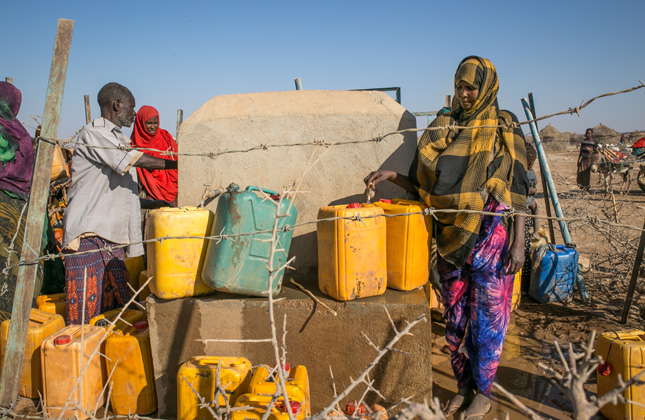
    This Earth Day, the United States, China, and Canada are among more than 170 countries expected to take part in the largest one-day signing of an international agreement in history. The ratification of the climate agreement hammered out at the Paris Conference of Parties (COP-21) last December could be the most significant elevation of environmental issues on the global stage yet.

    MORE
  • Changing the Narrative on Fertility Decline in Africa

    ›
    From the Wilson Center  //  April 20, 2016  //  By Eunice Mueni
    H4plus_SierraLeone

    Today, Africa has the world’s highest fertility rates. On average, women in sub-Saharan Africa have about five children over their reproductive lifetime, compared to a global average of 2.5 children. Research shows that the “demographic transition,” the name for the change from high death and fertility rates to lower death and eventually lower fertility rates, has proceeded differently here from other regions in the developing world.

    MORE
  • Turning the Impending Mosul Dam Disaster Into Opportunity

    ›
    From the Wilson Center  //  April 19, 2016  //  By Azzam Alwash
    MosulDam

    The original version of this article appeared as part of the Middle East Program’s Viewpoints series.

    Iraq has seen its share of calamities in recent years, but none is as dangerous as the impending failure of the Mosul Dam. A breach of the dam will result in a tsunami-like wave that sweeps through cities and hamlets along the Tigris River from Mosul to as far south as Amarah and even Basra. Baghdad would be submerged under five meters of water within four days. Not only do experts estimate the possible fatalities to range from 500,000 to more than 1 million, but consider the logistics of trying to provide electricity, drinking water, food, hospitals, transportation, and diesel for millions of people.

    MORE
  • Breaking the Fragility Trap: What Role for the World Bank?

    ›
    Guest Contributor  //  April 18, 2016  //  By Benjamin Pohl & Lukas Rüttinger
    Syria to Turkey crossing

    Last month, the World Bank’s Fragility Forum in Washington, DC, brought together some 600 participants to discuss how to advance sustainable development in the context of increasing conflicts and violence. World Bank President Jim Yong Kim opened the forum by emphasizing that we are at a critical moment.

    MORE
  • Joan Whelan on a New Strategy at the Office of Food for Peace: Address Conflict

    ›
    Friday Podcasts  //  April 15, 2016  //  By Sean Peoples

    whelan-smallSince its inception more than 60 years ago, USAID’s Office of Food for Peace has provided critical food assistance to billions of people around the world. Yet, despite its name, the office lacked a strategy to address the effects of conflict on its work.

    MORE
  • Tracking China’s “Foul and Filthy” Rivers With Citizen Science

    ›
    China Environment Forum  //  Guest Contributor  //  April 14, 2016  //  By Elizabeth Tyson & Kate Logan
    beijing-river

    The original version of this article, by Elizabeth Tyson and Kate Logan, appeared on the Wilson Center’s Commons Lab.

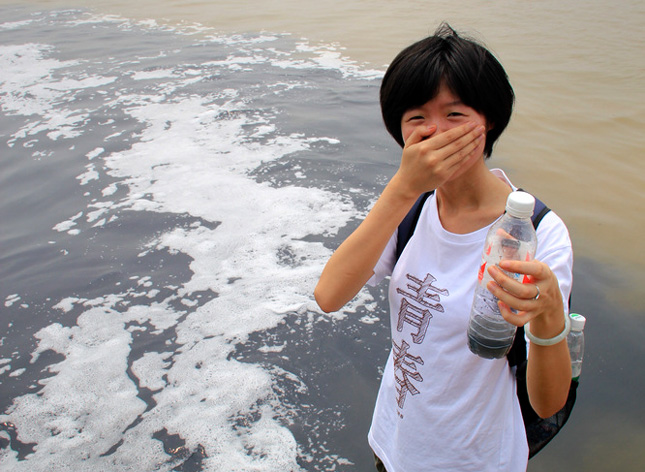
    Blackened rivers snake the ring roads of Beijing, carrying pollution and often smelly water from one end of the city to another. The most polluted of these have been dubbed “foul and filthy” rivers (黑臭河) by China’s Ministry of the Environment (MEP) and Ministry of Housing and Urban-Rural Development (MOHURD). However, the government has decided to clean these up – and is enlisting the help of the public to do so.

    MORE
  • A More Extreme Sea-Level Rise Scenario, and the Global Environmental Burden of Disease

    ›
    Reading Radar  //  April 13, 2016  //  By Haodan "Heather" Chen

    RR3_1Though governments have agreed to try to limit global warming to no more than two degrees Celsius above pre-industrial levels, a paper by James Hansen et al. in Atmospheric Chemistry and Physics finds that goal may not prevent major changes on an irreversible and unadaptable scale. Studying the last interglacial period, about 120,000 years ago, when the temperature was less than one degree Celsius warmer than today, Hansen et al. estimate sea level was six to nine meters higher than today.

    MORE
  • Myanmar’s Democratic Deficit: Demography and the Rohingya Dilemma

    ›
    Guest Contributor  //  April 12, 2016  //  By Rachel Blomquist & Richard Cincotta
    Rohingya camp

    According to political demographers, who study the relationship between population dynamics and politics, two characteristics when observed together provide a rather good indication that a state is about to shed its authoritarian regime, rise to a high level of democracy, and stay there. Myanmar has both.

    MORE
Newer Posts   Older Posts
View full site

Join the Conversation

  • RSS
  • subscribe
  • facebook
  • G+
  • twitter
  • iTunes
  • podomatic
  • youtube
Tweets by NewSecurityBeat

Trending Stories

  • unfccclogo1
  • Pop at COP: Population and Family Planning at the UN Climate Negotiations

Featured Media

Backdraft Podcast

play Backdraft
Podcasts

More »

What You're Saying

  • Volunteers,At,The,Lagos,Food,Bank,Initiative,Outreach,To,Ikotun, Pan-African Response to COVID-19: New Forms of Environmental Peacebuilding Emerge
    Rashida Salifu: Great piece 👍🏾 Africa as a continent has suffered this unfortunate pandemic.But it has also...
  • A desert road near Kuqa An Unholy Trinity: Xinjiang’s Unhealthy Relationship With Coal, Water, and the Quest for Development
    Ismail: It is more historically accurate to refer to Xinjiang as East Turkistan.
  • shutterstock_1779654803 Leverage COVID-19 Data Collection Networks for Environmental Peacebuilding
    Carsten Pran: Thanks for reading! It will be interesting to see how society adapts to droves of new information in...

What We’re Reading

  • Rising rates of food instability in Latin America threaten women and Venezuelan migrants
  • Treetop sensors help Indonesia eavesdrop on forests to cut logging
  • 'Seat at the table': Women's land rights seen as key to climate fight
  • A Surprise in Africa: Air Pollution Falls as Economies Rise
  • Himalayan glacier disaster highlights climate change risks
More »
  • woodrow
  • ecsp
  • RSS Feed
  • YouTube
  • Twitter
  • Facebook
  • Home
  • Who We Are
  • Publications
  • Events
  • Wilson Center
  • Contact Us
  • Print Friendly Page

© Copyright 2007-2021. Environmental Change and Security Program.

Woodrow Wilson International Center for Scholars. All rights reserved.

Developed by Vico Rock Media

Environmental Change and Security Program

Woodrow Wilson International Center for Scholars

Ronald Reagan Building and International Trade Center

  • One Woodrow Wilson Plaza
  • 1300 Pennsylvania Ave., NW
  • Washington, DC 20004-3027

T 202-691-4000