-
Partnerships, Politics, & Plastic Pollution: A Conversation with Rob Kaplan on Reducing Ocean Plastics
› “I’ve never seen this kind of political and public sector engagement in an environmental topic happen so fast,” said Rob Kaplan, the Founder and CEO of Circulate Capital in an interview with Ambassador David Balton following a recent Wilson Center event on reducing marine plastic pollution. Interest in reducing ocean plastics has gone from a blip on the radar at ocean conferences to “now becoming a top priority,” said Kaplan.
 -
Transforming Africa: Women and Young People Will Drive Progress
›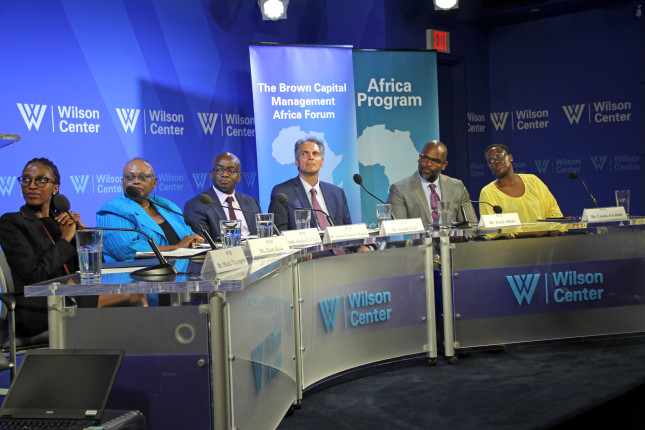
“Too often in the United States, the narrative that we hear about Africa is one of poverty, war, and ineffective or failed states. It is a crisis, a place best engaged through aid packages and humanitarian assistance,” said Keith Lee, President and Chief Operating Officer of Brown Capital Management at a recent Wilson Center event hosted by the Africa Program. “This has never been the entire story, and today more than ever, Africa is undergoing enormous transformations that challenge this narrative,” Lee said.
-
Urban Elites’ Livestock Exacerbate Herder-Farmer Tensions in Africa’s Sudano-Sahel
›In recent years, conflict between herders and farmers for access to increasingly scarce natural resources in Africa’s Sudano-Sahel has escalated. While the problems fueling these tensions are both hyper-local and transnational in nature, one important piece of the puzzle has been overlooked. The real “elephant in the room” is who owns the livestock. -
Weathering the Storm: Wastewater Resiliency in the US and China
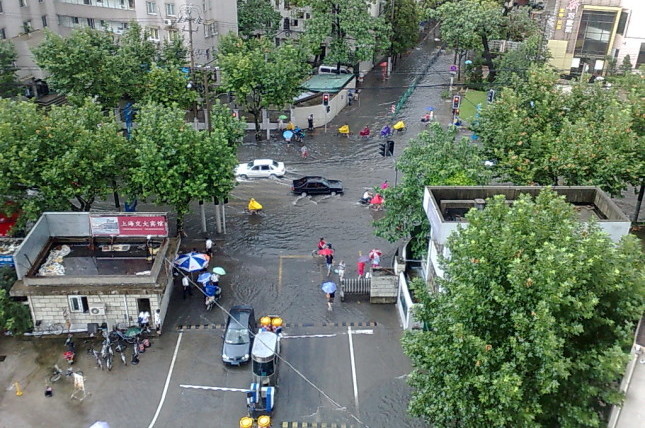
›In 2018, floods resulted in over 20 casualties and billions of yuan in damage in China, with the government issuing 835 flood warnings nationwide. As global temperatures rise, the combination of extreme weather events and sea level rise threaten the basic infrastructure and water security of low-elevation Chinese cities. Coastal residents account for 43% of China’s population – approximately 170 million citizens live less than ten meters above sea level. In fact, seven of China’s ten largest cities are on the coast, creating high stakes for the government to address impending threats of flooding and sea level rise. Shanghai, China’s largest city, is on the frontlines of climate change as one of the world’s most flood-vulnerable major cities. Shanghai’s government was eager to invest in the sponge city initiative and expand greenspace, rooftop gardens and porous pavements to control stormwater floods. However, officials have been hesitant to invest in climate adaptation measures that don’t create a big splash, like the unglamorous networks of sewage and wastewater infrastructure.
-
Middle East: EcoPeace Urges UN to Back Water-Energy Cooperation to Increase Security
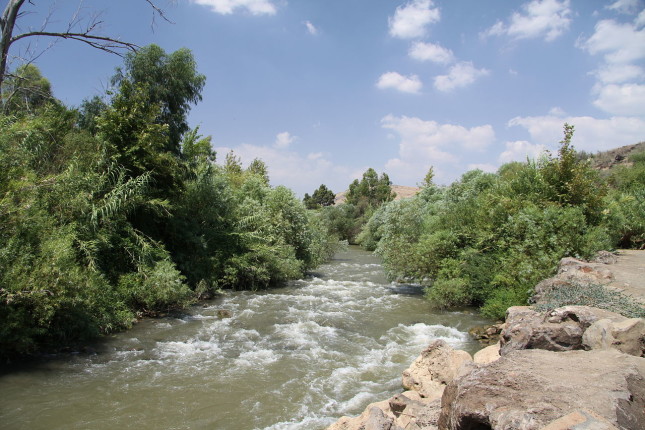
›“Action is needed today,” said EcoPeace Middle East’s Palestinian Co-Director Nada Majdalani. EcoPeace’s Palestinian and Israeli Co-Directors spoke at a recent session of the United Nations Security Council that focused on potential solutions to the decades-old Palestinian-Israeli crisis. They emphasized the importance of cooperation over shared water resources to help address human health and national, regional, and global security concerns. While EcoPeace has been working to foster cooperation over water for more than 25 years, as a way to build peace in the Middle East, this was the first time the trilateral organization briefed the Security Council.
-
Headlines and Trend Lines: A Wilson Center NOW Interview with James Hollifield on Global Migration
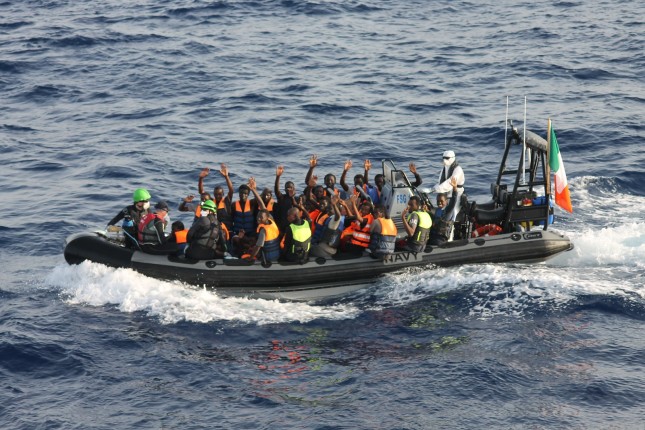
›One factor frequently underestimated in the global migration discussion is climate change, said James Hollifield, a Wilson Center Global Fellow, in a recent episode of Wilson NOW. Resulting in both internal displacement and international forced migration, climate-induced migration is set to become a complex problem. So far, there are no international agreements protecting those who may be displaced by climate-induced hardships. Hollifield anticipates regions in Africa, South Asia, and Southeast Asia will be significantly impacted by these dynamics and notes that Central America is already dealing with challenges of climate-induced displacement, in part due to increasing failure of cash-crops like coffee.
-
Water as a Tool for Resilience in Times of Crisis
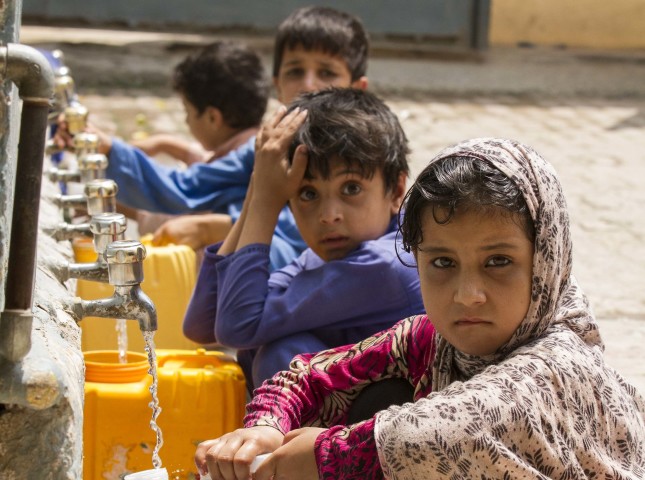
›Water serves as a tool for resilience only when access to it is consistent and the system for making it consistent is in place, said David De Armey, Director of International Partnerships for Water for Good, an international NGO. He spoke at a recent Wilson Center event, “Water as a Tool for Resilience in Times of Crisis,” the second event in a three-part series, Water Security for a Resilient World, sponsored by the Wilson Center, Winrock International, the Sustainable Water Partnership, and USAID. Water for Good monitors 80 percent of wells across seven provinces in Central African Republic (CAR), he said. By keeping the water infrastructure working, the nonprofit creates a stable environment within an unstable country. “Thus,” he said, “we see reliability and services as a tool for resilience.”
-
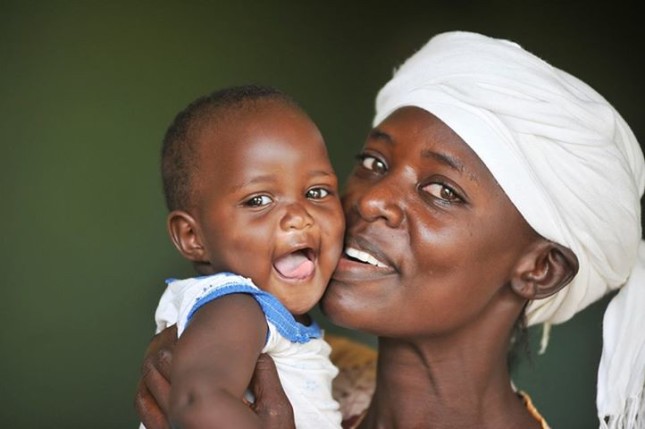
New Report: Six Steps Towards Ending Preventable Maternal Mortality
›In Six Steps Towards Ending Preventable Maternal Mortality, Sarah B. Barnes, Project Director of the Maternal Health Initiative, Geeta Lal, Senior Technical Advisor at the United Nations Population Fund (UNFPA), and Elizabeth Wang, Staff Intern at the Maternal Health Initiative, discuss suggested steps to prevent avoidable maternal deaths, globally.
Showing posts from category development.
 “I’ve never seen this kind of political and public sector engagement in an environmental topic happen so fast,” said Rob Kaplan, the Founder and CEO of Circulate Capital in an interview with Ambassador David Balton following a recent
  In recent years, conflict between herders and farmers for access to increasingly scarce natural resources in Africa’s Sudano-Sahel has escalated. While the problems fueling these tensions are both hyper-local and transnational in nature, one important piece of the puzzle has been overlooked. The real “elephant in the room” is who owns the livestock.