-
Foresight for Action | Ecosystem Degradation, Transnational Migration, and Political Instability: Three Main Tipping Points for East Africa
›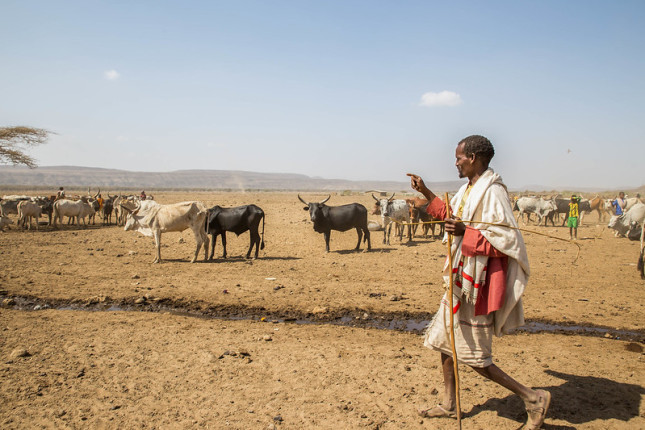
The Horn of Africa faces critical security and climate risks. Persistent droughts have precipitated the onset of food insecurity and waterborne disease, while heavy rain events such as Cyclone Sagar have caused widespread flooding, mudslides, and wind damage. These challenges are increasing in severity against a backdrop of changing demographic trends—including rapid population growth, increased migration, and urbanization—and power struggles both within and between countries in the region.
-
Glass Half Full? Innovative Technologies Could Increase Global Water Security
›
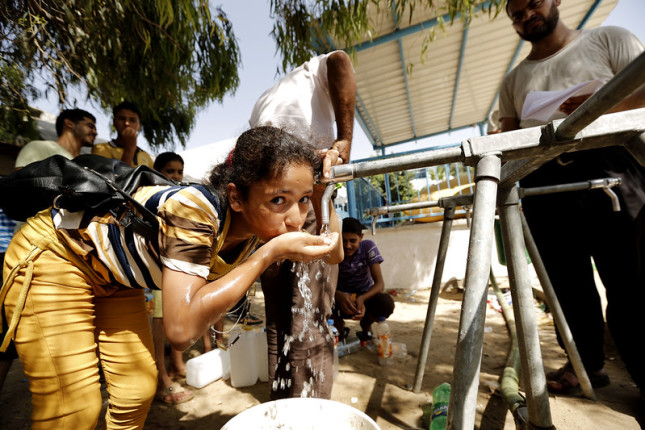
By 2050, the UN estimates that 52 percent of the world’s population will be at risk for water insecurity. Climate change is threatening water availability through increased temperatures and drought, unpredictable rain, and the growing threat of more pollution. Globally, most wastewater reenters the water cycle without being treated, introducing dangerous unseen particles including pharmaceuticals, diseases, and larger waste products such as plastics.
-
From Caution to Creative Solutions: The Necessary Evolution of the Climate Migration Debate
›Over the years, experts have cautioned against speaking of “climate refugees.” They argue that the term “refugee,” as defined by the 1951 Refugee Convention, only applies to those who flee across borders out of fear of persecution and violence. Furthermore, evidence shows that migration is a complex phenomenon. While climate change may influence decisions to migrate to some degree, it would likely drive internal movement along well-worn migration routes, often rural-urban in nature. Ultimately, experts have argued that policymakers should think of migration as a form of adaptation to climate change, and reject the term “climate refugee.” -
Mohamed’s Story: The Climate Conflict Trap in the Lake Chad Basin
›Years ago, Mohamed’s family had enough to eat, despite being poor. His daughter owned a vegetable stall at a bustling market in northeastern Nigeria. The family had options: during the dry season, when Lake Chad was shallow, Mohamed could farm; and during the wet season, he could fish or graze his cattle.
-
Gordon Mumbo on Water and Livelihoods in the Mara River Basin
›Friday Podcasts // Water Security for a Resilient World // Water Stories (Podcast Series) // November 15, 2019 // By Benjamin DillsThis article is part of ECSP’s Water Security for a Resilient World series, a partnership with USAID’s Sustainable Water Partnership and Winrock International to share stories about global water security.“If you live in the developed world or in some urban centers, then the supply of water is guaranteed,” said Gordon Mumbo, team leader for Sustainable Water for the Mara River Basin, a project of Winrock International and USAID’s Sustainable Water Partnership, in this week’s Water Stories podcast. When you wake up, you expect water to flow from your tap. “If you don’t find it flowing, you get upset and will probably call the utility company.” But people living in the Mara River Basin don’t have that luxury. “They have to walk to the river to get water and bring it home,” said Mumbo.
-
Investing in Women’s Empowerment Essential to Achieving Peace, Security in Africa
›Africa in Transition // From the Wilson Center // November 14, 2019 // By Brigitte Hugh & Deekshita RamanarayananA country can achieve sustainable peace and security only if women are included, said Monde Muyangwa, Director of the Wilson Center’s Africa Program at a recent Wilson Center event on the role of women in promoting peace and security in Africa. “And I would argue that part of the challenges that we face on the African continent, the insecurity that we face in parts of the African continent,” she said, “is precisely because not all segments of society are included.”
-
What Changes When We See Women
›To commemorate the 25th anniversary of the Wilson Center’s Environmental Change and Security Program, I have a prediction: by ECSP’s 50th anniversary, the idea that one could discuss national and international security without examining the situation, status, and security of women will be seen as laughably naïve. Over the next twenty-five years, I predict that every “Intro to International Relations” and “Intro to National Security” class (and every QDR and QDDR) will begin by examining the critical linkage between what is going on with women and what is going on with nation-states. -
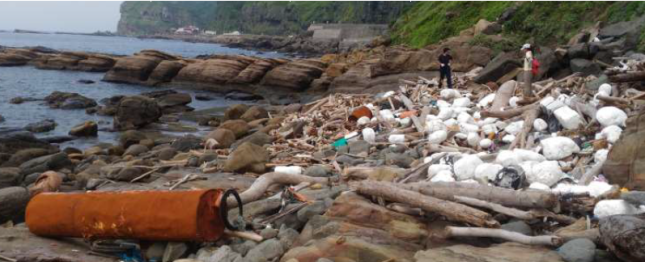
Upcycling ‘Beach Snow’: Clearing Taiwan’s Oyster Farming Marine Debris
›“If you go to some Taiwan beaches, you can see snow,” said Chieh-Shen (Jason) Hu, Ocean Initiative Coordinator for Taiwan’s Society of Wilderness, a 6,000-member organization similar to Sierra Club. Hu was referring to pervasive Styrofoam marine debris from western Taiwan’s oldest industry, oyster aquaculture.
Showing posts from category development.
 Over the years, experts have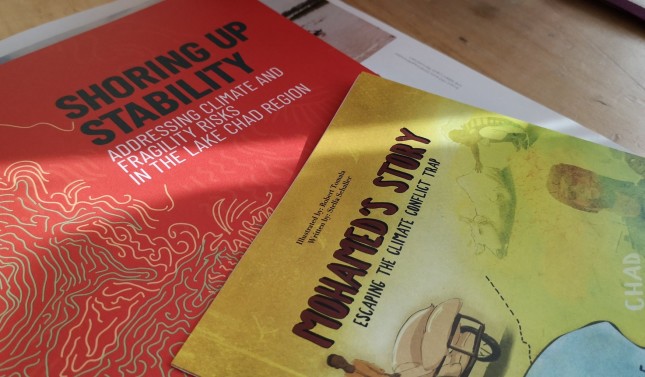
 This article is part of ECSP’s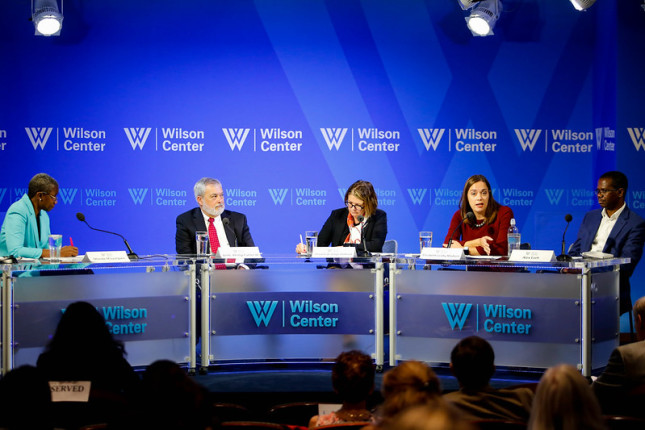
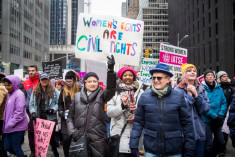 To commemorate the 25th anniversary of the Wilson Center’s Environmental Change and Security Program, I have a prediction: by ECSP’s 50th anniversary, the idea that one could discuss national and international security without examining the situation, status, and security of women will be seen as laughably naïve. Over the next twenty-five years, I predict that every “Intro to International Relations” and “Intro to National Security” class (and every QDR and QDDR) will begin by examining the critical linkage between what is going on with women and what is going on with nation-states.